Plot Explained Spoilers guaranteed!
Plot Explained

Browse by genre

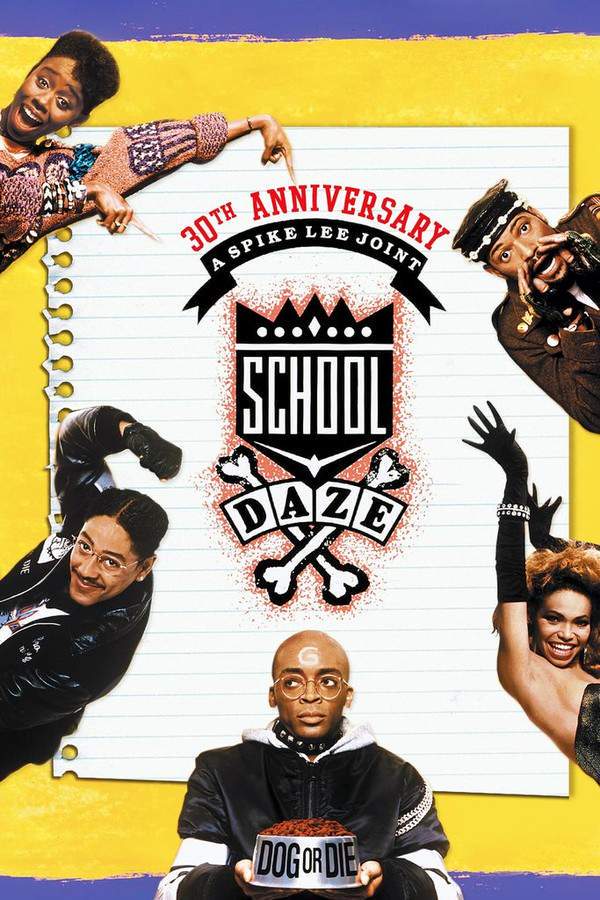
School Daze (1988) movie poster

Plot Summary

School Daze (1988) Plot Summary Explained

Release, runtime and language
1988 · 121 min · English
JustWatch #21,294 7
Directed by
Spike Lee
Starring
Laurence Fishburne, Giancarlo Esposito

At Mission College, a historically black institution, the dynamics of student life are explored as activism and apathy clash. Charismatic student Dap inspires change, challenging the established order, while Julian’s fraternity clings to tradition and campus prestige. Caught between these opposing forces is Half-Pint, struggling with his loyalty to his cousin’s cause and the temptations of belonging to the fraternity. The film examines themes of social responsibility and the complexities of navigating identity and belonging.

On this page (6)
  1. 1 Where to watch
  2. 2 What happens: full plot
  3. 3 Plot questions answered
  4. 4 Movie threads
  5. 5 Movies like School Daze
  6. 6 Every angle

Where to watch

Where to Watch School Daze (1988)

Where can you watch School Daze? Stream, rent or buy it in the US, including on YouTube TV, Amazon Video and Apple TV Store: current JustWatch availability with up-to-date prices.

Streaming availability powered by JustWatch

Full plot summary · contains spoilers

What Happens in School Daze: Full Plot Summary

The whole story of School Daze (1988) explained, from the opening scene to the final frame: every key event, every twist and what it all adds up to. Read it as a quick recap before the sequel, to check a scene you missed, or to finally understand what really happened.

On Homecoming Weekend at the historic Mission College in Georgia, the passionate senior Vaughn "Dap" Dunlap, portrayed by Laurence Fishburne, spearheads a protest rally against the school's complicity in apartheid in South Africa. This peaceful demonstration, however, is interrupted by the fraternity Gamma Phi Gamma and their pledge class known as the Gammites. Among them is Julian "Big Brother Almighty" Eaves, played by Giancarlo Esposito, who is a former friend of Dap and openly disagrees with his activist stance. Tensions escalate into a clash between Dap and Julian, but their quarrel is halted by Student Government Association president Virgil Cloyd, played by Gregg Burge.

Inside the administration building, Board of Trustees Chairman "Cedar Cloud," portrayed by Art Evans, instructs College President Harold McPherson, played by Joe Seneca, to put an end to Dap's protests. Meanwhile, Julian provokes fellow pledge Darrell "Half-Pint" (played by Spike Lee), reminiscing about how Dap dropped out of pledging years prior.

As evening descends, Dap summons his activist friends—Grady (Bill Nunn), Monroe (James Bond III), Jordan (Branford Marsalis), Edge (Kadeem Hardison), and Booker T. (Eric A. Payne)—to join him in continuing the protest. Despite their agreement with Dap's cause, they express concerns about their future, wishing to graduate and secure good jobs. In a parallel narrative, tensions rise among the Gamma Rays, a women's auxiliary group led by Julian's girlfriend Jane Toussaint (Tisha Campbell), who clash with Dap's girlfriend Rachel Meadows (Kyme) and her friends over issues related to skin color and hair politics.

On Saturday, the homecoming festivities kick off, leading to a near-physical confrontation between Dap’s followers and the Gamma brothers during the parade. The big homecoming football game that follows results in a disappointing defeat for the Mission football team, after which Dap is summoned by Cloud and McPherson. They threaten him with expulsion if he does not cease his activism.

Later, Dap and his friends head to a local KFC, where they experience hostility from locals who resent their privileged college status. Upon returning to campus, Dap confronts Julian regarding Darrell's status as a pledge.

As Sunday arrives, during a step show put on by the Greeks, a performance by Dap and his friends erupts into a fight with the Gammas. Dap seeks out Rachel, facing humiliation from her dorm neighbors, but ultimately, the couple mends their relationship. Later, Half-Pint and the Gammites proudly complete their pledging, embracing their new identities as fraternity brothers. During the celebration with the Gamma Ray sorority, Julian grows irritated with Jane and pressures Half-Pint into a compromising situation as a final test. Though uncomfortable with Julian's demand, Jane insists on compliance. This leads to a confrontation where Julian accuses Jane of caring more for the fraternity than for him, resulting in their breakup.

In a moment of realization, Half-Pint boasts to Dap about his actions at Julian's behest. Disturbed by how his cousin has changed into an entitled Gamma, Dap rushes to the center of the campus quad. With the dawn breaking, he rings a large bell, awake the slumbering campus from the night’s excesses. A tearful Julian confronts Dap, who then breaks the fourth wall and earnestly implores the audience, > "Please, wake up."
Last updated: November 03, 2024 at 22:36

Was this helpful?

Plot questions answered

School Daze Plot Explained: Your Questions Answered

The questions people ask most about School Daze (1988): what happens in the confusing scenes, why the characters do what they do, the twists, hidden details and what the ending means. Each answer contains spoilers.

Q1

Why is Dap organizing protests against apartheid?

Dap is protesting Mission College's financial ties to companies that do business in apartheid-era South Africa. As a passionate senior activist, he believes the college is complicit in supporting the oppressive regime through its investments. His protest challenges both the administration and the student body to take a stand on social responsibility, even threatening his academic future.

Foreshadowing: Earlier, Dap's speech at the rally establishes his commitment to social justice causes that go beyond campus politics.

  • dap dunlap
  • apartheid protest
  • mission college
  • activism
  • social responsibility
Q2

Why does Julian oppose Dap's activism?

Julian, now the leader of the Gamma Phi Gamma fraternity, represents the traditional campus establishment that values prestige and conformity over social activism. His open disagreement with Dap stems from their shared past, Julian recalls that Dap dropped out of the fraternity pledging process years ago. Julian sees Dap's protest as a threat to the fraternity's influence and the school's status quo.

Foreshadowing: Julian provokes Half-Pint by reminiscing about how Dap abandoned his pledge years earlier.

  • julian eaves
  • gamma phi gamma
  • dap
  • fraternity conflict
  • former friends
Q3

Why does Half-Pint join the fraternity despite Dap's activism?

Half-Pint struggles with loyalty to his cousin Dap and his desire to belong to Gamma Phi Gamma. Despite witnessing the conflict between Dap and Julian, Half-Pint is tempted by the fraternity's social status and brotherhood. Julian manipulates this vulnerability, pressuring Half-Pint into uncomfortable situations as a final test of loyalty, ultimately corrupting his integrity.

Foreshadowing: Julian goads Half-Pint about Dap dropping out of pledging, planting the idea that joining the fraternity means rejecting Dap's path.

  • half-pint
  • darrell
  • gamma phi gamma
  • pledging
  • cousin relationship
  • loyalty
Q4

What is the conflict between the Gamma Rays and Rachel's group about?

The Gamma Rays, led by Julian's girlfriend Jane Toussaint, clash with Dap's girlfriend Rachel Meadows over colorism and hair politics within the Black community. This subplot explores internal divisions around skin tone and straight versus natural hair, reflecting broader societal issues of colorism that divide women who should be united.

Foreshadowing: The tension is established early when the Gamma Rays and Rachel's friends confront each other over identity politics.

  • gamma rays
  • jane toussaint
  • rachel meadows
  • colorism
  • hair politics
  • identity
Q5

Why are Dap and his friends mistreated at the KFC?

After the football game, Dap and his activist friends visit a local KFC but face hostility from community members who resent their privileged college status. The locals view the students as entitled and out of touch with everyday Black experiences, highlighting the tension between educated Black youth and the working-class community that sustains the college.

Foreshadowing: This scene follows the team's disappointing football loss, adding to the sour mood on campus.

  • kfc scene
  • community tension
  • privilege
  • working class
  • local residents
Q6

Why does the step show turn into a fight?

The step show performance by Dap and his friends erupts into a brawl with the Gamma brothers due to mounting tensions throughout the weekend. The pent-up frustrations from the protest clash, fraternity rivalry, and personal conflicts finally explode during what should be a celebratory event. This violent outbreak symbolizes the broader clash of ideals and identities consuming the campus.

Foreshadowing: Tensions have been building since the homecoming parade confrontation between Dap's followers and the Gamma brothers.

  • step show
  • brawl
  • gamma phi gamma
  • fight
  • campus conflict
  • fraternity rivalry
Q7

Why does Julian break up with Jane?

During the celebration with the Gamma Ray sorority, Julian grows irritated with Jane and pressures Half-Pint into a compromising situation as a final test. When Jane insists on compliance despite her discomfort, Julian accuses her of caring more about the fraternity than about him. This explosion of jealousy and misunderstanding leads to their breakup, showing how the social battles taking place around them destroy personal relationships.

Foreshadowing: Julian's manipulation of Half-Pint creates tension between him and Jane, who questions his methods.

  • julian
  • jane toussaint
  • breakup
  • jealousy
  • gamma rays
  • relationship fallout
Q8

What does Dap ringing the bell at dawn mean?

Disturbed by how his cousin Half-Pint has changed into an entitled Gamma brother, Dap rushes to the campus quad at dawn and rings the large bell to awaken the slumbering campus. This symbolic act calls the entire community to wake up from the night's excesses and contemplate the state of their community, social consciousness, and priorities. The bell serves as both a literal and metaphorical awakening.

Foreshadowing: The Gamma celebration and Julian's manipulation have just concluded, leaving Dap devastated by his cousin's transformation.

  • bell
  • campus quad
  • dawn
  • symbolism
  • awakening
  • call to action
Q9

What does Dap's final plea to 'wake up' mean?

In the film's final moments, Dap breaks the fourth wall and directly addresses the audience, pleading Please, wake up. This urgent call extends beyond the fictional campus to implore viewers to recognize their own complicity in social injustice, to question authority, and to take responsibility for creating change. It transforms the film from a campus comedy into a call for societal consciousness.

Foreshadowing: The bell-ringing immediately precedes this moment, both serving as awakening symbols.

  • wake up
  • fourth wall
  • spike lee
  • audience appeal
  • social responsibility
  • activism
Q10

What happens when Dap is summoned by the administration?

After the football team's disappointing loss, Dap is called to meet with Board Chairman Cedar Cloud and College President Harold McPherson. They threaten him with expulsion if he does not cease his activism. This confrontation demonstrates how institutional authority sides with the fraternity against student activism, forcing Dap to choose between his cause and his education.

Foreshadowing: Earlier, Cedar Cloud instructed President McPherson to put an end to Dap's protests.

  • expulsion
  • cedar cloud
  • harold mcpherson
  • administration
  • threat
  • authority
Q11

What is Mission College's connection to apartheid?

Mission College has financial investments in companies that do business with apartheid South Africa. Dap's protest targets this complicity, arguing that the historically Black institution is indirectly supporting racial oppression abroad through its investment decisions. The Board of Trustees' swift action to silence Dap reveals how deeply entrenched these financial ties are.

Foreshadowing: The Board of Trustees intervention occurs immediately after Dap's protest gains momentum.

  • mission college
  • apartheid
  • investments
  • south africa
  • board of trustees
  • financial ties

Movie threads

More Movies Like School Daze, by Mood & Story

Curated lists built around what makes School Daze tick: the same mood, the same kind of story or the same emotional payoff. Each list explains why these movies belong together.

Movies about volatile campus life like School Daze

Movies where universities or colleges become pressure cookers for urgent social conflicts. If you liked the intense social clashes in School Daze, explore these movies set on college campuses that erupt with conflict. These stories feature activism, identity crises, and institutional pressure, creating dramas and comedies with a similar urgent and confrontational feel.

  • tense
  • confrontational
  • urgent
  • dramatic
  • uncomfortable
  • feverish
  • Tone: tense, confrontational, urgent
  • Pacing: fast, event-driven
Why these movies?

The story pattern: Stories in this thread typically unfold over a compressed timeline, often a weekend or pivotal event, forcing characters to confront deep-seated issues. The narrative revolves around clashes between activism and apathy, progress and tradition, leading to dramatic confrontations that challenge the characters' identities and loyalties.

Why they belong together: Movies are grouped here because they share the specific setting of a college campus as a crucible for conflict, a fast-paced narrative fueled by ideological battles, and a tense, urgent tone. They explore the intense emotions of young adulthood confronting systemic problems.

Movies about heavy internal conflict like School Daze

Character-driven stories where personal integrity clashes with the desire to belong. For viewers who appreciated the internal struggle in School Daze, this collection features movies about characters facing heavy moral choices between loyalty and belonging. These dramas explore identity, sacrifice, and bittersweet endings with similar emotional weight and complexity.

  • dramatic
  • reflective
  • uncomfortable
  • internal conflict
  • moral dilemma
  • emotional
  • Tone: dramatic, reflective, bittersweet
  • Pacing: steady, character-driven
Why these movies?

The story pattern: The narrative pattern follows a protagonist caught between two opposing worlds or ideals. Their journey is one of negotiation and compromise, often leading them to sacrifice a part of their identity or a meaningful relationship to achieve their goal, resulting in a victory that feels hollow or bittersweet.

Why they belong together: These films are grouped by their focus on a profound internal conflict as the driving force of the story, a heavy emotional weight stemming from moral dilemmas, and a bittersweet ending that reflects the cost of the character's choices. The tone is often dramatic and reflective.

If you liked this

Movies Like School Daze

Similar movies to School Daze: the same genre, themes or kind of story. Each one comes with its own plot summary, timeline and ending explained.

Browse all movie summaries

Every angle

School Daze (1988) Explained: Plot, Timeline & Characters

Everything about School Daze in one place: what happens in the plot summary, the timeline in chronological order, the characters and meaning and a spoiler-free summary. What's After the Movie adds the cast, box office and post-credit scenes.

Coming soon on iOS and Android

The Plot Explained Movie Summary App

Plot summaries, endings explained and timelines on your phone. Catch up on any movie in minutes, save your favorites and never miss a twist again.

Be the first to know when we launch. Your email stays private, always.

Learn more about the app