Plot Explained Spoilers guaranteed!
Plot Explained

Browse by genre

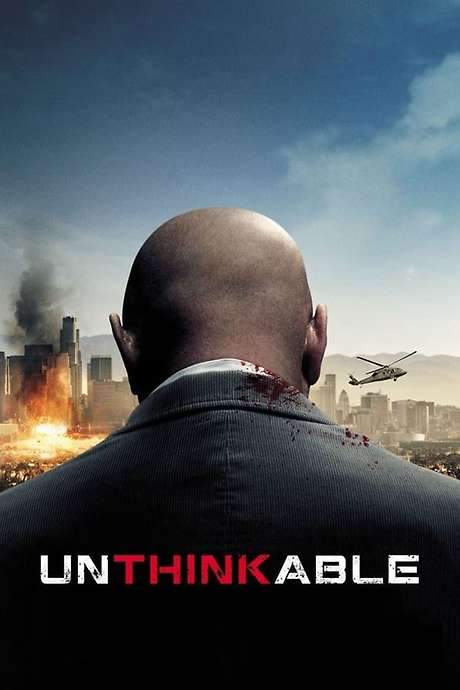
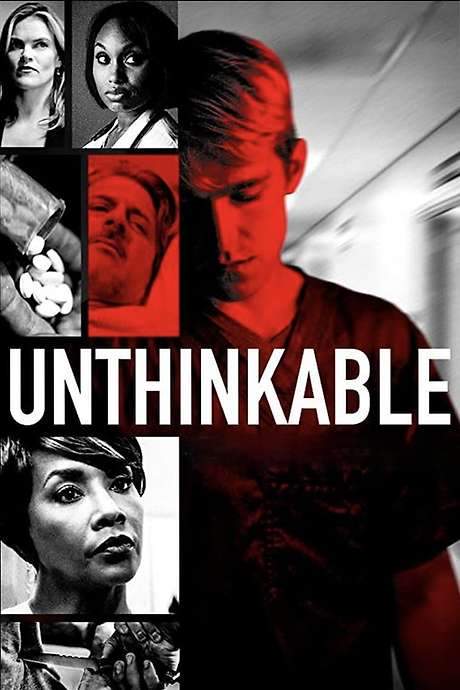
Unthinkable (2018) movie poster

Plot Summary

Unthinkable (2018) Plot Summary Explained

Release, runtime and language
2018 · 88 mins · English
Echo score 53
Loading streaming availability…
Starring
Mark Moses, Vivica A. Fox, Missi Pyle, Tanner Anderson, Katalina Viteri, Natalija Nogulich

A medical student is assigned to care for the former US ambassador to Syria, only to discover the profound suffering caused by a past attack and the dark secrets it unleashed. As he delves deeper, he becomes entangled in a complex conspiracy that surpasses his understanding and threatens to expose long-buried truths.

On this page (6)
  1. 1 Where to watch
  2. 2 What happens: full plot
  3. 3 Plot questions answered
  4. 4 Movie threads
  5. 5 Categories
  6. 6 Every angle
Loading streaming availability…

Full plot summary · contains spoilers

What Happens in Unthinkable: Full Plot Summary

The whole story of Unthinkable (2018) explained, from the opening scene to the final frame: every key event, every twist and what it all adds up to. Read it as a quick recap before the sequel, to check a scene you missed, or to finally understand what really happened.

An American former Delta Force operator, Steven Younger, records a videotape that triggers a tense crisis in Los Angeles as the FBI closes in on the truth behind his claim. The team is summoned to a high school that has been repurposed as a black-site holding Yusuf Mohamed, a man who insists he has placed three nuclear bombs in major U.S. cities. As investigators dissect the tape, they are forced to confront a chilling scenario: three devices scheduled to explode in synchrony unless their demands are met.

In the shadow of the crisis, an aggressive interrogator known simply as H is brought in to extract every possible detail about the bombs’ locations. He makes his intent brutally clear by severing one of Yusuf’s fingers, a move that leaves FBI supervisor [Saunders] unsettled and Helen Brody deeply troubled. Brody, however, finds herself torn between moral responsibility and the urgency of preventing mass casualties. The dynamic unfolds with her assuming the role of the good cop, attempting to counterbalance H’s relentless brutality. The tension escalates as the government’s core premise—“ten million deaths”—looms over every choice.

> "good cop"

Yusuf’s demands demand a political reversal: the President must publicly denounce support for puppet regimes and dictatorships in Muslim countries and announce a withdrawal of American troops from those regions. The team immediately rejects any notion of negotiating with terrorists, clinging to a policy built on non-negotiation with such actors, while the clock ticks toward catastrophe.

As the inquiry deepens, Yusuf reveals a disturbing ruse to test the moral fiber of the United States. He claims the bomb threat was a manipulation meant to provoke a response and to expose deep-seated flaws. He provides an address that appears to corroborate the fabrication, and the search leads them to a room matching the video—yet there is no bomb in sight. Then catastrophe strikes in another form: a soldier’s action—pulling Yusuf’s photo down—triggers a C-4 explosion at a nearby shopping mall, claiming the lives of 53 people. Brody’s outrage erupts as she confronts the brutal reality of what’s happened, and she confronts Yusuf directly, cutting his chest with a scalpel. Yusuf remains unfazed, arguing that the toll of American violence every day dwarfs any single act of terrorism.

The moral line between capture and coercion widens when Yusuf’s wife and children are detained. In a chilling sequence, H brings Yusuf’s wife before him and threatens to mutilate her right there. Brody and the others step back in horror as H slashes her throat, and she bleeds out in front of Yusuf. He endures the horror without breaking, insisting that he will not harm his children, even as the threat of torture is levied to extract the bombs’ locations. Yusuf’s resolve reaches a breaking point when the two children are brought in; the interrogator warns that he will torment them if the locations aren’t disclosed. The group moves to protect the children, but the coercion continues to press on.

In a twist linked to the volume of missing nuclear material—roughly eighteen pounds reported missing, with about 4½ pounds required per device—the possibility of a fourth bomb looms large. H argues that Yusuf could have anticipated the torture and planted a fourth device as a contingency. The officials demand more extreme measures, including torture of the children, and Brody refuses to trade two innocent lives for millions of potential victims. The moral clash peaks as Yusuf, realizing the endgame, seizes an opportunity: he grabs the official’s pistol, pleads with Brody to take care of his children, and then ends his own life. The crisis resolves with Brody walking out of the building, carrying Yusuf’s children to safety—an ending that leaves a lasting, unsettling impression about the human cost of extreme tactics in the name of national security.

Dr. Sherry Cooper, Vivica A. Fox, lends a clinical perspective during the escalating emergency, while other key figures step into experimental roles within the room’s claustrophobic drama. The ensemble of professionals and the relentless pressure of time illuminate the fragility of ethics when lives hang in the balance, and the film closes on a stark note: the line between justice and revenge is thin, and sometimes the hardest choice is to protect the innocent at the cost of complicating one’s own sense of right and wrong.

In an intertwined chorus of voices, the film grounds its tension in a complex network of individuals—Carrie Ingall, Dr. Brooks, Lucy Clark, Alana Williams, Mr. Joseph Stone, Ambassador Chris Williams, Miles Berg, Pharmacist Nilsson, Dr. Julien Drugov, Dr. Leigh Waters, and Jones Berg. Each name, a thread in a tapestry of fear, duty, and the uneasy ethics of interrogation.
Last updated: October 01, 2025 at 13:05

Was this helpful?

Plot questions answered

Unthinkable Plot Explained: Your Questions Answered

The questions people ask most about Unthinkable (2018): what happens in the confusing scenes, why the characters do what they do, the twists, hidden details and what the ending means. Each answer contains spoilers.

Q1

Why does Yusuf set up the bomb threat in the movie?

Yusuf (actually Steven Younger, a former Delta Force operator) creates the elaborate bomb threat as a test of America's moral character. He wants to expose what he sees as hypocrisy in U.S. foreign policy by forcing the government to choose between negotiating with terrorists or risking millions of civilian deaths. His demands require the President to publicly denounce support for puppet regimes and withdraw American troops from Muslim countries.

Foreshadowing: The videotape he records serves as the initial provocation that draws the FBI into his calculated scenario.

  • yusuf
  • motivation
  • bomb threat
  • steven younger
  • test america
Q2

How does the mall explosion happen in the movie?

When a soldier pulls down Yusuf's photo from the wall in the black site, it triggers a remotely detonated C-4 explosion at a nearby shopping mall. The device was hidden inside the photo itself. This explosion kills 53 people, proving that Yusuf's threat was not entirely a bluff and that he has active devices capable of causing mass casualties.

Foreshadowing: Yusuf's demands and the synchronized timer shown in his tape hint at his ability to trigger events remotely.

  • mall explosion
  • c-4
  • photo
  • 53 deaths
  • detonation
Q3

What happens to Yusuf's wife in the movie?

Yusuf's wife and children are detained by the authorities as leverage. H, the brutal interrogator, brings Yusuf's wife into the interrogation room and threatens to mutilate her in front of him. When this fails to break Yusuf, H slashes her throat and she bleeds out in front of her husband. This horrific act represents the extreme tactics employed to extract bomb locations.

Foreshadowing: Earlier, H demonstrates his ruthlessness by severing one of Yusuf's fingers, establishing his willingness to use extreme violence.

  • yusuf wife killed
  • torture
  • h interrogator
  • brutality
Q4

Is there a fourth bomb in the movie?

The film suggests the possibility but never confirms it. H points out that roughly eighteen pounds of nuclear material was reported missing, and about 4½ pounds is required per device. Since Yusuf claimed three bombs, this raises the possibility of a fourth device he might have planted as a contingency. The threat of this fourth bomb is used to justify escalating torture methods, but it remains unverified.

Foreshadowing: The missing nuclear material is introduced early in the investigation as a plot detail.

  • fourth bomb
  • nuclear material
  • missing
  • 18 pounds
  • contingency
Q5

Why does Yusuf kill himself at the end?

When officials pressure H to torture Yusuf's children to extract information about the supposed fourth bomb, Yusuf sees an opportunity to end the cycle of violence. He grabs an official's pistol, pleads with Brody to take care of his children, and then shoots himself. His suicide prevents further torture of his children and removes any leverage the interrogators had, allowing Brody to escort the children to safety.

Foreshadowing: Throughout the film, Yusuf demonstrates unwavering commitment to protecting his children even under extreme duress.

  • yusuf suicide
  • children
  • end game
  • self sacrifice
Q6

What are Yusuf's demands in the movie?

Yusuf demands two things: the President must publicly denounce support for puppet regimes and dictatorships in Muslim countries, and the U.S. must announce a complete withdrawal of American troops from those regions. These political demands frame his attack as ideological warfare rather than simple terrorism, meant to expose flaws in American foreign policy.

Foreshadowing: The tape Yusuf records contains his demands, which are revealed as the team analyzes his message.

  • demands
  • president
  • withdrawal troops
  • muslim countries
  • political
Q7

Why doesn't the FBI negotiate with Yusuf?

The FBI and government officials refuse to negotiate based on long-standing U.S. policy of not making concessions to terrorists. They argue that giving in to Yusuf's demands would set a dangerous precedent and encourage future attacks. However, the film questions whether this rigid stance leads to worse outcomes, as the death toll from the mall explosion and subsequent violence might have been prevented.

Foreshadowing: Saunders argues that the potential "ten million deaths" justify any means necessary to extract information.

  • negotiate
  • fbi policy
  • terrorists
  • no concessions
Q8

Why is Brody conflicted about the interrogation?

Brody is torn between her moral responsibility to prevent mass casualties and her horror at the brutal methods being used. While she initially tries to be the "good cop" to counterbalance H's violence, she becomes increasingly disturbed as the interrogation escalates, particularly when she cuts Yusuf's chest with a scalpel in anger after the mall massacre, and when she witnesses Yusuf's wife being killed. She ultimately refuses to allow the torture of children, choosing to protect the innocent over pursuing the bomb locations.

Foreshadowing: Brody's discomfort with H's methods is established early when she becomes visibly unsettled by his finger-severing tactic.

  • brody
  • moral conflict
  • torture
  • ethics
  • children
Q9

Was the bomb threat real or a ruse in the movie?

Yusuf admits the bomb threat was partially a ruse designed to test America's response and expose moral flaws. He provides an address that leads authorities to a room matching the video, but with no actual bomb present. However, the mall explosion proves he does have active explosive devices. The film leaves ambiguous whether any nuclear weapons were ever real, focusing instead on the psychological and moral warfare at play.

Foreshadowing: Yusuf's initial calm demeanor and willingness to provide information hint at his manipulation.

  • ruse
  • no bomb
  • nuclear
  • manipulation
  • test
Q10

What does the ending of the movie mean?

The ending is bittersweet: the immediate nuclear threat is resolved without catastrophe, and Brody successfully saves Yusuf's two children. However, this comes at the cost of multiple innocent lives (53 in the mall, Yusuf's wife), and Brody is left morally compromised, having participated in torture and violence she previously opposed. The film closes with a stark message about the ethical costs of extreme tactics in the name of national security, leaving the line between justice and revenge uncomfortably blurred.

Foreshadowing: The buildup of moral compromises throughout the film culminates in Brody walking away with the children, physically safe but emotionally shattered.

  • ending
  • bittersweet
  • children saved
  • ethics
  • moral compromise

Movie threads

More Movies Like Unthinkable, by Mood & Story

Curated lists built around what makes Unthinkable tick: the same mood, the same kind of story or the same emotional payoff. Each list explains why these movies belong together.

Ticking Clock Moral Dilemmas like in Unthinkable

High-stakes thrillers where the pressure of time forces brutal ethical choices. This section features movies like Unthinkable, where a race against time creates an intense moral crucible. If you enjoy similar high-stakes thrillers with urgent pacing and heavy ethical quandaries, you'll find gripping stories that push characters to their limits.

  • urgent
  • anxious
  • morally ambiguous
  • high-stakes
  • unsettling
  • claustrophobic
  • Tone: tense, morally ambiguous, unsettling
  • Pacing: fast, urgent, relentless
Why these movies?

The story pattern: The narrative is built around a countdown to a disaster, which accelerates the plot and narrows the options for the protagonists. The central conflict is not just external but deeply internal, as characters debate the cost of their actions and are often permanently scarred by the compromises they make.

Why they belong together: Movies are grouped here based on their intense pacing, immediate high stakes, and the central theme of a profound moral dilemma. They share a tense, anxious tone and leave the viewer wrestling with difficult questions long after the credits roll.

Claustrophobic Conspiracy Thrillers like Unthinkable

Stories where unraveling a secret trap closes in on the protagonist physically and psychologically. Find movies similar to Unthinkable that trap you in an oppressive atmosphere of secrets and lies. If you liked the feeling of being drawn into a dark, complex plot that feels both urgent and inescapable, explore these intense and unsettling conspiracy thrillers.

  • claustrophobic
  • paranoid
  • conspiracy
  • unsettling
  • urgent
  • anxious
  • Tone: oppressive, tense, paranoid
  • Pacing: fast, building tension
Why these movies?

The story pattern: The plot typically follows an investigator or ordinary person who is pulled into a hidden world of power and deceit. As they dig deeper, the walls—both literal and metaphorical—close in, escalating the danger and paranoia. The narrative complexity stems from peeling back layers of the conspiracy, often revealing that trusted figures are involved.

Why they belong together: These films share a distinct mood of claustrophobia and paranoia, combined with a plot-driven exploration of a hidden conspiracy. The viewing experience is defined by an oppressive, anxious tone and a steady-to-fast pacing that builds relentless tension as the truth is uncovered.

Categories

Movie Lists Featuring Unthinkable

Unthinkable appears in these hand-built movie categories. Each one groups movies by a specific mood, theme or story type, with their plot summaries and endings explained.

View all movie categories

Every angle

Unthinkable (2018) Explained: Plot, Timeline & Characters

Everything about Unthinkable in one place: what happens in the plot summary, the timeline in chronological order, the characters and meaning and a spoiler-free summary. What's After the Movie adds the cast, box office and post-credit scenes.

Coming soon on iOS and Android

The Plot Explained Movie Summary App

Plot summaries, endings explained and timelines on your phone. Catch up on any movie in minutes, save your favorites and never miss a twist again.

Be the first to know when we launch. Your email stays private, always.

Learn more about the app