Plot Explained Spoilers guaranteed!
Plot Explained

Browse by genre

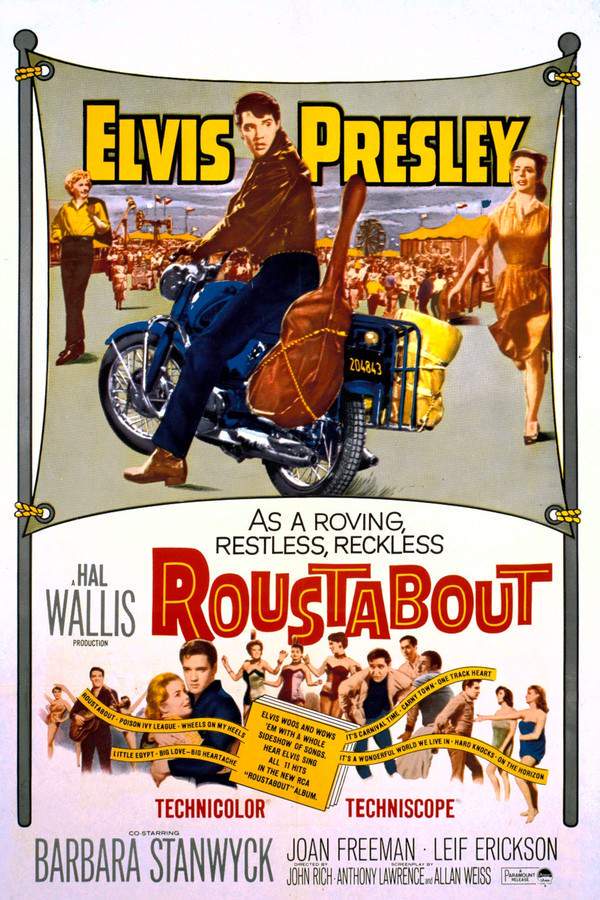
Roustabout (1964) movie poster

Plot Summary

Roustabout (1964) Plot Summary Explained

Release, runtime and language
1964 · 101 min · English
Directed by
John Rich
Starring
Steve Brodie, Barbara Stanwyck, Elvis Presley, Sue Ane Langdon, Pat Buttram, Dabbs Greer

A charismatic singer named Charlie Rogers, portrayed by Elvis Presley, experiences a setback that leaves him without a job. He then joins a traveling carnival, where his soulful voice revitalizes its performers and struggling acts. While finding a sense of belonging, Charlie becomes entangled in romantic complications that threaten the carnival's fragile unity and force him to confront personal challenges along the way.

On this page (6)
  1. 1 Where to watch
  2. 2 What happens: full plot
  3. 3 Plot questions answered
  4. 4 Movie threads
  5. 5 Movies like Roustabout
  6. 6 Every angle

Where to watch

Where to Watch Roustabout (1964)

Where can you watch Roustabout? Stream, rent or buy it in the US, including on Paramount Plus Essential, Paramount Plus Premium and Amazon Video: current JustWatch availability with up-to-date prices.

Streaming availability powered by JustWatch

Full plot summary · contains spoilers

What Happens in Roustabout: Full Plot Summary

The whole story of Roustabout (1964) explained, from the opening scene to the final frame: every key event, every twist and what it all adds up to. Read it as a quick recap before the sequel, to check a scene you missed, or to finally understand what really happened.

Charlie Rogers is a charismatic singer who lights up a busy California restaurant with his performances, drawing cheering crowds and a spotlight that glitters as brightly as his smile. The energy is high, the nights are sold out, and the atmosphere hums with the rhythm of a life built on showmanship. Yet beneath the applause, trouble brews: a group of excited female students draw fire from their jealous male companions, and what begins as a festive atmosphere soon spirals into danger. After the final bow, a tense confrontation spills into the parking lot, and Charlie finds himself fired and briefly arrested, the consequences of a momentary flare of conflict.

After a night in jail, Charlie climbs back into life on the road, riding his Honda 305 Superhawk toward a new horizon. He spots Cathy Lean in a car driven by her father, Joe, accompanied by their employer, Maggie Morgan. A chance encounter becomes a turning point: when Charlie reaches out in friendliness, Joe swerves his bike off the road, sending the machine crashing into a wooden fence and leaving Charlie stranded. Yet fate has a different plan. Maggie offers him shelter and a job with her struggling traveling carnival while the bike is repaired, and Charlie steps into the life of a carnie, learning the ropes as a roustabout.

Recognizing his musical talent, Maggie promotes him to become a feature attraction, and Charlie’s presence begins to draw bigger crowds to the carnival. His growing popularity coincides with a blossoming romance with Cathy, a development that sparks ongoing friction with Joe, who views Charlie as an outsider intruding into his family’s world. The tensions widen when a patron loses his wallet and accuses Joe of theft; Charlie eventually locates the wallet, but is then suspected of withholding a customer’s property that Joe was accused of stealing, further complicating loyalties and trust.

As Charlie arrives at a fork in the road, he is lured away by Harry Carver, drawn into a more glamorous and successful show. The new venture brings a string of triumphs and applause, confirming his star power and the appeal of his performances. Yet the allure of bigger stages never fully satisfies the pull of home. When Maggie faces bankruptcy, Charlie makes a decisive return, reviving the carnival with the energy that only he can bring and restoring the crowd’s heartbeat. Joe lands another swing at him, and Charlie defends himself, a confrontation that puts Maggie in a position to ask for the truth behind his return. With honesty at last, Charlie reveals that he came back not only to save the carnival but also because his heart longs for Cathy.

The finale crescendos into a musical celebration where love, loyalty, and a shared dream bring everyone back together. Charlie and Cathy are finally united, their bond shining through the applause as the carnival roars back to life, its lights sparkling against the night as a testament to perseverance, passion, and the power of choosing a path that aligns with the people you love.

Last updated: November 22, 2025 at 15:58

Was this helpful?

Plot questions answered

Roustabout Plot Explained: Your Questions Answered

The questions people ask most about Roustabout (1964): what happens in the confusing scenes, why the characters do what they do, the twists, hidden details and what the ending means. Each answer contains spoilers.

Q1

Why did Charlie get fired from the restaurant?

Charlie was fired after a brawl broke out in the parking lot. His energetic performances at the restaurant had drawn a crowd of female students whose male companions became jealous. The tension escalated into a physical confrontation that ended with Charlie's arrest, leading his employer to terminate his job.

Foreshadowing: The jealousy sparked by his popularity with female customers hinted at the romantic complications to come.

  • charlie rogers
  • fired
  • restaurant
  • brawl
  • arrested
Q2

Why did Joe crash Charlie's bike?

Joe deliberately swerved Charlie's bike off the road because he was protective of his daughter Cathy and viewed Charlie as an unwanted outsider. When Charlie reached out in friendliness during their chance meeting on the road, Joe responded by causing the crash that destroyed the motorcycle.

Foreshadowing: Joe's immediate hostility foreshadowed the ongoing conflict between him and Charlie throughout the story.

  • joe lean
  • crash
  • bike
  • catherine
  • protectiveness
Q3

How did Charlie become a featured attraction at the carnival?

After Maggie offered Charlie a job with her struggling carnival, she recognized his musical talent and promoted him from roustabout to featured attraction. His singing drew larger crowds and revitalized the carnival's failing shows, transforming it into a successful enterprise.

Foreshadowing: Maggie noticed his talent early and hinted at giving him a bigger role shortly after his arrival.

  • maggie morgan
  • featured attraction
  • promotion
  • talent
Q4

Why was Charlie suspected of hiding the wallet?

A patron lost his wallet and initially accused Joe of theft. Charlie later found the wallet but was wrongly accused of withholding it from the customer while trying to defend Joe. The misunderstanding created suspicion around Charlie's integrity and further strained his relationship with Joe.

Foreshadowing: The false accusation tested loyalties and showed how easily trust could be manipulated.

  • wallet
  • accusation
  • joe lean
  • theft
  • misunderstanding
Q5

Why did Charlie leave Maggie's carnival for Harry Carver?

Harry Carver lured Charlie away with the promise of a more glamorous and successful show. Despite his growing success at Maggie's carnival, Charlie was tempted by bigger stages and the recognition that came with Carver's operation, leading him to make a difficult departure.

Foreshadowing: The temptation of bigger opportunities was foreshadowed by Charlie's rapid rise in popularity.

  • harry carver
  • left carnival
  • temptation
  • bigger show
Q6

Why did Charlie return to save Maggie's carnival?

Charlie returned for two reasons: he learned that Maggie's carnival was facing bankruptcy and he wanted to help save it, but more importantly, he realized his heart belonged to Cathy. His return demonstrated his growth from a self-interested performer to someone who valued loyalty and love.
Foreshadowing: Earlier hints of his feelings for Cathy suggested his attachment to the carnival went beyond just a job.

  • return
  • bankruptcy
  • catherine
  • love
  • loyalty
Q7

Why was Joe so hostile toward Charlie throughout the movie?

Joe viewed Charlie as an outsider who was romantically pursuing his daughter Cathy. His protective nature and suspicion of outsiders made him hostile from the moment Charlie entered their lives, leading to ongoing conflict that culminated in multiple confrontations.

Foreshadowing: Joe's immediate bike crash reaction set the tone for his persistent antagonism.

  • joe lean
  • hostility
  • catherine
  • father
  • protective
Q8

What finally brought Charlie and Cathy together at the end?

Charlie publicly confessed his love for Cathy during his confrontation with Maggie, explaining that he had returned not just to save the carnival but because he genuinely loved her. This honest confession, combined with his actions to restore the carnival, convinced everyone of his sincerity and led to their reunion.

Foreshadowing: The buildup of their romance throughout the film made the confession a natural climax.

  • catherine
  • confession
  • love
  • reunion
  • finale
Q9

How was the carnival saved from bankruptcy?

Charlie's return was the key to saving Maggie's carnival. His star power and popular performances drew crowds back, revitalizing the failing business. The combined effort of his talent and the team's renewed hope transformed the carnival's fortunes.

Foreshadowing: Charlie's earlier success as a featured attraction hinted at his ability to revive the crowds.

  • bankruptcy
  • revival
  • carnival
  • crowds
  • saved

Movie threads

More Movies Like Roustabout, by Mood & Story

Curated lists built around what makes Roustabout tick: the same mood, the same kind of story or the same emotional payoff. Each list explains why these movies belong together.

Movies about charismatic performers finding redemption like Roustabout

Stories where talented outcasts find purpose and community through their art. If you enjoyed Elvis Presley's journey in Roustabout, you'll like these movies about talented singers, dancers, or actors who find a second chance. These stories blend music, romantic tension, and a hopeful tone, focusing on personal growth and finding a place to belong through performance.

  • charismatic
  • redemptive
  • upbeat
  • nostalgic
  • sentimental
  • community
  • Tone: hopeful, sentimental
  • Pacing: steady, character-driven
Why these movies?

The story pattern: The narrative follows a skilled but displaced performer who experiences a professional or personal setback. They are drawn into a new, often struggling, community where their talent becomes a catalyst for revival. External temptations and internal conflicts test their loyalty, but a final choice solidifies their redemption and integration into their found family.

Why they belong together: Movies are grouped here for their shared focus on a charismatic artist's redemptive arc, set against a backdrop of music or performance. They share a hopeful, optimistic tone where personal challenges are overcome, leading to a happy ending that celebrates community and artistic expression.

Movies about found family in traveling shows like Roustabout

Heartwarming tales of misfits bonding and thriving in a nomadic world. Fans of the carnival family in Roustabout will enjoy these movies about traveling communities. These films capture the unique bond between performers and crew on the road, blending drama, romance, and a strong sense of optimism as they work together to save their show and their home.

  • found family
  • community
  • nostalgic
  • upbeat
  • traveling show
  • sentimental
  • Tone: hopeful, nostalgic
  • Pacing: steady, episodic
Why these movies?

The story pattern: The narrative is set within a mobile, often financially precarious, community of entertainers. A newcomer arrives, sometimes reluctantly, and is gradually assimilated into the group. A central conflict—often financial ruin or internal discord—threatens to break them apart, but their collective effort and loyalty ultimately prevail, reinforcing their identity as a chosen family.

Why they belong together: These movies are united by their distinctive setting and theme of found family. They share an upbeat, community-oriented mood where the success of the group is paramount. The tone is generally hopeful, focusing on unity and perseverance, with a steady pace that allows the audience to connect with the ensemble cast.

If you liked this

Movies Like Roustabout

Similar movies to Roustabout: the same genre, themes or kind of story. Each one comes with its own plot summary, timeline and ending explained.

Browse all movie summaries

Every angle

Roustabout (1964) Explained: Plot, Timeline & Characters

Everything about Roustabout in one place: what happens in the plot summary, the timeline in chronological order, the characters and meaning and a spoiler-free summary. What's After the Movie adds the cast, box office and post-credit scenes.

Coming soon on iOS and Android

The Plot Explained Movie Summary App

Plot summaries, endings explained and timelines on your phone. Catch up on any movie in minutes, save your favorites and never miss a twist again.

Be the first to know when we launch. Your email stays private, always.

Learn more about the app