Plot Explained Spoilers guaranteed!
Plot Explained

Browse by genre

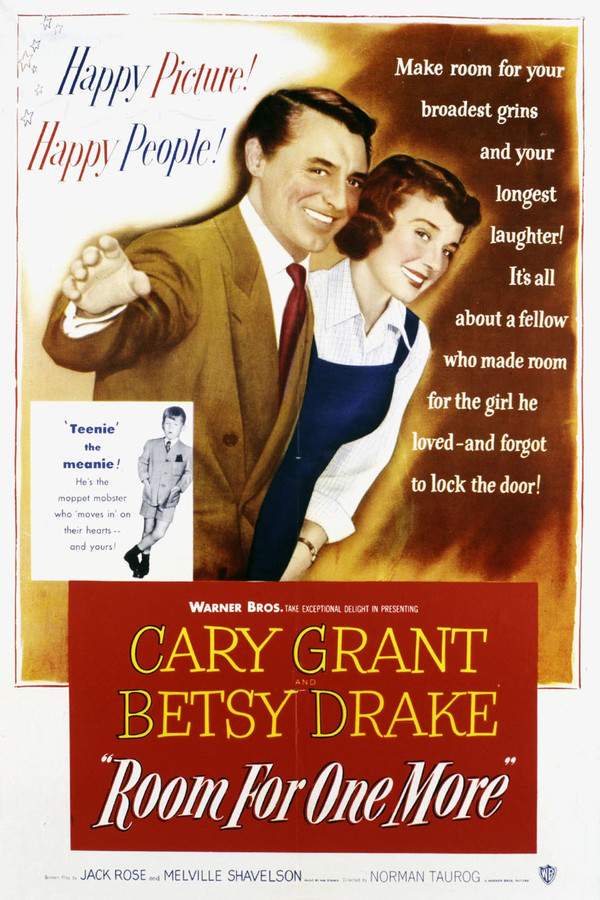
Room for One More (1952) movie poster

Characters & Themes

Room for One More (1952) Characters, Setting & Themes Explained

Release, runtime and language
1952 · 98 min · English
Loading streaming availability…
Directed by
Norman Taurog
Starring
Irving Bacon, Cary Grant, Randy Stuart, Lurene Tuttle, John Ridgely, Betsy Drake

A loving family offers a home to two young people facing difficult circumstances. The Rose family welcomes Jane, a withdrawn girl battling depression, and Jimmy, a spirited boy dealing with physical challenges. Through love, patience, and understanding, the Roses help Jane and Jimmy confront their struggles, discover their strengths, and ultimately find hope for a brighter future, creating a heartwarming story about family and resilience.

On this page (7)
  1. 1 Where to watch
  2. 2 Characters explained (4)
  3. 3 Where & when it takes place
  4. 4 Themes & meaning (3)
  5. 5 Character & meaning questions
  6. 6 Movie threads
  7. 7 Every angle
Loading streaming availability…

4 main characters · contains spoilers

Room for One More Characters Explained: Who Is Who

The main characters of Room for One More (1952), heroes and villains: what drives them, how they change over the course of the story and what each of them reveals about the film's bigger ideas.

  • Anna Rose

    A compassionate woman who seeks to provide love and stability to children in need. Her empathetic nature drives her to welcome Jane and Jimmy-John into her family, even when faced with challenges. Anna's nurturing instincts reflect her dedication to family and her ability to connect deeply with those around her.

    • 👩‍👧‍👦 Mother
    • 👐 Compassionate
    • 💖 Nurturing
  • George 'Poppy' Rose

    Anna's devoted husband, characterized by his warm heart and supportive demeanor. Poppy shows a keen interest in nurturing their children and understanding their struggles. His solution-oriented approach enables him to embrace new challenges within the household with love and patience.

    • 👨‍👧‍👦 Father
    • 💪 Supportive
    • 🛠️ Engineer
  • Jane

    A resilient 13-year-old girl who has faced numerous hardships before finding a home with the Roses. Initially hesitant, Jane gradually forms bonds with her new family, uncovering her potential for happiness and belonging. Her character illuminates the journey of healing and trust as she adapts to her loving environment.

    • 👧 Orphan
    • 🌟 Resilient
    • 💔 Troubled
  • Jimmy-John

    A 12-year-old boy grappling with physical and emotional challenges. His struggle manifests in his reluctance to accept help, yet through the Roses, he learns to channel his pain into growth. Jimmy-John's journey reflects the healing power of family and community as he discovers his place in the world.

    • 👦 Troubled
    • 🌈 Transformative
    • 🦋 Vulnerable

Last updated: October 22, 2024 at 23:19

Was this helpful?

Setting

Where and When Does Room for One More Take Place?

The setting of Room for One More (1952): the year and time period, the places and locations, and how they shape the characters, the mood and the tension of the story.

Time period

The events seem to take place in a warm and welcoming period characterized by family values and community support. The film explores themes of parental guidance and youth development, focusing on personal growth during the childhood and teenage years.

Location

An orphanage, a bustling household, grade school

The story revolves around various settings, including an orphanage where Anna encounters many children in need of nurturing. The bustling household of the Rose family is filled with love and challenges as they integrate new members into their home. Grade school plays a significant role in the children's social development, serving as a backdrop for events like dance parties and scouting activities.

  • 🏠 Home
  • 🎒 School
  • 🏕️ Orphanage

Last updated: October 22, 2024 at 23:19

Was this helpful?

3 major themes

Room for One More Meaning: Themes & Message Explained

What is Room for One More (1952) really about? The emotional, social and philosophical themes the film keeps returning to, its symbolism and the message beneath the surface.

  • Family

    The theme of family is central to the film, showcasing the importance of love and inclusion within a home. Anna and Poppy's open-heartedness exemplifies how fostering connections can transform lives. As children like Jane and Jimmy-John find their place in the Rose family, they learn invaluable lessons about acceptance and belonging.

  • Growth

    Personal growth is a key theme, particularly through the character arcs of Jane and Jimmy-John. Their journeys through adversity highlight the potential for transformation when given love and support. As they navigate challenges and forge new relationships, they discover new strengths within themselves, leading to remarkable development.

  • Friendship

    Friendship is portrayed as a source of solace and strength for the characters. Jane's evolving relationships with her new siblings and Jimmy-John's bond with Tim demonstrate the power of camaraderie in overcoming personal struggles. The film highlights that true friendship often develops through shared experiences and mutual support.

Last updated: October 22, 2024 at 23:19

Was this helpful?

Character & theme questions

Room for One More Characters & Meaning: Your Questions Answered

The questions people ask about Room for One More (1952): who the characters really are, their relationships, what the symbols mean, where it takes place and what the movie is really about. Each answer contains spoilers.

Q1

Where does the story take place?

The movie is set primarily in a bustling household belonging to the Rose family, with key scenes at a local grade school and an orphanage where Anna Rose encounters children in need. The home serves as the central setting where the children integrate into the family.

  • setting
  • locations
  • rose house
  • orphanage
  • school
Q2

What time period is the movie set in?

The movie takes place during a warm, mid-20th century period characterized by traditional family values and community support. While no specific year is given, the setting reflects an era when multi-child families and neighborhood community bonds were common.

  • time period
  • era
  • 1950s
  • setting context
Q3

What are the main themes of the movie?

The movie centers on three interconnected themes: family (the healing power of love and inclusion), growth (personal transformation through support), and friendship (the strength found in bonds with others). These themes weave together to show how a nurturing environment can help struggling children flourish.

  • themes
  • family
  • growth
  • friendship
  • meaning
Q4

What does the family theme represent in the story?

The family theme represents how open-heartedness and willingness to welcome others can transform lives. Anna and Poppy Rose exemplify how creating a loving, inclusive home gives children like Jane and Jimmy-John the security they need to heal and grow.

  • family theme
  • adoption
  • belonging
  • acceptance
Q5

How does the movie portray personal growth?

Personal growth is shown through Jane and Jimmy-John's arcs as they move from hardship to hope. Both children discover hidden strengths and forge new identities within the Rose family, demonstrating that love and patience can unlock remarkable transformation.

  • growth
  • transformation
  • personal development
  • healing
Q6

What role does friendship play in the movie?

Friendship serves as a source of solace and strength, particularly in Jane's relationships with her new siblings and Jimmy-John's bond with Tim. The movie shows how shared experiences and mutual support help children overcome personal struggles.

  • friendship
  • companionship
  • peer bonds
Q7

Who is Anna Rose and what is her role?

Anna Rose is the compassionate matriarch who seeks to provide love and stability to children in need. Her nurturing instincts and empathetic nature drive her to welcome Jane and Jimmy-John into her family, even when facing challenges.

  • anna rose
  • mother
  • caretaker
  • protagonist
Q8

Who is Poppy Rose and what motivates him?

George 'Poppy' Rose is Anna's devoted husband, characterized by his warm heart and supportive demeanor. He embraces the challenge of integrating new children into the household with love and patience, taking a solution-oriented approach to family dynamics.

  • poppy rose
  • father
  • husband
  • supportive
Q9

What challenges does Jane face in the movie?

Jane is a 13-year-old girl who has faced numerous hardships before arriving at the Rose family. She battles depression and initially struggles with trust, but gradually opens up to form bonds with her new family as she discovers her capacity for happiness and belonging.

  • jane
  • depression
  • struggle
  • trust
Q10

What challenges does Jimmy-John face?

Jimmy-John is a 12-year-old boy dealing with both physical and emotional challenges. His struggle manifests in resisting help, but through the Roses' support, he learns to channel his pain into growth and discovers his place within the family.

  • jimmy john
  • physical challenges
  • emotional struggle
Q11

What is the tone of the movie?

The movie has a hopeful and uplifting tone despite addressing serious topics like childhood depression and physical disability. The narrative balances these heavy themes with unwavering family support and positive resolutions, creating a comforting rather than depressing experience.

  • tone
  • mood
  • hopeful
  • emotional tone
Q12

How does the movie handle serious topics like depression?

The movie approaches serious topics like depression and disability with a positive, nurturing framework rather than dwelling on hardship. The children's difficult pasts are acknowledged but the focus remains on healing, growth, and successful resolution through family love.

  • depression
  • disability
  • sensitive topics
  • handling

Movie threads

More Movies Like Room for One More, by Mood & Story

Curated lists built around what makes Room for One More tick: the same mood, the same kind of story or the same emotional payoff. Each list explains why these movies belong together.

Found Family Dramas like Room for One More

Stories of welcoming families providing solace and growth for troubled youth. Discover movies like Room for One More, featuring compassionate stories of families who welcome foster children or troubled youth. If you enjoyed the themes of healing, resilience, and the creation of a loving home, you'll find similar heartwarming films here.

  • heartwarming
  • uplifting
  • comforting
  • domestic
  • sentimental
  • hopeful
  • Tone: hopeful, heartwarming
  • Pacing: steady, character-driven
Why these movies?

The story pattern: These stories follow a linear path of integration, where initial resistance and emotional wounds are gradually soothed through consistent care. The central conflict is often internal, revolving around a character learning to trust and love again, leading to a clearly resolved, positive character arc within a supportive domestic setting.

Why they belong together: Movies in this thread share a core focus on the transformative power of a nurturing home. They balance serious themes of adversity with an overwhelmingly hopeful tone, steady pacing, and a comforting, low-intensity viewing experience centered on emotional healing.

Gentle Stories of Overcoming Adversity like Room for One More

Quiet, hopeful stories about personal growth against difficult odds. Explore movies similar to Room for One More that depict gentle, character-driven journeys of overcoming adversity. If you liked watching Jane and Jimmy confront their struggles with hope and support, you'll appreciate these uplifting and resilient narratives.

  • uplifting
  • resilient
  • hopeful
  • inspiring
  • sentimental
  • comforting
  • Tone: hopeful, uplifting
  • Pacing: steady, deliberate
Why these movies?

The story pattern: The narrative pattern involves a character grappling with a defined struggle, such as a disability, grief, or social isolation. The plot unfolds not through external action but through small, meaningful moments of progress, support from others, and internal realizations, culminating in a satisfying, earned sense of hope and accomplishment.

Why they belong together: This thread groups films that share a specific emotional mix: they acknowledge sadness and difficulty but frame them within a safe, supportive context. The experience is defined by a steady pace, medium emotional weight that doesn't overwhelm, and a consistently uplifting, hopeful outcome.

Every angle

Room for One More (1952) Explained: Plot, Timeline & Characters

Everything about Room for One More in one place: what happens in the plot summary, the timeline in chronological order, the characters and meaning and a spoiler-free summary. What's After the Movie adds the cast, box office and post-credit scenes.

Coming soon on iOS and Android

The Plot Explained Movie Summary App

Plot summaries, endings explained and timelines on your phone. Catch up on any movie in minutes, save your favorites and never miss a twist again.

Be the first to know when we launch. Your email stays private, always.

Learn more about the app