Year: 1980
Runtime: 90 mins
Language: Chinese
Director: Huang Zumo
Set in 1980, the story follows the daughter of a former Nationalist general who returns to the famed Lushan Mountain resort in Jiangxi. There she meets and falls in love with the son of a senior Chinese Communist Party general, confronting the legacies of their families.
Warning: spoilers below!
Haven’t seen Romance on Lushan Mountain yet? This summary contains major spoilers. Bookmark the page, watch the movie, and come back for the full breakdown. If you're ready, scroll on and relive the story!
Trace every key event in Romance on Lushan Mountain (1980) with our detailed, chronological timeline. Perfect for unpacking nonlinear stories, spotting hidden connections, and understanding how each scene builds toward the film’s climax. Whether you're revisiting or decoding for the first time, this timeline gives you the full picture.
Last updated: February 18, 2026 at 23:45
Find frequently asked questions about the Romance on Lushan Mountain (1980) timeline, including chronological order, nonlinear jumps, cause-and-effect links, and scene sequence clarifications. This timeline FAQ helps explain when key events happen, how moments connect, and why the story unfolds in that specific order.
Geng Hua was interrogated because of his frequent contact with Zhou Jun, who was the daughter of a former Nationalist general. During the late 1970s, when the Gang of Four held power, anyone with connections to国民党 (Nationalist) backgrounds was viewed with suspicion. Since Zhou Jun's father was a retired Kuomintang general, the authorities viewed Geng's relationship with her as politically risky, especially given that Geng's own father was a CCP officer already under political scrutiny.
The film establishes early that Geng's father is already under investigation, making any association with a Nationalist family particularly dangerous.
Zhou Jun returned to America because the political pressure became too intense. After Geng Hua was summoned for questioning due to his contact with her, she realized her presence was putting not only herself but also Geng Hua at risk. The political climate during the Gang of Four era made it dangerous for a Nationalist general's daughter to remain in close association with a Communist official's son. She left with a heavy heart, believing their romance had been extinguished by the political storm.
The Whampoa Military Academy connection was crucial because it revealed that Zhou Jun's father Zhou Zhenwu and Geng Hua's father Geng Feng had been classmates there in the 1930s-1940s. During the Chinese Civil War, they found themselves on opposite sides, Zhou remained with the Nationalists while Geng joined the Communists. This historical rivalry explained why Geng Feng initially opposed the marriage; he remembered Zhou Zhenwu as a political enemy from his past, making the union feel like a betrayal of his revolutionary principles.
The film hints at the fathers' shared history when Geng Hua presents the photo to his father, triggering recognition.
Geng Feng initially rejected Zhou Jun because he recognized her father Zhou Zhenwu as his former classmate from Whampoa Military Academy who had fought on the opposing side during the Chinese Civil War. Despite the fall of the Gang of Four, old political loyalties ran deep, and Geng Feng struggled to accept that his son would marry the daughter of a man he once considered a political rival. The rejection was rooted in historical wounds rather than anything personal against Zhou Jun herself.
The fall of the Gang of Four in 1976 fundamentally changed the political landscape and allowed their romance to flourish. During the Gang's rule, anyone with Nationalist connections was suspect, and Geng Hua had already been interrogated for his relationship with Zhou Jun. After their arrest, China's political climate liberalized, removing the immediate danger. This new environment gave Zhou Jun the confidence to return to China and seek out Geng Hua again, ultimately leading to their reunion and decision to marry.
The film shows the immediate threat to Geng Hua during the Gang of Four era, making their fall a clear turning point.
The reconciliation happened when Geng Feng recognized Zhou Zhenwu from their Whampoa Academy days. After the initial shock of this discovery, both elder statesmen, once rivals during the Civil War, met on Mount Lu and began to thaw their hostility. Rather than letting historical rivalries define the next generation, they chose dialogue and compromise, acknowledging that China's future depended on unity rather than continued division. This meeting paved the way for the two lovers to marry and symbolized broader national reconciliation.
Geng Hua's act of showing his father the photo directly triggers this recognition.
Geng Hua's father, as a CCP officer, was under investigation during the Gang of Four's rule because the Gang conducted purges within the Communist Party itself. The Gang of Four targeted many cadres, including those they considered insufficiently loyal or potentially disloyal. Being a senior military officer did not protect Geng Feng from suspicion, in fact, it made him a target. This political persecution cast a shadow over Geng Hua's life and made his relationship with Zhou Jun even more dangerous, as associating with a Nationalist general's daughter could be used as evidence against his father.
The timeline establishes early that Geng's father faces political trouble, adding tension to every interaction.
The marriage between Zhou Jun and Geng Hua represents more than just personal happiness, it symbolizes the reconciliation between the Nationalist and Communist sides of the Chinese Civil War. By uniting their families through marriage, the couple becomes a living metaphor for China's potential reunification. The story uses their personal romance to illustrate how old wounds can heal and how the younger generation can bridge divides that once seemed insurmountable. The epilogue explicitly frames their union as a hopeful symbol of national unity.
The earlier conflict between the fathers directly sets up this symbolic resolution.
When Geng Hua met Zhou Jun at Mount Lu, he was preparing for his college entrance examinations while accompanying his ailing mother for rehabilitation. His life represented the ordinary concerns of Chinese youth during that era, studying, caring for family, and navigating the transition between Mao-era politics and the emerging new China. This ordinary life contrasted sharply with the political storm surrounding his father, creating tension between his personal ambitions and the shadow of his family's political vulnerability.
The film establishes Geng's dual life of exam preparation and family duty early in their encounter.
Zhou Jun traveled to China from America to sightsee and reconnect with her homeland, which had just opened up after decades of political tension between the two countries. As the daughter of a Nationalist general who had relocated to America after the Civil War, she represented a generation of overseas Chinese seeking to understand their roots during the period of normalized relations. Her visit to Mount Lu was both personal (discovering her heritage) and historical (witnessing the changing China), setting the stage for her unexpected romance with Geng Hua.
Discover curated groups of movies connected by mood, themes, and story style. Browse collections built around emotion, atmosphere, and narrative focus to easily find films that match what you feel like watching right now.
Romantic connections tested by the weight of history and political divides.If you enjoyed the story of lovers from opposing sides of a historical conflict in Romance on Lushan Mountain, you'll find similar tales here. These films explore forbidden romance amidst political turmoil, where family legacies and cultural divides create poignant obstacles for the central relationship.
Movies in this thread typically follow a pattern of an unlikely romantic connection forming during or after a major historical conflict. The lovers' personal journey is intertwined with the broader political reconciliation of their families or societies. The narrative often moves from initial separation or tension caused by external forces towards a hopeful resolution that symbolizes a healing of old wounds.
These movies are grouped together because they share a core theme of love persevering against immense historical and political pressures. They balance a serious, reflective tone with a fundamentally hopeful outlook, creating a specific bittersweet yet uplifting emotional experience centered on enduring affection and reconciliation.
Stories of love rekindled after years of separation and longing.Fans of the hopeful, yearning reunion in Romance on Lushan Mountain will appreciate these films. They capture the specific feeling of lovers reuniting after a painful separation, blending melancholic reflection with the joy of reconnection in a steady, character-focused narrative.
The narrative pattern involves two characters reuniting after a significant time apart, forced by circumstances beyond their control. The story delves into the melancholic reflection on lost time and the lingering pain of separation, before pivoting to a hopeful second chance. The emotional arc is defined by patience, endurance, and the ultimate victory of love over time and adversity.
These films share a distinct emotional cocktail of yearning, nostalgia, and hopefulness. They are united by a bittersweet tone that acknowledges past pain while looking forward to a happier future, all delivered with a steady pacing that lets the characters' emotional journey resonate deeply with the viewer.
Don't stop at just watching - explore Romance on Lushan Mountain in full detail. From the complete plot summary and scene-by-scene timeline to character breakdowns, thematic analysis, and a deep dive into the ending - every page helps you truly understand what Romance on Lushan Mountain is all about. Plus, discover what's next after the movie.
Read a complete plot summary of Romance on Lushan Mountain, including all key story points, character arcs, and turning points. This in-depth recap is ideal for understanding the narrative structure or reviewing what happened in the movie.
Discover the characters, locations, and core themes that shape Romance on Lushan Mountain. Get insights into symbolic elements, setting significance, and deeper narrative meaning - ideal for thematic analysis and movie breakdowns.
Discover movies like Romance on Lushan Mountain that share similar genres, themes, and storytelling elements. Whether you’re drawn to the atmosphere, character arcs, or plot structure, these curated recommendations will help you explore more films you’ll love.
Romance on Lushan Mountain (1980) Plot Summary & Movie Recap
Romance on Lushan Mountain (1980) Scene-by-Scene Movie Timeline
Romance on Lushan Mountain (1980) Spoiler-Free Summary & Key Flow
Movies Like Romance on Lushan Mountain – Similar Titles You’ll Enjoy
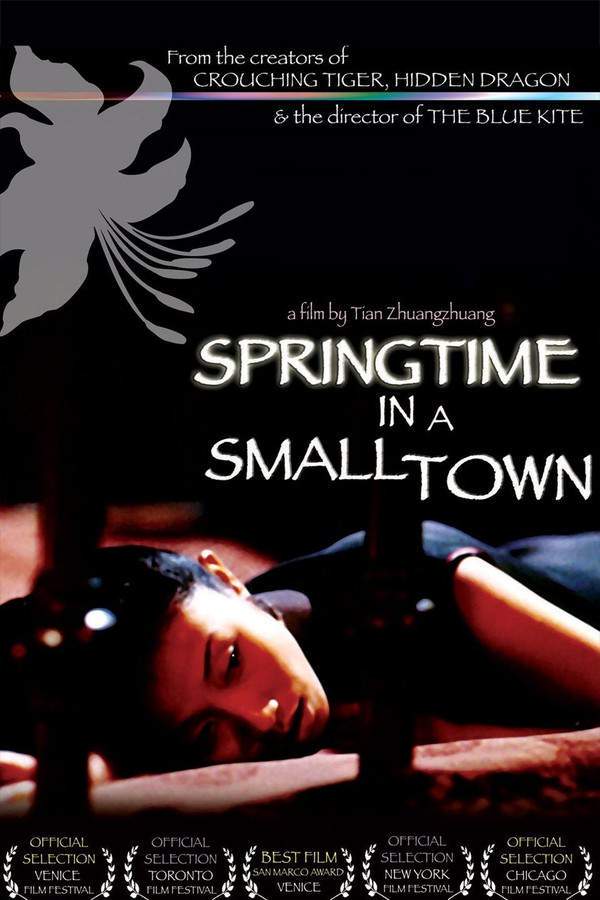
Springtime in a Small Town (2004) Full Summary & Key Details
The Moon Also Rises (2005) Full Summary & Key Details
The Chinese Botanist’s Daughters (2006) Story Summary & Characters
Love’s Lone Flower (2005) Story Summary & Characters
Legend of Tianyun Mountain (1980) Plot Summary & Ending Explained
The Romance of Tiger and Rose (1000) Movie Recap & Themes
Lost Romance (1000) Complete Plot Breakdown
First Romance (1000) Movie Recap & Themes
The Story Of Xi Bao (2020) Spoiler-Packed Plot Recap
Liang Shanbo and Zhu Yingtai (1954) Full Movie Breakdown
A Mountain Tale (1967) Movie Recap & Themes
Love and Duty (1931) Ending Explained & Film Insights
Sons of the Good Earth (1965) Movie Recap & Themes
Eighteen Springs (1997) Full Summary & Key Details
Wonderland of Love (1000) Film Overview & Timeline