Year: 1980
Runtime: 90 mins
Language: Chinese
Director: Huang Zumo
Set in 1980, the story follows the daughter of a former Nationalist general who returns to the famed Lushan Mountain resort in Jiangxi. There she meets and falls in love with the son of a senior Chinese Communist Party general, confronting the legacies of their families.
Warning: spoilers below!
Haven’t seen Romance on Lushan Mountain yet? This summary contains major spoilers. Bookmark the page, watch the movie, and come back for the full breakdown. If you're ready, scroll on and relive the story!
Explore the full timeline and setting of Romance on Lushan Mountain (1980). Follow every major event in chronological order and see how the environment shapes the story, characters, and dramatic tension.
Last updated: February 18, 2026 at 23:23
Meet the key characters of Romance on Lushan Mountain (1980), with detailed profiles, motivations, and roles in the plot. Understand their emotional journeys and what they reveal about the film’s deeper themes.
Last updated: February 18, 2026 at 23:23
Explore the central themes of Romance on Lushan Mountain (1980), from psychological, social, and emotional dimensions to philosophical messages. Understand what the film is really saying beneath the surface.
Last updated: February 18, 2026 at 23:23
Browse frequently asked questions about Romance on Lushan Mountain (1980) focused on characters, relationships, themes, symbols, setting, and story context. This movie info FAQ gives spoiler-aware explanations for character arcs, world details, and thematic interpretation so readers can better understand what the film is really about.
The film is set at Lushan Mountain (Mount Lu) in Jiangxi, China, a famous scenic mountain resort known for its lush peaks, ancient temples, and tranquil paths. This historically significant location serves as a backdrop for the romance between the two protagonists from opposing political backgrounds.
The story unfolds in the 1970s, during the aftermath of China's Cultural Revolution and the period following the fall of the Gang of Four. This era was marked by political tensions, factional struggles, and the early days of Sino-American diplomacy, all of which influence the characters' decisions and family loyalties.
The film explores love across political and ideological divides. It centers on a romance between the daughter of a former Kuomintang general and the son of a senior Communist Party general, testing personal autonomy against the weight of historical conflict. The story emphasizes choosing love when politics pull in opposite directions.
Family reconciliation is a central theme, as two generations with opposing loyalties gradually thaw and find common ground. The elder Zhou and Geng families confront past rivalries on Mount Lu, ultimately accepting the union between their children, symbolizing broader reconciliation between political factions.
The film is embedded in a turbulent political era, the Cultural Revolution, post-revolution shifts, and Sino-American diplomacy, which shapes character choices. Political investigations and official scrutiny intrude into private life, forcing characters to balance personal dreams with public duties and family expectations.
Zhou Jun is the daughter of Zhou Zhenwu, a retired Kuomintang general. She travels between America and mainland China and falls in love with Geng Hua. Her identity is tied to diaspora roots and a longing for homeland, making her a bridge between two worlds as she navigates duty, memory, and romantic desire.
Geng Hua is a young man preparing for his college entrance exams who becomes the romantic partner of Zhou Jun. He is the son of Geng Feng, a Chinese Communist Party officer under political investigation during the Cultural Revolution's aftermath. He faces pressure from political currents and cares deeply for his unwell mother.
Zhou Zhenwu is a retired Kuomintang general and the father of Zhou Jun. His past and connections create tension between old loyalties and new realities, as he weighs his daughter's happiness against political history and personal honor throughout the story.
Geng Feng is Geng Hua's father and a Chinese Communist Party officer who is under political investigation during the Cultural Revolution's aftermath. He seeks reunification and stability for his family despite political pressures, and his stance gradually shifts from suspicion to cautious openness.
Lushan Mountain serves as more than just a scenic backdrop, it represents a place of historical and cultural resonance where past conflicts can be confronted and healed. Its serene environment of misty scenery and quiet contemplation frames the romance and provides the setting for reunion and revelation between the two families.
The romance between Zhou Jun and Geng Hua is complicated by their families' opposing political backgrounds, her father a former Kuomintang general, his father a CCP officer under investigation. Political investigations, official scrutiny, and family loyalties create obstacles that test their relationship throughout the film.
The film has a predominantly bittersweet tone, stemming from the lovers' initial separation caused by political persecution and family history. However, it evolves toward hopefulness as historical wounds are healed. Despite hurdles, the narrative resolves with a happy ending that symbolizes reconciliation, balancing seriousness with optimism.
Discover curated groups of movies connected by mood, themes, and story style. Browse collections built around emotion, atmosphere, and narrative focus to easily find films that match what you feel like watching right now.
Romantic connections tested by the weight of history and political divides.If you enjoyed the story of lovers from opposing sides of a historical conflict in Romance on Lushan Mountain, you'll find similar tales here. These films explore forbidden romance amidst political turmoil, where family legacies and cultural divides create poignant obstacles for the central relationship.
Movies in this thread typically follow a pattern of an unlikely romantic connection forming during or after a major historical conflict. The lovers' personal journey is intertwined with the broader political reconciliation of their families or societies. The narrative often moves from initial separation or tension caused by external forces towards a hopeful resolution that symbolizes a healing of old wounds.
These movies are grouped together because they share a core theme of love persevering against immense historical and political pressures. They balance a serious, reflective tone with a fundamentally hopeful outlook, creating a specific bittersweet yet uplifting emotional experience centered on enduring affection and reconciliation.
Stories of love rekindled after years of separation and longing.Fans of the hopeful, yearning reunion in Romance on Lushan Mountain will appreciate these films. They capture the specific feeling of lovers reuniting after a painful separation, blending melancholic reflection with the joy of reconnection in a steady, character-focused narrative.
The narrative pattern involves two characters reuniting after a significant time apart, forced by circumstances beyond their control. The story delves into the melancholic reflection on lost time and the lingering pain of separation, before pivoting to a hopeful second chance. The emotional arc is defined by patience, endurance, and the ultimate victory of love over time and adversity.
These films share a distinct emotional cocktail of yearning, nostalgia, and hopefulness. They are united by a bittersweet tone that acknowledges past pain while looking forward to a happier future, all delivered with a steady pacing that lets the characters' emotional journey resonate deeply with the viewer.
Don't stop at just watching - explore Romance on Lushan Mountain in full detail. From the complete plot summary and scene-by-scene timeline to character breakdowns, thematic analysis, and a deep dive into the ending - every page helps you truly understand what Romance on Lushan Mountain is all about. Plus, discover what's next after the movie.
Read a complete plot summary of Romance on Lushan Mountain, including all key story points, character arcs, and turning points. This in-depth recap is ideal for understanding the narrative structure or reviewing what happened in the movie.
Track the full timeline of Romance on Lushan Mountain with every major event arranged chronologically. Perfect for decoding non-linear storytelling, flashbacks, or parallel narratives with a clear scene-by-scene breakdown.
Discover movies like Romance on Lushan Mountain that share similar genres, themes, and storytelling elements. Whether you’re drawn to the atmosphere, character arcs, or plot structure, these curated recommendations will help you explore more films you’ll love.
Romance on Lushan Mountain (1980) Plot Summary & Movie Recap
Romance on Lushan Mountain (1980) Scene-by-Scene Movie Timeline
Romance on Lushan Mountain (1980) Spoiler-Free Summary & Key Flow
Movies Like Romance on Lushan Mountain – Similar Titles You’ll Enjoy
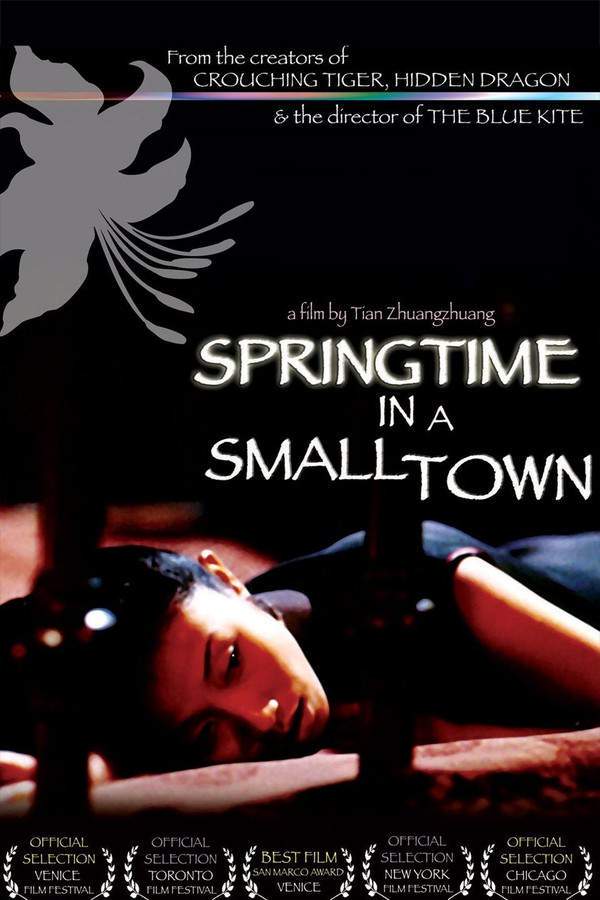
Springtime in a Small Town (2004) Plot Summary & Ending Explained
The Moon Also Rises (2005) Detailed Story Recap
The Chinese Botanist’s Daughters (2006) Full Summary & Key Details
Love’s Lone Flower (2005) Ending Explained & Film Insights
Legend of Tianyun Mountain (1980) Movie Recap & Themes
The Romance of Tiger and Rose (1000) Full Summary & Key Details
Lost Romance (1000) Full Movie Breakdown
First Romance (1000) Film Overview & Timeline
The Story Of Xi Bao (2020) Story Summary & Characters
Liang Shanbo and Zhu Yingtai (1954) Ending Explained & Film Insights
A Mountain Tale (1967) Full Movie Breakdown
Love and Duty (1931) Ending Explained & Film Insights
Sons of the Good Earth (1965) Movie Recap & Themes
Eighteen Springs (1997) Film Overview & Timeline
Wonderland of Love (1000) Full Movie Breakdown