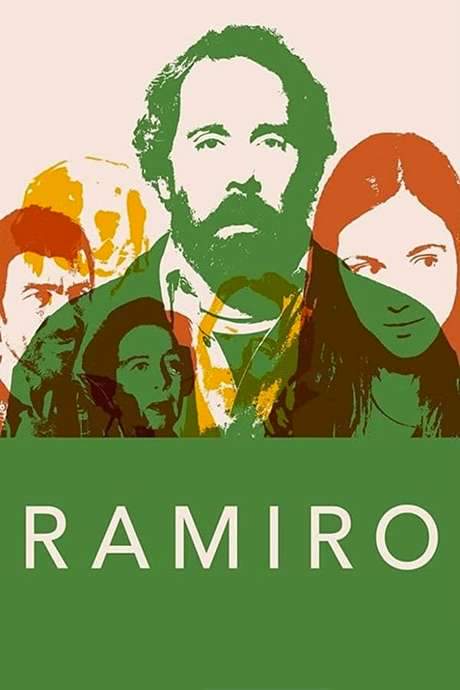
Year: 2017
Runtime: 104 mins
Language: Portuguese
Director: Manuel Mozos
Ramiro is a bookstore owner and poet living a quiet life in Lisbon, struggling with a creative block. His days are spent between his shop and a local tavern, sharing time with his dog, friends, and neighbors, including a pregnant teenager and her grandmother. Though content with his somewhat anachronistic routine, his peaceful existence is disrupted by unexpected events that shake up his world.
Warning: spoilers below!
Haven’t seen Ramiro yet? This summary contains major spoilers. Bookmark the page, watch the movie, and come back for the full breakdown. If you're ready, scroll on and relive the story!
Read the complete plot breakdown of Ramiro (2017), including all key story events, major twists, and the ending explained in detail. Discover what really happened, and what it all means.
Ramiro António Mortágua is a bookseller and a struggling writer in Lisbon. He clings to a quiet life, finding his rhythm in a modest used bookstore, a weekly stall at Lisbon’s Feira da Ladra flea market, and the familiar warmth of a corner bar where friends gather. His dog pads by his side, and his small world is kept steady by Patrícia Sofia Marques, a loyal friend who watches over him. He talks with his young neighbor, the pregnant orphan Daniela Madalena Almeida, and with her grandmother Amélia Fernanda Neves, who is still recovering from a stroke. The tone is intimate and observant, a portrait of a life that values texture, routine, and the quiet kindness of daily rituals.
Things begin to tilt when Grandma Amélia asks Ramiro to visit a man named Alfredo Vítor Correia in prison, a man who killed his wife. The encounter reveals a hidden thread: Alfredo is Daniela’s father. Ramiro set out to learn more about the case, drawn into a web of small testimonies and unresolved questions. At the same time, a publisher friend presses him to contribute to an anthology, and Ramiro, worn by writer’s block, agrees only reluctantly and without commitment. A teacher from Daniela’s world also approaches him, eager to understand Daniela’s situation; Ramiro explains simply that he is a neighbor and a friend, not the father, and that Daniela is an orphan who relies on care from those around her. The conversation leaves a trace, hinting at deeper responsibilities and fragile loyalties.
The story grows more tangled: Alfredo leaves prison and stays with Ramiro, intending to tell his daughter everything, but he never does. One of Ramiro’s old friends dies unexpectedly, a turning point that darkens the atmosphere. The dog grows more attached to Grandma Amélia than to Ramiro, and the neighborhood loses one of its constants when the local bar closes. In a harsher turn, two petty criminals ambush Ramiro on his way home, beating him and stealing his manuscript. The trilogy of blows—assault, betrayal, and the erosion of his daily rituals—drains Ramiro’s energy and broadens the rift between him and his girlfriend, while also straining his already fragile friendship and sense of purpose. To make matters heavier, his dog dies, and Ramiro feels increasingly imprisoned by life’s unpredictability.
Through it all, Ramiro clings to the core of his world: Daniela’s life continues forward, and when Daniela gives birth, the entire circle gathers in the hospital. In a moment of quiet, they reconcile without words, a textured scene that conveys forgiveness and connection more vividly than speech could. In the evenings, he watches a literary program that reminisces about him, a suicide of sorts to the day’s turmoil, as voices praise his work and nudge him toward something new. The dawn arrives with a small, almost stubborn shimmer of hope: the previous burden of his bag and manuscript returns to him, found at the flea market and purchased back for one euro, a simple, almost ceremonial reclamation of what he creates and what the world takes away.
Last updated: October 09, 2025 at 15:52
Explore frequently asked questions about Ramiro (2017) with spoiler-rich answers covering the full plot summary, major story beats, character motivations, hidden details, and ending meaning. This movie summary FAQ helps explain confusing scenes, plot twists, and narrative decisions in clear, searchable detail.
Amélia, who is still recovering from a stroke, asks Ramiro to visit Alfredo because she wants him to learn more about the man who killed his wife. The hidden reason is that Alfredo is actually Daniela’s father, an secret Amélia carries. By sending Ramiro, she hopes to uncover the truth about her grandson’s real father and bring some resolution to the family’s painful history.
Alfredo stays with Ramiro after his release specifically intending to tell Daniela the truth, but he ultimately cannot bring himself to do it. The weight of having killed his own wife, combined with the guilt of abandoning Daniela as an infant, creates too much shame. His silence preserves the fragile peace in Daniela’s life, though it also leaves the family relationship permanently unresolved.
The two petty criminals ambush Ramiro on his way home purely for opportunistic robbery, they want his bag and whatever valuables he carries. The attack is random and senseless, not connected to any deeper plot. They steal his manuscript, which represents years of his creative work, making the assault both physically and emotionally devastating.
Ramiro withdraws emotionally after accumulating too many losses, the death of his friend, the assault, his dog’s death, and the closure of his beloved bar. These successive blows leave him feeling trapped and isolated. He pushes away Patrícia (his girlfriend) and distances himself from Daniela and his bookstore friend, not out of anger but from a profound sense of being imprisoned by life’s unpredictability.
The dog naturally begins to gravitate toward Amélia, possibly sensing her vulnerability and need for companionship as she recovers from her stroke. This shift mirrors the broader theme of loss in Ramiro’s life, his dog, once his constant companion, now finds comfort elsewhere, reflecting how Ramiro’s world is gradually falling apart during this period.
The corner bar that serves as Ramiro’s social anchor simply shuts down, though the specific reason isn’t detailed in the story. Its closure represents another ritualistic loss in Ramiro’s life, the loss of his primary space for connection with friends. With the bar gone, his routine becomes even more constricted and his isolation deepens.
Alfredo is serving time for killing his own wife, Daniela’s mother. This violent act created the circumstances that left Daniela an orphan, relying on the care of her grandmother Amélia. The murder is the central tragedy connecting Alfredo to the family he later struggles to reconnect with.
When Daniela has her child, all the核心人物 gather at the hospital, Ramiro, Patrícia, Amélia, and others from their circle. In a quiet, wordless moment, Ramiro reconciles with everyone present. The tensions and distance that had built up over his period of isolation melt away in the face of new life, symbolizing forgiveness and the resilience of their community bonds.
After being robbed, Ramiro’s bag containing his manuscript ends up at Lisbon’s Feira da Ladra flea market, where he normally sells books himself. Someone finds it and sells it back to him for just one euro. This almost ceremonial reclamation of his creative work, at the very place where he conducts his daily business, symbolizes his ability to reclaim what life takes away.
The ending carries a bittersweet tone: despite all the losses, his friend’s death, the assault, the dog’s death, the bar closing, Ramiro experiences a small but meaningful renewal. The return of his manuscript, combined with the birth of Daniela’s child and reconciliation with his loved ones, suggests hope without erasing his pain. The literary program that praises his work also hints at eventual recognition for his writing.
Discover curated groups of movies connected by mood, themes, and story style. Browse collections built around emotion, atmosphere, and narrative focus to easily find films that match what you feel like watching right now.
Stories where gentle pacing meets a reflective, bittersweet mood.If you liked the quiet, reflective tone of Ramiro, this section highlights similar movies. These films share a gentle melancholia, slow pacing, and a focus on the intimate details of daily life and community, often exploring themes of loss and quiet resilience.
These narratives are rarely driven by high-stakes plots but instead unfold through the accumulation of small moments and personal interactions. The central journey often involves a character coming to terms with change, grief, or a creative block, finding meaning and strength not in grand gestures but in the reclamation of their own quiet world.
These films are grouped together because they share a specific emotional and atmospheric blend: a slow, contemplative pace, a melancholic but not bleak tone, and a medium emotional weight that feels profound without being overwhelming. They prioritize mood and character introspection over complex plotting.
Stories where an eclectic community supports each other through hardship.For viewers who appreciated the neighborhood dynamics in Ramiro, this section features films about found family and community resilience. These stories focus on how interconnected lives provide strength and hope during times of loss and change, often set within a specific, intimate world.
The plot often follows a central figure whose life is intertwined with a diverse group of neighbors, shopkeepers, or local friends. A catalyst event—such as a loss or an arrival—disrupts the status quo, testing the bonds of the community. The narrative arc shows how these bonds are strengthened as the characters collectively navigate the resulting emotional turmoil.
These movies are linked by their focus on 'found family' and the theme of resilience within a micro-community. They share a moderate narrative complexity due to multiple character arcs, a medium emotional weight as they deal with serious themes, and a tone that balances melancholy with the warmth of human connection.
Don't stop at just watching - explore Ramiro in full detail. From the complete plot summary and scene-by-scene timeline to character breakdowns, thematic analysis, and a deep dive into the ending - every page helps you truly understand what Ramiro is all about. Plus, discover what's next after the movie.
Track the full timeline of Ramiro with every major event arranged chronologically. Perfect for decoding non-linear storytelling, flashbacks, or parallel narratives with a clear scene-by-scene breakdown.
Discover the characters, locations, and core themes that shape Ramiro. Get insights into symbolic elements, setting significance, and deeper narrative meaning - ideal for thematic analysis and movie breakdowns.