Plot Explained Spoilers guaranteed!
Plot Explained

Browse by genre

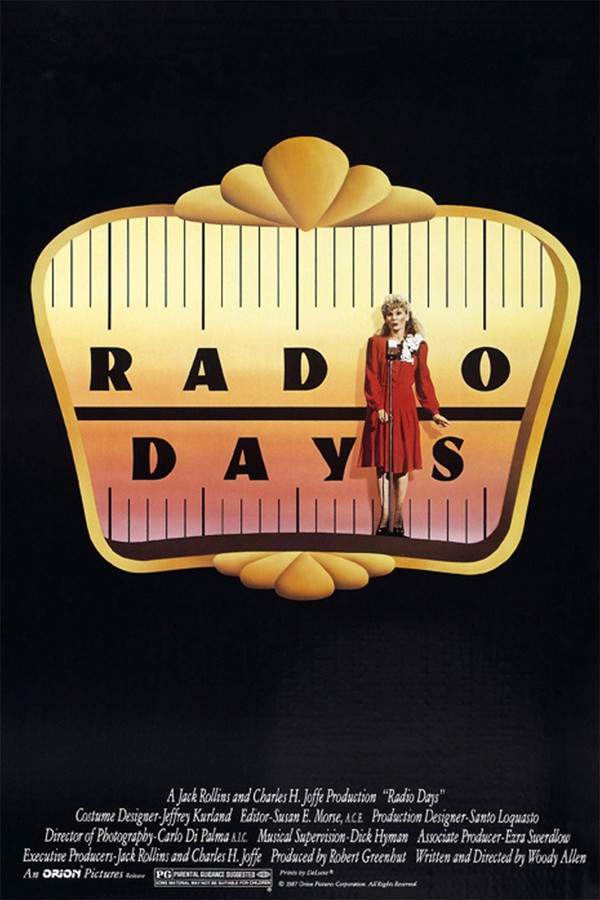
Radio Days (1987) movie poster

Timeline

Radio Days (1987) Timeline Explained – Every Event in Order

Release, runtime and language
1987 · 88 min · English
Loading streaming availability…
Starring
Danielle Ferland, Don Pardo, Helen Miller, Julie Kavner, Julie Kurnitz, Martin Rosenblatt

In 1940s Rockaway, New York, a man recalls his childhood during radio's golden age. Through a series of interconnected stories, we meet a memorable cast of characters, including his relatives and the vibrant personalities who filled the airwaves. The narrative follows an unlucky aunt, a determined cigarette girl striving for success, and two burglars with remarkably precise timing. The stories are interwoven with youthful adventures and the unique charm of a close-knit community, offering a warm and nostalgic portrait of a bygone era.

On this page (6)
  1. 1 Where to watch
  2. 2 Events in order (11)
  3. 3 Timeline questions answered
  4. 4 Movie threads
  5. 5 Movies like Radio Days
  6. 6 Every angle
Loading streaming availability…

11 events in order · contains spoilers

Radio Days Timeline: Events in Chronological Order

Every key event of Radio Days (1987) in order, scene by scene, with when and where it takes place. Use it to untangle flashbacks, time jumps and parallel storylines, to refresh your memory before the sequel or to find the exact scene you are thinking of.

  1. Joe's Childhood Memories

    The film opens with Joe reflecting on his upbringing during the late 1930s and early 1940s. He grew up in a modest Jewish-American household in Rockaway Beach, filled with fond memories tied to music and radio shows.

    When
    1930s
    Where
    Rockaway Beach
  2. Family Dynamics

    Joe's family included his mother, who was an avid listener of the radio program *Breakfast with Irene and Roger*, and his father, who was embarrassed about being a taxi driver. Uncle Abe, Aunt Ceil, and other relatives also played a role in shaping Joe's warm, yet chaotic family life.

    When
    1930s
    Where
    Rockaway Beach
  3. Inspiration from Radio

    Among the various radio shows, Joe was particularly captivated by *The Masked Avenger*. This obsession fueled his desire for a secret decoder ring, inspiring daydreams about heroism and bravery, contrasting with the reality of the character who was quite ordinary.

  4. Dramatic News Broadcasts

    As a child, Joe experienced many significant moments through the radio, including sports heroes' tales and World War II reports. These broadcasts sparked his imagination, leading to dreams of martian invasions and heroic rescues, slowly weaving radio into the fabric of his childhood.

  5. Young Adventures

    While playing with friends, Joe often fantasized about spotting German aircraft. One day, he became distracted watching a woman undressing in a nearby house, discovering she was actually their substitute teacher, adding a humorous twist to his youthful imagination.

    When
    Early 1940s
    Where
    Rockaway Beach
  6. Seeing a U-boat

    On a coastal outing, Joe mistakenly believed he spotted a German U-boat off the shore. He chose to keep this to himself, feeling that others might ridicule his claim, reflecting the tension and paranoia of the wartime atmosphere.

    When
    Early 1940s
    Where
    Coast
  7. Captivation with Manhattan

    Joe developed an insatiable fascination with Manhattan, seeing it as the heart of radio broadcasting. His visit to Radio City Music Hall left a lasting impression as he described it as one of the most breathtaking sights, elevating his dreams of success.

    When
    Early 1940s
    Where
    Manhattan
  8. The Story of Sally White

    One of Joe's favorite stories centers around Sally White, an aspiring actress whose dreams were thwarted by her voice. Initially stuck on the roof of a radio building, she becomes embroiled in a plot that leads to her rise as a gossip reporter, thanks to her ingenious mother.

    Where
    Radio Building Roof
  9. A Dangerous Encounter

    During her time on the roof, Sally witnesses a crime which escalates her situation, putting her life in jeopardy. However, her encounter with the gangster Rocco changes the course of her life, as he chooses to help her by using his connections instead of silencing her.

    Where
    Radio Building Roof
  10. New Year's Eve Celebration

    As the clock struck midnight on New Year's Eve signaling the start of 1944, Joe is unexpectedly escorted out of his room to celebrate. At the same time, the radio stars celebrate on the rooftop, highlighting the communal joy amidst the air of nostalgia.

    When
    Midnight, New Year's Eve 1944
  11. Cherishing Radio Voices

    In his final reflections, Joe considers how the voices of his beloved radio figures have shaped his life. However, he acknowledges that with each passing New Year's Eve, these cherished voices fade slightly, leaving him with a bittersweet sense of nostalgia.

Last updated: November 16, 2024 at 11:27

Was this helpful?

Timeline questions answered

Radio Days Timeline Explained: Your Questions Answered

When does it happen, and why in that order? The questions people ask about the chronology of Radio Days (1987): time jumps, flashbacks, cause and effect between scenes and the correct order of events, each answered with spoilers.

Q1

Why did gangster Rocco help Sally White instead of killing her?

After Sally witnessed a crime on the radio building roof, Rocco initially intended to eliminate her to keep her silent. However, influenced by his mother's wisdom, he chose to use his criminal connections to boost her career instead. This decision enabled Sally to become a gossip reporter, transforming her situation from life-threatening to opportunistically advantageous.

  • rocco
  • sally white
  • gangster
  • radio building
  • career change
Q2

How did Sally White go from cigar salesgirl to gossip reporter?

Sally began as a cigar salesgirl at the radio building, but her aspirations for fame were hindered by her poor voice and thick accent. After getting stuck on the roof with Roger, who was having an affair with Irene, she witnessed a crime that put her in danger. Her fortunes changed when Rocco, rather than silencing her, used his connections to launch her career as a gossip reporter.

  • sally white
  • cigar salesgirl
  • gossip reporter
  • radio building
  • career
Q3

Why did Joe keep his U-boat sighting a secret?

While at the coast during the early 1940s, Joe believed he spotted a German U-boat off the shore. He chose not to tell anyone because he feared others would ridicule his claim, reflecting the wartime atmosphere where children's observations were often dismissed.

  • joe
  • u-boat
  • german submarine
  • coast
  • secret
  • wartime
Q4

What was the radio game the burglars got involved in?

The two burglars were conducting a home burglary when they answered a radio call, inadvertently becoming part of a radio game. Their involvement was entirely accidental, stemming from their presence near a radio during a broadcast that drew them into the program unexpectedly.

  • burglars
  • radio game
  • home burglary
  • radio call
  • accident
Q5

Why was Joe's father embarrassed about being a taxi driver?

Joe's father concealed his profession as a taxi driver due to embarrassment. The film doesn't specify why he felt ashamed, but the sentiment reflects the economic aspirations and social status concerns common among Jewish-American families during the 1940s.

  • father
  • taxi driver
  • embarrassed
  • family
  • social status
Q6

Why did the Masked Avenger sound different from his appearance?

Joe's childhood obsession with The Masked Avenger fueled his desire for a secret decoder ring. In his daydreams, the Masked Avenger was a striking, heroic figure. However, the reality was quite different, the voice behind the character was actually short and bald, representing the gap between fantasy and reality that the film explores.

  • masked avenger
  • decoder ring
  • voice
  • appearance
  • childhood fantasy
Q7

What happened to Sally White on the radio building roof?

Sally became stuck on the roof of the radio building after accompanying Roger, who was having an affair with Irene. While there, she witnessed a crime, which put her in grave danger when the gangster Rocco sought to silence her. This rooftop encounter ultimately led to her career transformation.

  • sally white
  • roof
  • radio building
  • crime
  • rocco
  • roger
  • irene
Q8

What does the ending mean when Joe says the radio voices fade?

At the end of the film, Joe reflects on cherishing the voices of radio figures but acknowledges that with each passing New Year's Eve, those voices seem to fade ever so slightly. This represents the bittersweet nature of nostalgia, cherished memories become more distant over time, yet retain their emotional warmth.

  • ending
  • radio voices
  • nostalgia
  • fading
  • new year's eve
  • memories
Q9

Why did Aunt Bea constantly date in search of Mr. Right?

Aunt Bea was known for her endless dating exploits while living with Joe's family, perpetually searching for Mr. Right. This character detail reflects the universal quest for companionship and the comedic, often frustrating journey of finding love, adding to the film's portrait of a close-knit family.

  • aunt bea
  • dating
  • mr right
  • family
  • relationships
Q10

Why was Radio City Music Hall so impressive to Joe?

Joe developed an insatiable fascination with Manhattan, viewing it as the epicenter of radio broadcasting. When he visited Radio City Music Hall, he described it as the most breathtaking sight he had ever encountered, representing the glamorous world of radio that symbolized his dreams and aspirations.

  • radio city music hall
  • manhattan
  • joe
  • dreams
  • childhood wonder
Q11

Why was Joe escorted out of his room on New Year's Eve 1944?

As the clock struck midnight on New Year's Eve 1944, Joe was unexpectedly escorted from his room to participate in the celebrations bringing in the new year. This moment marks his transition from child to teenager and symbolizes the passage of time, paralleling the radio stars celebrating on their rooftop.

  • new year's eve
  • 1944
  • joe
  • celebration
  • midnight
  • passage of time

Movie threads

More Movies Like Radio Days, by Mood & Story

Curated lists built around what makes Radio Days tick: the same mood, the same kind of story or the same emotional payoff. Each list explains why these movies belong together.

Movies with Nostalgic Vignettes like Radio Days

Gentle, interconnected stories that paint a warm portrait of a specific time and place. Discover movies like Radio Days that weave together charming, episodic stories. If you enjoyed the warm, nostalgic portrait of a bygone era through interconnected tales of family and community, you'll find similar character-driven comedies and dramas here.

  • nostalgic
  • warm
  • charming
  • sentimental
  • reminiscent
  • affectionate
  • Tone: whimsical, warm, bittersweet
  • Pacing: variable, reflective
Why these movies?

The story pattern: Narratives in this thread are often non-linear or episodic, composed of vignettes that interconnect to form a complete picture of a time, place, or community. The journey is less about a protagonist's goal and more about experiencing the cumulative atmosphere and emotional texture of the setting.

Why they belong together: These films are grouped by their unique narrative structure of interwoven vignettes and their shared goal of evoking a specific, nostalgic period. They prioritize mood and character over intricate plotting, resulting in a similarly gentle, reflective, and charming viewing experience.

Whimsical Memory Journeys like Radio Days

Films where childhood imagination and adult reflection blend with playful charm. Find movies similar to Radio Days that explore nostalgia through a whimsical lens. If you liked the blend of childhood adventure, family life, and bittersweet reminiscence, this collection features films with a light emotional weight and charming, imaginative storytelling.

  • whimsical
  • nostalgic
  • charming
  • sentimental
  • dreamy
  • affectionate
  • Tone: whimsical, nostalgic, bittersweet
  • Pacing: steady, reflective
Why these movies?

The story pattern: The narrative is typically driven by a narrator recounting their past, infusing events with the heightened perception of childhood. The story balances youthful escapades and comedic misadventures with an underlying, gentle acknowledgment of time's passage, leading to a bittersweet but warm conclusion.

Why they belong together: These movies share a specific tonal mix: a low-intensity, whimsical approach to storytelling that is deeply rooted in nostalgia and memory. They possess a light emotional core despite bittersweet notes, creating a uniquely charming and comforting vibe centered on family and coming-of-age themes.

If you liked this

Movies Like Radio Days

Similar movies to Radio Days: the same genre, themes or kind of story. Each one comes with its own plot summary, timeline and ending explained.

Browse all movie summaries

Every angle

Radio Days (1987) Explained: Plot, Timeline & Characters

Everything about Radio Days in one place: what happens in the plot summary, the timeline in chronological order, the characters and meaning and a spoiler-free summary. What's After the Movie adds the cast, box office and post-credit scenes.

Coming soon on iOS and Android

The Plot Explained Movie Summary App

Plot summaries, endings explained and timelines on your phone. Catch up on any movie in minutes, save your favorites and never miss a twist again.

Be the first to know when we launch. Your email stays private, always.

Learn more about the app