





Plot Explained Spoilers guaranteed!
Plot Explained

Browse by genre

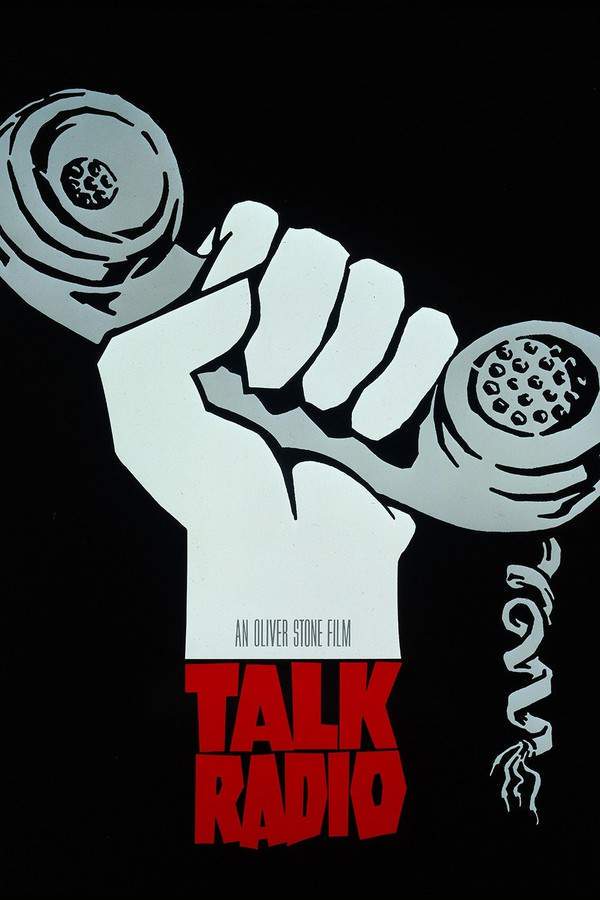
Talk Radio (1988) movie poster

Plot Summary

Talk Radio (1988) Plot Summary Explained

Release, runtime and language
1988 · 110 min · English
Directed by
Oliver Stone
Starring
Alec Baldwin, John C. McGinley, Zach Grenier, John Pankow, Ellen Greene, Michael Wincott

As a nationally recognized radio host experiences growing fame, his personal life unravels, marked by a failing marriage and intense criticism of his outspoken views. Barry Champlain’s controversial on-air behavior intensifies, but when a disturbed caller reveals a disturbing threat, he’s forced to examine the conflict between his public image and inner turmoil. He must confront the repercussions of his words and the increasingly blurred lines between performance and reality.

On this page (6)
  1. 1 Where to watch
  2. 2 What happens: full plot
  3. 3 Plot questions answered
  4. 4 Movie threads
  5. 5 Movies like Talk Radio
  6. 6 Every angle

Where to watch

Where to Watch Talk Radio (1988)

Where can you watch Talk Radio? Stream, rent or buy it in the US, including on Amazon Video, Apple TV Store and Fandango At Home: current JustWatch availability with up-to-date prices.

Streaming availability powered by JustWatch

Full plot summary · contains spoilers

What Happens in Talk Radio: Full Plot Summary

The whole story of Talk Radio (1988) explained, from the opening scene to the final frame: every key event, every twist and what it all adds up to. Read it as a quick recap before the sequel, to check a scene you missed, or to finally understand what really happened.

Barry Champlain [Eric Bogosian], a sharp-tongued Jewish radio host in Dallas, is known for his provocative political views and a condescending attitude toward his callers. As his show edges toward national syndication—a move that could make him rich and famous—he grapples with inner turmoil: self-doubt, swagger, and a deep-seated sense of self-loathing. The film uses flashbacks to trace his journey from a modest beginnings as a menswear salesman to a breakout on-air personality, revealing how easily charisma can translate into power.

The backstory shows Barry impressing a customer and catching the ear of local radio host Jeff Fisher [Alec Baldwin], whose invitation to appear on his program becomes a turning point. Barry quickly eclipses Fisher, landing his own show and shooting to the top of the ratings as a confrontational “shock jock.” As professional success mounts, he becomes a target for far-right militants and is flooded with threatening fan mail, yet his personal life suffers as his marriage unravels.

In the present, Barry invites his ex-wife Ellen [Ellen Greene], whom he still loves, to the studio to seek guidance on the looming syndication deal. To coax him toward his comfort zone, Ellen calls in live and speaks honestly about her love and concern. Barry, while acknowledging his feelings, masks vulnerability by tearing into Ellen on-air, a moment witnessed by the production staff who watch in stunned silence.

The climax unfolds in a blistering monologue where Barry confronts his own cynicism and admits he exploits the very audience that sustains him—and that he is terrified by what they represent. Rather than driving them away, his meltdown becomes the show’s highest-rated moment, and the syndication deal is approved. After the broadcast, Barry heads to his car, and a fan who has come for an autograph pulls a gun, fatally shooting him. The film ends with a soundscape of voices from Barry’s life—now callers to his show—filling the screen as the Dallas skyline glows in the distance.

Last updated: October 09, 2025 at 15:42

Was this helpful?

Plot questions answered

Talk Radio Plot Explained: Your Questions Answered

The questions people ask most about Talk Radio (1988): what happens in the confusing scenes, why the characters do what they do, the twists, hidden details and what the ending means. Each answer contains spoilers.

Q1

Why does Barry attack Ellen on air after she calls to express her love?

Barry attacks Ellen because he cannot handle his own vulnerability. Though he still loves her, his on-air persona requires him to maintain a confrontational, cutting edge. When Ellen calls to express genuine love and concern, Barry responds with cruelty to protect himself from appearing weak. This moment reveals how completely his public identity has overtaken his real self, he cannot be authentic even with someone he deeply cares about.

  • Ellen
  • on-air attack
  • vulnerability
  • radio persona
  • ex-wife
Q2

Why does Barry's on-air meltdown actually increase ratings?

Barry's meltdown increases ratings because listeners perceive his confession as authentic in a show built on performance. When he admits he exploits his audience and is terrified by what they represent, it creates unprecedented drama. The paradox is that his moment of genuine vulnerability becomes the most compelling content he's ever produced, drawing even more listeners and securing the syndication deal.

  • ratings
  • on-air confession
  • syndication
  • audience
  • vulnerability
Q3

Why does the fan shoot Barry at the end of the film?

The fan shoots Barry as a direct consequence of the violent rhetoric his show cultivates. Throughout his career, Barry's confrontational shock jock persona attracts far-right militants and generates threatening fan mail. The film implies that one of these radicalized listeners, energized by Barry's inflammatory rhetoric, sees him as a target, either feeling betrayed by his on-air persona or believing violence is justified by the culture he's helped create.

  • shooting
  • fan assassination
  • consequences
  • violence
  • far-right
Q4

How does Barry transition from menswear salesman to radio host?

Barry's radio career begins when his natural charisma catches the attention of Jeff Fisher, a local radio host, while Barry works as a menswear salesman. Fisher invites him to guest on his show, where Barry's sharp banter and confrontational style impress listeners enough to earn him his own slot. He quickly rises to the top of the Dallas ratings as a shock jock, using the same aggressive energy that made him successful in sales.

Foreshadowing: The flashback to Barry's menswear days plants the seed for his future by showing how easily his charm translates into power over an audience.

  • Jeff Fisher
  • radio career
  • shock jock
  • ascent
  • beginnings
Q5

What causes the syndication deal to be approved?

The syndication deal is approved because Barry's on-air meltdown produces record-high ratings. Network executives see the spike in listeners during his confession and approve the deal that will bring his show to a national audience. The tragic irony is that Barry's most honest moment, where he admits to exploiting his listeners, is what finally achieves the fame and wealth he sought, making his success directly tied to his breakdown.

  • syndication
  • ratings
  • deal
  • national audience
  • success
Q6

What drives Barry's sense of self-loathing throughout the film?

Barry's self-loathing stems from the gap between his public persona and his private doubts. While his on-air character projects confidence and contempt for callers, the film reveals he harbors deep insecurity about his authentic self. He knows his confrontational style is a performance that exploits vulnerable listeners, and he despises himself for it, yet he cannot stop because the persona is what brought him success and validation.

  • self-loathing
  • insecurity
  • persona
  • confidence
  • exploitation
Q7

What is the significance of the ending where voices from Barry's life become callers?

The ending signifies how Barry's life has been entirely absorbed by his radio identity. After his death, the voices of people from his past, Ellen, colleagues, acquaintances, reappear as anonymous callers to his show, merging his personal history into the same format he used professionally. The Dallas skyline glows behind these voices, suggesting the city itself has become a monument to his rise and fall, with his influence persisting even in death through the medium he mastered.

  • ending
  • callers
  • Dallas
  • legacy
  • voices
Q8

Why does Barry invite Ellen to the studio before the critical broadcast?

Barry invites Ellen to the studio because he genuinely seeks her guidance on the looming syndication deal and still values her opinion despite their divorce. He wants her advice during this pivotal career moment, demonstrating that beneath his on-air cruelty remains a person who trusts her judgment. However, when she calls in live, Barry reverts to his defensive on-air persona rather than accepting her genuine emotional outreach.

  • Ellen
  • studio
  • syndication
  • advice
  • ex-wife
Q9

Why do threats from far-right militants follow Barry as his fame grows?

Threats follow Barry because his provocative political commentary attracts extremist listeners. As his confrontational style gains popularity, he becomes a target for far-right groups whose views he sometimes mirrors or challenges. The hostile fan mail represents the dangerous audience he's cultivated, people who take his inflammatory rhetoric seriously and see him as either a champion or an enemy. This thread foreshadows his violent end.

Foreshadowing: The growing threats plant the seed for Barry's ultimate fate, showing how his content attracts dangerous individuals.

  • threats
  • far-right
  • militants
  • fan mail
  • danger

Movie threads

More Movies Like Talk Radio, by Mood & Story

Curated lists built around what makes Talk Radio tick: the same mood, the same kind of story or the same emotional payoff. Each list explains why these movies belong together.

Movies about self-destructive media figures like in Talk Radio

Stories of public personas unraveling under the pressure of their own success. If you liked the intense character study of Barry Champlain in Talk Radio, this list features similar movies about charismatic but self-destructive media personalities. Find films that explore the dark side of fame, the pressure of public personas, and the psychological unraveling of figures in broadcasting, journalism, or entertainment.

  • cynical
  • confrontational
  • agonizing
  • isolating
  • claustrophobic
  • tense
  • Tone: dark, cynical, confrontational
  • Pacing: steady, character driven
Why these movies?

The story pattern: The narrative pattern typically follows a central character who achieves significant influence through a media platform—radio, television, journalism—only to have their personal demons, arrogance, or cynicism lead to their downfall. The story is a steady, character-driven march towards a crisis, often using the confined setting of a studio or newsroom to amplify the feeling of entrapment.

Why they belong together: These films are grouped together because they share a focus on the psychological toll of being a public figure. They consistently feature high intensity, a dark or bleak tone, and a heavy emotional weight, all centered on a protagonist whose career success is inextricably linked to their personal failure.
Claustrophobic psychological dramas with bleak endings like Talk Radio

Intense stories of psychological unraveling within a limited, pressure-cooker environment. For viewers who appreciated the suffocating atmosphere and psychological tension of Talk Radio, this collection features movies with a similar sense of claustrophobic dread. Discover intense dramas where characters unravel in confined settings, leading to heavy emotional impact and bleak, tragic outcomes.

  • claustrophobic
  • anxious
  • agonizing
  • psychological
  • tense
  • unraveling
  • Tone: dark, anxious, bleak
  • Pacing: steady, building tension
Why these movies?

The story pattern: The emotional journey in these films is defined by a steady build of psychological pressure within a limited setting. The external world often feels distant, forcing the focus entirely on the protagonist's deteriorating mental state. The plot serves as a vehicle for this internal collapse, culminating in a violent or deeply sad resolution that feels like the only possible outcome.

Why they belong together: These movies are united by their shared mood: a palpable sense of anxiety and confinement. They prioritize a dark, heavy tone and a high-intensity viewing experience driven by character psychology rather than external action. The bleak ending is a key component, providing a consistent, emotionally draining conclusion.

If you liked this

Movies Like Talk Radio

Similar movies to Talk Radio: the same genre, themes or kind of story. Each one comes with its own plot summary, timeline and ending explained.

Browse all movie summaries

Every angle

Talk Radio (1988) Explained: Plot, Timeline & Characters

Everything about Talk Radio in one place: what happens in the plot summary, the timeline in chronological order, the characters and meaning and a spoiler-free summary. What's After the Movie adds the cast, box office and post-credit scenes.

Coming soon on iOS and Android

The Plot Explained Movie Summary App

Plot summaries, endings explained and timelines on your phone. Catch up on any movie in minutes, save your favorites and never miss a twist again.

Be the first to know when we launch. Your email stays private, always.

Learn more about the app