Plot Explained Spoilers guaranteed!
Plot Explained

Browse by genre

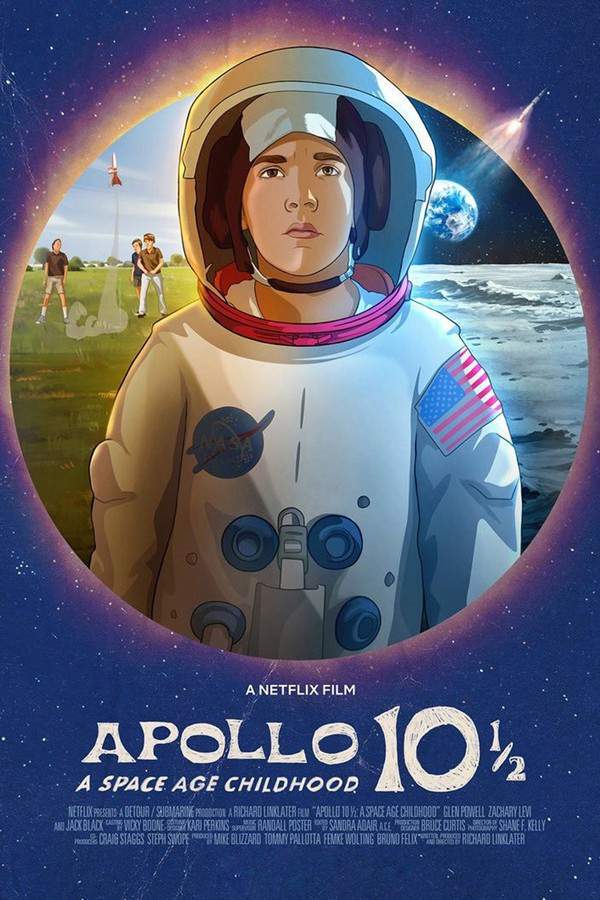
Apollo 10½: A Space Age Childhood (2022) movie poster

Plot Summary

Apollo 10½: A Space Age Childhood (2022) Plot Summary & Ending Explained

Release, runtime and language
2022 · 97 min · English
Echo score 63
JustWatch #24,168 3
Directed by
Richard Linklater
Starring
Zachary Levi, Josh Wiggins, Glen Powell, Jack Black, Bill Wise, Brian Villalobos

In 1969, as the world anticipates the Apollo 11 moon landing, a young boy growing up in Houston, Texas, experiences a childhood filled with wonder and imagination. Inspired by the space race and the bravery of the Apollo missions, he dreams of his own journey to the stars. The film blends the perspective of the astronauts with that of a boy pursuing his own ambitious dreams, offering a nostalgic look at a pivotal time in history and the excitement of a generation.

On this page (7)
  1. 1 Where to watch
  2. 2 What happens: full plot
  3. 3 Plot questions answered
  4. 4 How it ends
  5. 5 Movie threads
  6. 6 Movies like Apollo 10½: A Space Age Childhood
  7. 7 Every angle

Where to watch

Where to Watch Apollo 10½: A Space Age Childhood (2022)

Where can you watch Apollo 10½: A Space Age Childhood? Stream, rent or buy it in the US, including on Netflix and Netflix Standard: current JustWatch availability with up-to-date prices.

Streaming availability powered by JustWatch

Full plot summary · contains spoilers

What Happens in Apollo 10½: A Space Age Childhood: Full Plot Summary

The whole story of Apollo 10½: A Space Age Childhood (2022) explained, from the opening scene to the final frame: every key event, every twist and what it all adds up to. Read it as a quick recap before the sequel, to check a scene you missed, or to finally understand what really happened.

The film narrates the remarkable story of the first moon landing during the summer of 1969, captured through two distinct lenses: the experience of astronauts and the perspective from mission control, intertwined with the innocent viewpoint of an excited child observing it all from home, much like the millions of others glued to their screens. The film artfully juxtaposes a historical re-creation of this monumental event with a young boy's vivid fantasy of being unexpectedly selected to train for a covert journey to the moon.

In 1969, at an elementary school in El Lago, Texas, young Stanley, played by Milo Coy, receives surprising news from NASA officials, Bostick and Kranz, portrayed by Glen Powell and Zachary Levi, respectively. The duo informs Stanley that he has been chosen for the moon mission because the lunar module's size is unfortunately too constricted for an average adult astronaut. Despite being a fit and excelling student, Stanley is sworn to secrecy, unable to disclose his exciting news even to his family. They initiate a covert training program at the end of the school year, with Stanley disguising his absence by attending summer camp.

Going back a few years to 1962, when NASA was relocated to Houston, a significant milestone in architecture, the Astro Dome, was completed, marking it as the world's first domed stadium with an AstroTurf and a grand animated display. Meanwhile, in a time rife with tension due to the Vietnam War, Stanley resides with his siblings: Vicky (played by Natalie L'Amoreaux), Steve (Josh Wiggins), Jana (Jessica Brynn Cohen), Greg (Sam Chipman), and Stephanie (Danielle Guilbot), alongside his parents, Mom (Lee Eddy) and Dad (Bill Wise). Living in a neighborhood with frequent flooding due to poor land drainage, the family experiences a modest lifestyle. Stanley often daydreams about his father being a more prominent figure at NASA rather than just a procurement manager.

The family's dynamics are colored by their frugal upbringing, with every child contributing through chores and a tight budget. After Stanley was born, his mother began taking contraceptive pills, contrasting the Patek family next door who continued to have children. This led to Stanley feeling out of place, as he often faced teasing from his siblings about being adopted, compounded by a lack of presence in family photos or videos. Meanwhile, local culture is a mix of idealism and paranoia, as conspiracy theories swirl around his grandmother’s views on major historical events.

As the story moves forward, nostalgia intertwines with exploration as Stanley is thrust into practical training, where he learns vital survival skills and how to operate the Apollo 10 1/2 module, culminating in high-stakes simulations that mirror the very alarms Neil Armstrong faced during his lunar landing. The tension builds as the Apollo 11 mission ensues, launching Stanley into a voyage that he had only dreamed about, as he shares this pivotal moment with the world.

On the day of the historic moon landing, while Stanley’s family is off enjoying a day at Astroworld—Houston’s own version of Disneyland—the heroes of Apollo 11 confront their challenges just as Stanley had in training. Carrying the weight of the mission, the real astronauts manage the intense situation, paving the way for a triumphant lunar landing amid debates over the moon program's costs versus societal needs.

Ultimately, the film captures a profound moment in time, honoring not just the triumph of Apollo 11 but the dreams and aspirations of a young boy who, long before Neil Armstrong took that giant leap for mankind, found himself encapsulated in a fantastical narrative that intertwined reality with bold dreams of reaching the stars. Over 400,000 individuals contributed to the Apollo program, creating a legacy that would forever alter human history, with 600 million viewers eagerly awaiting the first steps on the lunar surface.
Last updated: November 15, 2024 at 18:25

Was this helpful?

Plot questions answered

Apollo 10½: A Space Age Childhood Plot Explained: Your Questions Answered

The questions people ask most about Apollo 10½: A Space Age Childhood (2022): what happens in the confusing scenes, why the characters do what they do, the twists, hidden details and what the ending means. Each answer contains spoilers.

Q1

Why was Stanley chosen for the secret moon mission?

Stanley was chosen because the lunar module was too small for an average adult astronaut. NASA officials Bostick and Kranz selected him after determining that a child, specifically a fit and excelling student, could fit in the constricted spacecraft. This secret mission was a covert operation separate from the actual Apollo program.

Foreshadowing: Earlier scenes establish Stanley as a bright, imaginative child who excels academically, making him an unexpected but plausible candidate in the film's fantasy logic.

  • Stanley
  • NASA
  • moon mission
  • secret training
  • lunar module
  • childhood fantasy
Q2

How did Stanley keep his NASA training secret from his family?

Stanley disguised his secret training by telling his family he was attending summer camp. The training program was scheduled at the end of the school year, allowing him to disappear for extended periods without raising suspicion. He was sworn to secrecy by NASA officials and could not disclose his exciting news even to his parents.

Foreshadowing: The film establishes Stanley as someone who often daydreams and幻想 about space, making it plausible he would jump at this secret opportunity.

  • secret
  • training
  • family
  • summer camp
  • NASA
  • concealment
Q3

Why did Stanley's family go to Astroworld on the day of the moon landing?

Stanley’s family decided to visit Astroworld, Houston’s own version of Disneyland, on July 20, 1969, the day of the historic Apollo 11 moon landing. While they enjoyed their day at the amusement park, the real astronauts faced the intense challenges of the lunar landing, creating a contrast between the family’s recreational activities and the monumental event unfolding in space.

Foreshadowing: The film repeatedly shows the family’s focus on everyday pleasures and outings, highlighting how ordinary life continued alongside the historic space achievement.

  • Astroworld
  • family
  • moon landing
  • July 20 1969
  • Apollo 11
  • Houston
Q4

Why does Stanley feel like an outsider in his own family?

Stanley feels out of place because he was born after his mother started taking contraceptive pills, contrasting with the Patek family next door who continued having children. His siblings teased him about being adopted, and he was notably absent from family photos and videos. These factors contributed to his feelings of not fully belonging, compounded by his modest upbringing where every child contributed through chores.

Foreshadowing: Early scenes show Stanley often daydreaming and imagining his father in a more prominent role at NASA, suggesting he seeks validation and belonging elsewhere.

  • family
  • siblings
  • adopted
  • outsider
  • childhood
  • teasing
  • contraception
Q5

What is the significance of the Astro Dome in the film?

The Astro Dome, completed in 1962, was the world's first domed stadium with AstroTurf and a grand animated display. Its completion coincided with NASA's relocation to Houston that same year, symbolizing innovation and progress in the region. The stadium represents the era's technological optimism that surrounded the space race.

Foreshadowing: The Astro Dome appears early in the film, establishing Houston as a hub of technological advancement during the 1960s.

  • Astro Dome
  • Houston
  • stadium
  • 1962
  • NASA relocation
  • innovation
Q6

How does the film blend historical reality with Stanley's fantasy?

The film interweaves two narratives: a historical re-creation of the Apollo 11 moon landing with a fictional, whimsical story of Stanley being recruited for a secret mission. The real Apollo 11 mission unfolds with accurate details, while Stanley's storyline represents a child's imaginative way of connecting to the monumental event. This dual structure creates a nostalgic tribute to both the actual achievement and the dreams it inspired in children.

Foreshadowing: The film's title itself, Apollo 10½, suggests a half-real, half-fantasy version of the actual Apollo missions.

  • fantasy
  • reality
  • Apollo 11
  • historical
  • narrative
  • childhood
  • NASA
Q7

Why does Stanley daydream about his father working at NASA?

Stanley often imagines his father being a more prominent figure at NASA rather than just a procurement manager. This desire reflects his deep fascination with space exploration and his longing for his father to have a more prestigious role in the exciting world of the space race. It also highlights Stanley's feeling of being on the outside looking in at his own family's modest circumstances.

Foreshadowing: The family dynamics show his father in a supporting role at NASA, while Stanley dreams of greater significance.

  • father
  • NASA
  • daydream
  • imagination
  • procurement
  • space race
  • aspirations
Q8

What historical events from 1969 does the film depict?

The film depicts several historical events from 1969, including NASA's operations in Houston, the completion of the Astro Dome, and most importantly, the Apollo 11 mission, the first moon landing on July 20, 1969. It also references the Vietnam War's impact on American society and the cultural climate of the era, including conspiracy theories and the tension between idealism and paranoia.

Foreshadowing: The timeline establishes these events chronologically, building toward the historic moon landing as the culmination.

  • 1969
  • Apollo 11
  • moon landing
  • historical
  • Vietnam War
  • Houston
  • NASA
Q9

Why does the film tell the story from both adult and child perspectives?

The film uses dual perspectives to capture the Apollo 11 moon landing both as a historic world event and as a deeply personal childhood experience. By interweaving the astronauts' and mission control's viewpoint with Stanley's innocent eyes, the film creates a nostalgic tribute to how a generation experienced the moon landing, through the wonder of a child dreaming alongside the achievements of real astronauts.

Foreshadowing: The opening establishes this dual lens immediately, showing both the grand scale of the mission and the intimate family setting.

  • perspective
  • astronauts
  • child
  • moon landing
  • nostalgia
  • 1969
  • viewpoint
Q10

Does the film address criticisms of the Apollo program costs?

Yes, the film touches on debates over the moon program's costs versus societal needs. While celebrating the triumph of Apollo 11, it acknowledges the tension between the enormous resources spent on space exploration and what could have been allocated to other societal concerns. This reflects the broader historical discourse about whether the billions spent on Apollo were justified.

Foreshadowing: The film occasionally references the modest lifestyle of Stanley's family and the broader social issues of the era.

  • costs
  • Apollo program
  • funding
  • criticism
  • society
  • budget
  • debate

Ending explained

What Happens at the End of Apollo 10½: A Space Age Childhood?

How Apollo 10½: A Space Age Childhood (2022) ends, in short: the final scene, the last twist and what it means for the characters. The full ending explained, with every spoiler, lives on its own page.

Read the full ending explained

At the end of Apollo 10½: A Space Age Childhood, we see the young protagonist, Stan, watching the historic first moon landing on television. As he struggles to stay awake, his parents help him to bed, and a tender conversation follows. His mother comments that even if he's asleep during the broadcast, someday he'll believe he witnessed it himself, highlighting how memories and perception shape our understanding of history. His father emphasizes that “we all did it," suggesting that participating in these monumental moments becomes a collective experience that connects everyone to history. The film concludes with this touching scene to underscore the central theme: that witnessing history, even in childhood, makes us a part of it. This blending of nostalgia, innocence, and wonder reflects how personal memories and shared history intertwine—showing that the events that shape our world also shape our sense of identity and hope for the future. The ending emphasizes that through childhood's eyes, we find a sense of belonging and the idea that the future is built on the wonder and dreams of the young.

Apollo 10½: A Space Age Childhood ending explained in full

Movie threads

More Movies Like Apollo 10½: A Space Age Childhood, by Mood & Story

Curated lists built around what makes Apollo 10½: A Space Age Childhood tick: the same mood, the same kind of story or the same emotional payoff. Each list explains why these movies belong together.

Movies with Nostalgic Childhood Fantasies like Apollo 10½: A Space Age Childhood

Stories where a child's imagination blends with real-world events. If you liked the nostalgic, imaginative feel of Apollo 10½, you'll enjoy these movies. They blend a child's perspective with larger-than-life fantasies, often set against a backdrop of real historical events or family life, creating a warm and wistful viewing experience.

  • nostalgic
  • imaginative
  • wistful
  • dreamlike
  • reflective
  • childlike
  • Tone: whimsical, nostalgic
  • Pacing: variable, reflective
Why these movies?

The story pattern: These narratives often follow a child protagonist whose rich inner life provides an escape or a unique way of processing their surroundings. The plot alternates between grounded, episodic slices of life and flights of fancy, ultimately leading to a reflective understanding of memory and growing up.

Why they belong together: They are grouped by their shared focus on the magic of a child's viewpoint, a gentle pacing that allows for reflection, and a tone that is both whimsical and deeply nostalgic. The emotional core is typically light but tinged with the bittersweetness of time passing.

Movies with Bittersweet Historical Whimsy like Apollo 10½: A Space Age Childhood

Whimsical stories set against the backdrop of pivotal historical moments. Discover movies similar to Apollo 10½ that combine historical settings with a whimsical tone. These films often use animation or a unique visual style to explore major events through a personal, nostalgic lens, resulting in stories that are both educational and emotionally resonant.

  • historical
  • whimsical
  • bittersweet
  • nostalgic
  • hopeful
  • reflective
  • Tone: whimsical, bittersweet
  • Pacing: steady, variable
Why these movies?

The story pattern: The narrative pattern involves anchoring a personal, often fictional story within a well-known historical context. The grandeur of the historical event is filtered through an intimate perspective, creating a unique blend of awe and everyday humanity, usually culminating in a bittersweet reflection on progress and change.

Why they belong together: They share a specific mood: the excitement and wonder of a historical period, viewed with a sense of nostalgia. The tone is consistently whimsical or hopeful, even when touching on complex topics, and the pacing allows for both historical suspense and personal reflection.

If you liked this

Movies Like Apollo 10½: A Space Age Childhood

Similar movies to Apollo 10½: A Space Age Childhood: the same genre, themes or kind of story. Each one comes with its own plot summary, timeline and ending explained.

Browse all movie summaries

Every angle

Apollo 10½: A Space Age Childhood (2022) Explained: Plot, Ending, Timeline & Characters

Everything about Apollo 10½: A Space Age Childhood in one place: what happens in the plot summary, the timeline in chronological order, the characters and meaning, the ending explained and a spoiler-free summary. What's After the Movie adds the cast, box office and post-credit scenes.

Coming soon on iOS and Android

The Plot Explained Movie Summary App

Plot summaries, endings explained and timelines on your phone. Catch up on any movie in minutes, save your favorites and never miss a twist again.

Be the first to know when we launch. Your email stays private, always.

Learn more about the app