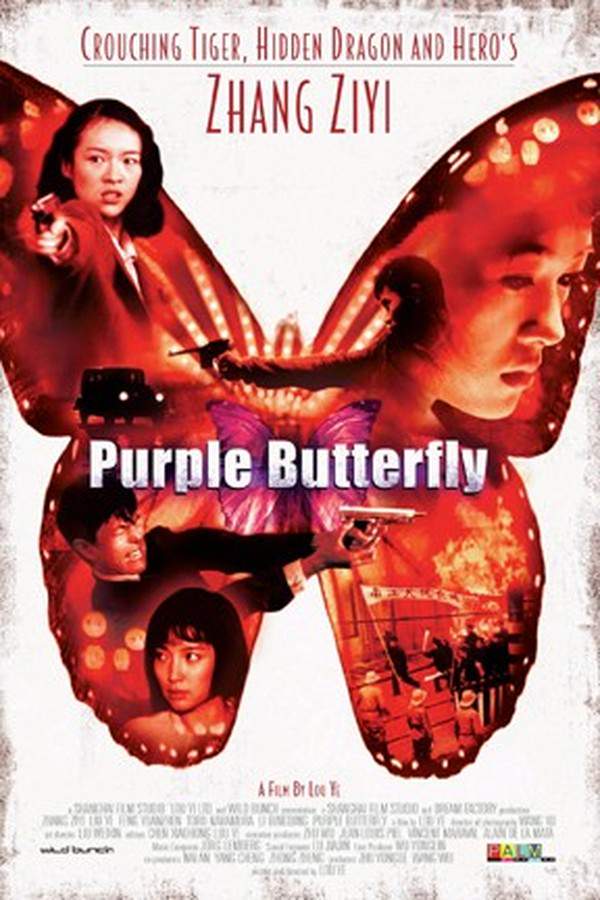
Year: 2004
Runtime: 127 min
Language: Chinese
Director: Ye Lou
Set in 1930s Shanghai, this film follows a lone individual drawn into a dangerous plot orchestrated by a Japanese operative. The scheme aims to compromise Chinese patriots, including the mysterious Zhang Ziyi and Feng Yuanzheng. As war rages around them, the story explores themes of loyalty, betrayal, and the struggle for resistance amidst a complex web of espionage.
Warning: spoilers below!
Haven’t seen Purple Butterfly yet? This summary contains major spoilers. Bookmark the page, watch the movie, and come back for the full breakdown. If you're ready, scroll on and relive the story!
Explore the full timeline and setting of Purple Butterfly (2004). Follow every major event in chronological order and see how the environment shapes the story, characters, and dramatic tension.
Last updated: April 05, 2026 at 17:03
Meet the key characters of Purple Butterfly (2004), with detailed profiles, motivations, and roles in the plot. Understand their emotional journeys and what they reveal about the film’s deeper themes.
Last updated: April 05, 2026 at 17:03
Explore the central themes of Purple Butterfly (2004), from psychological, social, and emotional dimensions to philosophical messages. Understand what the film is really saying beneath the surface.
Last updated: April 05, 2026 at 17:03
Browse frequently asked questions about Purple Butterfly (2004) focused on characters, relationships, themes, symbols, setting, and story context. This movie info FAQ gives spoiler-aware explanations for character arcs, world details, and thematic interpretation so readers can better understand what the film is really about.
The film is set primarily in 1930s Shanghai, a cosmopolitan city that served as a hotbed of underground resistance and espionage. The story also begins in Manchuria in 1928, a tense border region where Japanese influence collided with local resistance, and includes scenes in Tokyo where intelligence work and personal histories intersect.
The opening in Manchuria establishes the geopolitical tensions that will drive the entire narrative.
The narrative spans from 1928 in Manchuria through the early 1930s in Shanghai and Tokyo. This era was defined by Japanese expansion into China, covert resistance operations, and the looming specter of full-scale war in East Asia.
The 1928 starting point plants the seeds of the conflict that escalates throughout the film.
The movie explores three interconnected themes: Loyalty and Betrayal, which tests characters' commitments across national, romantic, and organizational lines; Identity and Deception, where hidden motives and mistaken identities drive the plot; and Violence and Consequences, examining how assassination and killing reshape relationships and leave lasting guilt.
The theme of deception is introduced early through the web of competing loyalties.
Loyalty in the film is portrayed as constantly contested, characters like Ding Hui, Itami, and Xie Ming must choose between competing obligations to nation, romantic partners, and resistance networks. Betrayal lurks behind careful façades, forcing painful choices and shifting alliances as characters discover who they can truly trust.
The love triangle between Ding Hui, Itami, and Xie Ming foreshadows the impossible choices to come.
Ding Hui is a Chinese activist played by Ziyi Zhang who joins the Purple Butterfly resistance after her brother is killed. She becomes entangled in a complex love triangle with her former lover Itami and resistance leader Xie Ming, torn between personal loyalties and political commitments. Her arc involves witnessing tragedy, participating in dangerous plots, and confronting guilt.
Her brother's death sets her on the path of resistance that defines her entire journey.
Itami is a Japanese translator turned spy played by Tôru Nakamura who navigates shifting loyalties and dangerous alliances. He reconnects with Ding Hui and interacts with both sides of the conflict, embodying the film's exploration of dual identities and the personal toll of espionage. His tragic fate underscores the cost of living between two worlds.
His dual identity as translator and spy establishes the film's theme of deception from the beginning.
Xie Ming is the leader of the Purple Butterfly resistance, played by Ye Liu, and serves as Ding Hui's on-again, off-again lover. As a key strategist against the Japanese occupation, he coordinates underground operations in Shanghai. His death removes a crucial pillar of the resistance and intensifies the emotional stakes for Ding Hui and the remaining fighters.
His leadership position makes his eventual loss devastating for the resistance cause.
Shanghai serves as the primary setting because in the early 1930s it was a cosmopolitan hub where underground resistance networks operated alongside Japanese intelligence. The city's atmosphere of secrecy and danger provides the perfect backdrop for espionage, betrayal, and the characters' desperate struggles against occupation.
The shift from Manchuria to Shanghai marks the move from open conflict to underground warfare.
Identity and deception are central to the narrative, an unsuspecting bystander is pulled into a deadly conspiracy, while spies hide their true loyalties behind careful façades. Characters must constantly question what is real, who they can trust, and how much of themselves they are willing to reveal, creating an atmosphere of paranoia.
The opening sequences introduce mistaken identity elements that ripple through the entire plot.
The film depicts a world consumed by geopolitical tension, where ordinary people's lives are shattered by Japanese expansion and resistance warfare. It's a realm of constant danger where torture, assassination, and betrayal are daily realities, and where characters live with the psychological weight of their violent actions.
The brutal opening establishes the violent world that shapes every character.
The Purple Butterfly is an underground Chinese resistance network fighting against Japanese occupation during the 1930s. Led by Xie Ming, the group conducts espionage operations, targets Japanese operatives, and operates in secrecy within Shanghai. Their mission often collides with personal ties, forcing members into painful moral choices.
The resistance's covert operations create thedangerous web of loyalty tests throughout the film.
Discover curated groups of movies connected by mood, themes, and story style. Browse collections built around emotion, atmosphere, and narrative focus to easily find films that match what you feel like watching right now.
Spy thrillers where loyalties blur and characters are consumed by paranoia.If you liked the tense, morally complex espionage of Purple Butterfly, you'll find more movies like it here. This collection features bleak wartime spy stories filled with betrayal, torture, and the heavy psychological toll of living undercover.
These narratives typically follow an individual drawn into a dangerous intelligence operation, often against their will. The plot is a complex web of double-crosses, mistaken identities, and covert missions where the stakes are life and death. The protagonist's journey is one of psychological unraveling, as the pressure of maintaining a facade and the moral cost of their actions lead to a bleak and fatalistic ending.
These films are grouped together for their shared high-stakes, paranoid atmosphere, complex plotting, and focus on the psychological destruction wrought by espionage. They deliver a consistent experience of tense dread, moral ambiguity, and a heavy emotional weight that leaves a lasting impact.
Love stories shattered by the brutal machinery of war and occupation.For viewers who appreciated the melancholic romance and heavy sacrifice in Purple Butterfly, this thread collects similar movies. Discover more heartbreaking stories of love and resistance set against the grim backdrop of war.
The narrative pattern centers on characters who find a profound connection during a time of extreme duress, often through involvement in a resistance cell or as enemies on opposite sides. Their love is tested by the constant threat of discovery, acts of violence, and the overwhelming demands of their cause. The story arc is inevitably downward, culminating in immense sacrifice, separation, or death, emphasizing the high cost of war on the human heart.
This group shares a core focus on the intersection of romance and wartime resistance, delivering a potent mix of heavy emotional weight, tragic endings, and a tense, oppressive atmosphere. They are united by their exploration of how love becomes both a source of strength and a point of ultimate vulnerability in a world falling apart.
Don't stop at just watching - explore Purple Butterfly in full detail. From the complete plot summary and scene-by-scene timeline to character breakdowns, thematic analysis, and a deep dive into the ending - every page helps you truly understand what Purple Butterfly is all about. Plus, discover what's next after the movie.
Read a complete plot summary of Purple Butterfly, including all key story points, character arcs, and turning points. This in-depth recap is ideal for understanding the narrative structure or reviewing what happened in the movie.
Track the full timeline of Purple Butterfly with every major event arranged chronologically. Perfect for decoding non-linear storytelling, flashbacks, or parallel narratives with a clear scene-by-scene breakdown.