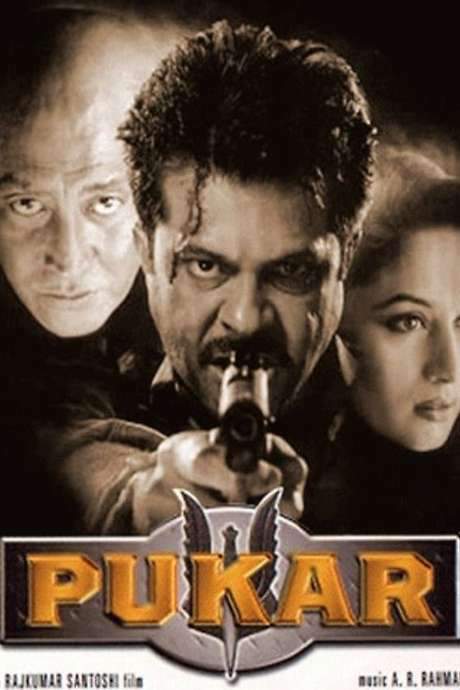
On a snow-clad mountain, a group of armed terrorists led by Abhrush, Danny Denzongpa, is cornered by the Indian army as every entry and exit is sealed to prevent any escape. The siege tightens while the guardians inside the fortress try to keep the situation under control, and the tension widens when Minister Mishra, Govind Namdeo, arrives with a desire to enter the temple for prayer. Initially refused entry because of the imminent danger, Mishra’s high political standing eventually earns him a pass, and he is escorted inside. Yet danger follows close behind: Abhrush’s men kidnap Mishra and demand safe passage to Pakistan, turning a religious visit into a bargaining chip in a larger game of risk and loyalty.
In response, the army dispatches Para (Special Forces) led by Major Jaidev Jai Rajvansh, known as Jai, Anil Kapoor, to infiltrate the mountain, rescue Mishra, and arrest the terrorists. The operation is clandestine and harrowing, and even as the team fights their way through tight corridors, they discover that the mission’s information was leaked. Abhrush, it seems, was one step ahead. Despite this betrayal and some casualties, the team completes its objective and withdraws with Mishra safe—though the victory is shadowed by the realization that there is a mole among them and that trust must be rebuilt from the ground up.
To complicate matters, Colonel Iqbal Hussein, Om Puri, Jai’s superior, receives a confidential briefing about Abhrush’s whereabouts: the transfer routes and custody details are shifted weekly, and the only reliable data comes directly from the army’s headquarters to Jai. The possibility of a leak makes Jai suspicious; he wonders aloud whether Mishra himself might be playing a double game. Yet with no hard evidence, Jai must continue to operate with caution, balancing loyalty to the mission with concern for the truth.
During a rare week off, Jai returns home to his family and becomes entangled in a different sort of drama. He meets Pooja Mallapa, Namrata Shirodkar, the daughter of retired General Mallapa, KD Chandran, and the two fall in love. Meanwhile, Jai’s childhood friend Anjali, Madhuri Dixit, also harbors feelings for him. The clash of social worlds—Pooja’s refined, privileged background versus Anjali’s more modest roots—creates a delicate love triangle that threatens to derail Jai’s focus on duty. Anjali learns of Jai’s relationship with Pooja and is heartbroken, believing she has lost him to a life of privilege.
Mishra’s right-hand man, Tiwari, Anjan Srivastav, steps in with a scheme to manipulate Jai’s career. He convinces Anjali to steal a coded file from Jai’s possession, claiming that it is a routine contract document that would ruin Jai’s career and sever the engagement with Pooja. Anjali, unaware of the true stakes, agrees and retrieves the code, delivering it to Tiwari. What they don’t realize is that the “code” contains critical information about Abhrush’s custody and transfer route, which Abhrush’s men quickly learn to exploit. An ambush on the transfer van allows Abhrush to slip away, and Jai finds himself suspended and later arrested for treason, with the public turning against him. Pooja’s family withdraws from the relationship, and Jai’s own family endures harassment and stigma as the case unfolds. The sentence looms: seven years in prison.
In the aftermath, Abhrush orders Tiwari to silence Anjali—her knowledge makes her a dangerous witness. Anjali confesses everything to Colonel Hussein, who is furious at Mishra’s involvement in terrorism. They confront Tiwari at his house, but are attacked by Abhrush’s men; both Tiwari and Hussein are shot. Before dying, Tiwari reveals a chilling detail: Abhrush plans to bomb the town hall during Independence Day. Hussein, gravely wounded, urges Jai to stop the coming catastrophe and passes away with this crucial knowledge in mind.
Anjali and Jai race against time. They rush to Mishra’s residence to confront him, and in the ensuing confrontation, Jai defeats Mishra and uses a bomb as a show of threat to force Mishra to lead him to the town hall on Independence Day. With Mishra’s reluctant help, Jai slips backstage at the celebration and prepares to thwart Abhrush’s plan. Major General, Kulbhushan Kharbanda, who is also at the scene, senses something amiss and moves to the backstage area to assess the danger. Jai locates Abhrush’s operatives, confronts them, and a tense confrontation ensues.
Abhrush then escalates matters by taking Anjali hostage, hoping to disarm Jai through fear. As the tension peaks, the Major General arrives and fires at Abhrush, killing him. The battle continues as Jai and the defenders race to defuse the remaining bombs before they explode in a catastrophe that could claim many lives. In the end, Jai and Anjali manage to survive, and the danger begins to recede. Jai’s forgiveness of Anjali grows as he confesses his love for her once again, and the Major General addresses the crowd, recounting the harrowing sequence of events. With Abhrush defeated and the immediate threat halted, the general clears Jai’s name and declares him a hero, restoring his reputation and bringing the town back from the brink.
The film also features cameo moments that punctuate the spectacle, including Prabhu Deva appearing as himself in the song “Kay Sera Sera” and Lata Mangeshkar performing in the song “Ek Tu Hi Bharosa,” adding layers of musical memory to an already high-stakes story.