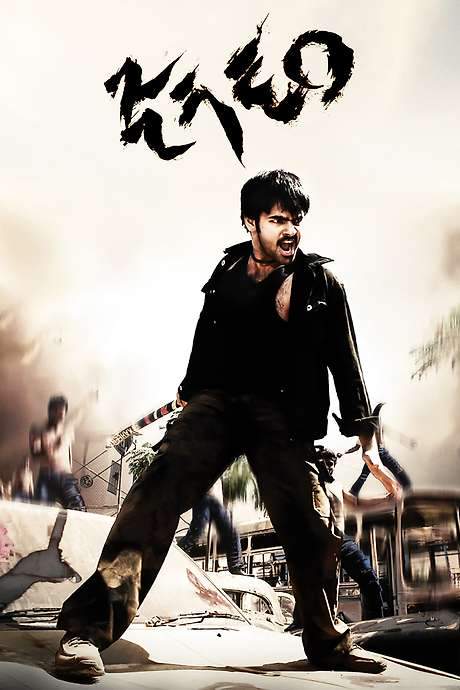
Kokki Kumar Dhanush is introduced in a jail cell, shouting in fear as he claims nobody is there, and he begins to tell his story to the emptiness around him.
Kumar grows up as a secondary school student in the crowded slums of Pudhupettai. One day, after returning from the cinema, he discovers his mother dead, killed by his father following a heated argument. Overhearing a plan by his father and a friend to kill him as a witness, Kumar flees his home and becomes homeless, begging on the streets. He is arrested on false charges, but after a bail, his life takes a sharper turn when he befriends Mani Nithish Veera, who works for a gangster named Anbu Bala Singh. Anbu operates for the opposition party’s leader, Thamizhselvan N. Azhagamperumal, a figure who also hides criminal instincts. With their protection, Kumar starts taking on petty jobs for the underworld network.
A violent confrontation with rival gangsters led by the ruling party politician Murthy Prudhviraj turns a corner in Kumar’s life. He shoots and kills Murthy’s brother amidst a crowd of a hundred goons, earning the respect of the gang and drawing the attention of professional hit squads. Anbu, impressed by Kumar’s audacity, tries to recruit him into a cadre of killers, but the gang refuses to intervene in Murthy’s escalating war for fear of sparking a larger conflict. Undeterred, Kumar continues to carve a path through the criminal world, killing several opponents single-handedly and gradually earning loyalty and fear from those around him.
Kumar’s relationship with Krishnaveni Sneha, a prostitute who works under Anbu, introduces a personal conflict into his rise. Kumar grows fond of Krishnaveni, but Anbu refuses to release her and even orders her to be killed if Kumar continues to press his plea. When Kumar pleads for mercy, Anbu refuses, and Kumar retaliates by killing him Bala Singh. Thamizhselvan then offers Kumar a chance to take over Anbu’s business, but only if he can survive the night against Anbu’s men, which Kumar does. He drives home his revenge and, through cunning manipulation, lures his own father into an emotional trap using the promise of money and shelter, only to bury him alive in a pre-dug grave for killing his mother—an act that cements his reputation as a ruthless don in North Chennai.
Kumar’s rise continues as he consolidates power, leading to Murthy’s paralysis at the hands of his men after a failed truce. He encounters Mani’s sister Selvi Sonia Agarwal and forcibly marries her on the eve of her wedding, triggering further conflict. Mani attempts to kill Kumar but fails, and eventually joins Murthy’s gang in opposition. Meanwhile, Krishnaveni reveals that she is pregnant with Kumar’s child, prompting a marriage to her as well.
As Mani becomes an informant who testifies in court against Kumar, the don uses intimidation to silence threats, targeting Selvi and her mother to avoid charges. Thamizhselvan gives Kumar a political post to deter defection, but when Kumar pushes for an MLA seat, he’s ridiculed and ultimately ousted. Murthy learns of the shifting power and plans to eliminate Kumar and his family. To protect them, Kumar sends Krishnaveni and their newborn son away, but Murthy’s men intercept them, killing Krishnaveni and seizing the baby. Mani, by a moment of mercy, returns the child to Kumar, only to be hung to death by Murthy in retaliation. Kumar then entrusts the child to a kindhearted, ordinary woman who is married with two children and works as a housemaid, keeping his paternity a secret.
The revenge saga intensifies as Kumar hunts down Murthy’s henchmen in a final stand, crippling his own right hand in the process. Murthy ultimately commits suicide as the cycle of violence closes in, and Kumar is arrested. In a twist at the end, the police and a warden come to take him away, but the epilogue reveals a different fate: the Chief Minister had arranged his release and named him as an MLA candidate for the next election. Kumar reflects with ironic reverence on Murthy and notes that he would have killed those who caused Murthy’s death if India were not the birthplace of Gandhi.
The epilogue further paints a broader arc of power: Kumar serves three times as an MLA and twice as Tamil Nadu’s Finance Minister, yet he remains unable to locate his son. Thamizhselvan retires abroad with his daughter and grandchildren, while Selvi’s life takes a grim turn—she marries her former fiancé, who disappears two months later and is later committed to a mental asylum. The story closes on a note of hard-won dominance that never fully resolves the family’s deepest scars.