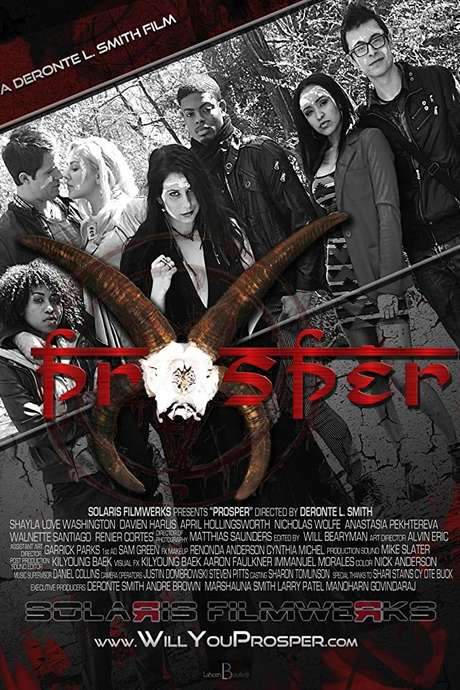
In a sleepy rural Southern town, a close-knit group of twenty-something locals crosses paths with a beguiling stranger who seems to promise answers and a rush of danger. She is Irene Good, April Hollingsworth. What begins as a wild night quickly uncovers a web of ancient power and personal peril that will pull the group into a realm they never anticipated.
The film unfurls a centuries-spanning backstory tied to the infamous Salem Witch Trials. Sarah Good had two daughters, a 5-year-old who died with her mother at the time of execution, and an infant whose fate has long lived only in rumor. The tale goes that the infant was spirited away by local slaves—figures like Tibutha—meant to spare her life, and as Irene grew, her talents in the spirit realm sharpened, her visions growing clearer and more dangerous. On her 15th birthday, Major, a leader among the enslaved, orders her to leave their grounds because her light has turned dark and her energy has become a threat.
Over the years Irene’s life never lacked for comfort or influence, and her innate beauty and vitality made her the envy of many. Yet her singular gifts and lineage drew the gaze of a secretive cabal—the Illuminati—a group that had helped expand their reach to the North Eastern borders of the country during the war. To protect herself, Irene forms a wary alliance that allows her to continue her lifestyle, but at a heavy price: every 50 years, when the Earth’s axis tilts closest to the moon, she must sacrifice a group of youths to a dark deity known as the Baphomet, a figure representing the most carnal desires of humanity and worshipped by the occult. The ritual is not carried out alone; a spirit she ascends to rule—the Dark Shadow—executes her bidding in moments of need, restoring Irene’s powers and her youthful appearance for another fifty years.
In the modern snapshot presented by Prosper, Irene lures a new batch of unsuspecting youths under the guise of a séance. What they think is a harmless gathering soon reveals itself as a drain on their life force, a ritual designed to strip them of vitality and send their souls spiraling into darkness forever—while Irene is reborn in the process, renewed for another half-century of influence and peril. The ritual’s toll is real, the fear palpable, and the sense of inevitability eerie: this is how power survives, at the expense of innocence.
As events unfold, the tension between appearance and reality intensifies. The group’s cohesion begins to crack under wicked temptations, and the line between trick and trap blurs. The presence of the Dark Shadow, voiced through the actual figure of [Samme William], hints at a force deeper and older than any single individual, an ancient hunger that stubbornly refuses to fade. The story threads together creatures of old myth with contemporary dread, crafting a mood that feels both intimate and mythic.
Ultimately, Prosper is a meditation on desire, control, and the price of immortality. It asks what a person—human or supernatural—will do to maintain youth, power, and influence when the night grows long and the moon pulls at the axis of the world itself. The film’s tone stays steady and restrained, preferring atmosphere and moral consequence to gore, inviting viewers to reckon with what they might sacrifice for a chance to stay forever young. The tale is not merely about evil lurking in the shadows; it’s about the seductive pull of a history that refuses to stay buried, and the fragile line between protection and predation that defines Irene Good’s enduring, dangerous allure.