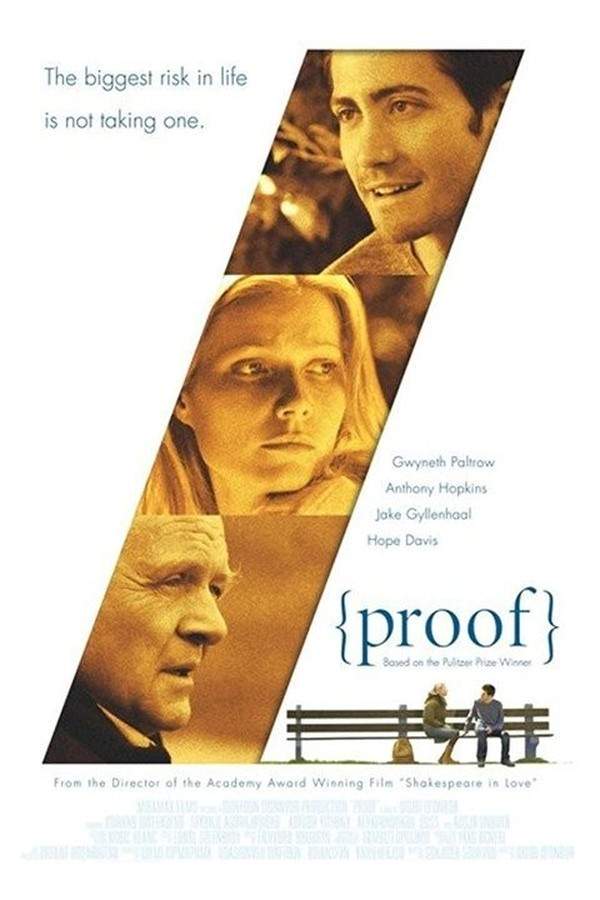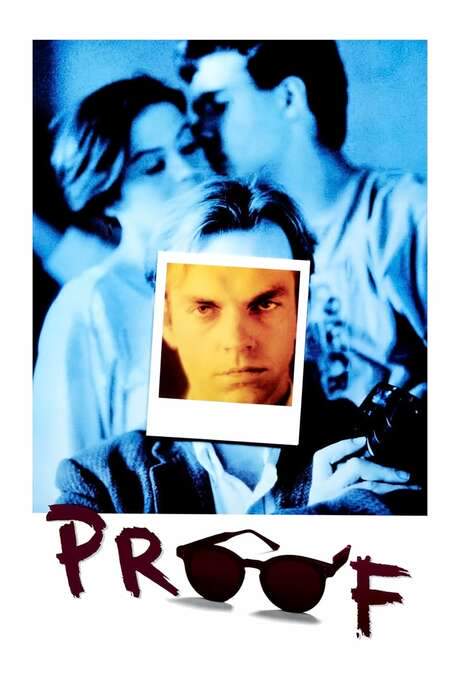
Martin, a talented young blind photographer, finds his world split between a budding friendship with Andy, a restaurant employee, and the intense, possessive love of Celia, who becomes increasingly jealous of his new bond. The film examines how trust must be proven before love can truly flourish.
Find where to stream, rent, or buy Proof (1991) in the US with current JustWatch availability, up-to-date pricing, and platform listings for subscription, rental, and digital purchase options.
Warning: spoilers below!
Haven’t seen Proof yet? This summary contains major spoilers. Bookmark the page, watch the movie, and come back for the full breakdown. If you're ready, scroll on and relive the story!
Trace every key event in Proof (1991) with our detailed, chronological timeline. Perfect for unpacking nonlinear stories, spotting hidden connections, and understanding how each scene builds toward the film’s climax. Whether you're revisiting or decoding for the first time, this timeline gives you the full picture.
Last updated: October 09, 2025 at 15:01
Find frequently asked questions about the Proof (1991) timeline, including chronological order, nonlinear jumps, cause-and-effect links, and scene sequence clarifications. This timeline FAQ helps explain when key events happen, how moments connect, and why the story unfolds in that specific order.
Martin distrusts sighted people because of a childhood memory where his mother described a garden outside his window with someone raking leaves, but Martin could not hear the sound. He concluded she was lying or playing a trick on him, and this early experience left a lasting scar on his ability to trust explanations from others.
The film opens with this childhood memory, establishing the central theme of perception versus description.
Celia harbors an intense, obsessive crush on Martin, filling her flat with photographs of him and controlling his surroundings to keep him dependent. Her possessiveness stems from fear of rejection and losing the only connection she has to him, even though her methods involve manipulation rather than genuine care.
Early scenes show Celia rearranging furniture to provoke reactions from Martin, establishing her pattern of emotional control.
Celia seduces Andy because she senses the growing bond between him and Martin and fears losing control over Martin. By destroying Martin's trust in Andy, she hopes to prevent any rival from replacing her role in his life.
Celia watches uneasily as Martin and Andy grow close, and her discomfort is visible in earlier scenes.
Martin fires Celia after discovering her manipulation with Andy and recognizing his own role in their tense dynamic. He acknowledges that their relationship was unhealthy, built on a mix of affection and coercion that prevented genuine connection.
Earlier scenes establish the volatile nature of their relationship, with Celia provoking reactions and Martin tolerating her behavior.
When Celia throws her house key into a sink full of water, it symbolizes her rejection of the life she tried to build around Martin. The act represents the collapse of her control and her refusal to be dismissed, marking the end of her place in his world.
This moment follows directly from Martin firing her, representing her final act of defiance.
The childhood garden photograph is important because it represents Martin's core wound, his mother's description of someone raking leaves that he could not hear. He kept this photo hidden for years, hoping to finally prove whether his memory was true or if she lied to him.
The film begins with this childhood scene, establishing it as the central mystery of Martin's life.
When Andy describes the childhood garden photograph, he reveals the figure of a man raking leaves that Martin's mother had described all those years ago. This confirms that Martin's mother was telling the truth, and the memory was accurate all along.
The entire film builds toward this moment, with Martin seeking proof that descriptions can be trusted.
Andy confronts Martin after their friendship is damaged, arguing that one instance of deception should not define all people. He urges Martin not to judge everyone by a single fault, planting seeds of doubt about Martin's blanket distrust of others.
This philosophical moment occurs after Martin has withdrawn from both Andy and Celia following the betrayal.
The film ends with Martin finding emotional closure through Andy's truthful description of the childhood garden. The revelation that his mother was telling the truth allows Martin to see the world anew with tempered clarity, finally accepting that the world can be complex but not entirely untrustworthy.
The ending directly resolves the central childhood memory that has haunted Martin throughout the film.
Martin photographs the world because it allows him to capture reality, then he relies on others to describe what he has captured. He reads Braille captions alongside these descriptions and stamps each work as "proof" that the world is as others say it is, using photography as a way to test whether descriptions match reality.
His photographic practice is established early, showing his ongoing quest for proof in a world of descriptions.
Discover curated groups of movies connected by mood, themes, and story style. Browse collections built around emotion, atmosphere, and narrative focus to easily find films that match what you feel like watching right now.
Stories where psychological manipulation and dependency create a cage of intimacy.Explore films with a similar feel to Proof, focusing on stories of obsessive relationships and psychological manipulation. If you liked the tense, claustrophobic dynamic between Martin and Celia, you'll find other movies that capture the unsettling experience of emotional entrapment.
These narratives typically focus on a vulnerable protagonist enmeshed in a relationship with a possessive or controlling figure. The conflict is internal and psychological, revolving around the protagonist's gradual realization of their situation and the difficult process of breaking free, often culminating in a bittersweet resolution that acknowledges the scars left behind.
They are grouped by their shared mood of anxious claustrophobia and their thematic focus on the darker sides of dependency and love. The pacing is often slow, allowing the tension of the unhealthy dynamic to simmer, while the tone remains consistently tense and unsettling.
Character-driven stories where trust is tested and reality is questioned.Find movies similar to Proof that explore themes of blindness, trust, and deception. If you appreciated the film's focus on Martin's perception of the world and the mystery of who he could truly rely on, this collection features other thoughtful, character-driven stories with moderate complexity.
These plots often involve a central mystery or emotional conflict that hinges on the protagonist's ability to correctly interpret the people and events around them. The journey is one of discovery, where alliances shift and the true nature of relationships is revealed, leading to a resolution that redefines the protagonist's understanding of their world.
They share a focus on the theme of perception versus reality, often employing a moderate level of narrative complexity. The emotional journey is contemplative and quiet, prioritizing character development over fast-paced action, and typically results in a bittersweet or emotionally resonant ending.
Don't stop at just watching - explore Proof in full detail. From the complete plot summary and scene-by-scene timeline to character breakdowns, thematic analysis, and a deep dive into the ending - every page helps you truly understand what Proof is all about. Plus, discover what's next after the movie.
Read a complete plot summary of Proof, including all key story points, character arcs, and turning points. This in-depth recap is ideal for understanding the narrative structure or reviewing what happened in the movie.
Discover the characters, locations, and core themes that shape Proof. Get insights into symbolic elements, setting significance, and deeper narrative meaning - ideal for thematic analysis and movie breakdowns.
Discover movies like Proof that share similar genres, themes, and storytelling elements. Whether you’re drawn to the atmosphere, character arcs, or plot structure, these curated recommendations will help you explore more films you’ll love.
Proof (1991) Plot Summary & Movie Recap
Proof (1991) Scene-by-Scene Movie Timeline
Proof (1991) Spoiler-Free Summary & Key Flow
Movies Like Proof – Similar Titles You’ll Enjoy
Non-Fiction (2019) Plot Summary & Ending Explained
I'll Show You Mine (2023) Detailed Story Recap
Love, etc. (1999) Plot Summary & Ending Explained
Proof (2005) Ending Explained & Film Insights
Trust the Man (2006) Complete Plot Breakdown
My Blind Brother (2016) Full Summary & Key Details
Feast of Love (2007) Complete Plot Breakdown
The Real Blonde (1998) Spoiler-Packed Plot Recap
Chance (2002) Plot Summary & Ending Explained
Blind Dating (2006) Spoiler-Packed Plot Recap
Naked (2002) Spoiler-Packed Plot Recap
Proof (1980) Full Summary & Key Details
Why Not! (1977) Detailed Story Recap
Man-Proof (1938) Plot Summary & Ending Explained
Proof of Love (2022) Detailed Story Recap