Plot Explained Spoilers guaranteed!
Plot Explained

Browse by genre

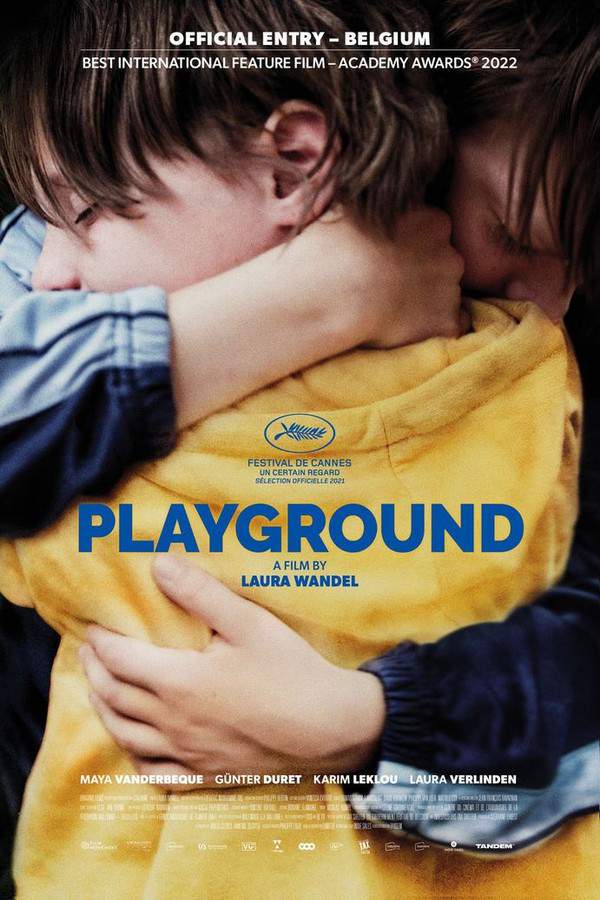
Playground (2022) movie poster

Timeline

Playground (2022) Timeline Explained – Every Event in Order

Release, runtime and language
2022 · 72 min · French
Echo score 85
Loading streaming availability…
Directed by
Laura Wandel
Starring
Simon Caudry, Günter Duret, Karim Leklou, Laura Verlinden, Lena Girard Voss, Maya Vanderbeque
Budget
$1M

A poignant drama follows a seven-year-old girl navigating the challenges of grade school, desperately seeking acceptance. Her journey becomes a heartbreaking struggle against bullying and neglect as she tries to protect her older brother. The film exposes the harsh realities of childhood cruelty and the difficult circumstances faced by vulnerable children when adults fail to provide adequate protection.

On this page (6)
  1. 1 Where to watch
  2. 2 Events in order (12)
  3. 3 Timeline questions answered
  4. 4 Movie threads
  5. 5 Movies like Playground
  6. 6 Every angle
Loading streaming availability…

12 events in order · contains spoilers

Playground Timeline: Events in Chronological Order

Every key event of Playground (2022) in order, scene by scene, with when and where it takes place. Use it to untangle flashbacks, time jumps and parallel storylines, to refresh your memory before the sequel or to find the exact scene you are thinking of.

  1. Nora and Abel navigate the school day together

    Nora and Abel move through their elementary school world with a close, protective bond. They try to read the room, make friends, and manage the subtle power dynamics that shape kid life. Their connection becomes their anchor as they face the social currents of classrooms and playgrounds.

    When
    Morning to afternoon
    Where
    Elementary school – classroom and playground
  2. Abel becomes the target of bullying

    Antoine and a group of bullies systematically harass Abel, skirting the edges of their authority and turning everyday spaces into zones of intimidation. The pattern follows him through hallways and classrooms, casting a shadow over his days. Nora watches with growing concern, trying to understand the persistence of the harassment.

    When
    Throughout the day
    Where
    School – hallways and classrooms
  3. Abel urges Nora to stay out of it

    Abel repeatedly advises Nora to avoid intervention, fearing that involvement could worsen things. He relies on a stubborn logic to shield both their futures from adult interference. Nora wrestles with his demand while the situation grows more complex around them.

    When
    During the day
    Where
    School and home
  4. Father confronts the bullies after Nora reports

    When Nora explains Abel’s despondency, their father confronts the bullies and their parents, attempting to intervene directly. Abel remains wary of adult involvement and warns Nora there may be consequences for meddling. The family starts to realize how deep the problem runs.

    When
    Afternoon
    Where
    School – hallway; Home
  5. Nora's attempts to help backfire

    Nora’s earnest attempts to aid Abel collide with his fear and stubbornness, making the problem feel bigger. Mme Agnès, the teacher, offers patience and explains the limits of what adults can do in such situations. The tension between good intentions and potential harm becomes a recurring theme.

    When
    Afternoon
    Where
    School – classroom
  6. Abel's injury draws attention

    Abel’s injury is noticed by both Nora and their father, marking the seriousness of the bullying. The moment heightens concern and forces a fuller acknowledgment of the harm being inflicted. The family and teacher race to respond, even as Abel remains cautious about escalation.

    When
    Afternoon
    Where
    School – hallway and classroom
  7. Mme Agnès offers guidance on limits and empathy

    Mme Agnès consoles Nora and explains that fixing every problem can entangle more issues. She helps Nora articulate her feelings and reinforces a measured approach to intervention. Her perspective frames how the class should navigate the bullying’s fallout.

    When
    Afternoon
    Where
    School – classroom
  8. Photo day reveals social tension

    Photo day crystallizes the strain in their social world, with Nora and Abel sitting together awkwardly while classmates react to Abel’s troubled status. The moment highlights how appearances influence dynamics and how alliances are shifting. It marks a visible turning point in the siblings’ standing within the class.

    When
    Photo day
    Where
    School – photo day
  9. Bullying episode leads to uneasy apologies

    After a tense meeting with the bullies and their parents, Antoine and the others offer grudging apologies. The reconciliation feels hollow to Abel and Nora, underscoring that the problem runs deeper than a single incident. The class returns to its routines, but the atmosphere remains fragile.

    When
    Later
    Where
    School – meeting area
  10. Teacher departure and a keepsake

    Mme Agnès announces she is moving away from the school, leaving Nora heartbroken. Nora offers her a drawing as a keepsake, seeking comfort as the familiar teacher exits. The farewell unsettles Nora and foreshadows changes to how the class will function without her guidance.

    When
    End of term
    Where
    School – classroom
  11. Nora and Abel clash before the closing moment

    In a charged exchange on the playground, Nora and Abel confront the widening rift between their worlds and expectations. A tense shove and rough confrontation give way to a softer, more vulnerable moment as their tension begins to ease. The moment underscores the fragility of their bond under pressure.

    When
    End of day
    Where
    Playground
  12. Plastic bag incident and final embrace

    Antoine and Abel team up to bully Ismael, placing a plastic bag over Ismael’s head. Nora rushes in, pleading for them to stop and pulling at Abel in a desperate bid to intervene. Abel is overwhelmed by the cruelty, pauses, and then turns to embrace his sister, choosing their bond over the hateful behavior.

    When
    Crisis moment
    Where
    Playground

Last updated: February 24, 2026 at 14:00

Was this helpful?

Timeline questions answered

Playground Timeline Explained: Your Questions Answered

When does it happen, and why in that order? The questions people ask about the chronology of Playground (2022): time jumps, flashbacks, cause and effect between scenes and the correct order of events, each answered with spoilers.

Q1

Why does Abel refuse to tell anyone about the bullying?

Abel believes that reporting the bullying will make things worse. He has developed a survival mindset where he thinks the only way to endure the harassment is to endure it silently. He warns Nora that if adults get involved, the bullies will retaliate more aggressively. This reflects a common reality among bullied children who feel trapped between the fear of escalation and the hope that the abuse will simply stop on its own.

Foreshadowing: Early in the film, Abel's repeated warnings to Nora about staying out of it hint at his belief that adult intervention creates more problems than it solves.

  • abel bullying
  • child psychology
  • bullying reporting
  • peer pressure
  • school bullying
Q2

Why does Nora start avoiding Abel at school?

Nora begins to distance herself from Abel because his status as a target of bullying begins to affect her own social standing. Her classmates express disdain for Abel, and Nora fears being associated with him will make her a target too. This represents the painful reality of how bullying victims become socially toxic even to those who love them. Nora's detachment is a self-preservation mechanism, though it conflicts with her deep care for her brother.

Foreshadowing: The film shows Nora's peers expressing disdain for Abel early on, establishing the social cost of remaining close to him.

  • nora social standing
  • sibling loyalty
  • bullying victims
  • childhood social hierarchy
Q3

Why does Abel start bullying Ismael?

After months of being bullied, Abel discovers that being the aggressor feels better than being the victim. When Nora witnesses him bullying Ismael, he explains that he sometimes prefers being the bully rather than risking being bullied again. This reflects a tragic coping mechanism where children who experience abuse reproduce that behavior to gain a sense of power and control they were denied.

Foreshadowing: Abel's earlier warnings about the consequences of intervention hint at his understanding of how power dynamics work in the school hierarchy.

  • abel bullies ismael
  • cycle of bullying
  • power dynamics
  • childhood trauma
Q4

What happens during the plastic bag scene?

In the film's climax, Antoine and Abel together bully Ismael by placing a plastic bag over his head. Nora witnesses this dangerous moment and rushes to intervene, physically pulling at Abel and begging them to stop. Abel becomes overwhelmed by the realization of what he is doing and finally stops. This scene represents the point of no return where the bullying crosses into life-threatening territory and forces Abel to confront the person he has become.

Foreshadowing: Earlier moments showing Abel's descent into aggressive behavior foreshadow this dangerous escalation.

  • plastic bag
  • ismael
  • bullying climax
  • dangerous bullying
Q5

Why does Abel embrace Nora at the end?

After the plastic bag incident, Abel is overcome with exhaustion and the weight of his actions. When Nora pleads with him to stop, he reaches a moment of clarity and chooses his sister over the harmful behavior. The embrace represents a fragile renewal of their bond, showing that despite the trauma and the cycles of cruelty, their sibling connection remains strong enough to pull him back from the brink.

Foreshadowing: The earlier playground confrontation between Nora and Abel, where they trade blows before softening, hints at the deep emotional undercurrent between them.

  • abel nora embrace
  • sibling reconciliation
  • ending explanation
  • emotional resolution
Q6

Why doesn't the father's intervention stop the bullying?

When Nora tells their father about the bullying, he confronts the bullies and their parents, leading to a meeting where Antoine and the others offer grudging apologies. However, the bullying continues because the confrontation escalated the situation rather than resolving it. Abel had warned Nora that adult intervention could make things worse, and his prediction comes true. This reflects the film's theme that adult solutions often fail to address the complex social dynamics of childhood bullying.

Foreshadowing: Abel's warnings to Nora about the consequences of getting adults involved foreshadow the failure of his father's intervention.

  • father intervention
  • adult help fails
  • bullying meeting
  • parent response
Q7

What happens to Mme Agnès at the end of the movie?

Mme Agnès announces that she is moving away from the school, leaving Nora heartbroken. This departure represents the loss of the only adult figure who truly supported and understood Nora during the bullying crisis. Without her guidance, Nora feels even more alone in navigating the complex social world of the school. The farewell scene underscores the film's theme that adults often leave or fail children when they need consistent support.

Foreshadowing: Earlier conversations where Mme Agnès consoles Nora and explains the limits of adult intervention hint at her eventual departure.

  • mme agnes leaves
  • teacher departure
  • nora support loss
  • adult failure
Q8

Why do Nora and Abel fight on the playground?

After Mme Agnès announces her departure, Nora experiences a surge of emotions including grief, anger, and frustration. When she sees Abel on the playground, she confronts him, recognizing that his social standing as a bully has negatively affected her own position. Their fight is a physical manifestation of the tension between sibling loyalty and self-preservation. However, the confrontation softens into vulnerability, showing the underlying love between them that persists despite the external pressures.

Foreshadowing: The photo day scene earlier highlights how their social standings have diverged, building tension for this confrontation.

  • nora abel fight
  • playground confrontation
  • sibling conflict
  • emotional release
Q9

Why is photo day important in the movie?

Photo day serves as a visual representation of the social dynamics at play. Nora and Abel sit together awkwardly, and their classmates' reactions reveal how Abel's status as a bully has changed their collective perception. The photo crystallizes the strain in their social world and marks a visible turning point where the siblings' standing within the class has shifted. It also highlights how external appearances often mask internal turmoil.

Foreshadowing: The social tension building throughout the film culminates in this visible representation of their changed status.

  • photo day
  • social hierarchy
  • class dynamics
  • visual symbolism
Q10

Why does Ismael avoid Nora after the meeting with parents?

After the meeting where the bullies apologize, Ismael becomes wary of Nora and avoids contact with her. This likely stems from Ismael recognizing that Nora is Abel's sister and fearing that any association with her could make him a target again. The social fallout from the bullying creates a divide where even potential allies are viewed with suspicion. It demonstrates how the trauma of bullying extends beyond the direct victims to affect entire peer relationships.

Foreshadowing: Ismael's wariness appears after the meeting with parents, suggesting he associates the family with his torment.

  • ismael avoids nora
  • social isolation
  • bullying aftermath
  • peer relationships

Movie threads

More Movies Like Playground, by Mood & Story

Curated lists built around what makes Playground tick: the same mood, the same kind of story or the same emotional payoff. Each list explains why these movies belong together.

Movies about harsh childhood realities like Playground

Raw portrayals of children navigating adult-sized emotional pain. A selection of movies like Playground that explore the intense emotional landscapes of childhood. If you were gripped by the portrayal of bullying and emotional neglect, these films offer similar journeys through youth's painful moments.

  • heartbreaking
  • oppressive
  • anxious
  • somber
  • lonely
  • emotional turmoil
  • Tone: melancholic, heartbreaking
  • Pacing: steady, methodical
Why these movies?

The story pattern: Stories in this thread typically follow a young protagonist navigating a hostile or indifferent environment, often within institutional settings like school. The narrative unfolds linearly, emphasizing emotional escalation and the child's internal conflict as adult support systems fail.

Why they belong together: These movies are grouped by their shared focus on the child's point of view, depicting intense emotional hardship with a heavy, melancholic tone. They share a steady pace that allows the weight of the situation to build, creating a powerful and often somber experience.

Dramas about bystander guilt and moral failure like Playground

Stories of helpless witnesses burdened by the trauma they cannot stop. Discover movies similar to Playground that delve into themes of helplessness and guilt. If you were moved by Nora's struggle to protect her brother, these films explore the heavy emotional toll on those who witness pain they feel powerless to stop.

  • guilt-ridden
  • despondent
  • oppressive
  • moral conflict
  • helplessness
  • psychological torment
  • Tone: melancholic, guilt-ridden
  • Pacing: steady, psychological build
Why these movies?

The story pattern: These narratives follow a protagonist who witnesses the systematic suffering of someone close to them but is unable to effectively intervene due to fear, social pressure, or a lack of power. The plot builds steadily towards a bittersweet or bleak conclusion, focusing on the psychological fallout and fractured relationships.

Why they belong together: These films are connected by their exploration of a specific emotional dynamic: the crushing guilt of a bystander. They share a heavy emotional weight, a melancholic tone, and a steady pacing that meticulously builds a sense of oppressive dread and moral unease.

If you liked this

Movies Like Playground

Similar movies to Playground: the same genre, themes or kind of story. Each one comes with its own plot summary, timeline and ending explained.

Browse all movie summaries

Every angle

Playground (2022) Explained: Plot, Timeline & Characters

Everything about Playground in one place: what happens in the plot summary, the timeline in chronological order, the characters and meaning and a spoiler-free summary. What's After the Movie adds the cast, box office and post-credit scenes.

Coming soon on iOS and Android

The Plot Explained Movie Summary App

Plot summaries, endings explained and timelines on your phone. Catch up on any movie in minutes, save your favorites and never miss a twist again.

Be the first to know when we launch. Your email stays private, always.

Learn more about the app