Year: 2017
Runtime: 96 mins
Language: Hindi
Director: Abhishek Saxena
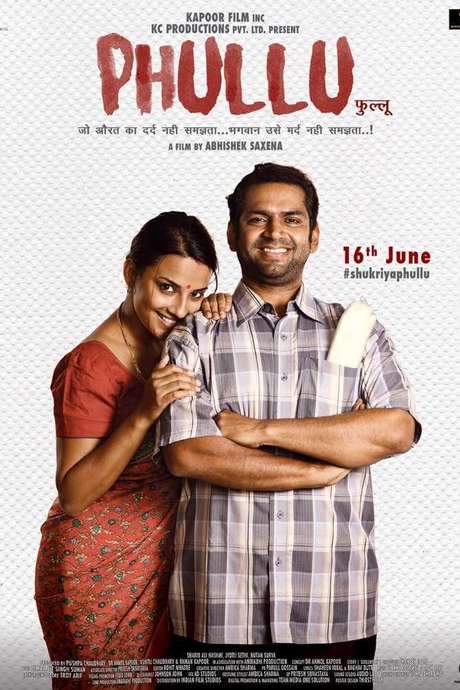
Phullu makes it his life’s mission to educate and empower the women in his village by providing better sanitary solutions.
Warning: spoilers below!
Haven’t seen Phullu yet? This summary contains major spoilers. Bookmark the page, watch the movie, and come back for the full breakdown. If you're ready, scroll on and relive the story!
Read the complete plot breakdown of Phullu (2017), including all key story events, major twists, and the ending explained in detail. Discover what really happened—and what it all means.
Phullu is an unemployed man living in a tiny village that lacks basic amenities and infrastructure. He shares a small home with his mother and sister, and their days revolve around salvaging pieces of waste cloth from nearby city tailors and turning them into refurbished quilts. The family grows a humble income by selling these quilts door-to-door, while Phullu’s mother also nudges him to seek a better life in a bigger city like Delhi. Despite the modest comforts, Phullu’s gentle nature keeps him helping the villagers—he brings back little things from the city for the women and families who need them, always trying to make life a touch easier for those around him.
When his mother arranges a marriage for him, hoping it would anchor him and coax him to move away, Phullu is quickly drawn to a woman named Bigni and the two marry. From that moment, Phullu’s priorities shift; his wife becomes his focal point, and he begins to place her needs above those of his mother and sister. In the quiet arc of daily life, he’s still the same kindhearted man, but the balance of responsibilities tilts toward his new family.
A pivotal moment arrives during a trip to the city to collect earrings for his sister. In the same visit, he steps into a chemist shop to buy sanitary napkins requested by his wife, though he has little idea what they are. A doctor explains that women should use sanitary pads rather than cloth to prevent infections. This revelation astonishes him, and instead of purchasing the earrings, he spends the money on pads for all the women in his family. This bold, compassionate act enrages his mother and sister, who feel the savings are squandered on a luxury they cannot afford.
Determined to understand the problem more deeply, Phullu seeks guidance from a local female schoolteacher and learns that menstrual pads are prohibitively expensive for poor households. Motivated to find a practical solution, he moves back to the city to explore possibilities. With the help of a local journalist, he lands a job at a sanitary napkin manufacturing company and begins studying the production process up close. The more he learns, the more he realizes that affordable options for women in his village are desperately needed. After gaining insight and inspiration, he quits the job and returns to his village, where his wife is now seven months pregnant.
Back home, Phullu begins experimenting with his own designs for low-cost pads, leveraging the knowledge he gained in the city. He envisions offering these pads at a nominal price to make a real difference in the lives of poor women. After countless trials and failures, he finally develops a workable prototype. Yet the village is wary; no woman is willing to trial his invention, and he faces sharp criticism for attempting something so unconventional. Undeterred, he conceives a bold approach: he builds a life-size mannequin to demonstrate the effectiveness of his design. He places his own blood in the mannequin’s pubic region and seals it with his sanitary napkin, hoping the demonstration will speak for itself.
The next morning brings a devastating turn. Phullu discovers that his wife has died from a vaginal infection, yet he also confirms that his mannequin-based demonstration has yielded the desired results. A journalist who had assisted him in the city helps publicize his work, and Phullu’s efforts are featured prominently in the day’s top stories. The film closes on a note of perseverance and social purpose, underscoring the importance of affordable menstrual products and the impact one determined individual can have on a community’s health and dignity.
Last Updated: October 01, 2025 at 13:07
Discover curated groups of movies connected by mood, themes, and story style. Browse collections built around emotion, atmosphere, and narrative focus to easily find films that match what you feel like watching right now.
Ordinary individuals sparking hope and transformation in their struggling communities.If you liked Phullu's story of one man's mission to improve his village, you'll appreciate these movies about grassroots heroes. This collection features similar dramas and comedies where individuals tackle social issues within their communities, focusing on earnest character journeys and hopeful stories of local impact.
These stories typically follow a linear progression: a protagonist discovers a local injustice or problem, faces skepticism and obstacles, and through ingenuity and persistence, develops a solution that slowly earns community trust. The conflict is less about external villains and more about overcoming systemic inertia and societal norms.
Movies are grouped here based on their shared focus on small-scale, character-driven social change. They share a hopeful, determined tone, a steady pacing that builds toward a meaningful impact, and a deep connection to a specific community setting that grounds the narrative.
Stories where profound grief fuels a new, meaningful mission in life.For viewers who appreciated the emotional depth of Phullu, this list features movies that share its bittersweet tone. These films explore how characters channel grief into positive action, blending moments of sorrow with inspiring determination. You'll find similar stories of emotional weight and hopeful conclusions born from personal pain.
The narrative pattern begins with a devastating personal loss that shatters the protagonist's world. Instead of succumbing to despair, they find a new sense of purpose by addressing a problem connected to their loss. The story arc is one of healing through action, leading to an ending that acknowledges the enduring pain while celebrating the good that emerged from it.
These films are connected by their specific emotional blend: a high sadness score balanced by a hopeful tone. They feature protagonists on a mission fueled by grief, resulting in a steady, emotionally medium-to-heavy pacing and a conclusively bittersweet ending that feels both sad and uplifting.
Don't stop at just watching — explore Phullu in full detail. From the complete plot summary and scene-by-scene timeline to character breakdowns, thematic analysis, and a deep dive into the ending — every page helps you truly understand what Phullu is all about. Plus, discover what's next after the movie.
Track the full timeline of Phullu with every major event arranged chronologically. Perfect for decoding non-linear storytelling, flashbacks, or parallel narratives with a clear scene-by-scene breakdown.
Discover the characters, locations, and core themes that shape Phullu. Get insights into symbolic elements, setting significance, and deeper narrative meaning — ideal for thematic analysis and movie breakdowns.
Get a quick, spoiler-free overview of Phullu that covers the main plot points and key details without revealing any major twists or spoilers. Perfect for those who want to know what to expect before diving in.
Visit What's After the Movie to explore more about Phullu: box office results, cast and crew info, production details, post-credit scenes, and external links — all in one place for movie fans and researchers.