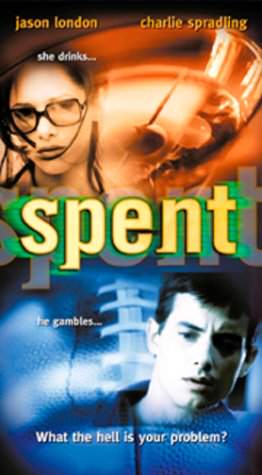
Year: 2000
Runtime: 91 min
Director: Gil Cates Jr.
A group of close friends in their twenties grapple with complex relationships and personal struggles. The story explores their self-destructive behaviors and the challenges they face while seeking meaningful connections. It's a comedic and dramatic look at the often-messy realities of life and the pursuit of belonging within a close-knit circle.
Warning: spoilers below!
Haven’t seen $pent yet? This summary contains major spoilers. Bookmark the page, watch the movie, and come back for the full breakdown. If you're ready, scroll on and relive the story!
Read the complete plot breakdown of $pent (2000), including all key story events, major twists, and the ending explained in detail. Discover what really happened, and what it all means.
Max is a struggling actor in Los Angeles whose career has stalled and debts have mounted beyond his ability to pay. With eviction looming and financial ruin threatening his stability, he makes a drastic choice: use his acting skills to deceive the people closest to him instead of chasing legitimate work.
He starts small, approaching friends with seemingly innocent requests for modest loans, chalking up every setback to temporary bad luck and promising swift repayment. The first mark is Brigette, his girlfriend, whom he manipulates with carefully crafted stories about delayed paychecks, urgent bills, and tiny crises that demand immediate help. The relief of a quick loan motivates him to push further, and he widens his net to include family members, old acquaintances, and even casual friends like Doug.
As the pressure to keep the lies straight grows, Max’s con games become more sophisticated and psychologically loaded. He builds detailed backstories for each target, tuning his pitch to fit their weaknesses, past interactions, and emotional ties to him. Some victims hear sob stories about medical emergencies or family crises; others are pitched on fake investment opportunities or told grand tales of career breakthroughs that require instant funding. In every case, the deception feels real to the recipient, and Max begins to measure his success by the speed and size of the next loan rather than by the truth.
The burden of maintaining multiple façades takes a heavy toll. Crossed timelines, inconsistent details, and the risk of accidental intersections between lies escalate the tension, and the people closest to him start to notice inconsistencies. Trust frays as friends and family members grow suspicious, and Max finds himself gaslighting, bluffing, and improvising at a breakneck pace to keep his network from collapsing. With each new lie, the moral line blurs, and the line between actor and con artist becomes increasingly porous.
Ultimately, the entire house of cards begins to tremble. The webs of deception start to intersect in dangerous ways, and the people who once cared about him become wary, then wary enough to demand answers. The film reaches a wrenching climax as Max confronts the consequences of betraying those closest to him in a desperate bid for financial survival. The pursuit of money, once a workaround for his stalled career, turns into a reckoning that forces him to face the fallout of every manipulation and the cost of choosing expedience over integrity.
Last updated: February 17, 2026 at 19:57
Explore frequently asked questions about $pent (2000) with spoiler-rich answers covering the full plot summary, major story beats, character motivations, hidden details, and ending meaning. This movie summary FAQ helps explain confusing scenes, plot twists, and narrative decisions in clear, searchable detail.
Max turns to lying because he's drowning in debt and facing eviction, with his acting career stalled and no way to pay his bills. He rationalizes that his acting skills, his ability to convincingly portray emotions and fabricate stories, make deception a faster solution than pursuing legitimate work. The desperation to avoid financial ruin overrides his moral judgment, and he convinces himself the lies are temporary until he can get back on his feet.
Early scenes establish Max's mounting financial pressure and his career frustration, setting the stage for his moral descent.
Max targets Brigette first because she's his girlfriend and trusts him implicitly. He fabricates a story about delayed paychecks and urgent bills that require immediate payment, delivering a convincing sob story with emotional appeals. He promises quick repayment, using their relationship as leverage and exploiting her concern for his wellbeing to secure the loan.
The timeline establishes Brigette as Max's first target, indicating he begins with those closest to him who have the most reason to believe him.
Max varies his approach based on each target, using sob stories about medical emergencies or family crises for sympathetic marks, fake investment opportunities for those motivated by profit, and tales of career breakthroughs requiring seed money for ambitious friends. He crafts detailed backstories for each scenario, rehearsing specifics like fake dates, amounts, and circumstances to make the lies feel authentic.
The timeline notes Max crafts detailed backstories, indicating he goes beyond simple lies to create elaborate fictional narratives.
Max's lies begin to intersect and contradict each other as he takes on more marks, crossed timelines, inconsistent details, and accidental intersections between his different stories eventually catch up with him. The weight of maintaining multiple façades causes him to make a critical mistake, and someone discovers a connection between two of his lies that proves impossible to explain away, irreversibly exposing him.
The narrative foreshadows this by showing Max's growing paranoia about keeping stories from intersecting and his reliance on improvisation as pressure mounts.
Max exploits existing emotional bonds and trust, targeting people who care about him and have reasons to want to believe his stories. He tailors each pitch to his mark's weaknesses, offering investment opportunities to those hungry for profit, presenting medical emergencies to those who respond to compassion, and uses his acting skills to appear genuinely distressed or confident. The initial small loans succeed, which lowers everyone's guard for larger requests later.
The timeline notes Max tailors each pitch to the mark's weaknesses and their relationship with him, turning affection into leverage.
Once Max is exposed, the people closest to him feel betrayed and manipulated, leading to damaged or destroyed relationships across the board. Friends, family, and former marks confront him with anger and hurt, replacing the sympathy they once had. The film shows the social and professional fallout leaving Max isolated, as those he deceived can no longer trust him even when he tells the truth.
The escalation section shows trust eroding as friends grow wary and demand answers, building toward complete relationship collapse.
Max leverages his training as an actor to create believable performances, he rehearses lines, develops detailed backstories, and learns to read his marks' emotional weaknesses. He treats each con like a role, adapting his pitch to match what will resonate with specific people. This skill at performance makes his lies feel authentic and helps him maintain multiple façades without immediate detection.
The opening establishes Max as a struggling actor who decides to use his acting skills to deceive people, directly connecting his career to his criminal behavior.
The collapse is triggered by the increasing complexity of Max's web of lies becoming impossible to manage, different stories intersect, timelines conflict, and suspicious connections surface that he cannot explain. A specific misstep, likely a moment where two of his marks compare notes or catch him in a contradiction, irreversibly exposes the entire operation and forces the truth into the open.
The buildup shows Max's growing paranoia about crossed timelines and accidental intersections, with the narrative building tension toward the inevitable collision of lies.
Max continues because each lie creates a temporary relief from his financial pressure, and the pattern becomes self-reinforcing, each new loan lets him pay off the last person while keeping his lifestyle afloat. By the time he recognizes the moral cost, the web of deception has grown so large that stopping feels impossible without everything collapsing. He convinces himself each lie is the last one, using rationalizations to avoid confronting the truth about what he's become.
The narrative shows Max's moral line blurring progressively, with each new lie making the next one easier to tell.
Max faces complete social isolation as friends, family, and former relationships turn away from him permanently. His reputation is destroyed, making it nearly impossible to rebuild trust or repair damaged connections. Financially, he remains in debt with no legitimate way out, and professionally his acting career, which was already stalled, becomes even more unattainable. He ends the film remorseful but alone, confronting the wreckage of a life built on expedience over integrity.
The endgame describes Max facing the aftermath of his choices, with the pursuit of money leaving him isolated and the truth that honesty, once lost, is hard to recover.
Discover curated groups of movies connected by mood, themes, and story style. Browse collections built around emotion, atmosphere, and narrative focus to easily find films that match what you feel like watching right now.
Intense stories of characters whose bad choices tighten the walls around them.For viewers who appreciated the grim character study in $pent, this list features movies with similarly intense and claustrophobic narratives. These films explore themes of desperation, deception, and moral collapse, following protagonists as their lives unravel from within. If you liked watching a character dig their own grave, you'll find more compelling descents here.
The narrative pattern follows a protagonist who, driven by internal or external desperation, engages in self-destructive behaviors that initially seem like solutions but quickly spiral out of control. The focus is on the psychological toll and the tightening web of consequences, leading to an inevitable and often bleak conclusion.
Movies are grouped here because they share a high-intensity, dark tone focused on internal conflict and moral decay. They feature a steady, deliberate pacing that allows the dread to build, creating an anxious and grim viewing experience centered on a character's downfall.

Watching a person's ethical compass slowly and steadily disintegrate.If you were captivated by the steady pacing and heavy emotional weight of $pent, this collection highlights similar films about moral decline. These movies feature characters who progressively compromise their ethics, leading to grim conclusions. Discover more stories that explore the quiet, devastating process of a person coming undone.
The narrative unfolds as a character, often starting from a relatable place, faces mounting pressures. The story meticulously tracks the series of small, justifiable choices that accumulate into a significant moral collapse. The focus is on the process—the 'how' and 'why' of the downfall—rather than a single catastrophic event.
These films are united by their moderate narrative complexity centered on a single character's arc, a steady pacing that builds tension methodically, and a heavy emotional weight derived from the tragedy of watching a person lose their moral footing.
Don't stop at just watching - explore $pent in full detail. From the complete plot summary and scene-by-scene timeline to character breakdowns, thematic analysis, and a deep dive into the ending - every page helps you truly understand what $pent is all about. Plus, discover what's next after the movie.
Track the full timeline of $pent with every major event arranged chronologically. Perfect for decoding non-linear storytelling, flashbacks, or parallel narratives with a clear scene-by-scene breakdown.
Discover the characters, locations, and core themes that shape $pent. Get insights into symbolic elements, setting significance, and deeper narrative meaning - ideal for thematic analysis and movie breakdowns.
Discover movies like $pent that share similar genres, themes, and storytelling elements. Whether you’re drawn to the atmosphere, character arcs, or plot structure, these curated recommendations will help you explore more films you’ll love.
$pent (2000) Scene-by-Scene Movie Timeline
$pent (2000) Movie Characters, Themes & Settings
$pent (2000) Spoiler-Free Summary & Key Flow
Movies Like $pent – Similar Titles You’ll Enjoy
Sugar Daddy (2021) Ending Explained & Film Insights
Hustlers (2019) Ending Explained & Film Insights
Friends with Money (2006) Plot Summary & Ending Explained
Splendor (1999) Ending Explained & Film Insights
Cassandra's Dream (2008) Complete Plot Breakdown
Fierce People (2007) Spoiler-Packed Plot Recap
Splinterheads (2009) Detailed Story Recap
Singles (1992) Detailed Story Recap
Sassy Pants (2012) Ending Explained & Film Insights
Phantom Halo (2015) Film Overview & Timeline
Pain Hustlers (2023) Detailed Story Recap
Pernicio (2018) Ending Explained & Film Insights
Penthouse Playgirls (1972) Detailed Story Recap
Twenty Bucks (1993) Story Summary & Characters
Pentimento (1979) Film Overview & Timeline