













Plot Explained Spoilers guaranteed!
Plot Explained

Browse by genre

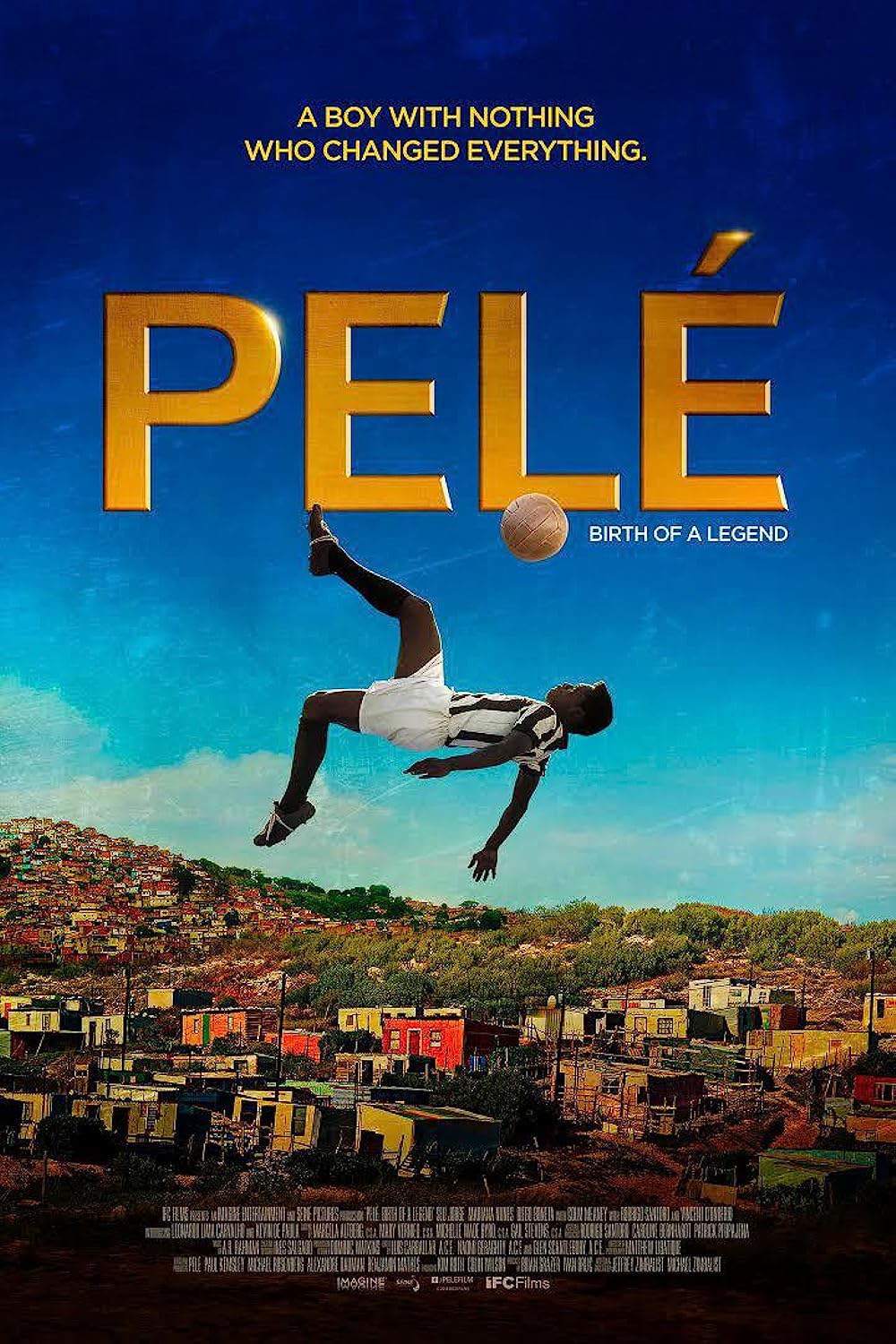
Pelé: Birth of a Legend (2016) movie poster

Timeline

Pelé: Birth of a Legend (2016) Timeline Explained – Every Event in Order

Release, runtime and language
2016 · 107 min · English
JustWatch #20,699 2
Directed by
Jeff Zimbalist, Michael Zimbalist
Starring
Rodrigo Santoro, Vincent D'Onofrio, Diego Boneta, Colm Meaney, Seu Jorge

Edison “Dico” Arantes do Nascimento grows up in the dangerous favelas of Brazil, surrounded by a loving family. Football becomes his only passion, though his mother initially forbids him from playing. The film explores his early life and the challenges he faces as he strives to pursue his dream of becoming a footballer, despite the difficult circumstances.

On this page (6)
  1. 1 Where to watch
  2. 2 Events in order (14)
  3. 3 Timeline questions answered
  4. 4 Movie threads
  5. 5 Movies like Pelé: Birth of a Legend
  6. 6 Every angle

Where to watch

Where to Watch Pelé: Birth of a Legend (2016)

Where can you watch Pelé: Birth of a Legend? Stream, rent or buy it in the US, including on Philo, Sundance Now and Kanopy: current JustWatch availability with up-to-date prices.

Streaming availability powered by JustWatch

14 events in order · contains spoilers

Pelé: Birth of a Legend Timeline: Events in Chronological Order

Every key event of Pelé: Birth of a Legend (2016) in order, scene by scene, with when and where it takes place. Use it to untangle flashbacks, time jumps and parallel storylines, to refresh your memory before the sequel or to find the exact scene you are thinking of.

  1. Dico's Early Life

    In 1950, a young boy named Dico, later known as Pelé, struggles to help his family by polishing shoes and playing street football with his friends. His mother Celeste disapproves of his obsession with football, wishing for him to focus on the family's financial needs.

    When
    1950
  2. World Cup Final Loss

    During the World Cup final in 1950, Brazil faces off against Uruguay. The heartbreaking loss, with a score of 2-1, deeply affects Dico, who vows to his father that he will secure a World Cup win for Brazil in the future.

    When
    1950
    Where
    Uruguay
  3. Support from Dondinho

    Dico's father, Dondinho, a former footballer whose career was cut short by injury, encourages his son's aspirations despite Celeste's disapproval. This support solidifies Dico's desire to pursue football more seriously, fueling his dreams.

  4. Encounter with Waldemar De Brito

    While helping his mother clean a wealthy household, Dico learns that former footballer Waldemar De Brito is seeking new talent for his club. This realization deepens Dico's aspirations of becoming a successful player, as he dreams of following in the footsteps of his idol, Pelé.

  5. Selection Trials

    Dico participates in selection trials where his team is financially struggling and lacks proper footwear. Just in time, Dico’s friend manages to procure some old shoes, and despite bullying from wealthy peers like José Altafini, Dico fights to showcase his talent.

  6. Dico's Barefoot Performance

    In a climactic match, Dico begins down 6-0 but plays barefoot, motivated by his father's presence in the stands. His exceptional skills allow him to close the gap to 6-5, demonstrating his natural ability and determination to succeed.

  7. Recruitment to Santos Football Club

    After his impressive performance, Dico catches the eye of Brito, who wants to recruit him for the Santos football club. Despite his mother's strong opposition, Dico overcomes his doubts and joins the club at just 15 years old, beginning his journey to success.

  8. Training and Overcoming Challenges

    Upon joining Santos, Dico faces numerous challenges and struggles with confidence. Encouraged by Brito and his father, Dondinho, he begins to embrace his playing style, enhancing his skills and fulfilling his potential as a forward.

  9. Selection for the 1958 World Cup

    At the age of 16, Dico earns a spot on the Brazilian national team for the 1958 World Cup in Sweden. His selection at such a young age marks a crucial point in his budding career and sets high expectations for his performance on the world stage.

    When
    1958
    Where
    Sweden
  10. Coach Vicente Feola's Dilemma

    As the team prepares for the World Cup, Coach Vicente Feola faces a dilemma between traditional Brazilian Ginga style and modern European tactics. Dico struggles to adapt but ultimately finds his rhythm, contributing to the team's strategy.

  11. Group Stage Matches

    In the group stages of the tournament, Brazil plays crucial matches against teams like Austria and England. Dico showcases outstanding determination and skill, gradually earning respect and admiration as he helps lead the team through tough encounters.

    When
    1958
  12. Semi-Final Against France

    In a pivotal semi-final match against France, Dico excels, scoring a powerful hat-trick that secures a 5-1 victory for Brazil. This match solidifies his growing reputation and confidence as a key player in the tournament.

  13. Victory in the Final

    In the finals against Sweden, Pelé delivers an electrifying performance, scoring two goals and helping Brazil secure a 5-2 victory. This win not only brings Brazil its first World Cup title since 1950 but also marks Pelé's ascension to football stardom.

    When
    1958
    Where
    Sweden
  14. Legacy Establishment

    By 1961, Pelé is recognized as a national treasure in Brazil after his spectacular performance in the World Cup. He goes on to win two more World Cups in 1962 and 1970, setting numerous records and cementing his legacy in football history.

    When
    1961

Last updated: November 02, 2024 at 13:47

Was this helpful?

Timeline questions answered

Pelé: Birth of a Legend Timeline Explained: Your Questions Answered

When does it happen, and why in that order? The questions people ask about the chronology of Pelé: Birth of a Legend (2016): time jumps, flashbacks, cause and effect between scenes and the correct order of events, each answered with spoilers.

Q1

Why does Pelé's mother oppose his football dream?

Celeste opposes Pelé's football obsession because the family is struggling financially, and she wants Dico to focus on helping support them rather than playing a sport she sees as a distraction. She also worries about him following in his father's footsteps, since Dondinho's football career was cut short by injury, leaving him to work as a janitor.

Foreshadowing: Earlier, we see Dico hustling to make ends meet by polishing shoes, establishing the family's financial hardship.

  • celeste
  • mother
  • opposition
  • football
  • family
  • poverty
Q2

How does the 1950 World Cup loss motivate Pelé?

Brazil's devastating 2-1 defeat to Uruguay in the 1950 final leaves a profound impact on young Dico. Watching his father weep after the match, Dico makes a solemn vow to one day win the World Cup for Brazil, transforming personal heartbreak into a lifelong goal.

Foreshadowing: The film opens with this traumatic loss, establishing the national disappointment that fuels Dico's ambition.

  • 1950
  • world cup
  • loss
  • uruguay
  • motivation
  • vow
Q3

How did Pelé get his famous nickname?

While helping his mother clean a wealthy household, Dico learns from Waldemar De Brito about a legendary player named Pelé. His friend José teases him with the nickname, calling him Pelé, and it eventually sticks despite Dico initially preferring his birth name Edson.

Foreshadowing: Dico's encounter with De Brito introduces him to football history and inspires his dreams of becoming a professional player.

  • nickname
  • pele
  • origin
  • waldemar de brito
  • jose
Q4

Why does Pelé play barefoot in the selection trials?

Dico's team cannot afford proper football boots, leaving them without shoes for the crucial match against José Altafini's wealthy team. Despite the disadvantage, Dico decides to play barefoot, focusing on his father's presence in the audience for motivation.

Foreshadowing: Earlier, we see Dico and his friends playing street football with a makeshift ball made from discarded clothing, showing his comfort playing without proper equipment.

  • barefoot
  • trials
  • shoes
  • boots
  • selection match
Q5

How does Pelé join Santos at age 15?

After his impressive barefoot performance in the trials, where he nearly closes a 6-0 deficit to 6-5, Dico catches the eye of scout Waldemar De Brito. Despite Celeste's strong opposition, Dico overcomes his doubts and joins Santos Football Club at just 15 years old, beginning his professional career.

Foreshadowing: Dico's natural talent and determination in the trial match directly leads to his recruitment opportunity.

  • santos
  • age 15
  • recruitment
  • waldemar de brito
  • professional debut
Q6

Why does Coach Feola struggle with tactical decisions?

Coach Vicente Feola faces a dilemma between adopting the traditional Brazilian Ginga style, which emphasizes creativity and individual skill, versus modern European tactics that rely on discipline and structure. The 1950 loss to Uruguay is partly blamed on tactical shortcomings, creating pressure to modernize, though Pelé ultimately helps bridge both approaches.

Foreshadowing: The film's depiction of Brazil's 1950 defeat establishes the historical tension between traditional and foreign football styles.

  • feola
  • ginga
  • tactics
  • coach
  • strategy
  • european style
Q7

How does Pelé make the 1958 World Cup team at 16?

Pelé's exceptional skills at Santos earn him spots on both the junior and professional teams, catching the attention of national team selectors. Despite being only 16 years old, his phenomenal abilities convince Coach Feola to include him on the Brazilian squad for the 1958 World Cup in Sweden, making him the youngest player ever selected for a World Cup team.

Foreshadowing: Brito's earlier encouragement about football's rich history and the importance of embracing one's unique style prepares Pelé for this opportunity.

  • 1958 world cup
  • age 16
  • selection
  • brazil national team
  • youngest player
Q8

What makes the semi-final against France significant for Pelé?

The semi-final against France proves to be a crucial turning point where Pelé regains his confidence and plays true to his roots. He scores a hat-trick, leading Brazil to a 5-1 victory and solidifying his reputation as a key player in the tournament after earlier struggles adapting to tactical demands.

Foreshadowing: Earlier, Pelé battles physical limitations and self-doubt while trying to balance different playing styles.

  • semi-final
  • france
  • hat-trick
  • confidence
  • 5-1 victory
Q9

How does Pelé perform in the 1958 World Cup final?

Against Sweden in the final, Pelé delivers an electrifying performance despite the local team's attempts to neutralize him. Inspired by crowd support, he channels the Ginga style, evading defenders and collaborating with teammates. He scores two goals in the 5-2 victory, helping Brazil secure its first World Cup title since 1950.

Foreshadowing: His earlier performances against Austria, England, and the Soviets have built toward this moment of triumph.

  • 1958 final
  • sweden
  • two goals
  • 5-2 victory
  • world cup champion
Q10

What makes Pelé's three World Cup wins historically significant?

By 1961, Pelé is hailed as a national treasure. He goes on to win World Cups in 1958, 1962, and 1970, becoming the only athlete to win three World Cups. This establishes his legacy as football's greatest player and fulfills his childhood vow to his father after the 1950 heartbreak.

Foreshadowing: Dico's vow to his weeping father after the 1950 loss plants the seeds for this historic achievement.

  • three world cups
  • legacy
  • 1962
  • 1970
  • record
  • youngest winner

Movie threads

More Movies Like Pelé: Birth of a Legend, by Mood & Story

Curated lists built around what makes Pelé: Birth of a Legend tick: the same mood, the same kind of story or the same emotional payoff. Each list explains why these movies belong together.

Inspiring Sports Biopics like Pelé: Birth of a Legend

Inspiring true stories of athletes overcoming poverty and doubt to achieve greatness. Explore movies like Pelé: Birth of a Legend that tell true stories of underdog athletes. If you enjoyed the journey from poverty to fame, you'll find similar inspiring sports biopics about perseverance, family, and achieving legendary status through sheer talent and will.

  • inspiring
  • triumphant
  • underdog
  • dramatic
  • hopeful
  • emotional
  • Tone: hopeful, inspiring, triumphant
  • Pacing: steady, chronological
Why these movies?

The story pattern: These narratives typically follow a linear, chronological path from childhood adversity to a defining moment of public triumph. The central conflict is between the protagonist's dream and the significant obstacles—often poverty, lack of opportunity, or familial concerns—that stand in their way. The story arc is one of gradual, steady progress fueled by talent and resilience, culminating in a public victory that validates the entire struggle.

Why they belong together: Movies in this thread share a core emotional journey: the uplifting arc of an underdog. They blend the melancholic reality of a difficult upbringing with the triumphant joy of achieving a monumental dream. The tone is consistently hopeful, the pacing steady, and the focus is on the transformative power of sport.

Movies about Chasing Dreams like Pelé: Birth of a Legend

Character-driven stories where passion and persistence conquer adversity. Find more movies like Pelé: Birth of a Legend about passionate individuals chasing their dreams. These similar dramas focus on perseverance, facing obstacles, and the emotional payoff of never giving up, perfect if you loved the hopeful and inspiring vibe.

  • hopeful
  • inspiring
  • dramatic
  • perseverance
  • triumphant
  • emotional
  • Tone: hopeful, dramatic, uplifting
  • Pacing: steady, engaging
Why these movies?

The story pattern: The narrative pattern is a straightforward, aspirational arc where a clear goal is established early on. The protagonist faces a series of challenges that test their resolve, often involving personal sacrifice and moments of doubt. The story is driven by their emotional growth and unwavering commitment, leading to a climax where their perseverance is ultimately rewarded, delivering a powerful sense of validation and joy.

Why they belong together: These films are grouped by their shared optimistic core and emotional resonance. They prioritize a hopeful tone and a steady, engaging pace that allows the viewer to invest fully in the character's journey. The experience is defined by a medium emotional weight—serious enough to feel meaningful, but ultimately uplifting and satisfying.

If you liked this

Movies Like Pelé: Birth of a Legend

Similar movies to Pelé: Birth of a Legend: the same genre, themes or kind of story. Each one comes with its own plot summary, timeline and ending explained.

Browse all movie summaries

Every angle

Pelé: Birth of a Legend (2016) Explained: Plot, Timeline & Characters

Everything about Pelé: Birth of a Legend in one place: what happens in the plot summary, the timeline in chronological order, the characters and meaning and a spoiler-free summary. What's After the Movie adds the cast, box office and post-credit scenes.

Coming soon on iOS and Android

The Plot Explained Movie Summary App

Plot summaries, endings explained and timelines on your phone. Catch up on any movie in minutes, save your favorites and never miss a twist again.

Be the first to know when we launch. Your email stays private, always.

Learn more about the app