Patterns

Patterns

Year: 1955

Runtime: 53 mins

Language: English

Director: Fielder Cook

Drama

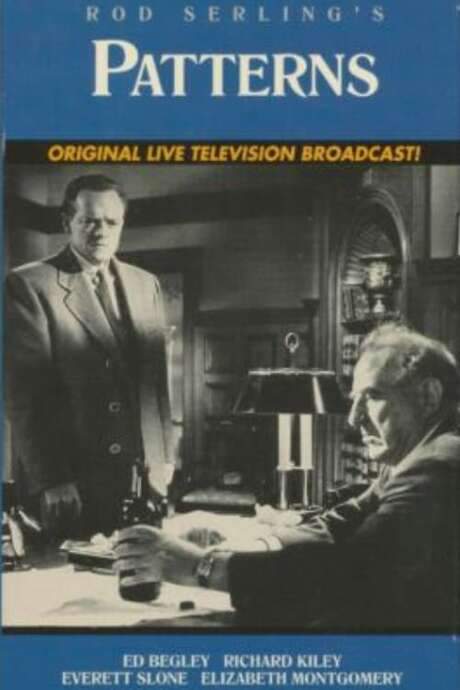
“Patterns” began as an American live television play aired on January 12, 1955 and was adapted into a film the following year with several original cast members. Fred Staples, the newest executive at a large corporation, befriends Vice‑President Andy Sloane, his nominal supervisor. Their hard‑nosed president, Walter Ramsey, praises Staples’ performance, then offers him Sloane’s position—a role Sloane has sacrificed his family for. As Ramsey’s machinations become clear, Sloane refuses to resign, and a tragic crisis forces Staples to choose between ambition and conscience.

Warning: spoilers below!

Haven’t seen Patterns yet? This summary contains major spoilers. Bookmark the page, watch the movie, and come back for the full breakdown. If you're ready, scroll on and relive the story!

Timeline & Setting – Patterns (1955)

Explore the full timeline and setting of Patterns (1955). Follow every major event in chronological order and see how the environment shapes the story, characters, and dramatic tension.

Time period

1950s

Set in the 1950s, a period of rapid corporate expansion and the rise of professional management. Boards, stock options, and competitive strategies define the climate, pushing leaders to trade loyalty for performance. The era's emphasis on efficiency and profit provides a tense backdrop for the power struggle at Ramsey & Company.

Location

Manhattan, Ohio

The film centers on Ramsey & Company's Manhattan headquarters, a symbol of postwar corporate power. The company also operates an Ohio factory that anchors Staples' career and the industrial reach of the empire. The setting captures the glossy high-rise environment and the factory floor where production and pressure collide.

🏙️ Urban 🏭 Industrial

Last Updated: October 04, 2025 at 17:16

Main Characters – Patterns (1955)

Meet the key characters of Patterns (1955), with detailed profiles, motivations, and roles in the plot. Understand their emotional journeys and what they reveal about the film’s deeper themes.

Walter Ramsey (Everett Sloane)

A ruthless empire-builder who views the company as a machine for power and profit. He engineers crises to test and shape his lieutenants, using humiliation and pressure as tools of control. Ramsey thrives on strategic dominance and the belief that the end justifies the means.

💼 Power 🧭 Strategy 🗜️ Control

Fred Staples (Richard Kiley)

A talented industrial engineer recruited after an Ohio factory success. He is torn between Briggs's humane stewardship and Ramsey's magnetic, coercive push toward the presidency. His ambition is tempered by a growing moral awareness and concern for how decisions affect people.

💡 Ambition 🧭 Ethics 🏢 Corporate

Fran Staples (June Dayton)

Staples's wife, who supports him as the pressure at work intensifies. She embodies the domestic perspective on the consequences of corporate maneuvering and the personal sacrifices involved in climbing the ladder.

👫 Family 💬 Support

Bill Briggs

The aging board member whose long service and good intentions clash with Ramsey's modern, hard-edged approach. His health deteriorates under mounting stress, culminating in a collapse and death in the hospital.

🏥 Health 🧭 Tradition

Last Updated: October 04, 2025 at 17:16

Major Themes – Patterns (1955)

Explore the central themes of Patterns (1955), from psychological, social, and emotional dimensions to philosophical messages. Understand what the film is really saying beneath the surface.

💼 Power & Ambition

The film centers on the drive to ascend within a powerful company. Staples's career path becomes a battleground for Ramsey's test of loyalty and talent. Ambition drives manipulative tactics and high-stakes decisions that threaten personal relationships. The narrative uses this pursuit to explore how power reshapes ethics and trust.

⚖️ Ethics vs Profit

Ramsey's profit-first philosophy clashes with Briggs's humane, steady approach and Staples's moral tension. The story constantly weighs human cost against financial gain, forcing characters to choose between principle and advancement. This tension reveals how corporate mechanisms can dehumanize workers while boosting the bottom line.

⏳ Old Guard vs Modern

Briggs embodies the old guard whose loyalty to organization and people clashes with Ramsey's modern, ruthless efficiency. The clash highlights a generational shift in corporate culture and management style. The balance between experience and innovation becomes the key battleground for control.

🕴️ Authority & Control

Ramsey exercises authority through manipulation, incentives, and psychological pressure. The boardroom becomes a theatre where control is won, lost, and contested through strategic moves. Staples' hesitation and eventual stay reveal how influence can shape leadership turnover and corporate destiny.

Last Updated: October 04, 2025 at 17:16

Mobile App Preview

Coming soon on iOS and Android

The Plot Explained Mobile App

From blockbusters to hidden gems — dive into movie stories anytime, anywhere. Save your favorites, discover plots faster, and never miss a twist again.

Sign up to be the first to know when we launch. Your email stays private — always.

Explore Movie Threads

Discover curated groups of movies connected by mood, themes, and story style. Browse collections built around emotion, atmosphere, and narrative focus to easily find films that match what you feel like watching right now.

Corporate Psychological Dramas like Patterns

Stories where professional ambition clashes with moral decay in high-stakes offices.If you liked the tense corporate pressure and moral conflict in Patterns, explore more movies like it. This collection features dramas and thrillers set in the workplace, focusing on power struggles, ambition, and the heavy cost of climbing the corporate ladder.

corporate pressuremorally conflictedanxiouspsychological manipulationpower struggleworkplace ethicssomberoppressive

Narrative Summary

These stories typically follow a protagonist, often a newcomer or an idealist, entering a powerful organization. They quickly uncover a culture of ruthless competition and ethical compromise, often personified by a manipulative authority figure. The central conflict is internal—a battle between personal ambition and the conscience—as the character witnesses or is pressured to participate in the systematic destruction of a colleague.

Why These Movies?

Movies in this thread are united by their setting—the corporate world—and their focus on psychological tension over physical action. They share a mood of professional anxiety, moral conflict, and the oppressive feeling of being trapped in a system that rewards ruthlessness. The pacing is often steady, methodically building dread through conversations and boardroom confrontations.
Movies with Bittersweet Moral Stands like Patterns

Narratives where a character chooses to fight a corrupt system from within, at a personal cost.For viewers who appreciated the complex ending of Patterns, where the hero stays to fight from within. These films feature similar narratives where characters make heavy moral choices, resulting in endings that are neither fully triumphant nor completely bleak.

morally ambiguousbittersweetinstitutional critiquepersonal sacrificeethical strugglehopeful yet cynicalsomber reflection

Narrative Summary

The narrative pattern involves a character confronted with the profound corruption of an institution they are part of. After a crisis that highlights the human cost of this corruption, they face a clear choice: escape or engage. Choosing to stay and reform the system from the inside is presented as a difficult, morally ambiguous path. The conclusion acknowledges the gravity of the compromise, offering a sliver of hope overshadowed by cynicism about the system's inherent flaws.

Why These Movies?

These films are grouped by a specific character arc and a particular emotional payoff. They share a focus on internal conflict, the theme of institutional corrosion, and an ending feel that is decidedly bittersweet. The experience is one of thoughtful tension, leading to a conclusion that lingers due to its realistic ambiguity.

Unlock the Full Story of Patterns

Don't stop at just watching — explore Patterns in full detail. From the complete plot summary and scene-by-scene timeline to character breakdowns, thematic analysis, and a deep dive into the ending — every page helps you truly understand what Patterns is all about. Plus, discover what's next after the movie.

Patterns Summary

Read a complete plot summary of Patterns, including all key story points, character arcs, and turning points. This in-depth recap is ideal for understanding the narrative structure or reviewing what happened in the movie.

Patterns Summary

Patterns Timeline

Track the full timeline of Patterns with every major event arranged chronologically. Perfect for decoding non-linear storytelling, flashbacks, or parallel narratives with a clear scene-by-scene breakdown.

Patterns Timeline

Patterns Spoiler-Free Summary

Get a quick, spoiler-free overview of Patterns that covers the main plot points and key details without revealing any major twists or spoilers. Perfect for those who want to know what to expect before diving in.

Patterns Spoiler-Free Summary

More About Patterns

Visit What's After the Movie to explore more about Patterns: box office results, cast and crew info, production details, post-credit scenes, and external links — all in one place for movie fans and researchers.

More About Patterns