

Plot Explained Spoilers guaranteed!
Plot Explained

Browse by genre

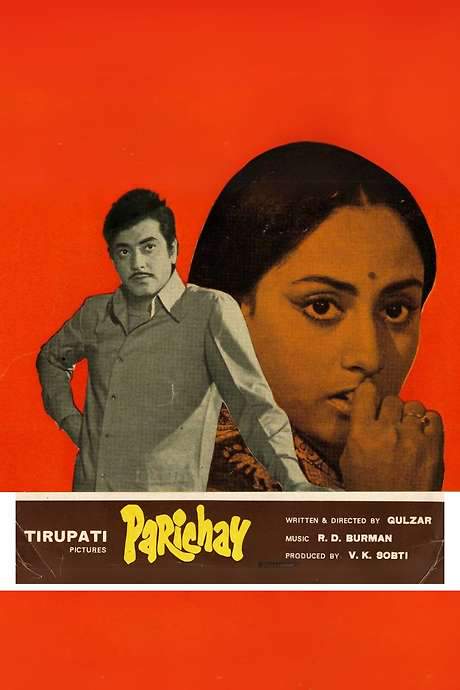
Parichay (1972) movie poster

Timeline

Parichay (1972) Timeline Explained – Every Event in Order

Release, runtime and language
1972 · 145 mins · Hindi
Directed by
Gulzar
Starring
Vinod Khanna, Jaya Bachchan, Govardhan Asrani, Kanwarjeet Paintal, A.K. Hangal, Jeetendra

An unemployed young man (Jeetendra) takes a job to tutor unruly grandkids of Rai Sahab (Pran) and brings out respect, appreciation and hard work hidden deep inside them.

On this page (6)
  1. 1 Where to watch
  2. 2 Events in order (12)
  3. 3 Timeline questions answered
  4. 4 Movie threads
  5. 5 Movies like Parichay
  6. 6 Every angle

Where to watch

Where to Watch Parichay (1972)

Where can you watch Parichay? Stream, rent or buy it in the US, including on Amazon Video: current JustWatch availability with up-to-date prices.

Streaming availability powered by JustWatch

12 events in order · contains spoilers

Parichay Timeline: Events in Chronological Order

Every key event of Parichay (1972) in order, scene by scene, with when and where it takes place. Use it to untangle flashbacks, time jumps and parallel storylines, to refresh your memory before the sequel or to find the exact scene you are thinking of.

  1. Rai Sahab’s austere, grieving household

    Rai Sahab is a retired colonel who lives in a large family mansion with his five grandchildren. The children resent him, blaming him for their father Nilesh Roy’s death, and he has grown cold after Nilesh left to pursue music and died. The house is governed by rigid rules and a distant, disciplinary manner that isolates the family.

    When
    Present, after Nilesh's death
    Where
    Rai Sahab's family mansion, village
  2. Ravi accepts the tutor job

    Ravi, a job-seeker in the city, receives a letter about a tutoring position at Rai Sahab's house in his village. He is initially put off by Rai Sahab’s cold demeanor, but the need for work drives him to take the job. He hopes to gain experience and perhaps win over the resistant grandchildren.

    When
    At the outset of the assignment
    Where
    Rai Sahab's village mansion
  3. First meeting and a clash of temperaments

    In their first encounter, Rai Sahab’s stern authority clashes with Ravi’s easygoing approach. The grandchildren try to scare him away using the same tricks that defeated previous teachers, but Ravi refuses to quit, choosing to laugh at their pranks and attempt friendship.

    When
    Early days of Ravi’s tutoring
    Where
    Mansion, village
  4. The rules against singing and outdoor play

    Ravi discovers that singing and laughing are banned in the house, and the children aren’t even allowed to play outside. He begins to see how deeply Rai Sahab’s control shapes their lives and realizes the need for careful, gradual change.

    When
    First weeks
    Where
    Mansion
  5. Nilesh’s room and the return of music

    During Rai Sahab’s absence, Ravi enters Nilesh’s old room and starts playing his sitar, rekindling a link to the past. The music loosens the children’s defenses and they begin to open up to Ravi. His melodies become a bridge between Rai Sahab and the grandchildren.

    When
    During Rai Sahab’s absence
    Where
    Nilesh’s old room, mansion
  6. Bonding, outings, and study

    Ravi takes the children out on picnics, tells them stories, and begins regular lessons. Gradually their behavior changes, and they become more respectful and attentive toward elders. Ravi and Rama, the eldest sister, also start to develop feelings for each other.

    When
    Weeks after start of tutoring
    Where
    Various locations around village and mansion
  7. Rama’s grievance and the truth about the letter

    Rama resents Rai Sahab for not supporting their family after their father’s death. Ravi reveals that Rai Sahab did send a letter, but it arrived late because he was away on business, and he left promptly on reading it. Rama realizes she had misjudged her grandfather.

    When
    Before Rai Sahab’s return
    Where
    Village, in and around mansion
  8. Rai Sahab returns to find visible changes

    Rai Sahab returns to discover the children studying peacefully with Rama and seeing his late son’s framed photo in the foyer. He is initially upset, but the sight of their quiet respect and Ravi’s influence fills him with pride and gratitude.

    When
    Shortly after Rama’s reconciliation
    Where
    Mansion, foyer
  9. Ravi’s city departure and Rama’s letter

    Back in the city, Ravi misses Rama and receives a letter from her. Encouraged by his friend Amit, he resolves to return and ask Rai Sahab for Rama’s hand in marriage. He soon learns that Rai Sahab intends Rama to marry a family friend’s grandson.

    When
    While Ravi works in the city
    Where
    City
  10. A tense pause before the reunion

    Ravi departs for the city, leaving without meeting the kids and Rama, while Rai Sahab asks Rama whether she met him. Rama is surprised by the question; Rai Sahab begins to realize there is more to their story than he thought.

    When
    Immediately before the train departure
    Where
    Railway station or city
  11. Train reunion and the confession

    At the station, Rai Sahab brings Rama to the platform as the train pulls away with Ravi at the doorway. Ravi leaps from the moving train to join them, and the trio’s reunion culminates in their commitment to a wedding. The moment seals a new, hopeful future for the family.

    When
    Climactic moment at train departure
    Where
    Railway station
  12. A hopeful future: wedding invitation

    The ending scene invites audiences to celebrate Rama and Ravi’s wedding, symbolizing Rai Sahab’s softened heart and the newly united family. The film closes on a note of reconciliation and family harmony.

    When
    After the reunion

Last updated: October 09, 2025 at 12:30

Was this helpful?

Timeline questions answered

Parichay Timeline Explained: Your Questions Answered

When does it happen, and why in that order? The questions people ask about the chronology of Parichay (1972): time jumps, flashbacks, cause and effect between scenes and the correct order of events, each answered with spoilers.

Q1

Why do the grandchildren blame Rai Sahab for their father's death?

The grandchildren believe Rai Sahab is responsible for their father Nilesh Roy's death because he disapproved when Nilesh left home to pursue music against his wishes. After Nilesh died, the children held onto the belief that if Rai Sahab had been more supportive, their father might still be alive.

Foreshadowing: The tension is introduced in the opening scene where the grandchildren are distant and wary of their grandfather.

  • nilesh roy's death
  • family blame
  • grandchildren
  • rai sahab
Q2

Why are singing and laughing banned in Rai Sahab's house?

After losing his son Nilesh, Rai Sahab became a cold, strict man who associated joy and music with the painful memories of his rebellious son. He imposed rigid rules banning singing, laughter, and outdoor play as a way to maintain control over the household and suppress any reminders of his loss.

Foreshadowing: Ravi discovers these strict bans early in his tenure, showing how deeply Rai Sahab's grief affected the household.

  • house rules
  • music ban
  • rai sahab grief
  • childhood
Q3

How does Ravi succeed where other tutors failed?

Unlike previous tutors who reacted with anger to the children's pranks, Ravi responded with humor and patience. He refused to quit when tested and instead earned their trust by playing Nilesh's sitar, taking them on picnics, and treating them with warmth rather than authority. His approach was to connect emotionally before demanding discipline.

Foreshadowing: The children test Ravi with the same tricks they used on previous tutors, but his unique response sets him apart.

  • tutor
  • children
  • patience
  • trust building
Q4

Why did Nilesh leave home against Rai Sahab's wishes?

Nilesh Roy left the family mansion to pursue a career in music, which his father Rai Sahab strongly disapproved of. This act of rebellion created a deep rift between father and son, and when Nilesh later died, Rai Sahab blamed himself for not reconciling while also hardening his heart against any expression of joy or creativity.

Foreshadowing: The rigid bans on singing throughout the house reflect Rai Sahab's unresolved pain over Nilesh's choices.

  • nilesh roydisapproval
  • music career
  • family rift
Q5

What truth does Ravi reveal to Rama about the letter?

Ravi tells Rama that Rai Sahab did send a letter to help the family after Nilesh's death, but it arrived late because Rai Sahab was away on business. Upon reading about his grandchildren's plight, he left immediately with only the clothes on his back. This revelation corrects Rama's belief that her grandfather had abandoned them.

Foreshadowing: This moment occurs before Rai Sahab returns, providing a turning point in Rama's understanding of her grandfather.

  • letter
  • rai sahab
  • rama
  • misunderstanding
Q6

Why does Rai Sahab arrange Rama's marriage to someone else?

Rai Sahab intends to arrange Rama's marriage to a family friend's grandson because he wants her to have a secure future with someone who could carry the family forward. He does this without realizing that Rama has fallen in love with Ravi, as he is still adjusting to the changes in the household.

Foreshadowing: This arrangement creates the central conflict that leads to the train station climax.

  • marriage arrangement
  • rama
  • rai sahab
  • intentions
Q7

How does the sitar music help bridge the gap between Rai Sahab and his grandchildren?

When Ravi plays Nilesh's sitar in his old room, the music rekindles memories and emotional connections that had been suppressed. The children begin to open up as the music softens their defenses, and the sitar becomes a symbolic bridge linking the younger generation to their late father's memory, indirectly connecting them to Rai Sahab as well.

Foreshadowing: This happens during Rai Sahab's absence, allowing the children to process their feelings before his return.

  • sitar
  • nilesh
  • memory
  • emotional healing
Q8

What prompts Ravi to leap from the moving train?

When Ravi sees Rai Sahab standing with Rama at the station platform, he realizes that Rai Sahab has accepted their love and brought Rama to him. Overwhelmed by this confirmation of approval and his love for Rama, Ravi jumps from the moving train to reunite with them, choosing love and family over his initial resignation.

Foreshadowing: This moment is preceded by Rai Sahab asking Rama if she met Ravi, realizing there was more to their story.

  • train station
  • jump
  • reunion
  • love
Q9

How does Rai Sahab's attitude change by the end of the film?

Rai Sahab transforms from a cold, rigid patriarch into a warm, forgiving grandfather. Witnessing the children's transformation through Ravi's teachings, seeing his late son's photo honored in the foyer, and recognizing Rama's love for Ravi all soften his heart. By the climax, he actively brings Rama to the station, demonstrating his embrace of love and reconciliation.

Foreshadowing: His change is visible when he returns home and finds the children studying peacefully, leading to laughter and play.

  • transformation
  • forgiveness
  • family reconciliation
  • rai sahab
Q10

Why do the children resist every rule and defy authority?

The children resist Rai Sahab's authority because they genuinely believe he is responsible for their father's death. Their pranks and defiance are expressions of grief, anger, and a desire to retaliate against the grandfather they blame. Additionally, the strict environment with bans on singing, laughter, and outdoor play made the house feel oppressive rather than loving.

Foreshadowing: The opening scene establishes the grandchildren as distant and wary of Rai Sahab.

  • defiance
  • children
  • anger
  • grief
  • resistance

Movie threads

More Movies Like Parichay, by Mood & Story

Curated lists built around what makes Parichay tick: the same mood, the same kind of story or the same emotional payoff. Each list explains why these movies belong together.

Family reconciliation stories like Parichay

Stories of mentors or catalysts who mend broken family bonds through patience and care. Discover movies like Parichay that explore the healing of family wounds. If you enjoyed watching a mentor bring a fractured family together, you'll find similar heartfelt stories of reconciliation, generational understanding, and the power of patience and kindness to overcome past sorrows.

  • heartwarming
  • redemptive
  • uplifting
  • gentle
  • affectionate
  • nostalgic
  • Tone: hopeful, affectionate, redemptive
  • Pacing: steady, character-driven
Why these movies?

The story pattern: Stories in this thread typically begin with a family unit in disarray, often due to a past loss or misunderstanding. A catalyst figure—a teacher, a relative, or a new arrival—enters their lives and uses gentle guidance to break down emotional walls. The narrative follows a steady arc from conflict to connection, emphasizing personal growth and the rebuilding of trust.

Why they belong together: Movies are grouped here because they share a core focus on resolving family conflict through non-confrontational, empathetic means. They balance the emotional weight of past hurt with an overwhelmingly hopeful and uplifting tone, creating a satisfying journey towards togetherness.

Movies with inspirational mentors like in Parichay

Unconventional guides who unlock hidden potential in their troubled charges. Explore films similar to Parichay featuring uplifting mentorship stories. If you liked seeing a compassionate teacher transform unruly children, this collection highlights stories where guidance and patience reveal hidden talents and mend spirits, leading to hopeful and satisfying conclusions.

  • uplifting
  • inspirational
  • heartwarming
  • redemptive
  • gentle
  • affectionate
  • Tone: hopeful, uplifting, gentle
  • Pacing: steady, progressive
Why these movies?

The story pattern: The narrative pattern involves a protagonist taking on the challenge of guiding a group or individual who is initially resistant. Through innovative methods and genuine care, the mentor breaks through the surface defiance to address deeper insecurities or pain. The story unfolds at a steady pace, showcasing small victories that build towards a significant, positive transformation for all involved.

Why they belong together: These films are united by their focus on the mentor-student dynamic as a source of positive change. They share a medium emotional weight, balancing darker backstories with a consistently hopeful tone and a steady, rewarding pacing that makes the emotional payoff feel earned.

If you liked this

Movies Like Parichay

Similar movies to Parichay: the same genre, themes or kind of story. Each one comes with its own plot summary, timeline and ending explained.

Browse all movie summaries

Every angle

Parichay (1972) Explained: Plot, Timeline & Characters

Everything about Parichay in one place: what happens in the plot summary, the timeline in chronological order, the characters and meaning and a spoiler-free summary. What's After the Movie adds the cast, box office and post-credit scenes.

Coming soon on iOS and Android

The Plot Explained Movie Summary App

Plot summaries, endings explained and timelines on your phone. Catch up on any movie in minutes, save your favorites and never miss a twist again.

Be the first to know when we launch. Your email stays private, always.

Learn more about the app