Plot Explained Spoilers guaranteed!
Plot Explained

Browse by genre

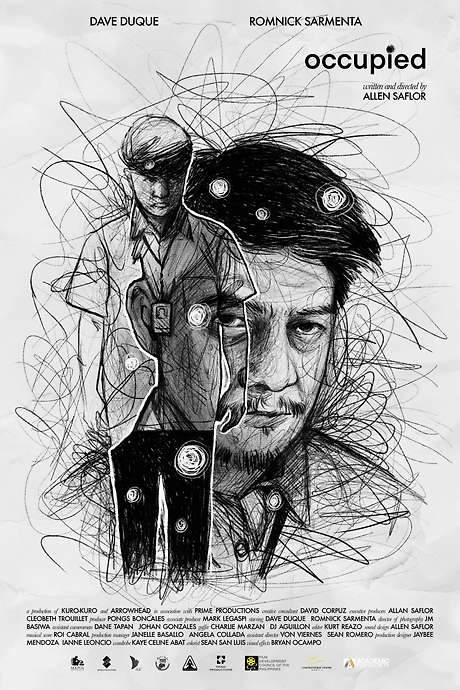
Occupied (2024) movie poster

Timeline

Occupied (2024) Timeline Explained – Every Event in Order

Release, runtime and language
2024 · 20 mins · Tagalog
Loading streaming availability…
Directed by
Allen Saflor
Starring
Romnick Sarmenta, Dave Duque

A bright young student who is deeply troubled by his intrusive thoughts is summoned by his strict teacher to confront him about his failing grades.

On this page (5)
  1. 1 Where to watch
  2. 2 Events in order (15)
  3. 3 Timeline questions answered
  4. 4 Movie threads
  5. 5 Every angle
Loading streaming availability…

15 events in order · contains spoilers

Occupied Timeline: Events in Chronological Order

Every key event of Occupied (2024) in order, scene by scene, with when and where it takes place. Use it to untangle flashbacks, time jumps and parallel storylines, to refresh your memory before the sequel or to find the exact scene you are thinking of.

  1. Climate Catastrophe and the Rise of Ny Kraft

    In the near future, Middle East turmoil and the US withdrawal from NATO trigger a continent-wide energy crisis. A catastrophic hurricane fueled by climate change devastates Norway, killing 700–800 people and wreaking untold physical and economic damage. The fictitious green party Ny Kraft sweeps to power, and idealistic Prime Minister Jesper Berg cuts off all fossil fuel production to develop thorium-based nuclear power as an alternative to oil. In desperation, the European Union acquiesces to a Russian-led invasion of Norway.

    When
    Near future
    Where
    Norway
  2. Berg Kidnapped by Russian Special Forces

    At the inauguration of the first thorium plant, Berg proclaims the end of the fossil fuel era. As he leaves the event, Russian special forces kidnap him and fly him by helicopter to a forest, where EU Commissioner Pierre Anselme demands via video chat that he restart Norwegian oil production or face a full-scale invasion. Berg refuses, but when a civilian approaches the helicopter and is shot dead, he is forced to agree to the EU's demands. He is then released and picked up by his bodyguard, Martin Djupvik, who has been pursuing the helicopter.

    Where
    Norway
  3. From Assassination Attempt to Free Norway

    On Constitution Day, Royal Guard member Stefan Christensen attempts to assassinate Russian ambassador Irina Sidorova but is thwarted by Djupvik, earning him the ambassador's gratitude and a key role in relations between the Norwegian government and the Russian embassy. When Norwegian soldiers abduct two Russian officials, Djupvik helps defuse the resulting hostage crisis, after which Police Security Service chief Wenche Arnesen assigns him to protect Russian officials. Around the same time, a hit-and-run kills a Russian agent outside the embassy, and Norway is pressured to extradite the driver, Elbek Musajev, who commits suicide to avoid deportation. Blaming Djupvik for his father's death, Elbek's son Iljas joins Christensen, Royal Guard commander Harald Vold, and nationalist academic Eivind Birkeland to form the rebel group Free Norway (Fritt Norge).

    When
    Constitution Day (May 17)
    Where
    Oslo, Norway
  4. Free Norway's Terror and a Canceled Withdrawal

    Free Norway detonates a bomb at the PST headquarters, injuring Djupvik, and journalist Thomas Eriksen is threatened by Christensen over his outspoken criticism of the occupation. A gas production facility in Viksund is then attacked, killing many Russian workers and causing Moscow to cancel its planned withdrawal from Norway. Russian troops enter Finnmark and a naval fleet conducts exercises off the northern coast, while Eriksen is found dead after going to investigate. Berg asks the EU to protect Norway's sovereignty, but the EU fails to act decisively.

  5. Berg's Government Goes into Internal Exile

    After a terminal brain tumor diagnosis, PST chief Wenche Arnesen secretly contacts and assists Free Norway, helping the group recruit retired military personnel and prisoners. Having lost a no-confidence motion in his own party, Berg sets up a caretaker government under the King's orders. After discovering that Russian sleeper agents are entering the country illegally, Berg interns and deports them, prompting Russian 'terrorists' armed with suicide vests to storm his office and take him hostage. Berg is rescued and evacuated to the US embassy, where a government in internal exile is established, and the Viksund attack is revealed as a Russian false flag staged to justify prolonging the occupation.

    Where
    Oslo, Norway
  6. Ambassador Kidnapped, Russian General Slain

    After Berg broadcasts an appeal for public resistance, Free Norway kidnaps Sidorova and a bodyguard, executing the guard live over the internet and threatening to kill her unless Russia withdraws within 24 hours. Russian special forces seize Oslo Airport in response, and America refuses to intervene even as its ambassador covertly poisons Berg's food to move him off embassy grounds. Djupvik tracks down and rescues Sidorova, killing Iljas Musajev in the process. With Bente Norum's help, Free Norway then assassinates a high-ranking Russian general outside the Russian embassy.

    Where
    Oslo, Norway
  7. Full Invasion — Berg Becomes the Rebel Leader

    The general's assassination is taken as an act of war, and Russian troops begin crossing the border into Norway. Arnesen records and releases a video claiming she is going into hiding as the leader of Free Norway, then commits suicide at a church. Unaware of her death, Djupvik and the Russian authorities search for her, while Berg is kidnapped and flown to a Free Norway resistance camp, where Vold welcomes him and asks if he is ready to fight for his country.

    Where
    Norway
  8. Guerrilla War Falters as Berg Is Exiled to Sweden

    Berg is proclaimed the new leader of Free Norway, and the group wages a guerrilla campaign against both Russian and Norwegian forces, staging attacks that nearly plummet Norway into civil war. Six months later, heavy Russian military and Norwegian police action has drained the insurgency's strength. Berg is forced into exile in neighboring Sweden, his replacement as prime minister, Anders Knudsen, resigns under the pressure, and his adviser and lover Anita Rygh accepts the prime ministerial position offered by the President of the Storting — severing her ties with Berg.

    Where
    Sweden
  9. The Melkøya Incident

    A Coast Guard officer brings Berg news that the Russians are installing cruise missile launchers on the Melkøya oil installation in northern Norway. Berg orders his insurgents to get photographic evidence, and a platoon of guardsmen independently confronts a Russian private military company stationed there, with guardsman Faisal Abdi transmitting video of the missiles before a gunfight breaks out. The guardsmen are captured and imprisoned, and after a trial in Norway with a Russian lay judge presiding, all are sentenced to the maximum 21 years. Frida Engø, Faisal's girlfriend, and hacker Leon Tangen found the peaceful protest group Free Our Soldiers (FOS) to demand their release.

    Where
    Melkøya, Norway
  10. Berg Exposed and on the Run

    Now head of the PST, Djupvik learns from a priest that Arnesen has been dead all along, and Norwegian police locate the Free Norway camp and capture Vold and other insurgents. Berg is exposed for communicating with his fighters through the video game DayZ and for ordering the illegal mission at Melkøya, forcing him to flee in the night; he escapes a faked execution in Poland and is arrested in Paris, before the European Court of Human Rights rules in his favour and orders his release. Rygh then offers the remaining insurgents amnesty, and Vold agrees to end violent resistance, launching the Liberation Party as Free Norway's peaceful political successor. Christensen refuses to lay down his arms, and after kidnapping Djupvik's daughter to demand the soldiers' freedom, he is captured and later shot dead by Djupvik during an interrogation.

  11. The False Flag Missile Attack

    Berg uncovers corruption in the finances of French EU commissioner Anselme and pressures him to help the Norwegian cause, leading to his resignation and replacement by a Polish politician who puts forward a motion demanding Russian withdrawal. Berg recruits FOS developer Leon Tangen to hack the Russian anti-aircraft defence system and stages a false flag attack, using a Russian missile to shoot down a Finnish Air Force fighter jet. The EU demands an immediate Russian withdrawal, which Moscow agrees to on the condition that Rygh remains prime minister to guarantee cordial relations. Resistance soldiers kill Leon to bury the truth — though he manages to tell Frida before dying — and after Frida informs Rygh, she orders the Navy to detain Berg as his ship enters Norwegian waters, but the crews refuse.

  12. Coup Thwarted and Rygh Assassinated

    Djupvik realizes that the hotel plot involving Bente Norum was a diversion and that a coup d'état led by Vold is imminent. Rygh evades the military and boards Berg's ship, confronting him with proof that he staged the missile attack; Berg agrees to implement her peace deal with Russia in exchange for being placed in charge of the Norwegian armed forces. Under Berg's orders, the military escorts Vold out of the prime minister's office, and Berg steps ashore in Oslo to an adoring crowd, holding a joint speech that proclaims Rygh his official successor as she announces the imminent end of the Russian occupation. As she concludes her speech, Faisal — one of the freed Melkøya soldiers, given a gun by Vold — shoots her dead, leaving a distraught Berg facing an uncertain future.

    Where
    Oslo, Norway
  13. Peace Treaty, Explosion and Purges

    Berg is tasked with forming a new government and reluctantly ratifies the peace treaty forged between Rygh and the Russian government, which entails resuming oil and gas production to Europe. During the reopening ceremony of the Melkøya facility, a gas explosion kills 56 people, and Berg — who was attending — narrowly escapes unharmed. After learning that Parliament collaborated with the Russian government during the occupation, he convinces the Supreme Court to dissolve it and schedules elections, with most members of parliament arrested on charges of treason and collaboration. He also begins registering Russians in Norway and revokes their citizenships, ordering deportations, while Sidorova's partner Lyubov Sorokina is implanted with a remote-controlled poison ampoule in Tbilisi as leverage to keep Sidorova loyal to Russia.

  14. Acid Attacks and Election Sabotage

    The '#BrandThem' movement begins punishing perceived profiteers and collaborators with the Russian occupation, splashing acid in the face of Sundby's son Fritjof and spraying Vold during a campaign video, leaving him unable to speak and ending his political career. Hilde suffers burns in a near-miss acid attack and joins Petter Bjørnstad's Unified Party as spokeswoman for justice after a Russian trade unionist's son is severely burned in an arson attack. In Moscow, businessman Igor Sobol enlists Bente Norum to spread a rumour that Berg was responsible for Rygh's assassination, aiming to swing the election in Bjørnstad's favour. At a staged meeting in Svalbard, Norum secretly gives Berg her source's name — Vold, who is then found dead — leading Sundby to resign and publicly denounce him, before Berg collapses during a televised debate two days before the election.

  15. Election Day and Berg's Final Broadcast

    On election day, Bjørnstad is declared the winner as Berg — confiding that he feels responsible for Rygh's death — escapes his security detail and disappears. Djupvik gives Hilde tickets to Washington D.C. to help her escape Sidorova's blackmail and, rather than reveal her location to his Russian captors, kills himself. Lyubov survives giving birth when the poison ampoule bursts, leaving the baby healthy while she is rushed to intensive care. A week later, Elvestad tracks Berg down, and the Njord environmental group's hackers trigger a city-wide power outage in Moscow; Berg stays behind, broadcasting a message that the blackouts will continue daily until Russia pays compensation for its carbon emissions, and calling for a global eco-terrorist campaign against polluting governments.

    Where
    Norway

Last updated: October 20, 2026 at 01:18

Was this helpful?

Timeline questions answered

Occupied Timeline Explained: Your Questions Answered

When does it happen, and why in that order? The questions people ask about the chronology of Occupied (2024): time jumps, flashbacks, cause and effect between scenes and the correct order of events, each answered with spoilers.

Q1

Why did Russia invade Norway in the first place?

Russia invades Norway after the European Union, desperate over a continent-wide energy crisis, agrees to a Russian-led intervention. The crisis was triggered by Middle East turmoil, the US withdrawal from NATO, and Norway's new green government (Ny Kraft) cutting off all fossil fuel production to pursue thorium nuclear power. With European energy supplies collapsing, the EU effectively invited Russia in to restore Norwegian oil output, giving Moscow the political cover it needed to occupy the country.

Foreshadowing: The hurricane devastating Norway and the energy crisis are established in the opening act as the direct preconditions for the invasion.

  • russian invasion
  • energy crisis
  • ny kraft
  • eu
  • norway
  • climate catastrophe
Q2

Why did Prime Minister Berg restart oil production after being kidnapped?

Berg is kidnapped by Russian special forces after the inauguration of Norway's first thorium plant and flown to a forest, where EU Commissioner Pierre Anselme demands via video chat that he resume Norwegian oil production or face a full-scale invasion. When Berg refuses and tries to escape, the soldiers shoot a civilian who approaches the helicopter, demonstrating they are willing to kill. Realizing continued resistance would trigger a wider war, Berg agrees to the EU's demands and is released.

  • jesper berg
  • kidnapping
  • oil production
  • eu commissioner
  • anselme
Q3

How did the Free Norway rebel group come together?

Free Norway forms from a convergence of personal grievances against both the Russian occupiers and the Norwegian government that accommodates them. After Royal Guard member Stefan Christensen's attempted assassination of Ambassador Sidorova on Constitution Day, he is recruited by Iljas Musajev, whose father Elbek committed suicide rather than be deported to Russia following a hit-and-run outside the embassy. They are joined by Royal Guard commander Harald Vold and nationalist academic Eivind Birkeland, creating the core of the resistance.

Foreshadowing: Christensen's thwarted assassination attempt establishes him as a committed militant willing to use violence against the occupation.

  • free norway
  • fritt norge
  • christensen
  • iljas musajev
  • harald vold
  • resistance
Q4

Was the Viksund gas facility attack really carried out by Free Norway?

No. The Viksund attack, which killed many Russian workers and prompted Russia to cancel its planned withdrawal from Norway, was actually a false flag operation staged by the Russian government. The revelation only emerges later, after Berg has been evacuated to the US embassy. The attack was deliberately designed to look like resistance terrorism so that Moscow would have a pretext to extend its military presence in Norway indefinitely.

  • viksund attack
  • false flag
  • russian government
  • free norway
  • withdrawal
Q5

Why did Berg flee to the US embassy and form a government in exile?

After Berg begins interning and deporting Russian sleeper agents discovered entering Norway, Russian forces disguised as suicide-vest-wearing terrorists storm his office and hold him hostage. He is rescued and evacuated to the US embassy for safety, where he establishes a government in internal exile. The move effectively removes him from direct Norwegian territory, allowing him to continue claiming legitimate authority while under American protection.

  • jesper berg
  • us embassy
  • internal exile
  • sleeper agents
  • hostage
Q6

Why did Wenche Arnesen claim to lead it and then commit suicide?

After being diagnosed with a terminal brain tumor, PST chief Wenche Arnesen secretly begins assisting Free Norway, helping recruit retired military personnel and prisoners. When her health deteriorates and she is told she can no longer work, she records and releases a video revealing her defection and claiming she is going into hiding as the leader of the resistance. She then commits suicide at a church, ensuring her death would be discovered only after her public claim, making the resistance appear to have a protected leader still at large.

Foreshadowing: Arnesen's quiet recruitment work in earlier episodes subtly foreshadows her deeper commitment to the resistance.

  • wenche arnesen
  • free norway
  • pst chief
  • suicide
  • terminal illness
Q7

What happened at the Melkøya oil installation with Faisal Abdi?

A Coast Guard officer informs exiled PM Berg that the Russians are secretly installing cruise missile launchers on the Melkøya oil platform in northern Norway. Berg orders his insurgents to gather photographic evidence, and a platoon of guardsmen independently confronts the Russian private military company stationed there. Naturalized Somali immigrant Faisal Abdi transmits video of the missiles before a gunfight breaks out, leaving the guardsmen captured and their leader killed. The soldiers are later tried in Norway with a Russian lay judge and sentenced to the maximum 21 years, sparking the peaceful protest movement Free Our Soldiers.

Foreshadowing: Berg's history of covert operations through the video game DayZ hints at his willingness to order risky intelligence-gathering missions.

  • melkoya
  • faisal abdi
  • cruise missiles
  • free our soldiers
  • fos
Q8

Why did Berg order a false flag attack that shot down a Finnish fighter jet?

Berg recruits Leon Tangen, a hacker from the Free Our Soldiers movement, to compromise the Russian anti-aircraft defense system and stages a false flag attack, using a Russian missile to shoot down a Finnish Air Force fighter jet. The manufactured atrocity is designed to outrage the EU into demanding an immediate Russian withdrawal from Norway. The plan succeeds diplomatically, as Moscow agrees to withdraw on the condition that Anita Rygh remains prime minister, but the truth later threatens to destroy Berg politically.

Foreshadowing: Berg's prior manipulation of political events and the Anselme corruption scandal establish that he is willing to use ruthless tactics to achieve his goals.

  • false flag
  • finnish fighter jet
  • leon tangen
  • russian withdrawal
  • european union
Q9

Who assassinated Anita Rygh and why?

Rygh is shot dead by Faisal Abdi, one of the freed Melkøya soldiers, as she concludes a joint speech with Berg proclaiming the imminent end of the Russian occupation. Faisal had been given a gun by Harald Vold during the suppressed coup attempt, and Vold himself had earlier been coerced into cooperating with Berg's enemies. Faisal acts because he believes the resistance must continue striking against the Russian occupation, and the assassination plunges the country back into chaos as Berg is forced to retake the prime ministership.

Foreshadowing: Vold's deteriorating political position and his private dealings with Berg hint at his eventual willingness to act against the new government.

  • anita rygh
  • assassination
  • faisal abdi
  • harald vold
  • coup
Q10

Why did Berg dissolve Parliament and arrest its members?

After Rygh's assassination, Berg returns to power and learns that Parliament secretly collaborated with the Russian government during the occupation, including a demand to grant Russian residents citizenship in exchange for political stability. Using emergency powers, he convinces the Supreme Court to dissolve Parliament, schedules new elections, and arrests most members on charges of treason and collaboration. The purge allows Berg to claim the moral high ground while eliminating political opposition ahead of the election.

Foreshadowing: Grete Sundby's later admission to Berg about parliamentary collaboration foreshadows this reckoning.

  • parliament dissolution
  • treason
  • collaboration
  • supreme court
  • jesper berg
Q11

What is the poison ampoule implanted in Lyubov Sorokina?

After Sidorova helps Lyubov escape Russia through Georgia, Russian officials arrange for Lyubov to undergo an operation in Tbilisi where a small ampoule of poison is implanted in her body. Sidorova is then told the ampoule is remote-controlled and that Lyubov will be killed if Sidorova ever acts against Russian interests again. The device is later revealed when Lyubov gives birth, causing the ampoule to burst; the baby survives, but Lyubov is rushed to intensive care.

Foreshadowing: Sidorova's earlier removal as ambassador and her relationship with Lyubov already made her a target for Russian leverage.

  • lyubov sorokina
  • sidorova
  • poison ampoule
  • remote controlled
  • tbilisi
Q12

Why did Harald Vold lose his ability to speak?

While filming a campaign video for his Liberation Party, Vold is sprayed in the face with acid from a makeshift launcher. The attack, which leaves him unable to speak and ends his political career, was secretly arranged by Berg's own campaign advisor. Berg, however, publicly blames Russia for the assault in order to undermine Vold's surging popularity in the polls. The act demonstrates Berg's willingness to destroy political rivals through covert violence.

Foreshadowing: Earlier '#BrandThem' acid attacks against perceived profiteers established the public climate that made such an attack easy to disguise.

  • harald vold
  • acid attack
  • liberation party
  • jesper berg
  • brandthem
Q13

Why does Berg end up broadcasting eco-terrorist demands from Njord?

After losing the election to Petter Bjørnstad and disappearing, Berg is tracked down by Marie Elvestad and returns to Njord, the environmental organization she runs. Together with the group's hackers, they trigger a city-wide power outage in Moscow, and Berg stays behind to broadcast a message demanding that Russia pay compensation for its carbon emissions or face continued blackouts. Framing the act as the start of a global eco-terrorist campaign against polluting governments, Berg abandons conventional politics entirely and embraces sabotage as his final lever of influence.

Foreshadowing: Berg's long-standing commitment to green energy and his earlier promotion of hydroelectric dams over oil show his willingness to use radical environmental positions politically.

  • jesper berg
  • njord
  • eco terrorism
  • moscow blackout
  • climate compensation
Q14

Why did Martin Djupvik kill himself at the end?

After giving Hilde tickets to Washington to help her escape Sidorova's blackmail, Djupvik is taken into Russian custody, who demand he reveal Hilde's location in exchange for his life. During a video call set up by Sidorova that the Russian authorities are using to trace Hilde, Djupvik realizes he is being used as bait. To prevent Hilde from being found, he kills himself with a bodyguard's gun, sacrificing himself to protect her.

Foreshadowing: Djupvik's earlier shooting of Christensen in custody and his resignation from the PST foreshadow his increasing moral burden and willingness to act alone.

  • martin djupvik
  • suicide
  • hilde
  • sidorova
  • russian custody
Q15

Why did the European Union fail to protect Norway from Russian occupation?

The EU's failure stems from its own complicity: it had invited the Russian invasion as a desperate response to the energy crisis caused by Berg's fossil fuel shutdown, and Commissioner Anselme had personally threatened Berg into restarting oil production. Once Russian troops were in Norway, the EU had no political will to confront Moscow because its own members depended on Russian-mediated energy supplies. Later, when Berg begs the EU to defend Norwegian sovereignty, it refuses to act decisively, exposing the institution as captured by the same energy politics that triggered the invasion.

Foreshadowing: The EU's initial acquiescence to the invasion in the first episode establishes its compromised position for the rest of the series.

  • european union
  • eu
  • anselme
  • russian invasion
  • energy crisis
Q16

What caused the gas explosion at Melkøya that killed 56 people?

The gas explosion during the reopening ceremony of the Melkøya facility kills 56 people shortly after Berg ratifies the peace treaty that resumes oil and gas production to Europe. The cause is never conclusively explained in the narrative, but its timing, occurring at a symbolic moment of resumed fossil fuel cooperation with Europe, suggests it was either sabotage by resistance forces opposed to the peace deal or a Russian warning strike. The explosion reinforces the fragility of the post-occupation settlement and contributes to Berg's increasingly authoritarian response.

Foreshadowing: The earlier Melkøya missile crisis and the soldiers' imprisonment set the stage for the facility's continued symbolic importance.

  • melkoya explosion
  • peace treaty
  • oil production
  • sabotage
  • berg
Q17

What is the #BrandThem movement and what do they want?

The #BrandThem movement emerges in the final season as a vigilante campaign that targets Norwegians perceived as profiteers and collaborators with the Russian occupation. Members carry out acid attacks on public figures, including Berg's state secretary's son and Harald Vold, and an arson attack severely burns the son of a Russian trade unionist who had cooperated with Norwegian authorities. The movement reflects popular fury at those who benefited from the occupation, but its violent tactics also become a tool that political actors like Berg can manipulate for their own ends.

Foreshadowing: Earlier anti-collaboration rhetoric from journalists like Thomas Eriksen and the social tensions surrounding the occupation foreshadow this radicalization.

  • brandthem
  • acid attack
  • vigilantes
  • collaboration
  • occupation
Q18

How did Prime Minister Berg end up leading the Free Norway resistance?

After the assassination of the Russian general outside the embassy is treated as an act of war and Russian troops begin crossing the border, Berg is kidnapped from his hiding place and flown by helicopter to a Free Norway resistance camp. Upon landing, he is welcomed by Harald Vold, who asks if he is ready to fight for his country. Berg is then proclaimed the new leader of Free Norway, lending the insurgency political legitimacy and international recognition while continuing the armed struggle against both the Russian occupiers and the Norwegian government that has accepted the peace deal.

Foreshadowing: Berg's earlier broadcasts calling for public resistance established his credibility as a leader of the anti-occupation cause.

  • jesper berg
  • free norway
  • resistance leader
  • harald vold
  • guerrilla

Movie threads

More Movies Like Occupied, by Mood & Story

Curated lists built around what makes Occupied tick: the same mood, the same kind of story or the same emotional payoff. Each list explains why these movies belong together.

Political occupation thrillers like Occupied

Sprawling political chess where civilians, spies, and leaders collide under foreign boots. If you liked Occupied and want more sprawling political thrillers about nations under siege, this thread surfaces movies like Occupied with layered espionage, resistance movements, geopolitical chess, and bleak outcomes. Expect extended narratives about occupation, false flag operations, hostage crises, and the moral compromises forced by invasion. These are tense, complex films for viewers craving serious geopolitical drama.

  • tense
  • oppressive
  • paranoid
  • claustrophobic
  • gripping
  • bleak
  • Tone: tense, bleak, paranoid
  • Pacing: variable, slow build with violent spikes
Why these movies?

The story pattern: These stories typically open with a seemingly stable political order that is shattered by an invasion, coup, or covert takeover. From there, the narrative braids together the arcs of high-level politicians negotiating impossible choices, spies running risky operations in moral gray zones, journalists trying to report truth under censorship, and civilians who simply try to survive. Acts of heroism are routinely punished, betrayals are common, and the line between resistance fighter and terrorist blurs. Climaxes usually involve a shocking act of violence, a public revelation, or a hostage situation, and endings tend to leave the political situation unresolved or worse than where it began, emphasizing that individual sacrifice rarely reverses the larger tide.

Why they belong together: They are grouped because they share the same high-stakes geopolitical subject matter, extended ensemble storytelling, very high narrative complexity, and a tonal commitment to paranoia, dread, and moral compromise. Pacing oscillates between slow diplomatic scheming and sudden violent eruptions, intensity stays cranked up, and endings lean bleak rather than triumphant. Together they create an exhausting but gripping viewing experience about power, sovereignty, and the human cost of political conflict.
Oppressive paranoia and bleak endings like Occupied

Ordinary lives are ground down by political machinery, surveillance, and invisible enemies. If you liked Occupied and want more movies like Occupied that leave you emotionally drained, this thread gathers tense, paranoid dramas where ordinary people are crushed by political forces beyond their control. Look here for bleak, complex stories heavy on surveillance, false flag operations, moral compromise, and unresolved endings. These are dark thrillers for viewers who love intense, claustrophobic political storytelling.

  • oppressive
  • anxious
  • claustrophobic
  • dark
  • bleak
  • gripping
  • Tone: dark, anxious, bleak
  • Pacing: variable, shifting between slow dread and sudden bursts
Why these movies?

The story pattern: These films often begin with a small protagonist — a student, a functionary, a quiet operative — whose world is invaded by a larger political upheaval. That upheaval becomes inescapable: surveillance tightens, allegiances become deadly, and even personal relationships are weaponized. Through escalating kidnappings, betrayals, assassinations, and hostage crises, the protagonist is forced into choices that strip away innocence or idealism. The narrative rarely rewards virtue, and the finale typically strands the lead as a fugitive, a casualty, or a compromised survivor, refusing the comfort of a clean resolution and insisting that political violence leaves permanent scars.

Why they belong together: They share an oppressive, anxious atmosphere, very high narrative complexity, variable pacing that swings between scheming and sudden violence, and endings that are bleak, ambiguous, or unresolved. Emotional weight is heavy throughout, humor is almost nonexistent, and content tends to include disturbing themes such as torture, suicide, child endangerment, or political corruption. The unifying feeling is of being boxed in by history, with no real escape hatch.

Every angle

Occupied (2024) Explained: Plot, Timeline & Characters

Everything about Occupied in one place: what happens in the plot summary, the timeline in chronological order, the characters and meaning and a spoiler-free summary. What's After the Movie adds the cast, box office and post-credit scenes.

Coming soon on iOS and Android

The Plot Explained Movie Summary App

Plot summaries, endings explained and timelines on your phone. Catch up on any movie in minutes, save your favorites and never miss a twist again.

Be the first to know when we launch. Your email stays private, always.

Learn more about the app