












Plot Explained Spoilers guaranteed!
Plot Explained

Browse by genre

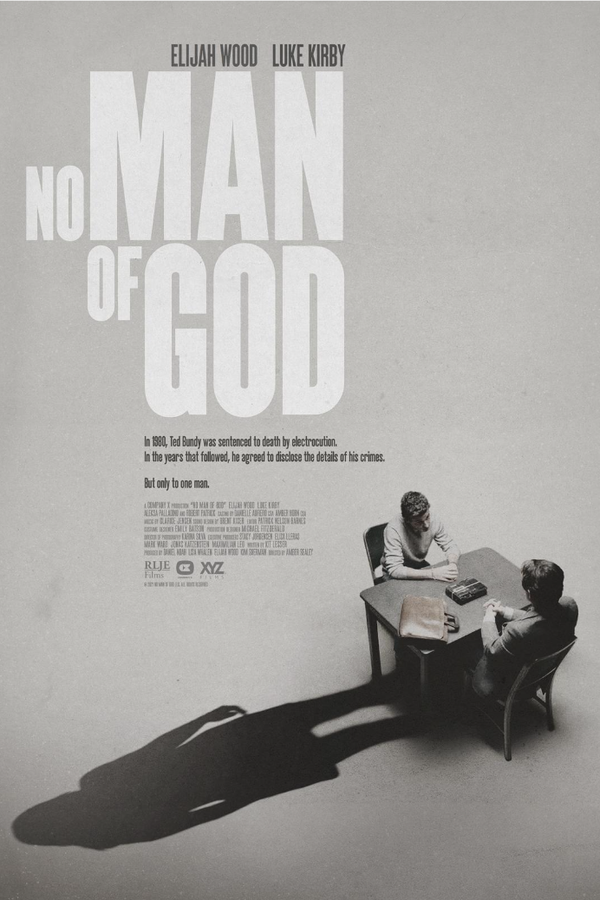
No Man of God (2021) movie poster

Ending Explained

No Man of God (2021) Ending Explained – Final Scene & Meaning

Release, runtime and language
2021 · 100 min · English
Echo score 64
JustWatch #21,740 3
Directed by
Amber Sealey
Starring
Mac Brandt, Aleksa Palladino, Robert Patrick, Elijah Wood, Luke Kirby, Gilbert Owuor

As Ted Bundy faced execution, he shared his most disturbing secrets with FBI agent Bill Hagmaier. The film portrays the unusual relationship that developed between the notorious serial killer and the investigator, examining their interactions in the years before Bundy's death. Through these conversations, the film attempts to illuminate the psychology of a chilling criminal and the complexities of confronting evil.

On this page (7)
  1. 1 Where to watch
  2. 2 What happens at the end
  3. 3 Final events in order
  4. 4 Ending questions answered
  5. 5 Movie threads
  6. 6 Movies like No Man of God
  7. 7 Every angle

Where to watch

Where to Watch No Man of God (2021)

Where can you watch No Man of God? Stream, rent or buy it in the US, including on AMC+, Philo and Sundance Now: current JustWatch availability with up-to-date prices.

Streaming availability powered by JustWatch

Ending explained · contains spoilers

What Happens at the End of No Man of God?

How No Man of God (2021) ends, what the final scene means, which earlier moments set it up and how to read the ending if the film leaves it open. The full ending explained, with every spoiler.

At the end of No Man of God, the film leaves viewers with a haunting reflection on the nature of evil and accountability. After years of engaging in a psychological cat-and-mouse game, FBI profiler Bill Hagmaier refuses to grant Ted Bundy the satisfaction of revealing his true motivation. When Bundy, during their final conversation, asks Hagmaier why he thinks he killed, Hagmaier simply responds, "because you wanted to." This blunt statement silences Bundy’s manipulative attempts to justify his actions, emphasizing that his crimes are rooted in a desire driven by his own twisted will rather than external influences or excuses. The scene culminates in Bundy offering a chilling and unrepentant admission of guilt—an unfiltered glimpse into his monstrous psyche—and, in doing so, dehumanizes himself further, showing that his motivations are merely about satisfying his own lust for power and control.

Meanwhile, the film’s concluding images and Hagmaier’s final reflections underscore a complex stance on justice and morality. The last shot features Hagmaier watching a hostile crowd celebrating Bundy’s execution, a moment that prompts viewers to question whether capital punishment is the just response to such evil or whether it simply perpetuates a cycle of violence. The movie refrains from providing easy answers, instead inviting the audience to consider the human capacity for evil, the dangers of idolizing such figures, and the importance of acknowledging the voices and victims silenced by Bundy. Throughout, No Man of God emphasizes the disturbing ease with which evil can be masked by normalcy, and how understanding—while crucial—is no excuse for allowing such horrors to go unpunished. The ending leaves us with a haunting sense of the unresolved tension between justice, humanity, and the lingering shadows of evil.

Last updated: June 25, 2025 at 09:00

Was this helpful?

The last 4 events

How No Man of God Ends: The Final Events in Order

The last events of No Man of God (2021) in chronological order, the run-up to the ending explained above. The complete timeline has all 14 events, scene by scene.

Open the full timeline
  1. Heartbreaking Dialogue Before Execution

    On the eve of his execution, Hagmaier and Bundy share a poignant conversation where Bundy recounts the murder of one of his victims. Hagmaier is left reeling from the emotional weight of Bundy’s chilling reminiscences, contrasting life and death.

    When
    1989
    Where
    Florida State Prison
  2. Bundy's Suicidal Intensity

    Throughout their final exchanges, Bundy expresses gratitude for Hagmaier's support while revealing his own suicidal thoughts. This moment creates a stark juxtaposition between Bundy's intense personal struggles and the grim reality of his actions.

    When
    1989
    Where
    Florida State Prison
  3. Hagmaier Omitted from Execution

    As execution day arrives, Hagmaier learns that he will not be present for Bundy's execution, reducing his role to that of a mere observer. Overwhelmed by the emotional turmoil, he seeks solace in a phone call to his son, illustrating the personal toll of the events.

    When
    1989
    Where
    Florida State Prison
  4. The Execution and Aftermath

    Cheers erupt outside the prison as news of Bundy's execution circulates, encapsulating the mixed feelings surrounding justice. For those involved, the conclusion of Bundy's life does not equate to satisfaction, leaving lingering questions about morality and evil.

    When
    1989
    Where
    Florida State Prison

Ending questions answered

No Man of God Ending: Your Questions Answered

The questions people ask most about the ending of No Man of God (2021): what the final scene means, how the twist works, what happens to each character and how to read the ending. Each answer contains spoilers.

Q1

Why did Bill Hagmaier refuse to give Bundy an answer about his motivation?

Hagmaier deliberately withheld the explanation Bundy was seeking because he recognized that Bundy craved validation for his crimes. By refusing to provide a psychological justification, Hagmaier denied Bundy the power and control he sought through these conversations. This act represents Hagmaier's refusal to be manipulated into understanding or legitimizing Bundy's reasoning.

Foreshadowing: Earlier conversations showed Bundy repeatedly probing Hagmaier for validation of his twisted logic.

  • bill hagmaier
  • ted bundy
  • motivation
  • manipulation
  • power control
Q2

What did Hagmaier mean when he said "because you wanted to"?

Hagmaier's statement directly confronted Bundy by attributing his crimes entirely to personal choice and desire, rejecting any external explanation. This concise response stripped away the complex psychological narrative Bundy had been constructing throughout their conversations. It positioned Bundy's actions as driven by his own twisted will rather than trauma, upbringing, or other factors he might use to excuse his behavior.

Foreshadowing: Throughout the film, Bundy attempts to frame his crimes as resulting from forces beyond his control.

  • because you wanted to
  • psychology
  • responsibility
  • blame
Q3

Does Ted Bundy confess to his crimes in the ending?

Bundy offers an unrepentant admission of guilt, but it comes across as a chilling display of his monstrous self-awareness rather than genuine remorse. His confession serves to dehumanize himself further, showing that he understood the magnitude of his actions but felt no moral conflict. This moment reinforces the film's portrayal of Bundy as someone who committed crimes purely to satisfy his own lust for power and control.

Foreshadowing: Bundy had previously toyed with partial confessions throughout the film.

  • confession
  • admission guilt
  • execution
Q4

What happens at the end of No Man of God?

After their final conversation where Hagmaier denies Bundy the satisfaction of explanation, Bundy is executed. The film concludes with Hagmaier watching a hostile crowd outside the prison celebrating the execution. This creates a haunting image that raises questions about whether capital punishment brings true justice or simply perpetuates another cycle of violence.

Foreshadowing: The film's title and themes have foreshadowed the execution as inevitable.

  • execution
  • capital punishment
  • death penalty
Q5

Why does the film show the crowd celebrating Bundy's execution?

The scene presents a stark visual of public celebration at Bundy's death, forcing viewers to confront uncomfortable questions about justice and mob mentality. The film suggests that while Bundy unquestionably deserved punishment, the celebration reflects a kind of spectacle and vengefulness that mirrors the very violence they claim to oppose. Hagmaier's solitary observation of this celebration positions him as a figure caught between duty and moral uncertainty.

Foreshadowing: Earlier scenes established Hagmaier's complex relationship with the case and the public's fascination with Bundy.

  • crowd
  • celebration
  • execution
  • justice
  • mob mentality
Q6

What is the film's message about justice in the ending?

The ending deliberately avoids providing clear answers about whether execution constitutes true justice. Instead, it presents capital punishment as a morally complex act that brings closure but also perpetuates a cycle of violence. The film emphasizes that understanding Bundy's psychology does not excuse his actions or diminish the suffering of his victims. It invites viewers to consider the tension between justice, humanity, and the lingering darkness left by such crimes.

Foreshadowing: The entire cat-and-mouse dynamic between Hagmaier and Bundy explored the limits of psychological understanding.

  • justice
  • morality
  • capital punishment
  • meaning
Q7

Does Hagmaier find closure after Bundy's execution?

The ending suggests Hagmaier experiences no clear sense of victory or resolution. His final observation of the celebrating crowd reflects personal emptiness rather than closure. Years of engaging with Bundy's twisted psychology have left him in a state of moral uncertainty. The film portrays his journey as one of professional duty fulfilled but personal peace remains elusive, underscoring the psychological toll of confronting such evil.

Foreshadowing: The slow pacing throughout the film emphasized the accumulated emotional weight on Hagmaier.

  • bill hagmaier
  • closure
  • emotional outcome
Q8

What does the title No Man of God mean in relation to the ending?

The title reflects the film's exploration of moral emptiness and the absence of divine redemption in Bundy's story. At the ending, Bundy's unrepentant admission demonstrates that he remains fundamentally disconnected from humanity or divinity. The phrase suggests that some evil exists beyond spiritual or moral redemption, and that capital punishment represents the ultimate accountability without offering spiritual meaning. The ending reinforces that Bundy's crimes were exercises of personal will without justification or excuse.

Foreshadowing: The title was established early but gains full resonance through Bundy's final attitude.

  • title meaning
  • redemption
  • evil
  • accountability

Movie threads

More Movies Like No Man of God, by Mood & Story

Curated lists built around what makes No Man of God tick: the same mood, the same kind of story or the same emotional payoff. Each list explains why these movies belong together.

Movies with tense, confined dialogues like No Man of God

Movies built around tense, intimate conversations in confined spaces. If you liked the intense, dialogue-driven tension of No Man of God, you'll find similar movies here. These films often take place in single rooms or confined spaces, building psychological unease through powerful conversations between characters with deep conflicts, making them similar to No Man of God's immersive and claustrophobic feel.

  • claustrophobic
  • tense
  • psychological
  • dialogue-driven
  • unsettling
  • intimate
  • Tone: dark, tense, psychological
  • Pacing: slow, deliberate
Why these movies?

The story pattern: The narrative in this thread unfolds primarily through sustained, high-stakes dialogue between two or a few characters in a limited setting. The conflict is psychological and verbal, with power dynamics shifting through conversation, revealing hidden truths and testing personal boundaries.

Why they belong together: Movies are grouped here for their shared reliance on confined settings and dialogue to generate suspense and explore complex character psychology, creating a distinct, intimate, and often unsettling viewing experience.


True crime psychology movies like No Man of God

Stories about investigators delving into the minds of dangerous criminals. For viewers who enjoyed the criminal profiling and psychological exploration in No Man of God, this section features similar movies about FBI agents and detectives forming complex relationships with killers. These films dive deep into the criminal mind, offering a similar blend of true crime drama and heavy psychological themes as seen in No Man of God.

  • psychological
  • somber
  • intellectual
  • unsettling
  • true crime
  • moral ambiguity
  • Tone: dark, somber, intellectual
  • Pacing: slow, steady
Why these movies?

The story pattern: The narrative follows a law enforcement professional as they engage with a notorious criminal, often through a series of interviews. The journey explores the criminal's psychology, the investigator's methodology, and the blurred lines that can form in this high-stakes intellectual and emotional confrontation.

Why they belong together: These films share a core focus on the process of criminal profiling and the morally ambiguous, intellectually challenging relationship that can develop between hunter and hunted, resulting in a heavy, thought-provoking mood.

If you liked this

Movies Like No Man of God

Similar movies to No Man of God: the same genre, themes or kind of story. Each one comes with its own plot summary, timeline and ending explained.

Browse all movie summaries

Every angle

No Man of God (2021) Explained: Plot, Ending, Timeline & Characters

Everything about No Man of God in one place: what happens in the plot summary, the timeline in chronological order, the characters and meaning, the ending explained and a spoiler-free summary. What's After the Movie adds the cast, box office and post-credit scenes.

Coming soon on iOS and Android

The Plot Explained Movie Summary App

Plot summaries, endings explained and timelines on your phone. Catch up on any movie in minutes, save your favorites and never miss a twist again.

Be the first to know when we launch. Your email stays private, always.

Learn more about the app