


Plot Explained Spoilers guaranteed!
Plot Explained

Browse by genre

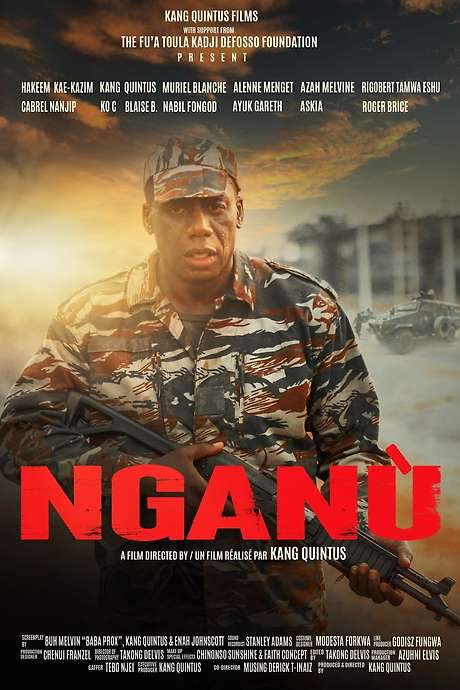
Nganù (2023) movie poster

Timeline

Nganù (2023) Timeline Explained – Every Event in Order

Release, runtime and language
2023 · 101 mins · English
JustWatch #11,662 7
Starring
Hakeem Kae-Kazim, Kang Quintus, Alenne Menget, Muriel Blanche, Azah Melvine, Ayuk Gareth

Villagers advise an abusive husband to channel his rage in the army. There, he must come to terms with violent urges that have deep and painful roots.

On this page (5)
  1. 1 Where to watch
  2. 2 Events in order (11)
  3. 3 Timeline questions answered
  4. 4 Movie threads
  5. 5 Every angle

Where to watch

Where to Watch Nganù (2023)

Where can you watch Nganù? Stream, rent or buy it in the US, including on Netflix and Netflix Standard: current JustWatch availability with up-to-date prices.

Streaming availability powered by JustWatch

11 events in order · contains spoilers

Nganù Timeline: Events in Chronological Order

Every key event of Nganù (2023) in order, scene by scene, with when and where it takes place. Use it to untangle flashbacks, time jumps and parallel storylines, to refresh your memory before the sequel or to find the exact scene you are thinking of.

  1. Childhood trauma haunts Nganu

    Nganu is tormented by memories of his abusive father and his mother's suffering, shaping the way he views family life. These memories linger and color his later behavior, fueling a latent brutality. The weight of the past foreshadows the violence that will erupt at home and beyond.

    When
    Childhood
    Where
    Nganu's childhood home, Cameroon
  2. Domestic violence escalates at home

    Nganu's behavior worsens as he abuses his wife Meukeuna and his son Kum, blaming them for his misfortunes. The abuse becomes a recurring pattern that sows fear and resentment in the family. His aggression marks the family's days with constant tension.

    When
    Pre-army
    Where
    Village home
  3. Pregnancy sparks accusations and doubts

    When Meukeuna becomes pregnant, Nganu accuses her of infidelity, projecting his own insecurities onto the relationship. His suspicion extends to Kum, whom he starts to believe might not be his biological son. The home becomes a battleground as trust erodes.

    When
    Pre-army
    Where
    Village home
  4. Neighbors urge a change: join the army

    Concerned neighbors suggest that Nganu join the army to channel his anger and find purpose. He reluctantly agrees, hoping discipline and structure might steady him. The decision marks a turning point that shifts the focus from home to the wider world.

    When
    Pre-deployment
    Where
    Village to recruitment center
  5. Captain Bello sees potential

    At the recruitment camp, Captain Bello is strict but fair, recognizing a spark in Nganu. He offers him a chance to prove himself and channel his rage into controlled action. This mentor-like figure becomes a catalyst for Nganu's military arc.

    When
    Enlistment
    Where
    Military base
  6. Bonds form with Nabil and Ko-C

    Nganu befriends soldiers Nabil and Ko-C, and they share personal stories from their own lives. The camaraderie gives him a sense of belonging he has long lacked. He begins to show signs of personal growth and remorse for his past actions.

    When
    During service
    Where
    Military camp
  7. Trauma resurfaced by battlefield violence

    Despite the growing trust, the violence and atrocities he witnesses reignite Nganu's old traumas. The memories of his past and the brutality around him feed his aggression rather than temper it. He struggles to keep control as the cycle of violence returns.

    When
    During service
    Where
    Various army theaters
  8. News of childbirth deepens paternity obsession

    Nganu learns that Meukeuna has given birth, which intensifies his fixation on whether Kum is truly his son. The fear of betrayal gnaws at him, sharpening his need to prove paternity. His mental stability becomes closely tied to the truth of their family.

    When
    During service (upon learning birth)
    Where
    With the army
  9. Desertion and return to village

    Overcome by his instability, Nganu deserts the army and returns to his village armed and volatile. He carries the trauma back home and now uses violence as a tool to force truth from his wife and son. The distance between him and his family collapses in a dangerous confrontation.

    When
    Post-desertion
    Where
    Nganu's village
  10. Confrontation about paternity

    Back in the village, Nganu confronts Meukeuna and Kum, demanding the truth about Kum's paternity and threatening to kill them if they lie. The tension peaks as his fear of betrayal drives him toward a violent resolution. The family teeters on the brink of ruin.

    When
    Evening
    Where
    Meukeuna and Kum's home
  11. Final dramatic showdown

    The confrontation culminates in a dramatic showdown that determines the fate of Nganu and his family. The outcome hinges on the truth, courage, and the cost of past violence. The film leaves the consequences of the clash open to interpretation.

    When
    Climax
    Where
    Village

Last updated: February 06, 2026 at 10:54

Was this helpful?

Timeline questions answered

Nganù Timeline Explained: Your Questions Answered

When does it happen, and why in that order? The questions people ask about the chronology of Nganù (2023): time jumps, flashbacks, cause and effect between scenes and the correct order of events, each answered with spoilers.

Q1

Why does Nganu abuse Meukeuna and Kum?

Nganu's violence stems from childhood trauma. He grew up watching his father abuse his mother, and those memories have shaped him into a man who replicates that cycle of aggression. Rather than processing his pain, he projects it onto his family, blaming them for misfortunes he cannot control.

Foreshadowing: Earlier memories of his father's brutality foreshadow the abuse Nganu inflicts on his own family.

  • nganu abuse
  • domestic violence
  • childhood trauma
  • cycle of violence
Q2

Why does Nganu accuse Meukeuna of being unfaithful?

Nganu's accusations stem from deep insecurity and paranoia rooted in his traumatic past. When Meukeuna becomes pregnant, his fear of being betrayed mirrors the suffering he witnessed his mother endure. He projects his own anxieties onto her, unable to trust because he has never learned healthy attachment.

Foreshadowing: His mother's suffering at the hands of his father planted the seed of distrust that later explodes toward Meukeuna.

  • nganu jealousy
  • infidelity accusations
  • paranoia
  • insecurity
Q3

Why does Nganu believe Kum might not be his biological son?

Nganu's paternity doubts are driven by his psychological instability and need for control. His inability to trust stems from childhood trauma, and as his paranoia intensifies during Meukeuna's pregnancy, he fixates on the idea that his family is betraying him the way he imagines his mother was betrayed by his father.

Foreshadowing: The pattern of his father's suspicions and cruelty hints at why Nganu mirrors this behavior.

  • kum paternity
  • nganu son
  • family trust
  • paternity doubts
Q4

Why do the neighbors suggest Nganu join the army?

The neighbors observe Nganu's escalating violence and fear for Meukeuna and Kum's safety. They believe the army's structure and discipline might redirect his anger into something productive, giving him purpose and boundaries he lacks as a farmer consumed by rage.

Foreshadowing: This intervention reflects the community's awareness of the danger brewing in Nganu's home.

  • army recruitment
  • neighbors help
  • nganu army
  • village advice
Q5

How does Captain Bello affect Nganu?

Captain Bello serves as a mentor who sees potential beneath Nganu's rough exterior. His strict but fair approach gives Nganu a framework for discipline and respect that he never received as a child. This relationship becomes a catalyst for Nganu's tentative personal growth during military service.

Foreshadowing: Captain Bello's recognition of Nganu's potential establishes the possibility of change, even if ultimately unstable.

  • captain bello
  • military mentor
  • nganu growth
  • army figures
Q6

Why does Nganu desert the army?

Nganu deserts because the violence and atrocities he witnesses in the army trigger his suppressed traumatic memories. Rather than healing, the battlefield reignites his aggression, and combined with his obsession over his wife's childbirth and paternity questions, his mental stability deteriorates until he flees back to his village armed and dangerous.

Foreshadowing: His earlier struggles with trauma foreshadow how wartime violence would overwhelm his fragile progress.

  • nganu desertion
  • army trauma
  • mental breakdown
  • return to village
Q7

Why does the army make Nganu's trauma worse instead of helping?

The army exposes Nganu to brutal violence that mirrors his childhood memories of his father's cruelty. Rather than providing a fresh start, the atrocities he witnesses and participates in pull him back into the psychological patterns he hoped to escape, amplifying rather than healing his psychological wounds.

Foreshadowing: The cycle of violence from his childhood finds fertile ground in the army's own violence.

  • trauma relapse
  • army violence
  • ptsd
  • psychological breakdown
Q8

What happens in Nganu's confrontation with Meukeuna and Kum?

After deserting, Nganu returns home armed and demands Meukeuna reveal the truth about Kum's paternity, threatening to kill them if they lie. The showdown escalates to a life-or-death moment where the family's survival depends on confronting his obsessive jealousy and violent obsession.

Foreshadowing: His earlier accusations and paternity doubts build inexorably toward this violent confrontation.

  • final showdown
  • confrontation scene
  • paternity reveal
  • family fate
Q9

Is the ending of Nganù resolved or left ambiguous?

The ending remains deliberately ambiguous. The dramatic showdown determines the family's fate, but the specific outcome is left unclear. The film prioritizes the intensity of the confrontation over providing closure, leaving viewers to interpret whether tragedy occurs or if some other resolution unfolds.

Foreshadowing: The unresolved nature of the climax mirrors the unresolved trauma that drives the entire narrative.

  • ending explained
  • ambiguous conclusion
  • nganu fate
  • movie resolution
Q10

Why does Nganu agree to join the army despite his reluctance?

Nganu enlists because his situation at home has become unsustainable. Neighbors recognize the growing danger, and the army represents a last resort. Though reluctant to leave, he harbors hope that discipline and purpose might steady his volatile temperament and give him control over the rage that consumes him.

Foreshadowing: This decision marks the pivotal shift from domestic tragedy to the larger world that will shape his fate.

  • army enlistment
  • nganu decision
  • hope for change
  • desperation

Movie threads

More Movies Like Nganù, by Mood & Story

Curated lists built around what makes Nganù tick: the same mood, the same kind of story or the same emotional payoff. Each list explains why these movies belong together.

Descent into darkness like in Nganù

Character studies of individuals collapsing under the weight of their own trauma. Explore movies like Nganù that follow a character's psychological collapse. If you were gripped by the heavy, intense portrayal of a man succumbing to his violent past, these films offer similar journeys into inner turmoil.

  • psychological
  • bleak
  • intense
  • unsettling
  • somber
  • gritty
  • Tone: dark, bleak, oppressive
  • Pacing: steady, methodical
Why these movies?

The story pattern: Stories in this thread follow a clear, often linear progression of a protagonist's deterioration. The plot is driven by internal conflict, where suppressed trauma or rage surfaces and escalates, leading to a crisis point that threatens the character and those around them.

Why they belong together: These movies are grouped by their shared focus on a single, intense character study of psychological decline. They feature a dark, heavy tone, steady pacing that builds tension, and an emotional journey centered on confronting deep-seated personal demons.


Cycles of violence like in Nganù

Stories that explore how abuse and trauma are passed down through generations. Find movies similar to Nganù that explore the theme of intergenerational trauma and the cycle of violence. If you were interested in how the protagonist's painful roots fuel his actions, these films examine the same powerful and difficult subject matter.

  • somber
  • gritty
  • anxious
  • unsettling
  • heavy
  • confrontational
  • Tone: somber, gritty, anxious
  • Pacing: steady, linear
Why these movies?

The story pattern: The narrative pattern involves uncovering a painful family or personal history that directly influences the protagonist's present-day struggles. The central conflict is often the character's battle against this inherited legacy, leading to a climactic confrontation that determines whether the cycle will continue or be broken.

Why they belong together: These films are united by their deep exploration of how trauma is inherited and perpetuated. They share a somber, anxious mood, straightforward storytelling that clearly links cause and effect, and a heavy emotional weight stemming from the characters' painful histories.

Every angle

Nganù (2023) Explained: Plot, Timeline & Characters

Everything about Nganù in one place: what happens in the plot summary, the timeline in chronological order, the characters and meaning and a spoiler-free summary. What's After the Movie adds the cast, box office and post-credit scenes.

Coming soon on iOS and Android

The Plot Explained Movie Summary App

Plot summaries, endings explained and timelines on your phone. Catch up on any movie in minutes, save your favorites and never miss a twist again.

Be the first to know when we launch. Your email stays private, always.

Learn more about the app