Plot Explained Spoilers guaranteed!
Plot Explained

Browse by genre

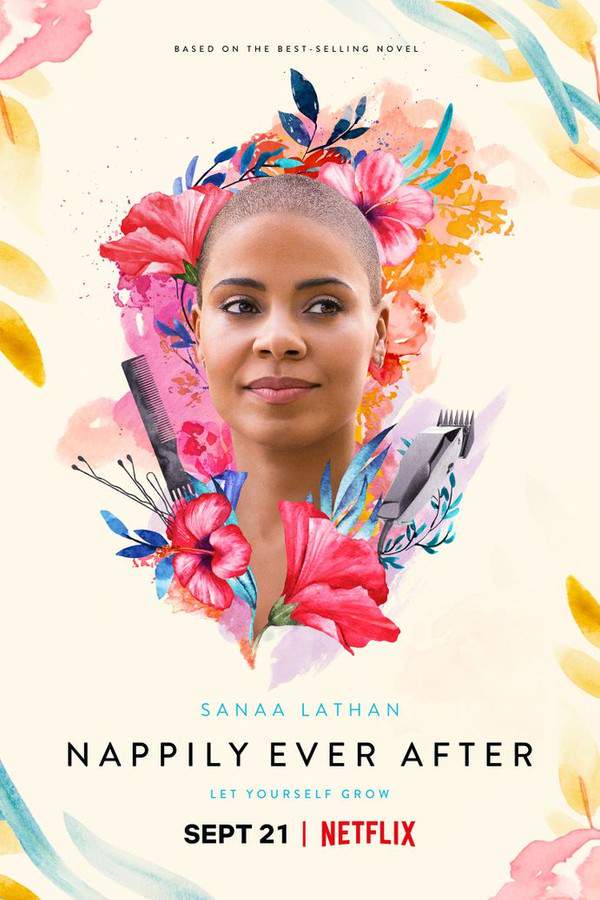
Nappily Ever After (2018) movie poster

Plot Summary

Nappily Ever After (2018) Plot Summary Explained

Release, runtime and language
2018 · 98 min · English
Echo score 51
Directed by
Haifaa Al-Mansour
Starring
Brittany S. Hall, Camille Guaty, Catherine Dyer, Daria Johns, Ernie Hudson, George Lott

Violet Jones believed her career and carefully styled hair were the keys to her happiness. But when a mishap leads to a disastrous haircut, her carefully constructed world begins to unravel. This experience prompts a journey of self-discovery, forcing her to re-evaluate her relationships, career, and sense of identity. She must now confront the difference between her expectations and the realities of finding true happiness.

On this page (6)
  1. 1 What happens: full plot
  2. 2 Plot questions answered
  3. 3 The book behind the movie
  4. 4 Movie threads
  5. 5 Movies like Nappily Ever After
  6. 6 Every angle

Full plot summary · contains spoilers

What Happens in Nappily Ever After: Full Plot Summary

The whole story of Nappily Ever After (2018) explained, from the opening scene to the final frame: every key event, every twist and what it all adds up to. Read it as a quick recap before the sequel, to check a scene you missed, or to finally understand what really happened.

Violet, portrayed by Sanaa Lathan, has always felt the pressure of perfection from her mother, Paulette, played by Lynn Whitfield. From a young age, Paulette insists on straightening Violet's naturally curly hair, causing both physical burns and emotional scars. During a pool outing, a childhood dare leads Violet to dive underwater, where her hair naturally frizzes up, prompting harsh teasing from her peers. This moment sets the tone for Violet’s challenging relationship with self-image and societal expectations.

As an adult, Violet appears to have it all—a successful career in advertising, a long-term boyfriend in Clint, skillfully portrayed by Ricky Whittle, and a seemingly perfect life. Yet, the issues with her mother persist, and the strain with her estranged father, played by Ernie Hudson, becomes apparent. On her birthday, Violet anticipates a marriage proposal, but instead, Clint presents her with a dog, leaving her heartbroken and prompting a confrontation about their superficial relationship.

Encounters with a young girl named Zoe, played by Daria Johns, lead Violet to confront broader societal issues and her own identity. When forced to engage with Zoe's misbehavior, Violet realizes the complexities of parenthood and the challenges of raising a child in a world rife with judgment.

In an impulsive move, Violet decides to bleach her hair blonde, believing this drastic change will absorb her insecurities. However, a series of misguided nights culminates in a moment of painful self-realization, leading her to shave her head entirely. This bold act becomes a catalyst for growth, as she begins to embrace her new appearance and the authenticity it brings.

As she begins to explore her newfound confidence, Violet develops a romantic relationship with Will, portrayed by Lyriq Bent, who supports her through personal trials. At a Fourth of July celebration, tensions rise when Paulette belittles Will, prompting Violet to reassess her commitment to both her mother and her relationship.

After a setback at work involving a crucial pitch, Violet decides to leave her job. With renewed spirit, she embraces herself authentically, culminating in a steamy reunion with Clint. Despite her mother's expectations, Violet ultimately takes a leap of faith—both in her career and personal life.

By pitching a product aimed at women with natural hair, inspired by her own journey, Violet steps into her power, signaling a new chapter. The story wraps up with her confident strides into the future, embracing who she truly is, free from the confines of perfectionism and societal standards.

Last updated: November 16, 2024 at 12:01

Was this helpful?

Plot questions answered

Nappily Ever After Plot Explained: Your Questions Answered

The questions people ask most about Nappily Ever After (2018): what happens in the confusing scenes, why the characters do what they do, the twists, hidden details and what the ending means. Each answer contains spoilers.

Q1

Why does Violet shave her head after bleaching her hair?

Violet shaves her head as a response to a painful self-realization. After bleaching her hair blonde in an impulsive attempt to change her appearance and escape her insecurities, she experiences a series of bad decisions that culminate in this bold act. The shaved head becomes a turning point where she stops trying to conform to societal standards and begins embracing her authentic self, leading to genuine confidence.

Foreshadowing: Her childhood experience at the pool, where her natural hair frizzed and drew teasing, planted the seed of her lifelong struggle with self-image.

  • Violet Jones
  • hair
  • self-acceptance
  • identity
  • transformation
  • confidence
Q2

Why does Clint give Violet a dog instead of proposing on her birthday?

Clint gives Violet a dog instead of a proposal because their relationship is fundamentally superficial. While Violet believes everything is perfect and expects a marriage proposal, Clint recognizes that their connection lacks depth. The gift of a dog instead of a ring exposes that he was never truly ready for the commitment Violet wanted, forcing her to confront the reality that she was chasing a fantasy rather than a genuine partnership.

Foreshadowing: Earlier in the film, Violet's mother Paulette's constant pressure for perfection mirrors the empty perfection Violet has built in her adult life.

  • Clint
  • proposal
  • dog
  • relationship
  • birthday
  • superficial
Q3

Why does Violet end up with Will instead of staying with Clint?

Violet chooses Will because he supports her authentic self rather than the polished facade she maintained with Clint. While her relationship with Clint was built on externalappearances and societal expectations, Will accepts her after her transformation, including her shaved head. This genuine acceptance represents the healthy partnership Violet ultimately seeks, contrasted with the superficial dynamic she had with Clint.

Foreshadowing: The contrast between Will's acceptance and Clint's inability to propose sets up the eventual romantic shift.

  • Will
  • Clint
  • romance
  • relationship
  • authentic self
  • support
Q4

Why does Violet quit her advertising job?

Violet quits her job after experiencing a setback with a crucial pitch, but more importantly, she realizes her career has been built on pleasing others rather than pursuing what genuinely fulfills her. The combination of her personal transformation and professional crisis gives her the clarity to walk away from a job that no longer aligns with who she is becoming.

Foreshadowing: Her earlier work on pitches that require her to present a curated version of herself hints at the dissatisfaction beneath her professional success.

  • career
  • job
  • advertising
  • quit
  • pitch
  • self-discovery
Q5

Why does Violet's mother Paulette disapprove of Will?

Paulette disapproves of Will because he represents a departure from the societal standards she has always pressured Violet to meet. During the Fourth of July celebration, Paulette openly belittles Will, revealing her inability to accept Violet's choice to embrace authenticity over perfection. This confrontation forces Violet to choose between maintaining her mother's approval and honoring her own journey.

Foreshadowing: Paulette's lifelong insistence on straightening Violet's hair established her values around appearance and status.

  • Paulette
  • mother
  • Will
  • disapproval
  • Fourth of July
  • family
Q6

Why does Violet pitch a product for women with natural hair?

Violet pitches a natural hair product because her entire journey, from childhood trauma around her hair to shaving her head, has led her to reject societal beauty standards and embrace her natural curls. This pitch represents the culmination of her transformation, where she transforms her personal struggle into professional purpose, using her experience to empower other women.

Foreshadowing: Her childhood memories of burns from hair straightening and the teasing at the pool connect directly to this moment of reclamation.

  • natural hair
  • pitch
  • product
  • entrepreneurship
  • empowerment
  • self-acceptance
Q7

Why does Violet bleach her hair blonde in the first place?

Violet bleaches her hair blonde as a desperate attempt to escape her insecurities and reinvent herself after her relationship with Clint falls apart. Believing that changing her appearance externally would somehow change how she feels internally, she makes this impulsive decision without understanding that true happiness must come from within rather than from superficial transformations.

Foreshadowing: Her lifelong dependence on styled hair for confidence foreshadows this misguided attempt to solve internal struggles through external changes.

  • bleach
  • blonde hair
  • insecurity
  • desperate change
  • appearance
Q8

Why does Violet have a reunion with Clint despite being with Will?

Violet's reunion with Clint represents her struggle between the familiar comfort of her old life and the uncertain path of her new self-discovery. Even as she grows into her authentic self with Will, she momentarily falls back into old patterns with Clint, showing that true transformation is not linear. However, this moment reinforces that Clint cannot provide what she truly needs, acceptance of who she really is.

Foreshadowing: The superficial foundation of her relationship with Clint was established early when she mistook perfection for happiness.

  • Clint
  • reunion
  • affair
  • struggle
  • comfort zone
  • past
Q9

What triggers Violet's journey toward self-acceptance?

Violet's journey is triggered by multiple converging factors: the heartbreak of Clint's non-proposal, her encounter with young Zoe who forces her to confront parenting challenges, and finally the painful process of bleaching and shaving her hair. These events collectively shatter the false reality she has built, compelling her to stop performing perfection and start living authentically.

Foreshadowing: The poolside teasing incident in childhood planted the initial wound that made her dependent on hair for self-worth.

  • self-acceptance
  • journey
  • transformation
  • trigger
  • growth
  • identity
Q10

Why is Violet so obsessed with her hair throughout the movie?

Violet's obsession with her hair stems from her mother's pressure from childhood, where Paulette forced her to straighten her naturally curly hair, causing physical burns and emotional scars. This created a deep connection in Violet's mind between her hair and her worth, leading her to believe that maintaining perfectly styled hair is essential to being acceptable and successful.

Foreshadowing: The pool incident where her hair frizzed and drew cruel teasing reinforced her belief that her natural hair was something to be ashamed of.

  • hair
  • obsession
  • mother
  • Paulette
  • childhood
  • self-worth
  • beauty standards

Movie threads

More Movies Like Nappily Ever After, by Mood & Story

Curated lists built around what makes Nappily Ever After tick: the same mood, the same kind of story or the same emotional payoff. Each list explains why these movies belong together.

Movies about personal reinvention like Nappily Ever After

Stories of characters who rebuild their identity after a personal crisis. If you liked watching Violet's transformation in Nappily Ever After, you'll enjoy these movies about characters who experience a life-altering event that forces them to rebuild. These stories focus on self-discovery, shedding societal expectations, and finding a more authentic path to happiness and fulfillment.

  • cathartic
  • introspective
  • empowering
  • heartfelt
  • relatable
  • hopeful
  • Tone: hopeful, cathartic, introspective
  • Pacing: steady, character-driven
Why these movies?

The story pattern: Stories in this thread typically begin with a protagonist living a life defined by external validation or rigid expectations. A catalyst event—which could be a personal failure, a sudden loss, or a physical change—shatters their world, prompting a period of turmoil and reflection. The narrative follows their journey as they let go of their old self, confront deep-seated insecurities, and gradually build a new, more genuine life, often leading to a happy or hopeful resolution.

Why they belong together: Movies are grouped here because they share a core narrative arc of deconstruction and rebirth. They explore themes of identity, perfectionism, and societal pressure, balancing emotional challenges with a ultimately uplifting and cathartic tone. The focus is on the internal journey of the character rather than the external plot.

Uplifting self-acceptance journeys like Nappily Ever After

Heartfelt stories about shedding external pressures to find internal peace. Viewers who appreciated the heartfelt and empowering self-acceptance arc in Nappily Ever After will find similar stories here. These movies focus on characters overcoming external pressures related to beauty, career, or family to discover their true worth, blending relatable struggles with an ultimately hopeful and uplifting feel.

  • heartfelt
  • empowering
  • relatable
  • hopeful
  • cathartic
  • introspective
  • Tone: heartfelt, hopeful, relatable
  • Pacing: steady
Why these movies?

The story pattern: The defining pattern is an emotional arc where a character struggles with the weight of external expectations—from family, partners, or society—often related to appearance, success, or life milestones. This creates internal conflict and a feeling of being trapped. The story follows their process of questioning these norms, experiencing setbacks and breakthroughs, and finally achieving a state of self-love and acceptance that is independent of external validation.

Why they belong together: These films are grouped together based on their shared focus on the emotional journey from self-doubt to self-love. They consistently balance moments of heartfelt frustration with a cathartic and hopeful payoff. The tone is never bleak, instead focusing on the positive transformation and emotional release that comes with authenticity.

If you liked this

Movies Like Nappily Ever After

Similar movies to Nappily Ever After: the same genre, themes or kind of story. Each one comes with its own plot summary, timeline and ending explained.

Browse all movie summaries

Every angle

Nappily Ever After (2018) Explained: Plot, Timeline & Characters

Everything about Nappily Ever After in one place: what happens in the plot summary, the timeline in chronological order, the characters and meaning and a spoiler-free summary. What's After the Movie adds the cast, box office and post-credit scenes.

Coming soon on iOS and Android

The Plot Explained Movie Summary App

Plot summaries, endings explained and timelines on your phone. Catch up on any movie in minutes, save your favorites and never miss a twist again.

Be the first to know when we launch. Your email stays private, always.

Learn more about the app