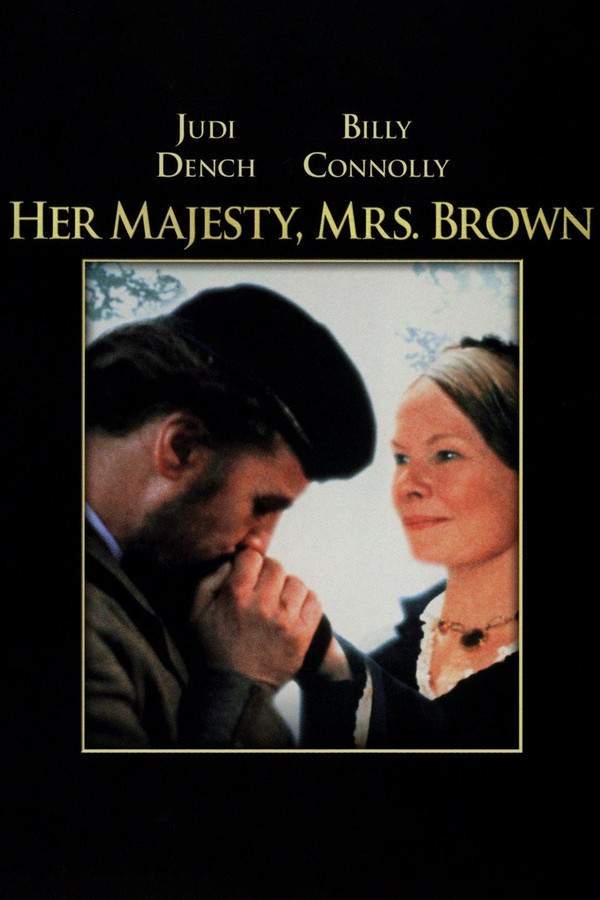
In 1863, hoping to subtly coax Queen Victoria toward resuming public life after two years of seclusion, Scottish servant John Brown is summoned to court. The plan nudges the monarch’s world back toward activity, but it swiftly unsettles those around her: Victoria’s Chief Secretary Sir Henry Ponsonby and The Prince of Wales, among others in the Royal Family, begin to fear Brown’s growing influence over the Queen. He moves with audacious confidence, bending court protocol and even addressing Her Majesty as “woman”, a lack of deference that fans the flames of tension throughout the palace. The nickname “Mrs Brown”—a nod to propriety and rumor alike—circulates in political and social circles, underscoring the sense that Brown’s closeness to the Queen crosses a line. The film doesn’t explicitly confirm any romantic liaison, though satirical cartoons in Parliament hint at public curiosity about the relationship, with one image showing an empty throne and a scepter left aside, a visual commentary on the shifting balance of power.
Victoria’s extended seclusion, especially at Balmoral, coincides with waning popularity and a swell of republican sentiment. Prime Minister Benjamin Disraeli senses the monarchy’s fragility and urges Brown to press Victoria to return to her duties, including the Speech from the Throne at Parliament’s opening. Brown is wary of betrayal and tries to shield the Queen from political pressure, which only deepens the rift. When he again presses her to rejoin public life, Victoria rebukes him; she withdraws from his immediate circle and leans more on her physician, Dr. Jenner. The dynamics inside the palace shift, and the Queen’s trust in Brown begins to erode even as her public role is rekindled, sparking a revival in support for the crown.
Brown remains by Victoria’s side for years, his duties increasingly defined as head of security. The palace staff grow weary of his rigid, sometimes paranoid approach, but his vigilance proves crucial during a later crisis: a gunman lunges toward the Royal Family, and Brown’s quick action foils the threat. The following night, at a dinner, the Prince of Wales recounts the incident with a boast that he had warned Brown, but Victoria understands the manipulation in that storytelling. She counters by announcing a new honor for Brown—the Devoted Service Medal—marking a public acknowledgment of his long service.
As time passes, Brown’s health declines; pneumonia grips him after a nocturnal pursuit of a possible intruder. Victoria visits, confessing that she has not always been the friend she could have been. Brown dies, leaving behind a diary chronicling his years at court. Ponsonby and Jenner agree that the diary must remain unseen, preserving the secret history that surrounded Victoria and her confidant. The film closes with a stark note: the diary was never found. Jenner also reveals a final, telling detail—Beneath the layers of memory, the Prince of Wales once hurled the Queen’s favorite bust of Brown over the palace wall, a memory that loops back to the film’s opening sequence.