Plot Explained Spoilers guaranteed!
Plot Explained

Browse by genre

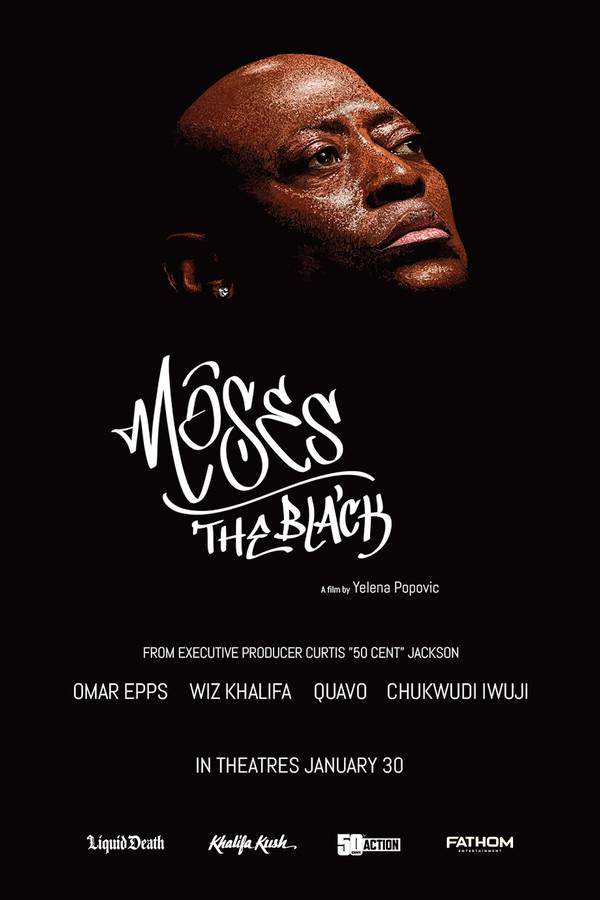
Moses the Black (2026) movie poster

Plot Summary

Moses the Black (2026) Plot Summary Explained

Release, runtime and language
2026 · 1 h 50 m · English
Loading streaming availability…
Directed by
Yelena Popovic
Starring
Omar Epps, Wiz Khalifa, Chukwudi Iwuji, Quavo, Corey Hendrix, Jordan Ward

Recently released from prison, Malik (Omar Epps), a feared Chicago West Side gang leader, returns home determined to avenge his best friend Sayeed’s murder. His right‑hand Mike (Corey Hendrix) tries to keep the crew together as hot‑headed members like 2wo 3ree (Wiz Khalifa) and Meechie (Skilla Baby) push for retaliation, sparking a violent turf war that forces Malik to confront his past and choose between vengeance and redemption.

On this page (5)
  1. 1 Where to watch
  2. 2 What happens: full plot
  3. 3 Plot questions answered
  4. 4 Movie threads
  5. 5 Every angle
Loading streaming availability…

Full plot summary · contains spoilers

What Happens in Moses the Black: Full Plot Summary

The whole story of Moses the Black (2026) explained, from the opening scene to the final frame: every key event, every twist and what it all adds up to. Read it as a quick recap before the sequel, to check a scene you missed, or to finally understand what really happened.

Malik returns to West Side Chicago after his prison term, stepping back into a life of leadership as he tries to steer his crew through a landscape that has grown more dangerous in his absence. He soon learns that his closest friend, Sayeed, was murdered by a rival gang, and the weight of vengeance presses on him as he orders his gang to retaliate against the attackers. His aging grandmother—an unwavering Christian who prays for him daily—gives Malik a small icon of St. Moses the Black, describing the saint not only as a former gang leader who found sainthood but as a symbol of mercy in the face of violence. The ceremony of her funeral becomes a chilling turning point when a rival gang launches a drive-by aimed at Malik, yet hits one of his own men instead. The moment unsettles Malik deeply, and a sudden panic attack forces him to cling to the Moses icon, triggering a dream where the saint speaks a stark warning: > He who lives by the sword shall die by the sword.

This vision sparks a clash inside Malik between old loyalties and a rising sense of duty to something higher. He shares the message with his close ally Mike, a gang member who simultaneously embodies devout faith and immersion in street life. Mike recognizes the line as Jesus’s teaching and urges Malik to actually read the Bible himself, hinting at a path that could pull him away from the cycle of violence. Malik’s internal struggle deepens as he questions whether leadership requires blood for blood, and whether a life of crime can coexist with the quiet dignity his grandmother admired.

Seeking guidance, Malik visits his grandmother’s church and confesses that his dreams revolve around [St. Moses the Black]. The priest responds with calm certainty: God may be calling Malik to change his life before it’s too late. The tension within the gang escalates when Lil B, a member who has endured humiliation in a viral video made by the rival gang, decides to take matters into his own hands and kills a rival fighter. The resulting shootout intensifies the feud and forces Malik to confront a grim realization: > the thief went to heaven first. The moment comes when [Straw] joins the chaos in a brutal exchange, and [2wo-3ree] is struck down, his dying words asking Malik whether he’ll find a place in heaven.

In the aftermath, Malik places a photograph of Sayeed beside the church’s Moses the Black icon and makes a bold, if dangerous, deal with the rival gang: he will surrender to the police, confess his crimes alone, and refuse to snitch on others. He returns to prison and experiences a vision of Moses the Black foretelling martyrdom at the hands of bandits, repeating, > Lord, have mercy. Malik pleads for mercy not only for himself but for everyone in his gang as two inmates close in. The struggle ends with Malik’s murder inside the prison, his final utterance a quiet plea: > Remember us in your kingdom. The film closes on a stark biblical echo, with a final title card quoting Matthew 21:31: > Verily I say unto you, that the publicans and the harlots go into the kingdom of God before you.

Through its charged arc of duty, faith, and redemption, the story follows a man who tries to trade a life of crime for a chance at mercy, only to find that mercy—and even salvation—comes at a steep, personal cost.
Last updated: February 03, 2026 at 07:41

Was this helpful?

Plot questions answered

Moses the Black Plot Explained: Your Questions Answered

The questions people ask most about Moses the Black (2026): what happens in the confusing scenes, why the characters do what they do, the twists, hidden details and what the ending means. Each answer contains spoilers.

Q1

Why does Malik's grandmother give him the Saint Moses the Black icon?

Malik's grandmother gives him the icon because she sees a parallel between the saint's life and her grandson's path. St. Moses the Black was a former gang leader who became a saint after choosing mercy over violence. She hopes the toward the icon will guide Malik same transformation, believing he can find redemption like the saint did.

Foreshadowing: The icon foreshadows Malik's eventual sacrifice, as the saint himself was martyred for his beliefs.

  • moses the black icon
  • grandmother
  • saint
  • redemption
  • gang leader
Q2

What does the dream vision of Moses the Black mean for Malik?

During a panic attack at his grandmother's funeral, Malik dreams of St. Moses the Black warning him: 'He who lives by the sword shall die by the sword.' This prophecy directly confronts Malik's cycle of violence, suggesting that continuing retaliation will lead to his own death.

Foreshadowing: The dream planted the seed for Malik's later decision to surrender to police rather than continue the cycle of vengeance.

  • dream
  • vision
  • prophecy
  • sword
  • warning
  • panic attack
Q3

Why does Malik decide to stop authorizing retaliations after the dream?

After the prophetic dream, Malik questions whether leadership truly requires 'blood for blood.' The vision of Moses the Black shaking him with the sword warning creates enough doubt that he chooses not to authorize further attacks, though this decision strains his authority with hot-headed gang members.

Foreshadowing: His restraint sets up the conflict that leads Lil B to act independently and spark the final shootout.

  • retaliation
  • leadership
  • restraint
  • violence
  • dream
Q4

What triggers the shootout between the gangs?

Lil B, humiliated by a viral video made by the rival gang, decides to take matters into his own hands and kills a rival fighter. This act of personal vengeance triggers a full-scale gunfight between both gangs, forcing Malik to witness the consequences of violence he tried to prevent.

Foreshadowing: Lil B's unilateral action shows that Malik's attempt to break the cycle has failed.

  • lil b
  • shootout
  • viral video
  • revenge
  • feud
Q5

Why does 2wo-3ree's death impact Malik so heavily?

During the shootout, 2wo-3ree is shot and dies in Malik's arms. His dying words ask Malik whether he'll find a place in heaven. This moment forces Malik to confront the spiritual cost of his lifestyle and the lives lost under his leadership, intensifying his moral crisis.

Foreshadowing: 2wo-3ree's death directly influences Malik's decision to end the violence and sacrifice himself.

  • 2wo-3ree
  • death
  • heaven
  • spiritual
  • dying words
Q6

What deal does Malik make with the rival gang, and why does he agree to it?

Malik makes a deal with the rival gang to end the fighting: he will surrender to the police, confess his crimes alone, and refuse to snitch on anyone. He places a photo of Sayeed beside the church's Moses icon, showing his commitment to ending the cycle while honoring his fallen friend. He chooses to sacrifice himself rather than let more gang members die.

Foreshadowing: The deal leads directly to Malik's return to prison and eventual death.

  • deal
  • surrender
  • police
  • confession
  • rival gang
Q7

What does the final Bible quote (Matthew 21:31) mean in the story?

The closing quote states that 'publicans and harlots go into the kingdom of God before you.' In the film, this reinforces Malik's arc, he was a criminal (publican) but ultimately chose mercy and sacrifice over continued violence. The quote suggests his self-sacrifice grants him redemption despite his past, while those who judged him may not be so fortunate.

Foreshadowing: This final card frames Malik's death as a form of martyrdom and spiritual victory.

  • matthew 21:31
  • bible quote
  • kingdom of god
  • redemption
  • ending
Q8

Why does Malik die in prison after trying to change his life?

Malik returns to prison after surrendering to end the gang war. While there, he experiences a vision of Moses the Black foretelling martyrdom at the hands of bandits. Two inmates stab him to death, but he dies showing mercy for his gang, repeating 'Remember us in your kingdom.' His death represents the ultimate sacrifice, he gave up his life trying to save others from the cycle of violence.

Foreshadowing: The vision foreshadows exactly how and when Malik will die, completing the prophecy.

  • death
  • prison
  • martyrdom
  • sacrifice
  • stabbing
  • mercy
Q9

How does the Moses the Black icon represent the movie's central theme?

St. Moses the Black was a former gang leader who became a saint through mercy and faith. The icon represents the possibility of redemption even for those deep in criminal life. Malik's journey mirrors the saint's, he tries to trade violence for salvation, ultimately finding that mercy comes at a steep personal cost.

Foreshadowing: The icon appears throughout the film as both a guide and a foreshadowing of Malik's martyrdom.

  • symbolism
  • theme
  • redemption
  • saint
  • mercy
  • icon

Movie threads

More Movies Like Moses the Black, by Mood & Story

Curated lists built around what makes Moses the Black tick: the same mood, the same kind of story or the same emotional payoff. Each list explains why these movies belong together.

Gangland Redemption Tragedies like Moses the Black

Violent tales of underworld figures seeking spiritual peace through tragic sacrifice. For viewers who appreciated the spiritual struggle in Moses the Black, this list features movies about gangsters and criminals on a path to redemption. Discover similar crime dramas with heavy emotional weight, dark tones, and tragic endings that explore faith and sacrifice within a violent urban world.

  • gritty
  • spiritual
  • penitent
  • fatalistic
  • violent
  • grim
  • Tone: dark, spiritual, fatalistic
  • Pacing: steady, character-driven
Why these movies?

The story pattern: The narrative follows a character deeply embedded in a life of crime, often triggered by a personal loss or betrayal, who grapples with the possibility of change. Their journey towards redemption is intertwined with a violent conflict from their past, forcing a final, fateful choice that often leads to a sad but spiritually resonant ending.

Why they belong together: These films are grouped together because they share a core theme of a criminal protagonist seeking redemption against a backdrop of urban violence. They consistently feature a dark, gritty tone, high emotional intensity, and a steady pacing driven by revenge and moral conflict, culminating in a finale that is more spiritually significant than conventionally happy.

Fatalistic Urban Crime Spirals like Moses the Black

Stories where the cycle of revenge leads to an inevitable, grim conclusion. If you liked the escalating turf war and sense of doom in Moses the Black, explore these movies about inescapable cycles of violence. Find similar gritty crime films with a steady pace, high tension, and bleak endings that depict the harsh realities and tragic consequences of life on the streets.

  • fatalistic
  • grim
  • anxious
  • violent
  • gritty
  • tense
  • Tone: dark, tense, bleak
  • Pacing: steady, escalating
Why these movies?

The story pattern: The plot is typically straightforward, focusing on a single catalyst—such as a murder—that sets off a series of retaliatory acts. The protagonist, often a respected figure in their community or crew, attempts to navigate or control the spiraling conflict but is ultimately powerless to stop the tide of violence, resulting in a loss-filled, sad ending.

Why they belong together: Movies in this thread share a core narrative structure of a revenge plot spiraling out of control. They are united by a high-intensity, dark tone, a steady pace that builds tension, and a fatalistic mood where characters are doomed by their environment and choices. The emotional journey is heavy and ends on a somber note.

Every angle

Moses the Black (2026) Explained: Plot, Timeline & Characters

Everything about Moses the Black in one place: what happens in the plot summary, the timeline in chronological order, the characters and meaning and a spoiler-free summary. What's After the Movie adds the cast, box office and post-credit scenes.

Coming soon on iOS and Android

The Plot Explained Movie Summary App

Plot summaries, endings explained and timelines on your phone. Catch up on any movie in minutes, save your favorites and never miss a twist again.

Be the first to know when we launch. Your email stays private, always.

Learn more about the app