Plot Explained Spoilers guaranteed!
Plot Explained

Browse by genre

Master of Zen (1994) movie poster

Timeline

Master of Zen (1994) Timeline Explained – Every Event in Order

Release, runtime and language
1994 · 89 mins · Cantonese
Directed by
Brandy Yuen Jan-Yeung
Starring
Wu Ma, Louis Fan Siu-Wong, Derek Yee Tung-Sing, Austin Wai Tin-Chi, Chan Chung-Yung, Eddy Ko Hung

Set in first‑century India, a visionary prince haunted by prophetic dreams abandons his claim to the throne after his father’s death, becomes a monk, and spends sixty years studying Buddhism. He then journeys to China to spread Zen, teaching the Shaolin monks exercises that become the basis of their famed training.

On this page (5)
  1. 1 Events in order (12)
  2. 2 Timeline questions answered
  3. 3 Movie threads
  4. 4 Movies like Master of Zen
  5. 5 Every angle

12 events in order · contains spoilers

Master of Zen Timeline: Events in Chronological Order

Every key event of Master of Zen (1994) in order, scene by scene, with when and where it takes place. Use it to untangle flashbacks, time jumps and parallel storylines, to refresh your memory before the sequel or to find the exact scene you are thinking of.

  1. Birth in Kanchipuram and early life

    Bodhidharma is born in Kanchipuram, the third son of Pallava king Simhavarman II in the 5th or 6th century. He grows up within a royal milieu but leaves home after his father's death to seek spiritual training. He studies Buddhism under the master Prajnatara, setting the course for his later mission in Asia.

    When
    5th–6th century
    Where
    Kanchipuram, Pallava Kingdom (South India)
  2. Leaves home to seek Buddhist training

    After his father's death, Bodhidharma departs from his royal life to pursue deeper Buddhist practice. He travels across regions of India in search of teachers, eventually meeting Prajnatara who becomes his tutelage. This period establishes his lifelong commitment to awakening and teaching.

    When
    5th–6th century
    Where
    India
  3. Travels to China and meets Emperor Wu

    Bodhidharma travels to China to spread Zen Buddhism. He encounters Emperor Wu of the Liang dynasty and challenges him, saying he has not accumulated merit despite the emperor's generous donations to Buddhism. The emperor is displeased, but Bodhidharma's presence sets the stage for his future influence.

    When
    Early years in China
    Where
    China (Emperor Wu of Liang)
  4. Rescues a girl and crosses the river

    Local people are wary of Bodhidharma, but he proves his power and mercy by rescuing a girl from drowning. He then demonstrates his qinggong skill, crossing a wide river with the help of a reed. These acts foreshadow his unexpected compassion and abilities.

    When
    During his journey to Shaolin
    Where
    China
  5. Arrives at Shaolin Monastery

    Bodhidharma reaches Shaolin Monastery and settles in a cave on the back hillside. He begins his long work there, shaping meditation as a core practice for the community. His arrival marks the start of the Shaolin lineage's development.

    When
    Before the nine-year meditation
    Where
    Shaolin Monastery, Songshan
  6. Nine years of seated meditation

    For nine years he faces the wall, in unwavering meditation. He does not move, and crowds come to watch as rumors spread about a holy man in solitary discipline. This endurance becomes the catalyst for the Shaolin lineage that follows.

    When
    Nine-year meditation
    Where
    Shaolin cave, back hillside
  7. Shenguang seeks enlightenment; Huike becomes apprentice

    Shenguang, a former soldier turned monk, arrives in snow and kneels outside his cave seeking enlightenment. Bodhidharma awakens and accepts him as his student after Shenguang cuts off his left arm to show sincerity. Bodhidharma renames Shenguang as Huike.

    When
    After the nine-year meditation
    Where
    Shaolin Monastery cave
  8. Defends Shaolin and survives fire

    Bodhidharma fends off robbers who try to raid the Shaolin monks and miraculously survives after being set on fire. The robbers retreat when they realize their efforts are futile against his spiritual presence. The incident underlines the martial and mystical power attributed to him.

    When
    During his Shaolin years
    Where
    Shaolin Monastery
  9. Teaches martial arts; birth of Shaolin Kung Fu

    Witnessing the monks' vulnerability, Bodhidharma teaches them combat and self-defense. His instruction evolves into a tradition that later becomes Shaolin Kung Fu. This is presented as a cornerstone of the monastery's martial identity.

    When
    Later period
    Where
    Shaolin Monastery
  10. Old age and return to India; tests disciples; Huike successor

    In his old age, he contemplates returning to India and gathers his students to test their understanding of his teachings. Through demonstrations and dialogue, he determines who best embodies his legacy. He ultimately designates Huike as his successor.

    When
    Old age
    Where
    Shaolin Monastery
  11. Final departure: single shoe on the staff

    In the concluding imagery, Bodhidharma walks away with a single shoe dangling from his staff. This visual hints at departure from the mortal world or a spiritual leaving. The moment is both mysterious and symbolic within the story.

    When
    Final scene
    Where
    On the road from Shaolin
  12. Peasant encounter and empty coffin revelation

    A peasant meets Bodhidharma and later informs a Shaolin monk of his encounter. The monk reveals Bodhidharma died three years earlier, and they open his coffin to find it empty except for the other shoe. The scene leaves an impression of transcendence or unfinished departure.

    When
    Final reveal
    Where
    Shaolin / nearby

Last updated: October 09, 2025 at 11:18

Was this helpful?

Timeline questions answered

Master of Zen Timeline Explained: Your Questions Answered

When does it happen, and why in that order? The questions people ask about the chronology of Master of Zen (1994): time jumps, flashbacks, cause and effect between scenes and the correct order of events, each answered with spoilers.

Q1

Why did Bodhidharma tell Emperor Wu he had not accumulated any merit?

Bodhidharma told Emperor Wu that his donations to Buddhism had not earned him any merit because the emperor's motivations were rooted in ego and worldly gain rather than genuine spiritual understanding. True merit in Buddhism comes from inner realization and detachment from material pursuits, not from financial contributions. Bodhidharma's blunt assessment displeased the emperor because it exposed the superficial nature of his piety.

  • emperor wu
  • merit
  • buddhism
  • spiritual understanding
  • donations
Q2

Why did Bodhidharma meditate facing a wall for nine years?

Bodhidharma faced the wall in meditation for nine years as a demonstration of absolute dedication to spiritual practice, showing that true enlightenment requires unwavering concentration and perseverance. This extreme form of meditation, known as 'wall-gazing,' was intended to quiet the mind completely and transcend all worldly distractions. The prolonged meditation became legendary and attracted many followers who witnessed his extraordinary discipline.

  • meditation
  • nine years
  • wall
  • enlightenment
  • discipline
  • shaolin
Q3

Why did Shenguang cut off his arm to become Bodhidharma's student?

Shenguang cut off his left arm to demonstrate his complete sincerity and willingness to sacrifice everything for enlightenment, which he believed was necessary to prove his devotion afterBodhidharma initially rejected him. This extreme act of self-sacrifice showed that he was willing to give up even his physical body to pursue the Buddhist path, qualities that Bodhidharma recognized as essential for a true disciple. Bodhidharma then renamed him Huike, accepting him as his successor.

  • shenguang
  • huike
  • arm
  • sacrifice
  • disciple
  • sincerity
Q4

What happened to Bodhidharma's body after his death?

The film reveals that Bodhidharma's coffin was found empty except for one shoe, suggesting he transcended physical death or achieved a form of spiritual departure rather than a conventional burial. The two shoes become a symbol of his mysterious disappearance, his body vanished but left behind this final mystery. This ambiguity reflects the legendary status of the historical Bodhidharma and the mystical elements surrounding his life.

  • coffin
  • shoes
  • death
  • transcendence
  • mystery
  • legend
Q5

How did Bodhidharma survive being set on fire by the robbers?

Bodhidharma survived being set on fire through his spiritual power and unwavering composure, demonstrating the superhuman abilities attributed to him in legend. The robbers retreated in shame when they realized their weapons and fire could not harm this holy man. This event showcased both his mystical protection and the respect he commanded even from violent opponents.

  • robbers
  • fire
  • survival
  • spiritual power
  • miracle
  • shaolin
Q6

Why did Bodhidharma teach the Shaolin monks martial arts?

Bodhidharma taught the Shaolin monks martial arts after witnessing their inability to defend themselves against the robbers who attacked the monastery. He recognized that physical training complemented their spiritual practice and could protect the temple. These exercises eventually evolved into Shaolin Kung Fu, becoming the foundation of one of the most famous martial art traditions in the world.

  • martial arts
  • shaolin kung fu
  • monks
  • self-defense
  • teaching
  • robbers
Q7

What is the significance of the single shoe dangling from Bodhidharma's staff?

The single shoe dangling from Bodhidharma's staff in the final scene is a visual symbol of his departure from the physical world. Combined with the empty coffin containing only the other shoe, it creates a mystery suggesting he walked away from his earthly existence rather than dying conventionally. This imagery reflects the legendary accounts of Bodhidharma's mysterious disappearance.

  • shoe
  • staff
  • departure
  • symbolism
  • transcendence
  • final scene
Q8

How did Bodhidharma cross the river using a reed?

Bodhidharma crossed the wide river by using qinggong (a skill in Chinese martial arts involving light footwork) while standing on a reed that he used as a floating platform. This demonstration of extraordinary martial ability surprised the local people who had been wary of him. The moment also revealed his compassion and supernatural powers to the community.

Foreshadowing: Earlier in his journey, local people were unwelcoming toward Bodhidharma.

  • reed
  • river
  • qinggong
  • crossing
  • martial ability
  • miracle
Q9

Why did Bodhidharma choose Huike as his successor?

Bodhidharma chose Huike as his successor because Huike demonstrated unwavering dedication and willingness to sacrifice everything for enlightenment, symbolized by cutting off his arm to prove his sincerity. During the testing phase in his old age, Huike best embodied the teachings and understanding that Bodhidharma sought to pass on. This selection established the lineage of Zen masters that would continue after Bodhidharma left China.

  • huike
  • successor
  • lineage
  • zen master
  • teaching
  • transmission
Q10

What is the connection between Bodhidharma and Shaolin Kung Fu?

Bodhidharma is credited with founding Shaolin Kung Fu by teaching the Shaolin monks combat exercises and self-defense techniques after witnessing their vulnerability against attackers. His instruction combined physical training with spiritual discipline, creating a unique tradition that merged martial prowess with Buddhist meditation. This transmission established Shaolin Monastery as the birthplace of one of China's most renowned martial arts styles.

  • shaolin kung fu
  • founder
  • martial arts
  • origin
  • Bodhidharma
  • monastery

Movie threads

More Movies Like Master of Zen, by Mood & Story

Curated lists built around what makes Master of Zen tick: the same mood, the same kind of story or the same emotional payoff. Each list explains why these movies belong together.

Spiritual Journeys of Enlightenment like in Master of Zen

Serene films about profound personal transformations and the search for spiritual truth. Explore movies like Master of Zen that follow a profound spiritual quest. If you enjoyed the serene and devoted journey of a monk seeking enlightenment, you'll find similar stories of personal transformation, monastic life, and the pursuit of higher wisdom in these films.

  • spiritual
  • meditative
  • serene
  • introspective
  • devoted
  • reverent
  • Tone: hopeful, reverent
  • Pacing: slow, deliberate
Why these movies?

The story pattern: The narrative follows a linear, often biographical, arc from a life of worldly attachment to one of spiritual devotion. The central conflict is internal, a battle against ego and desire, with external challenges serving as tests of faith. The journey is the focus, typically spanning years or decades, culminating in a legacy of teaching or a transcendent, ambiguous conclusion.

Why they belong together: Movies are grouped here for their shared focus on spirituality as the central theme. They possess a calm, reverent mood, a slow, contemplative pacing, and a hopeful tone that celebrates the human capacity for enlightenment. The emotional weight is substantial but not overwhelming, balancing the gravity of renunciation with uplifting outcomes.
Slow-Burn Biographical Legends like in Master of Zen

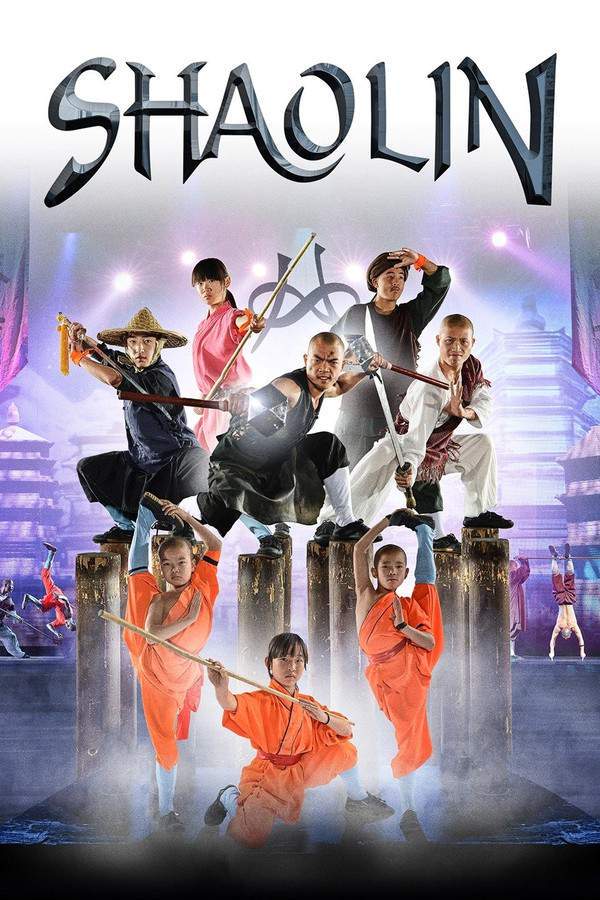
Patient, decades-spanning stories about the origins of legendary figures and traditions. Discover movies similar to Master of Zen that patiently trace the life of a legendary figure. If you liked the slow, epic narrative about the founder of Shaolin kung fu, you'll appreciate these other biographical films that unfold over many years, focusing on legacy, tradition, and profound impact.

  • patient
  • legendary
  • historical
  • epic
  • reverent
  • origin story
  • Tone: hopeful, earnest
  • Pacing: slow, epic
Why these movies?

The story pattern: These narratives are straightforward, linear biographies that follow a figure from their early life through the pivotal events that define their legacy. The plot is driven by personal growth and historical impact rather than high-stakes conflict. The ending often feels ambiguous or transcendent, reflecting the enduring, mythical nature of the subject's influence beyond their mortal life.

Why they belong together: These films are united by their patient, epic scope and biographical structure. They share a slow pacing that allows the weight of time to be felt, a medium emotional weight that balances gravity with inspiration, and a focus on historical or mythical origin stories. The tone is generally hopeful, celebrating the positive outcome of a life dedicated to a cause.

If you liked this

Movies Like Master of Zen

Similar movies to Master of Zen: the same genre, themes or kind of story. Each one comes with its own plot summary, timeline and ending explained.

Browse all movie summaries

Every angle

Master of Zen (1994) Explained: Plot, Timeline & Characters

Everything about Master of Zen in one place: what happens in the plot summary, the timeline in chronological order, the characters and meaning and a spoiler-free summary. What's After the Movie adds the cast, box office and post-credit scenes.

Coming soon on iOS and Android

The Plot Explained Movie Summary App

Plot summaries, endings explained and timelines on your phone. Catch up on any movie in minutes, save your favorites and never miss a twist again.

Be the first to know when we launch. Your email stays private, always.

Learn more about the app