Plot Explained Spoilers guaranteed!
Plot Explained

Browse by genre

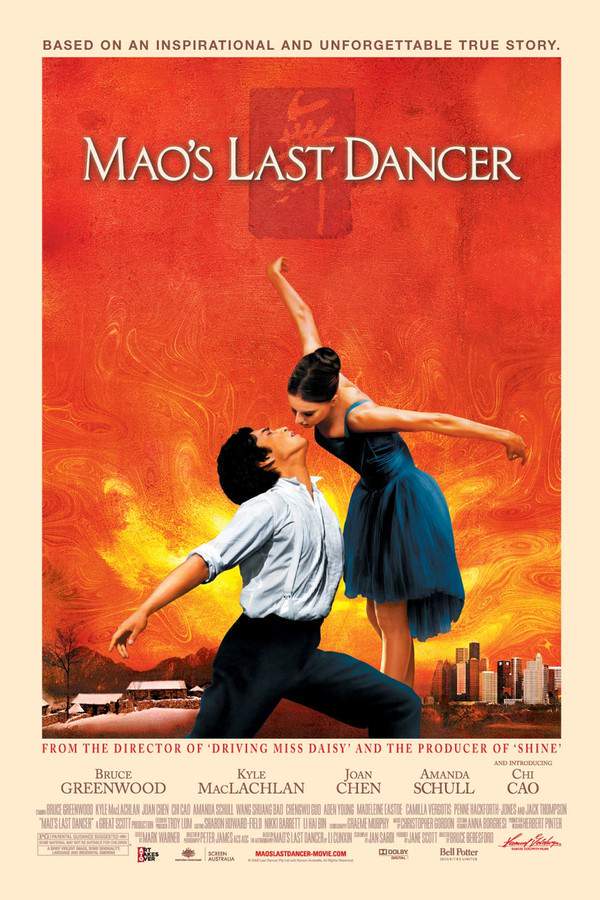
Mao's Last Dancer (2010) movie poster

Timeline

Mao's Last Dancer (2010) Timeline Explained – Every Event in Order

Release, runtime and language
2010 · 117 min · English
Directed by
Bruce Beresford
Starring
Kyle MacLachlan, Bruce Greenwood, Chi Cao

A young boy's remarkable journey forms the heart of this drama, inspired by the true story of Li Cunxin. He is taken from his rural Chinese upbringing and enters the demanding training of Beijing’s elite ballet academy. As he develops his talent, love and the art of dance lead him to Texas, where he faces a difficult choice between honoring his cultural heritage and pursuing his own happiness.

On this page (5)
  1. 1 Events in order (15)
  2. 2 Timeline questions answered
  3. 3 Movie threads
  4. 4 Movies like Mao's Last Dancer
  5. 5 Every angle

15 events in order · contains spoilers

Mao's Last Dancer Timeline: Events in Chronological Order

Every key event of Mao's Last Dancer (2010) in order, scene by scene, with when and where it takes place. Use it to untangle flashbacks, time jumps and parallel storylines, to refresh your memory before the sequel or to find the exact scene you are thinking of.

  1. Life in Rural Shandong

    Li Cunxin, an 11-year-old boy, lives a monotonous life in the rural Shandong Province during Mao's Cultural Revolution. His existence is marked by the struggles and the limitations imposed by the state, which dictate the lives of every citizen.

    Where
    Shandong Province
  2. A New Beginning

    The trajectory of Li's life changes dramatically when government officials visit his school. This unexpected encounter leads to his selection to attend the esteemed Madame Mao's Dance Academy in Beijing, removing him from his familiar upbringing.

    Where
    Beijing
  3. Training at Madame Mao's Dance Academy

    At the dance academy, Li is initially overwhelmed by the rigorous ballet training regimens imposed upon him. However, under the mentorship of Chan, a knowledgeable Russian ballet enthusiast, Li begins to thrive and tap into his hidden talent for dance.

    Where
    Madame Mao's Dance Academy, Beijing
  4. Discovery by Ben Stevenson

    During a cultural exchange initiative to China, American ballet director Ben Stevenson recognizes Li's extraordinary skills. He extends an invitation for Li to join the Houston Ballet as an exchange student, opening up a plethora of new possibilities for the young dancer.

    Where
    Houston
  5. Conflict of Ideologies

    As Li adjusts to life in America, he grapples with the conflicts arising from his Communist upbringing. The warmth and opportunities in the U.S. challenge his previously held beliefs, leading him to explore his identity further.

    Where
    Houston, United States
  6. Romantic Developments

    Amidst this cultural shift, Li finds himself romantically intertwined with aspiring American dancer Elizabeth Mackey. Their blossoming relationship amplifies his desire to remain in the United States, complicating the choices he faces regarding his future.

    Where
    Houston
  7. Marriage and Tensions

    In a desperate bid to secure his position in the U.S., Li marries Elizabeth. However, despite their union, the threat of repatriation looms large when Li is detained at the Chinese Consulate while seeking legal advice.

    Where
    Chinese Consulate, Houston
  8. International Struggles

    Li's predicament escalates, as high-ranking officials from both the Chinese and American governments become involved in his case. His persistent resistance against going back to China leads to significant international tension.

  9. Sacrifice for Freedom

    Eventually, the Chinese government allows Li to stay in the U.S., but at a daunting personal cost: he loses his citizenship and is barred from returning to his homeland. This decision weighs heavily on Li, impacting his personal relationships.

  10. Performing The Rite of Spring

    Years later, despite achieving stage success, Li faces challenges in his personal life. His parents are allowed to visit, and during an emotional reunion, they witness his dazzling performance of The Rite of Spring, a moment that marks a pivotal point in their relationship.

    Where
    Houston, United States
  11. Return to Roots

    After years of separation, Li is granted permission to return to China, marking the beginning of a new chapter in his life. Alongside Australian ballerina Mary McKendry, he visits his village to reconnect with his past.

    Where
    Shandong Province
  12. Reunion with Chan

    Li's return is filled with nostalgia as he reunites with Chan, his former mentor. They share heartfelt moments reflecting on the journey of Li's illustrious career in ballet that both marks a culmination and a bittersweet remembrance.

  13. A Community Celebration

    In a touching tribute to the community that once nurtured him, Li and Mary perform an impromptu outdoor ballet. The performance captivates local audiences, rekindling a connection between Li's past and present.

    Where
    Shandong Province
  14. Global Recognition

    By 1995, Li performs with the Houston Ballet, sharing his artistry with over 500 million viewers globally. His story inspires many, marking a significant impact on the world of dance and demonstrating the power of perseverance.

    When
    1995
  15. New Beginnings in Australia

    Li and Mary eventually settle in Australia, raising three children together. Meanwhile, Elizabeth transitions into a new career as a speech therapist, showing how all their lives have evolved from the shared dance journey.

    Where
    Australia

Last updated: November 21, 2024 at 11:25

Was this helpful?

Timeline questions answered

Mao's Last Dancer Timeline Explained: Your Questions Answered

When does it happen, and why in that order? The questions people ask about the chronology of Mao's Last Dancer (2010): time jumps, flashbacks, cause and effect between scenes and the correct order of events, each answered with spoilers.

Q1

Why was Li Cunxin chosen to attend Madame Mao's Dance Academy?

Li was selected when government officials visited his school in rural Shandong Province during Mao's Cultural Revolution. The Chinese government was actively searching for talented children to train in the arts as part of the state's cultural programs. Li was among the children chosen for this prestigious opportunity, which removed him from his ordinary rural life and propelled him into the demanding world of elite ballet training in Beijing.

Foreshadowing: The film establishes early that the state controlled nearly every aspect of citizens' lives, including children's futures.

  • Madame Mao's Dance Academy
  • selection
  • Cultural Revolution
  • government officials
Q2

How did Chan influence Li's ballet training at the academy?

Chan was a teacher at Madame Mao's Dance Academy who possessed deep knowledge of Russian classical ballet, which contrasted sharply with the ideologically influenced physical performances promoted by the Politburo. Despite the strict political environment, Chan nurtured Li's talent and helped him understand the intricacies of ballet. Under Chan's mentorship, Li's hidden talent blossomed, and he began to thrive as a dancer, eventually becoming skilled enough to catch the eye of international visitors.

Foreshadowing: Chan's expertise in Russian classical ballet hints at the broader world of dance that exists beyond China's political boundaries.

  • Chan
  • ballet mentor
  • Russian classical ballet
  • Madame Mao's Dance Academy
Q3

Why did Li marry Elizabeth Mackey?

Li married Elizabeth Mackey as a desperate attempt to secure his position in the United States. After his three-month exchange program ended, the Chinese government refused to allow him to extend his stay. Believing that marriage to an American citizen would provide some protection from governmental pressure to repatriate, Li took this bold step. However, the marriage ultimately did not prevent his detention at the Chinese Consulate in Houston.

Foreshadowing: Li's growing romance with Elizabeth earlier in the film creates the foundation for this pivotal decision.

  • Elizabeth Mackey
  • marriage
  • Houston
  • repatriation
  • Chinese Consulate
Q4

What happened when Li sought legal advice at the Chinese Consulate?

When Li went to the Chinese Consulate in Houston to seek legal advice about his immigration status, he was abruptly detained by a diplomat. The Chinese government was determined to force his return to China and used his visit to the consulate as an opportunity to hold him. This detention escalated his situation into an international diplomatic incident, involving high-ranking officials from both China and the United States.

Foreshadowing: The film's earlier tension about Li's visa status foreshadows this confrontational moment at the consulate.

  • Chinese Consulate
  • detention
  • Houston
  • diplomacy
  • visa
Q5

Why was Li stripped of his Chinese citizenship?

Li was stripped of his Chinese citizenship as the price for being allowed to remain in the United States. After his persistent resistance against repatriation created an international diplomatic incident, the Chinese government eventually allowed him to stay. However, they made him pay a devastating personal cost: he lost his citizenship and was condemned never to return to the land of his birth. This was their way of punishing him for defying the state.

Foreshadowing: The escalating conflict between Li's desires and the Chinese government's demands builds toward this permanent consequences.

  • citizenship
  • China
  • exile
  • punishment
  • defection
Q6

Why did Li's marriage to Elizabeth Mackey eventually fail?

Li's marriage to Elizabeth unraveled due to the immense strain caused by his difficult decisions and secrets. When Ben Stevenson persuaded Li to remain in the U.S. and join his ballet company, it negatively impacted Elizabeth's own dreams. Additionally, Li carried the burden of secrets regarding his family back in China, and the constant pressure from his legal battle, loss of citizenship, and the weight of his choices created fissures in their relationship that gradually led to their separation.

Foreshadowing: The film foreshadows marital strain when Li must choose between his career and Elizabeth's dreams.

  • Elizabeth Mackey
  • marriage failure
  • divorce
  • secrets
  • strain
Q7

Why was Li's performance of The Rite of Spring emotionally significant?

Li's performance of The Rite of Spring was significant because it marked the first time his parents were able to witness his artistry in person. After years of separation due to his exile, Chinese authorities finally permitted his parents to visit him in the U.S. Watching their son perform on such a prestigious stage was an emotional culmination of his journey, representing both his personal triumph as a dancer and the reconciliation of his dual identity as a Chinese artist and an American resident.

Foreshadowing: The buildup of Li's isolation from his family throughout the film makes this reunion emotionally powerful.

  • The Rite of Spring
  • parents
  • reunion
  • performance
  • Houston Ballet
Q8

Why couldn't Li return to China for so many years?

Li couldn't return to China because the Chinese government stripped him of his citizenship as punishment for defying their orders to repatriate. He was condemned never to return to the land of his birth. This exile separated him from his family for many years until the Chinese authorities eventually granted him permission to return, allowing him to reconnect with his family and revisit his village in Shandong Province.

Foreshadowing: The harsh punishment of losing citizenship establishes the severity of Li's defiance and its lasting consequences.

  • China
  • return
  • exile
  • citizenship
  • family visit
Q9

Why did Li move to Australia with Mary McKendry?

Li moved to Australia with Mary McKendry, an Australian ballerina he had befriended, to start a new chapter in his life. After achieving success with the Houston Ballet and eventually being permitted to return to China, Li chose to settle in Australia with Mary, where they raised three children together. This move represented his ability to build a new life while maintaining connections to his Chinese roots.

Foreshadowing: Li's journey of finding new beginnings after loss sets the stage for his life in Australia.

  • Mary McKendry
  • Australia
  • new life
  • Houston Ballet
  • family
Q10

What happened when Li reunited with his former mentor Chan?

When Li returned to China and reunited with Chan, his former mentor at Madame Mao's Dance Academy, the encounter was filled with joy and nostalgia. They shared heartfelt moments reflecting on Li's remarkable journey from a young student to an internationally acclaimed dancer. The reunion was bittersweet, as it highlighted the missed opportunities to share his artistic journey with the man who had first nurtured his talent.

Foreshadowing: Chan's pivotal role in Li's early development makes this reunion a powerful full-circle moment.

  • Chan
  • reunion
  • mentor
  • Beijing
  • Shanghai
Q11

Why did Ben Stevenson persuade Li to stay in the United States?

Ben Stevenson, the American ballet director who discovered Li in China, persuaded him to remain in the U.S. and join his prestigious Houston Ballet company. Stevenson saw extraordinary potential in Li's talent and wanted to give him the opportunity to develop his career in America. However, this decision came with consequences, it increased the burden of secrets about Li's family in China and created tension in his marriage to Elizabeth, whose own dreams were affected by this choice.

Foreshadowing: Stevenson's initial invitation to Li in China sets up his later persuasive efforts.

  • Ben Stevenson
  • Houston Ballet
  • career
  • persuasion
  • opportunity

Movie threads

More Movies Like Mao's Last Dancer, by Mood & Story

Curated lists built around what makes Mao's Last Dancer tick: the same mood, the same kind of story or the same emotional payoff. Each list explains why these movies belong together.

Movies about artistic triumph like Mao's Last Dancer

Stories of artists who overcome immense obstacles to achieve creative freedom. If you were inspired by the journey in Mao's Last Dancer, explore more movies like it about artists defying the odds. These similar films feature biographical dramas and inspirational stories where creative passion overcomes political or cultural barriers, leading to bittersweet but triumphant endings.

  • inspirational
  • triumphant
  • emotional
  • dramatic
  • longing
  • cultural conflict
  • Tone: hopeful, inspirational, bittersweet
  • Pacing: steady, character-driven
Why these movies?

The story pattern: The narrative pattern follows a talented individual whose artistic gift becomes their ticket out of a restrictive environment. The journey is often linear, moving from oppression to a form of freedom, but is marked by significant personal sacrifice, such as exile or separation from family. The climax revolves around a defining choice between loyalty and self-fulfillment.

Why they belong together: These movies are grouped by their shared focus on art as a redemptive force and their blend of hopeful tone with bittersweet emotional consequences. They feature medium-intensity dramatic stakes, steady pacing that builds towards a pivotal moment of choice, and a central theme of cultural identity clashing with personal ambition.
Movies about cultural exile like Mao's Last Dancer

Emotional stories about finding a new home while longing for the old. For viewers who connected with the themes of exile in Mao's Last Dancer, this section features similar movies about cultural identity and immigration. These dramatic stories explore the bittersweet feeling of building a new life abroad, dealing with family separation, and the longing for home.

  • nostalgic
  • longing
  • emotional
  • cultural conflict
  • dramatic
  • uplifting
  • Tone: bittersweet, nostalgic, hopeful
  • Pacing: steady, reflective
Why these movies?

The story pattern: Stories in this thread typically follow a protagonist who is thrust into a new cultural context, often through defection, immigration, or opportunity. The plot explores their adaptation and success in the new world, but consistently juxtaposes this with flashbacks or longings for their homeland. The emotional arc is not about simple escape but about the enduring, complicated connection to one's roots.

Why they belong together: These films share a specific emotional mix: the uplifting joy of newfound freedom tempered by the profound sadness of separation. They possess a medium emotional weight, a steady pacing that allows for reflection, and a core theme of navigating dual identities. The ending is rarely purely happy, instead acknowledging the sacrifices made.

If you liked this

Movies Like Mao's Last Dancer

Similar movies to Mao's Last Dancer: the same genre, themes or kind of story. Each one comes with its own plot summary, timeline and ending explained.

Browse all movie summaries

Every angle

Mao's Last Dancer (2010) Explained: Plot, Timeline & Characters

Everything about Mao's Last Dancer in one place: what happens in the plot summary, the timeline in chronological order, the characters and meaning and a spoiler-free summary. What's After the Movie adds the cast, box office and post-credit scenes.

Coming soon on iOS and Android

The Plot Explained Movie Summary App

Plot summaries, endings explained and timelines on your phone. Catch up on any movie in minutes, save your favorites and never miss a twist again.

Be the first to know when we launch. Your email stays private, always.

Learn more about the app