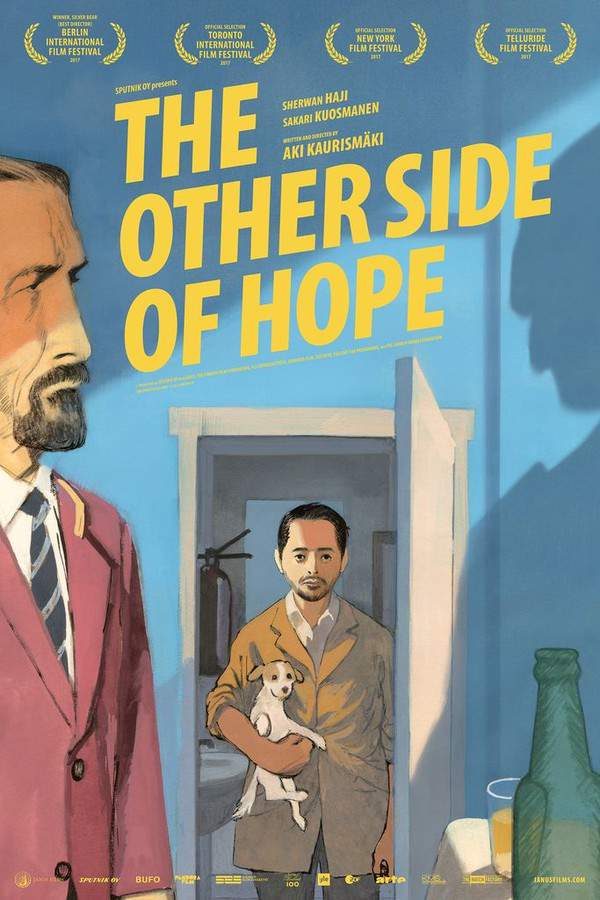
A Syrian refugee seeking a new life unexpectedly finds himself in Helsinki, while a weary businessman leaves his old life behind to purchase a struggling restaurant. Their separate journeys unexpectedly converge, forging a connection that explores themes of hope, loss, and the search for meaning. The film portrays the challenges and quiet moments of connection as they navigate their individual circumstances and find solace in an unlikely friendship.
Warning: spoilers below!
Haven’t seen The Other Side of Hope yet? This summary contains major spoilers. Bookmark the page, watch the movie, and come back for the full breakdown. If you're ready, scroll on and relive the story!
Read the complete plot breakdown of The Other Side of Hope (2017), including all key story events, major twists, and the ending explained in detail. Discover what really happened, and what it all means.
In Helsinki, the story unfolds with Waldemar Sakari Kuosmanen, a traveling shirt salesman who has a heated argument with his wife, leading him to abandon her. Determined to change his life, he liquidates his remaining stock and gambles his earnings during a poker game, where fortune smiles upon him as he wins a substantial sum. With his newfound wealth, he takes a bold step and purchases a restaurant, but his three employees are initially skeptical of his strategies to breathe new life into their establishment.
Meanwhile, Khaled Sherwan Haji, a Syrian refugee, arrives in Helsinki clandestinely aboard a cargo ship. Once he disembarks, he promptly turns himself into the authorities and files for asylum. At the refugee processing center, he forges a friendship with Mazdak, an Iraqi refugee. Desperate to locate his sister, Miriam, who went missing during their perilous journey across the Balkans escaping the Syrian Civil War, Khaled turns to Mazdak for assistance. When Khaled’s asylum request is abruptly denied, he decides to take matters into his own hands and escapes.
Destiny brings Khaled to Waldemar’s doorstep, where he finds shelter from the storm. Waldemar not only takes him in but also offers him a job within his restaurant. With the support of Waldemar and his team, Khaled navigates the complex process of obtaining new identification papers. Eventually, Mazdak drops a glimmer of hope when he learns of Miriam’s whereabouts. Together, Waldemar and Khaled arrange for a trucker to smuggle her out from a refugee facility in Lithuania. The long-awaited reunion between Khaled and Miriam occurs, filled with emotion and relief.
However, tragedy strikes when Khaled faces horrific racism upon his return to Waldemar’s apartment. A brutal thug confronts him, leading to a violent attack where Khaled is stabbed, leaving him on the verge of death. Returning home, Waldemar is met with a shocking sight—pools of blood that send him racing outside, where he discovers Khaled nestled under a tree by the riverside, smiling peacefully as a small dog playfully licks his face. This striking moment encapsulates the themes of resilience and hope amid despair, demonstrating the bond formed between these two men from vastly different worlds.
Last updated: November 16, 2024 at 12:30
Explore frequently asked questions about The Other Side of Hope (2017) with spoiler-rich answers covering the full plot summary, major story beats, character motivations, hidden details, and ending meaning. This movie summary FAQ helps explain confusing scenes, plot twists, and narrative decisions in clear, searchable detail.
Waldemar's decision comes after a heated argument with his wife that reaches a breaking point. Feeling trapped in his life as a traveling shirt salesman, he liquidates his remaining stock and gambles the money in a poker game. Winning a substantial sum gives him the financial means and the psychological push to completely start over. Purchasing the struggling restaurant represents his attempt to reinvent himself and find meaning beyond his previous existence.
The film's opening argument foreshadows Waldemar's pattern of making dramatic, impulsive life changes when dissatisfied.
The summary does not specify the exact reasoning behind the denial, but asylum requests can be denied for various reasons including insufficient documentation, skepticism about the applicant's credibility, or immigration policies at the time. The abrupt denial forces Khaled into desperation, leading him to escape from the refugee center to take control of his fate rather than accept deportation.
The denial plants the seed for Khaled's decision to escape, directly connecting to his arrival at Waldemar's restaurant.
After escaping from the refugee center following his asylum denial, Khaled finds himself wandering in Helsinki during a storm. He arrives at Waldemar's restaurant seeking shelter from the harsh weather. Waldemar, recognizing the man's desperation and need, not only provides refuge but offers him a job. This act of kindness becomes the foundation of their unlikely friendship.
Khaled's desperate search for shelter parallels Waldemar's own search for meaning, setting up their convergence.
Khaled's friend Mazdak at the refugee processing center discovers information about Miriam's whereabouts. He learns that she is being held at a refugee facility in Lithuania. Together with Waldemar, they arrange for a trucker to smuggle her out of the facility, enabling the long-awaited reunion between Khaled and his sister.
Mazdak's connection to Khaled earlier in the film pays off when he uses his contacts to help find Miriam.
Khaled becomes the victim of a violent racist attack when a thug confronts him upon his return to Waldemar's apartment. The attack is motivated by xenophobia and racism directed toward the Syrian refugee. The brutal stabbing leaves Khaled on the verge of death, representing the harsh reality of violence that refugees often face in their new countries.
The film hints at the challenges of integration and the threat of racism that refugees encounter.
After the violent attack leaves Khaled severely wounded, Waldemar returns home to find blood pools in his apartment. Rushing outside, he discovers Khaled nestled under a tree by the riverside. Despite his critical injuries, Khaled is smiling peacefully while a small dog licks his face. This poignant image symbolizes resilience and hope persisting even in the darkest moments. Whether Khaled survives remains ambiguous, but the ending emphasizes spiritual peace and human connection over physical outcome.
The peaceful final image contrasts sharply with the violence of the attack, delivering the film's thematic message about hope amid suffering.
Waldemar's decision to help Khaled stems from his own recent life transformation. After leaving his wife and gambling his way to a new beginning, Waldemar recognizes a kindred spirit in Khaled, someone else seeking a fresh start against difficult odds. Rather than turning away the desperate refugee, Waldemar sees an opportunity to make a meaningful difference. He offers not only shelter and employment but also helps Khaled navigate the complex process of obtaining identification papers.
Waldemar's parallel story of reinvention makes him uniquely positioned to understand and help Khaled.
The three existing employees are initially skeptical of Waldemar's strategies to revitalize their struggling establishment. However, they eventually embrace change when they witness his genuine commitment and see how he treats Khaled with respect and kindness. Their acceptance grows as Khaled becomes a valued team member, demonstrating how the restaurant becomes a space where both the old and new staff unite.
The employees' skepticism mirrors the broader societal hesitation toward refugees, which the film gradually overcomes through personal connections.
Discover curated groups of movies connected by mood, themes, and story style. Browse collections built around emotion, atmosphere, and narrative focus to easily find films that match what you feel like watching right now.
Stories of characters finding hope and connection in the face of adversity.Discover movies like 'The Other Side of Hope' that explore themes of human resilience, unlikely friendships, and finding hope in difficult circumstances. These films share a similar steady pacing and bittersweet tone, often focusing on quiet, character-driven dramas about overcoming adversity.
These narratives typically follow characters navigating significant hardships, such as being an outsider, starting over, or grappling with loss. The plot is driven by character interactions and quiet moments rather than high drama, often culminating in an ending that acknowledges the struggle but affirms the possibility of human connection.
Movies are grouped here because they share a specific emotional mix: a blend of somber reflection with resilient optimism. They possess a similar pacing—steady and thoughtful—and a medium intensity that allows for a deep, empathetic engagement with serious themes without being overwhelming.
Mismatched characters forming deep connections that change their lives.If you liked the friendship in 'The Other Side of Hope', explore these movies about unlikely bonds and found family. These films feature characters from different backgrounds who form deep connections, often with a bittersweet feel and a focus on themes of belonging and starting over.
The narrative pattern involves two or more separate character arcs—often individuals who are isolated or lost—that slowly converge. Their initial interactions may be tentative or even antagonistic, but through shared experiences or a common goal, a profound and transformative friendship emerges, offering a new direction in life.
These films are grouped by their core focus on the 'found family' trope and the specific dynamic of unlikely friendships. They share a thematic heart, exploring how connection can bridge cultural, social, or personal divides, and they typically deliver this with a mix of earnestness and gentle humor.
Don't stop at just watching - explore The Other Side of Hope in full detail. From the complete plot summary and scene-by-scene timeline to character breakdowns, thematic analysis, and a deep dive into the ending - every page helps you truly understand what The Other Side of Hope is all about. Plus, discover what's next after the movie.
Track the full timeline of The Other Side of Hope with every major event arranged chronologically. Perfect for decoding non-linear storytelling, flashbacks, or parallel narratives with a clear scene-by-scene breakdown.
Discover the characters, locations, and core themes that shape The Other Side of Hope. Get insights into symbolic elements, setting significance, and deeper narrative meaning - ideal for thematic analysis and movie breakdowns.