Plot Explained Spoilers guaranteed!
Plot Explained

Browse by genre

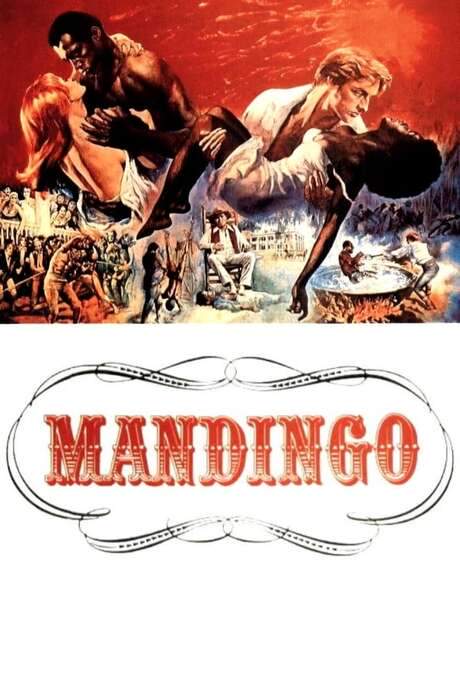
Mandingo (1975) movie poster

Plot Summary

Mandingo (1975) Plot Summary Explained

Release, runtime and language
1975 · 127 mins · English
Loading streaming availability…
Directed by
Richard Fleischer
Starring
Sylvester Stallone, James Mason, Debbi Morgan, Susan George, Perry King, Paul Benedict

Set on a decaying Southern plantation, Warren Maxwell pressures his son Hammond to marry and secure an heir. Hammond chooses his cousin Blanche, but after their honeymoon he acquires a sex slave. Maxwell also brings in a Mandingo slave, Mede, to be bred and trained as a prize‑fighter, exposing the brutal, sensual, and shameful realities of the era.

On this page (5)
  1. 1 Where to watch
  2. 2 What happens: full plot
  3. 3 Plot questions answered
  4. 4 Movie threads
  5. 5 Every angle
Loading streaming availability…

Full plot summary · contains spoilers

What Happens in Mandingo: Full Plot Summary

The whole story of Mandingo (1975) explained, from the opening scene to the final frame: every key event, every twist and what it all adds up to. Read it as a quick recap before the sequel, to check a scene you missed, or to finally understand what really happened.

In the Deep South before the American Civil War, Falconhurst is a run-down plantation that sits at the center of a brutal social order. It is owned by widower Warren Maxwell, a man whose authority is largely exercised through his son, Hammond Maxwell. The two men visit a neighboring plantation where hospitality includes offering two black women. Hammond selects Ellen [Debbi Morgan], a young woman who is a virgin, while Charles — the other man present — rapes the other woman, a crime Hammond’s companion casually condones as if it were a matter of course. Ellen’s quiet insistence that she does not welcome what happens is met with a cold, transactional gaze from Hammond, who then takes Ellen as his own. The dynamic here sets the tone for a plantation world in which desire, power, and ownership are inseparable.

Warren Maxwell pressures Hammond to marry, and he fulfills that request by selecting his cousin Blanche Woodford Maxwell [Susan George], a woman who longs to escape her confining home life and the shadow of her brother Charles. It’s implied that Blanche’s past includes an incestuous tie to Charles, a detail that weighs on the marriage from the start. After their wedding night, Hammond begins to doubt whether Blanche is a virgin, a suspicion Blanche fervently denies. As Hammond and Blanche travel back from their honeymoon, he returns to Falconhurst and buys Ellen again, this time as his sex slave, a decision that complicates the fragile balance of power around the estate. Over time, however, Hammond’s treatment of Ellen shifts from domination to genuine care, revealing cracks in the rigid hierarchy that once defined the plantation.

Around this circle of masters and mistresses move Mede, a Mandingo slave purchased by Hammond. Mede, nicknamed “Mede,” is put to work as a prizefighter, a brutal system that uses the slave’s body as leverage for profit. To harden Mede’s skin, he is subjected to a painful soak in a cauldron of scalding salt water, a ritual meant to transform him into a marketable asset. Hammond also arranges a progeny by breeding Mede with Pearl, a slave who is blood-related to Mede, which underscores the disturbing eugenic practices that underpin this world. The result is a dangerous stock market of human bodies, where Hammond’s wealth grows as Mede’s fights draw bets and attention. The money from these bets buys Hammond influence, which in turn feeds the cycle of control on Falconhurst.

As Blanche’s fragile pride erodes, she becomes a neglected, reckless figure who turns to alcohol. Ellen’s pregnancy becomes a moment of fragile hope for Ellen and, in a cruel reversal, a point of jealousy for Blanche. Blanche beats Ellen after learning of the pregnancy, and Ellen flees only to suffer a fall that leads to a miscarriage. Hammond, who had promised Ellen that her child would be freed, returns to discover the miscarriage and, under pressure from Warren, Ellen keeps silent about the circumstances. Hammond offers Ellen ruby earrings to mark his favor, while Blanche wears a matching necklace, a visible sign of the rivalry between the two women and the unequal distribution of affection and power on the estate.

Hammond’s travels for business bring a new, perilous dynamic into the household when Blanche, in a drunken frenzy, manipulates Mede into sexual encounters with her. Moestering his way into Blanche’s room, Mede is forced to comply on several occasions, and the strain and coercion intensify the plantation’s already volatile atmosphere. When Hammond finally returns, the tension between Ellen and Blanche has mounted to a near-breaking point, and Warren Maxwell grows anxious for grandchildren. He locks Hammond and Blanche together in a room to force them to reconcile, and the couple seems to appear to cooperate — at least on the surface.

A moment of truth arrives when Blanche announces she is pregnant again, but the baby is visibly mixed-race. Doctors, fearing scandal, allow the infant to bleed to death from the umbilical cord. Enraged by what he perceives as Blanche’s infidelity and the collapse of their household, Hammond asks the physician if he has poison for old slaves and horses and pours a dose into a drink meant for Blanche. He then confronts Mede, who tries to explain that Blanche had forced him into sex under threat of accusations of rape if he refused. Hammond’s fury ignites: he fires at Mede with a rifle, the second shot hurling Mede into a boiling cauldron, and he finishes Mede off with a pitchfork.

In the aftermath, Agamemnon, a slave, seizes a rifle and shoots toward Hammond after Warren calls him a racial slur and demands that he put the weapon down. The shot finally ends Warren’s life, and as the killer runs away, Hammond sinks to the ground, left with the lifeless body of his father beside him. The plantation’s violent hierarchy has shattered, leaving a chilling reminder that power, ownership, and desire are inseparable forces in Falconhurst. On a landscape where affection can be weaponized, where wealth relies on the exploitation of bodies, the fates of Ellen, Blanche, Mede, and those who dare to resist the system are sealed in blood and tragedy.
Last updated: October 09, 2025 at 10:48

Was this helpful?

Plot questions answered

Mandingo Plot Explained: Your Questions Answered

The questions people ask most about Mandingo (1975): what happens in the confusing scenes, why the characters do what they do, the twists, hidden details and what the ending means. Each answer contains spoilers.

Q1

Why does Hammond buy Ellen as a sex slave after marrying Blanche?

After returning from his honeymoon, Hammond returns to Falconhurst and purchases Ellen as his sex slave. This decision stems from the plantation's social order where white men exercised unchecked power over enslaved women. Though married to Blanche, Hammond views Ellen as property he can claim. Over time, his treatment of Ellen shifts from pure domination to genuine care, revealing how the rigid hierarchy cracks when genuine human connection forms.

Foreshadowing: Earlier, Hammond selected Ellen at the neighboring plantation, establishing his claim over her.

  • ellen
  • hammond
  • sex slave
  • falconhurst
  • marriage
Q2

Why does Blanche become an alcoholic?

Blanche's decline into alcoholism stems from multiple factors: her feeling of neglect by Hammond, her jealousy over Hammond's growing affection for Ellen, and her troubled past involving an incestuous relationship with her brother Charles. As Hammond spends more time with Ellen and shows her public favor through gifts like ruby earrings, Blanche's fragility shatters, leading her to reckless drinking and eventual breakdown.

Foreshadowing: Blanche's wedding night sets up tension when Hammond doubts her virginity, hinting at deeper insecurities.

  • blanche
  • alcoholism
  • hammond
  • ellen
  • jealousy
Q3

What causes Ellen's miscarriage?

When Blanche discovers Ellen's pregnancy, she beats her in a fit of rage. Ellen flees the attack but suffers a fall down the stairs, causing a miscarriage. Hammond had promised Ellen that her child would be freed, making the loss especially devastating. Ellen remains silent about the true circumstances under pressure from Warren, protecting Blanche despite what she did.

Foreshadowing: The pregnancy itself becomes a point of conflict when Blanche sees it as a threat to her position.

  • ellen
  • miscarriage
  • pregnancy
  • blanche
  • beatings
Q4

Why does Blanche manipulate Mede into sexual encounters?

While Hammond is away on business, a drunken Blanche orders Mede to come to her bedroom. Despite other slaves attempting to prevent it, Blanche coerces Mede into sleeping with her on several occasions. This act represents Blanche's desperate attempt to reclaim power and affection, using the only leverage she believes she has left. When Mede later explains to Hammond that Blanche forced him under threat of accusing him of rape, it becomes clear the encounters were non-consensual from Mede's perspective.

Foreshadowing: Blanche's isolation and alcoholism set the stage for her desperate actions during Hammond's absence.

  • blanche
  • mede
  • coercion
  • sexual assault
  • manipulation
Q5

Why does the mixed-race infant die after birth?

After reconciliation, Blanche becomes pregnant, but the baby is visibly mixed-race. To avoid scandal and protect the Maxwell family's reputation, doctors order the infant to bleed to death from the umbilical cord rather than provide proper medical care. This horrifying act exposes the hypocrisy of the plantation's moral code, where preserving white appearance matters more than innocent life.

Foreshadowing: Blanche's forced encounters with Mede during Hammond's absence directly lead to this pregnancy.

  • blanche
  • baby
  • mixed-race
  • infanticide
  • scandal
Q6

Why does Hammond try to poison Blanche?

Outraged by Blanche's apparent infidelity and the birth of a mixed-race child, Hammond asks the doctor if he has poison used on old slaves and horses. He prepares a poisoned drink for Blanche, intending to kill her as revenge for what he perceives as betrayal. However, he doesn't immediately carry out the act, as he also considers Mede's testimony about Blanche's coercion, showing his conflicted state.

Foreshadowing: The infant's death and the revelation of Blanche's actions trigger Hammond's murderous intent.

  • hammond
  • poison
  • blanche
  • revenge
  • infidelity
Q7

How does Mede die in the boiling cauldron?

Hammond confronts Mede, who tries to explain that Blanche forced him into sexual encounters under threat of accusations that would mean his death. Ignoring this explanation, Hammond fires a rifle at Mede. The second shot sends Mede tumbling into the boiling cauldron of salt water originally used to toughen his skin for fighting. Hammond then finishes Mede off with a pitchfork, killing him in a brutal fashion that mirrors how the plantation used his body for profit.

Foreshadowing: Mede's earlier soaking in the scalding cauldron foreshadows his ultimate death in boiling water.

  • mede
  • death
  • boiling cauldron
  • hammond
  • violence
Q8

Why does Agamemnon shoot Warren Maxwell?

During the chaotic confrontation where Mede dies, Warren Maxwell calls Agamemnon a racial slur and demands he hand over a rifle. Agamemnon, a slave who has endured years of brutal oppression, finally snaps and fires the weapon at Warren, killing him. This act represents the inevitable violence that erupts from systemic cruelty, as the oppressed turn on their oppressors when pushed beyond endurance.

Foreshadowing: Warren's consistent use of harsh language and control over his slaves establishes his attitudes that ultimately provoke this response.

  • agamemnon
  • warren maxwell
  • shooting
  • racial slur
  • slave rebellion
Q9

Why does Hammond give Ellen ruby earrings?

After Ellen's miscarriage, Hammond gives her a pair of ruby earrings to wear while serving an evening meal. He also gives Blanche a matching necklace. These gifts symbolize Hammond's shifting favoritism toward Ellen, which enrages Blanche. The ruby earrings represent both affection and ownership, a public display of Hammond's favor that deepens the rivalry between the two women and highlights the unequal power dynamics on the estate.

Foreshadowing: Hammond's growing care for Ellen develops throughout the story, culminating in these public gifts.

  • ruby earrings
  • hammond
  • ellen
  • necklace
  • favoritism
Q10

Why does Hammond train Mede as a prizefighter?

Hammond purchases Mede, a Mandingo slave, specifically to use his body for profit. Mede is forced to soak in a cauldron of scalding salt water to toughen his skin, then trained as a prizefighter. Hammond bets on Mede's fights, using the slave's body as a commodity to generate wealth. Hammond also breeds Mede with Pearl, a blood-related slave, demonstrating the disturbing eugenic practices that treat human beings as livestock for improving the stock.

Foreshadowing: Mede's physical strength makes him valuable as both a fighter and breeding stock.

  • mede
  • prizefighter
  • breeding
  • exploitation
  • profit
Q11

Why does Hammond doubt Blanche's virginity on their wedding night?

After their wedding night, Hammond becomes suspicious that Blanche is not a virgin. This doubt is significant because virginity was highly valued in that era, especially for women from prominent families. Blanche fervently denies his suspicion. The implied backstory involves Blanche's incestuous relationship with her brother Charles, which may have led to the loss of her virginity before marriage, adding another layer of dysfunction to their union.

Foreshadowing: This early tension establishes the troubled foundation of their marriage.

  • blanche
  • virginity
  • wedding
  • hammond
  • suspicion
Q12

Why does Warren pressure Hammond to marry Blanche?

Warren Maxwell pressures his son Hammond to marry and produce an heir to secure the plantation's future. Warren, a widower, views marriage as a strategic necessity rather than a union of affection. Hammond selects his cousin Blanche Woodford, who eagerly accepts to escape her oppressive home life and the hold her brother Charles has over her. Warren's primary concern is maintaining the family line and the plantation's legacy through offspring.

Foreshadowing: Warren's desperate desire for grandchildren later leads him to lock Hammond and Blanche together to force reconciliation.

  • warren maxwell
  • marriage
  • heir
  • pressure
  • blance

Movie threads

More Movies Like Mandingo, by Mood & Story

Curated lists built around what makes Mandingo tick: the same mood, the same kind of story or the same emotional payoff. Each list explains why these movies belong together.

Gothic tales of moral decay like Mandingo

Gothic tales where a family's legacy is built on a foundation of rot. If you were captivated by the oppressive atmosphere and systemic cruelty in Mandingo, explore more movies like it. These films feature decaying families, corrupt power structures, and settings that become prisons, all leading to a sense of inescapable doom.

  • oppressive
  • decadent
  • claustrophobic
  • grim
  • volatile
  • melancholic
  • Tone: dark, bleak, oppressive
  • Pacing: steady, deliberate
Why these movies?

The story pattern: These narratives typically follow the unraveling of a powerful but corrupt system, often a family or institution. The plot focuses on exposing the rot at the core, as characters who are both perpetrators and victims navigate a world where humanity has been stripped away, leading to tragic consequences for nearly everyone involved.

Why they belong together: These films are grouped together for their shared atmosphere of oppressive dread, their focus on systemic moral failure, and their unflinching portrayal of how power corrupts absolutely. They deliver a consistently dark and emotionally heavy experience.

Movies about systemic cruelty like Mandingo

Stories that relentlessly expose the violent machinery of an unjust world. For viewers seeking films similar to Mandingo's unflinching look at the horrors of slavery. These movies share a high-intensity, steady pacing as they expose the brutal realities of oppressive systems, leaving a lasting emotional impact.

  • brutal
  • harsh
  • desperate
  • anxious
  • grim
  • unflinching
  • Tone: dark, grim, harsh
  • Pacing: steady, methodical
Why these movies?

The story pattern: The narrative pattern involves a steady, almost clinical unveiling of an exploitative system's mechanisms. Characters are often trapped by their roles within the system, whether as enforcers, victims, or both. The story builds tension not through action, but through the accumulation of horrific details, culminating in a conclusion that underscores the system's devastating power.

Why they belong together: These movies are connected by their shared commitment to depicting the grim reality of oppressive power structures without sugarcoating or offering easy redemption. They feature high intensity, heavy emotional weight, and a pacing that forces the viewer to sit with the discomfort.

Every angle

Mandingo (1975) Explained: Plot, Timeline & Characters

Everything about Mandingo in one place: what happens in the plot summary, the timeline in chronological order, the characters and meaning and a spoiler-free summary. What's After the Movie adds the cast, box office and post-credit scenes.

Coming soon on iOS and Android

The Plot Explained Movie Summary App

Plot summaries, endings explained and timelines on your phone. Catch up on any movie in minutes, save your favorites and never miss a twist again.

Be the first to know when we launch. Your email stays private, always.

Learn more about the app