Plot Explained Spoilers guaranteed!
Plot Explained

Browse by genre

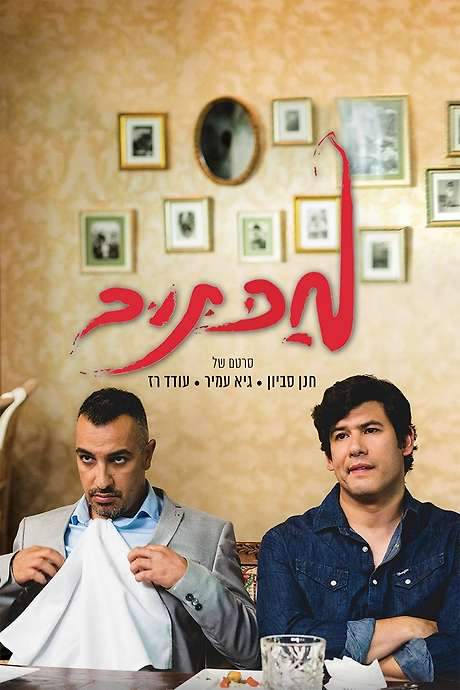
Maktub (2017) movie poster

Timeline

Maktub (2017) Timeline Explained – Every Event in Order

Release, runtime and language
2017 · 100 mins · Hebrew
Loading streaming availability…
Directed by
Oded Raz
Starring
Gal Amitai, Itzik Cohen, Igal Naor, Edna Blilious, Abraham Celektar, Guy Amir

After surviving a terrorist attack in Jerusalem, two criminals, Steve and Chuma, resolve to change their lives and become benevolent figures. They embark on a journey to fulfill the wishes of people who submit written requests tucked between the stones of the Wailing Wall. Their newfound purpose leads them on a path of wish fulfillment, intertwining their fates with those seeking a touch of hope and divine intervention.

On this page (5)
  1. 1 Where to watch
  2. 2 Events in order (14)
  3. 3 Timeline questions answered
  4. 4 Movie threads
  5. 5 Every angle
Loading streaming availability…

14 events in order · contains spoilers

Maktub Timeline: Events in Chronological Order

Every key event of Maktub (2017) in order, scene by scene, with when and where it takes place. Use it to untangle flashbacks, time jumps and parallel storylines, to refresh your memory before the sequel or to find the exact scene you are thinking of.

  1. Surviving the Bombing

    Steve and Chuma, two mobsters, miraculously survive a terrorist bombing in a restaurant. This event serves as a turning point in their lives and leads Chuma to believe they have been spared by divine intervention.

    Where
    Restaurant
  2. Prayer at the Western Wall

    After the bombing, Chuma insists that they must pray for guidance and heads to the Western Wall. Here, Steve finds a note left in the wall, which he uses to communicate with Chuma, who is temporarily deaf.

    Where
    Western Wall, Jerusalem
  3. Reading the Boy's Note

    The note they read reveals a lonely boy's wish related to a bar mitzvah, reflecting his mother's struggle to afford the celebration. Steve and Chuma decide they have been chosen by G-d to help answer the prayers left at the Western Wall.

    Where
    Western Wall, Jerusalem
  4. Meeting Boris

    Steve and Chuma meet with Boris, the lonely boy mentioned in the note. They falsely tell him that his mother has won a lottery that will allow them to throw him a bar mitzvah, hoping to bring joy to the boy's life.

  5. Meeting Avishar

    Chuma encounters Avishar, a boy who is neglected by his father. Steve denies that Avishar is his son, setting the stage for Chuma to become a paternal figure for the boy.

  6. Bruria's Wish

    The second note they read is from Bruria, a woman longing for a child due to her struggles with infertility. Steve and Chuma devise a plan involving a staged car accident to connect her with a fertility doctor.

  7. The Phony Accident

    Chuma and Steve orchestrate a fake car accident that leads Bruria to a hospital. Here, she meets a fertility specialist who suggests that her husband's infertility could be the issue.

    Where
    Hospital
  8. Home Remedy for Infertility

    Chuma goes to Mahane Yehuda Market in search of a folk remedy for male infertility. He offers this remedy to Bruria, showing his desire to help her achieve motherhood.

    Where
    Mahane Yehuda Market
  9. Avishar's Note

    While following Avishar, Steve and Chuma witness him leaving a note at the Western Wall. In it, he expresses a heartfelt wish for Chuma to be his father, deepening Chuma's connection to the boy.

    Where
    Western Wall, Jerusalem
  10. Capture by the Mob Boss

    Steve and Chuma are captured by their former mob boss, who suspects they are trying to take his money and run. Tension escalates as they confront their past and current troubles.

  11. Rescue by the Hitman

    Just in time, the hitman, who works for their mob boss, comes to their aid. It is revealed that he is Bruria's husband, who has come to share the good news that she is pregnant.

  12. Chuma's Role as a Father

    The movie culminates with Chuma taking on a father's role for Avishar, as he promises to be there for him. This moment signifies growth for both Chuma and Steve, as they embrace their new circumstances.

  13. Avishar's Soccer Match

    Chuma escorts Avishar to his soccer match, fulfilling the boy's dream and solidifying their bond. This joyful moment reinforces the theme of fatherhood that runs throughout the film.

    Where
    Soccer Field
  14. Steve Accepts Avishar

    In a touching conclusion, Steve comes to terms with his feelings and finally accepts Avishar as his son. This acceptance marks a significant transformation in Steve's character and relationship dynamics.

Last updated: September 18, 2026 at 08:59

Was this helpful?

Timeline questions answered

Maktub Timeline Explained: Your Questions Answered

When does it happen, and why in that order? The questions people ask about the chronology of Maktub (2017): time jumps, flashbacks, cause and effect between scenes and the correct order of events, each answered with spoilers.

Q1

Why did Steve and Chuma start fulfilling wishes at the Western Wall?

After surviving a terrorist bombing at a restaurant, Chuma becomes convinced that their escape was an act of divine intervention. When they visit the Western Wall to pray, Steve picks up a prayer note left in the stones and uses it to communicate with the temporarily deaf Chuma. The note, written by a lonely boy named Boris who cannot afford a bar mitzvah, convinces the pair that G-d is directing them to answer the prayers left at the wall, transforming them from mob enforcers into wish-fulfillers.

Foreshadowing: Chuma's insistence on praying at the Western Wall directly after the bombing hints that he already sees their survival as more than luck.

  • western wall
  • divine intervention
  • prayer notes
  • bar mitzvah
  • mobsters
  • wish fulfillment
Q2

How did Steve communicate with Chuma after the bombing left him deaf?

The explosion temporarily deafens Chuma, making verbal conversation impossible. At the Western Wall, Steve improvises by grabbing a prayer note already tucked between the stones and handing it to Chuma as a written message. Ironically, this makeshift communication tool is what introduces them to Boris's wish, which becomes the catalyst for their entire wish-fulfillment mission throughout Maktub.

Foreshadowing: The note Steve picks up for simple communication turns out to be the very prayer that launches their new calling.

  • deaf chuma
  • western wall note
  • communication
  • steve
  • explosion
Q3

Why does Steve deny that Avishar is his son?

Steve denies being Avishar's father to avoid the responsibility of raising a child while still working as a mob enforcer. Acknowledging Avishar would mean abandoning his criminal lifestyle and facing the boy he has long neglected. His denial allows him to maintain his old identity until the film's events, and Avishar's emotional needs, force him to confront the truth.

Foreshadowing: Steve's avoidance of Avishar in early scenes signals fear of commitment rather than simple disinterest.

  • steve
  • avishar
  • denial
  • fatherhood
  • absentee parent
Q4

How does buying a folk infertility remedy hint at Avishar's real parentage?

Chuma goes to Mahane Yehuda Market to buy an old folk cure for male infertility to help Bruria. There he discovers that Steve previously purchased the same remedy. The coincidence raises questions about which of the two is actually Avishar's biological father, suggesting that the boy Chuma has grown closest to may share his blood rather than Steve's. The film leaves the implication hanging, adding depth to the father-son dynamic at the heart of Maktub.

Foreshadowing: Chuma's growing closeness with Avishar already hints at a deeper bond than mere friendship.

  • infertility remedy
  • mahane yehuda market
  • avishar parentage
  • chuma
  • steve
Q5

Why does Avishar leave a prayer note at the Western Wall asking for Chuma as his father?

Avishar forms a deep bond with Chuma, who gives him the warmth and attention his real father never provides. Wanting to make that bond permanent, Avishar writes a note at the Western Wall praying for Chuma to become his real father. When Steve and Chuma later catch him tucking the note into the wall, it confirms how completely Chuma has taken on the paternal role the boy always longed for.

Foreshadowing: Earlier scenes where Avishar clings to Chuma in public already foreshadow the strength of his attachment.

  • avishar note
  • western wall
  • father wish
  • chuma
  • paternal bond
Q6

How does Bruria's husband end up saving Steve and Chuma from the mob boss?

Bruria's husband is secretly a hitman employed by the very mob boss who captures Steve and Chuma. When the boss confronts the pair over missing money, the husband intervenes at the critical moment to spare their lives. He then reveals that Bruria is pregnant, which proves his earlier supposed infertility was either temporary or wrongly diagnosed, and ties his act of mercy directly to the wish Bruria had prayed for.

Foreshadowing: Bruria's mention of her husband's unusual work schedule earlier in the film subtly hints at his hidden profession.

  • bruria husband
  • hitman
  • mob boss
  • capture
  • pregnancy
  • infertility
Q7

Why does the mob boss capture Steve and Chuma?

The mob boss notices that money and sponsorship fees are disappearing while Steve and Chuma spend their time praying at the Western Wall instead of working. He assumes the two are embezzling from him and orders their capture to extract a confession. The confrontation is meant to punish them for theft, but it instead becomes the turning point where their wish-fulfillment journey is rewarded.

Foreshadowing: Steve and Chuma skipping collection rounds to visit the wall foreshadows the boss's growing suspicion.

  • mob boss
  • capture
  • missing money
  • steve
  • chuma
  • sponsorship fees
Q8

How does the fake car accident help Bruria get pregnant?

Steve and Chuma stage a car accident to send Bruria to the hospital, where she coincidentally meets a fertility specialist. The doctor identifies that her husband, not Bruria herself, is the one with fertility issues. This medical diagnosis, triggered by their scheme, sets in motion the treatment that ultimately leads to Bruria's pregnancy, fulfilling the wish she had written at the Western Wall.

Foreshadowing: Bruria's earlier mention of repeated unsuccessful pregnancy attempts sets up why a specialist's intervention is so impactful.

  • staged accident
  • bruria
  • fertility doctor
  • hospital
  • pregnancy
Q9

Why does Steve finally accept Avishar as his son at the end of Maktub?

After witnessing Avishar's prayer note at the Western Wall and watching Chuma step in to take the boy to his soccer match, Steve is forced to see the emotional damage his absence has caused. Seeing the father-son bond form between Chuma and Avishar pushes Steve to confront his own failures. His acceptance marks the personal transformation the bombing set in motion and completes the redemption arc of both criminals.

Foreshadowing: Steve quietly observing Avishar and Chuma together in earlier scenes already hints at his growing guilt.

  • steve acceptance
  • avishar
  • redemption
  • soccer match
  • fatherhood
Q10

What does the title Maktub mean in the context of the movie?

Maktub is an Arabic word meaning "it is written" or "it was destined," commonly used to suggest that events are preordained. In Maktub, the title reflects how the bombing, the discovery of the prayer notes, and the eventual fulfillment of every wish follow a path that feels divinely guided. The characters' choices only become meaningful because they align with a fate that was, quite literally, already written into the wall.

Foreshadowing: Chuma calling their survival a miracle after the bombing plants the idea of destiny early in the story.

  • maktub meaning
  • destiny
  • it is written
  • fate
  • arabic phrase

Movie threads

More Movies Like Maktub, by Mood & Story

Curated lists built around what makes Maktub tick: the same mood, the same kind of story or the same emotional payoff. Each list explains why these movies belong together.

Criminal redemption stories like in Maktub

Flawed antiheroes trade crime for kindness and discover a deeper purpose. Movies like Maktub where flawed, often funny characters turn away from crime and discover a gentler, more meaningful life. If you liked Maktub's warm take on criminal reform, these hopeful character-driven stories offer the same blend of humor, heart, and second chances you'll love exploring next.

  • redemptive
  • heartwarming
  • second chances
  • criminal reform
  • uplifting
  • gentle humor
  • Tone: hopeful, warm, redemptive
  • Pacing: steady character driven
Why these movies?

The story pattern: These narratives typically begin with a violent or life-altering event that forces protagonists to confront their own mortality or values. They follow antiheroes who gradually shift from self-serving schemes to altruistic ones, often using their old streetwise skills for good. The journey is peppered with comedic missteps and small moral victories, culminating in a satisfying reconciliation with community, family, or a higher calling.

Why they belong together: Grouped for their shared arc of criminal reform, their balance of gentle humor with touching human moments, and their insistence on happy or hopeful resolutions. Each film leans on warmth and quirky charm rather than gritty realism to portray transformation, creating a distinct feel-good identity despite darker subject matter.
Faith-driven feel-good movies like in Maktub

Whimsical stories where faith, chance, and kindness turn ordinary lives around. Movies like Maktub that blend gentle humor, faith, and the idea that small miracles can transform ordinary lives. If you loved Maktub's quirky spiritual warmth and its hopeful message about answered prayers, these uplifting films share the same tender, feel-good spirit and divine intervention themes worth discovering.

  • faith-driven
  • miraculous
  • feel-good
  • whimsical
  • heartwarming
  • spirituality
  • Tone: hopeful, whimsical, heartwarming
  • Pacing: steady and gentle
Why these movies?

The story pattern: In these stories, characters encounter seemingly supernatural or fateful moments that redirect their lives toward purpose. Plotlines often interweave multiple ordinary people whose wishes or struggles are gently resolved through the actions of an unlikely catalyst or a quiet sense of providence. The tone stays warm and sincere rather than preachy, with humor softening the spiritual themes and a happy ending tying everything together.

Why they belong together: Grouped for their shared embrace of faith, divine intervention, or kismet, combined with a feel-good comedic tone and unambiguously happy endings. Each film uses whimsy and warmth to explore what happens when people open themselves to grace, treating the spiritual elements as gentle and accessible rather than dogmatic.

Every angle

Maktub (2017) Explained: Plot, Timeline & Characters

Everything about Maktub in one place: what happens in the plot summary, the timeline in chronological order, the characters and meaning and a spoiler-free summary. What's After the Movie adds the cast, box office and post-credit scenes.

Coming soon on iOS and Android

The Plot Explained Movie Summary App

Plot summaries, endings explained and timelines on your phone. Catch up on any movie in minutes, save your favorites and never miss a twist again.

Be the first to know when we launch. Your email stays private, always.

Learn more about the app