

Year: 1974
Runtime: 115 mins
Language: English
Director: Ken Russell
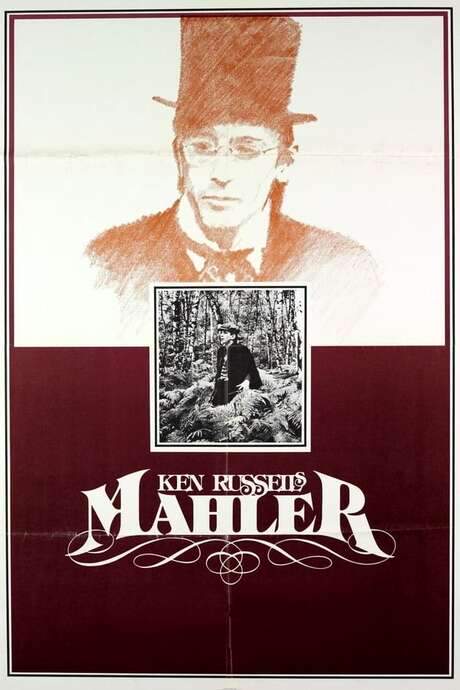
Through striking cinematography, the film becomes an electrifying visual odyssey that immerses the viewer in musical madness and a savage romance. As he journeys by train, famed composer Gustav Mahler confronts the tragedies of his past, the disintegration of his marriage, and the inner turmoil that shapes his art.
Get a spoiler-free look at Mahler (1974) with a clear plot overview that covers the setting, main characters, and story premise—without revealing key twists or the ending. Perfect for deciding if this film is your next watch.
In a world where the rhythm of a train’s wheels becomes a conduit for memory, a restless composer and his wife embark on a transatlantic voyage that feels less like travel than a moving gallery of the past. The cinematography turns the carriage into a kaleidoscope of light and shadow, each station whispering a fragment of a life lived in the margins of history. The film is an electro‑visual odyssey that immerses the audience in the fevered pulse of music and a romance that teeters on the edge of obsession.
Gustav Mahler sits at the heart of the journey, a towering figure whose genius is matched only by the weight of his own inner turbulence. He carries the echo of symphonies that grapple with mortality, love, and the relentless demand for creation. Beside him, Alma Mahler radiates both affection and an unspoken yearning for her own artistic voice, her presence a mirror and a counterpoint to Gustav’s relentless drive. Their conversations flicker between tenderness and tension, hinting at a partnership that is as fragile as the notes they cherish.
The train’s compartments become stages for fleeting encounters, the most striking of which is Max, a charismatic interloper whose allure threatens to shift the balance of the couple’s fragile equilibrium. As the locomotive hurtles toward Vienna, the surrounding world blurs into a series of vivid tableaux—lakeside cabins, imperial audiences, surreal baptisms—each reflecting the turbulent currents that shape the composer’s art. The atmosphere is charged with a savagely beautiful romance, a sense that every glance and whispered word could spark a new melody or a new wound.
Through its relentless visual poetry and a soundtrack that pulses with the same urgency as the characters’ hearts, the film invites viewers to sit beside the travelers and feel the silhouette of a life composed in motion. It promises an exploration of how memory, love, and artistic obsession intertwine, leaving the audience eager to hear what the next station will reveal.
Last Updated: December 04, 2025 at 18:21
Discover curated groups of movies connected by mood, themes, and story style. Browse collections built around emotion, atmosphere, and narrative focus to easily find films that match what you feel like watching right now.
Films that blur memory, fantasy, and reality to explore a creator's inner turmoil.Find other movies like Mahler that explore the lives of creators through a surreal and psychologically intense lens. This thread gathers films where artistic genius is intertwined with personal turmoil, presented with dreamlike visuals and complex, non-linear narratives.
The narrative pattern follows the life of a creative figure, eschewing conventional chronology in favor of a stream-of-consciousness journey. The story weaves together key memories, existential fears, and symbolic fantasies, often triggered by a present-moment catalyst like a journey or illness, to paint a portrait of the artist's soul.
Movies in this thread share a focus on the creative process as a form of madness or salvation, a melancholic and heavy tone, and a complex structure that mirrors the fractured nature of memory and inspiration. The visual style is often striking and symbolic.
Stories where a physical voyage prompts a heavy reckoning with love, loss, and legacy.If you liked Mahler's train journey through a life of music and regret, explore this thread of movies with similar bittersweet voyages. These stories use travel as a framework for characters to reflect on love, legacy, and mortality, leading to emotionally heavy and reflective conclusions.
The narrative is structured around a journey in the present that acts as a framing device for flashbacks and reflections. The central conflict is internal, as the protagonist grapples with the pain and beauty of their memories, culminating in a climax of self-acceptance that is both sad and strangely hopeful.
This thread groups films that share a specific narrative structure (journey-as-memory-trigger), a bittersweet emotional arc, and a heavy, reflective mood. The pacing is often variable, shifting between the calm of travel and the emotional intensity of recalled moments.
Don't stop at just watching — explore Mahler in full detail. From the complete plot summary and scene-by-scene timeline to character breakdowns, thematic analysis, and a deep dive into the ending — every page helps you truly understand what Mahler is all about. Plus, discover what's next after the movie.
Read a complete plot summary of Mahler, including all key story points, character arcs, and turning points. This in-depth recap is ideal for understanding the narrative structure or reviewing what happened in the movie.
Track the full timeline of Mahler with every major event arranged chronologically. Perfect for decoding non-linear storytelling, flashbacks, or parallel narratives with a clear scene-by-scene breakdown.
Discover the characters, locations, and core themes that shape Mahler. Get insights into symbolic elements, setting significance, and deeper narrative meaning — ideal for thematic analysis and movie breakdowns.
Visit What's After the Movie to explore more about Mahler: box office results, cast and crew info, production details, post-credit scenes, and external links — all in one place for movie fans and researchers.