Plot Explained Spoilers guaranteed!
Plot Explained

Browse by genre

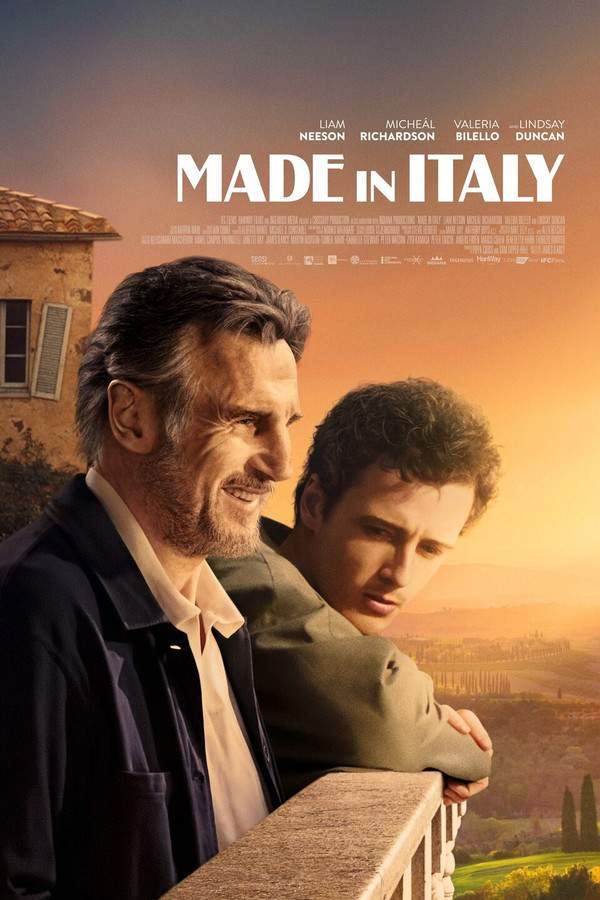
Made in Italy (2020) movie poster

Plot Summary

Made in Italy (2020) Plot Summary Explained

Release, runtime and language
2020 · 94 min · English
Echo score 56
JustWatch #31,831
Starring
Liam Neeson, Lindsay Duncan, Micheál Richardson, Claire Dyson, Gabriele Tozzi, Gian Marco Tavani
Budget
$101.3K

A neglected Italian villa sparks a journey of reconciliation for a widower and his estranged son. As they work together to renovate the property, the father and son confront past conflicts and embark on a path of self-discovery, learning to understand and appreciate each other amidst the challenges of restoring the beautiful Italian home. It's a heartwarming story about family, forgiveness, and finding connection in unexpected places.

On this page (7)
  1. 1 Where to watch
  2. 2 What happens: full plot
  3. 3 Plot questions answered
  4. 4 Movie threads
  5. 5 Movies like Made in Italy
  6. 6 Categories
  7. 7 Every angle

Where to watch

Where to Watch Made in Italy (2020)

Where can you watch Made in Italy? Stream, rent or buy it in the US, including on Philo, Sundance Now and Kanopy: current JustWatch availability with up-to-date prices.

Streaming availability powered by JustWatch

Full plot summary · contains spoilers

What Happens in Made in Italy: Full Plot Summary

The whole story of Made in Italy (2020) explained, from the opening scene to the final frame: every key event, every twist and what it all adds up to. Read it as a quick recap before the sequel, to check a scene you missed, or to finally understand what really happened.

The film begins in Flite Gallery, an art space in London overseen by Jack (played by Micheál Richardson, who is actually Liam Neeson's son), yet owned by Ruth (played by Yolanda Kettle), Jack's estranged wife and her family. Ruth informs Jack that her family has decided to sell the gallery, highlighting that despite his considerable efforts, he had never invested any money into it; thus, he has no authority in this matter. Jack proposes that he and his father, Robert (portrayed by Liam Neeson), can sell their house in Italy to fund the gallery purchase.

Bright and early, Jack visits his father Robert, a quintessential bohemian artist residing in his London studio flat. Robert, still in his robe with a scruffy appearance, gives Jack's arrival a rather peculiar twist when he introduces a woman leaving his room, misnaming her, causing a chaotic scene.

Jack hesitates to disclose the news of his impending divorce from Ruth, but insists on selling the Italian house. Robert is taken aback, revealing that Jack hasn't visited the property since he was seven and questioning his sudden interest. Upon their arrival at the neglected estate, they find it in an alarming state of disrepair; the warped wooden door is nearly impossible to pry open, and when Jack forces it, it collapses into the dust-filled interior.

They call in Kate (portrayed by Lindsay Duncan), a composed British real estate broker, to help with the sale of this eyesore. The house features an entire wall adorned in vibrant colors, a tribute by Robert to artist Frank Swine. With a roof in disarray and minimal provisions of bread and tomato sandwiches, their stay at the house is neither luxurious nor accommodating, not to mention the added trouble of a wayward weasel residing in the cabinet.

With Kate’s assistance, a local expert captures the pesky weasel, allowing local contractors to commence much-needed repairs, patching holes and painting the interior. Meanwhile, Robert gently attempts to sway Jack away from selling, but Jack’s frustration culminates in him leaving for town, where his clumsiness lands him sprawled on the cobblestones after mishandling a menu. Thankfully, he is helped by Natalia (played by Valeria Bilello), the proprietor of the restaurant, who serves him Risotto despite the establishment being closed.

As time passes, spectators visit the house while Robert makes it a point to turn away any potential buyers. Jack, meanwhile, discovers moments of joy riding a motorcycle and spending time with Natalia, learning about her life, including her ex-husband and their daughter.

Yet, Robert's commitment to holding onto the house intensifies as he sends away prospective buyers. In an emotional twist, Jack finds a bedroom filled with memorabilia of his childhood and his mother's drawings. Confronting Robert reveals the tragic past of his mother's untimely death in a car accident, a moment filled with both grief and reconciliation as father and son share a long-awaited embrace.

The plot thickens as Robert seeks to reconnect with Jack outside of their home, bringing with him a check from the sale of his London flat, allowing Jack to redeem his interest in the Italian property and fulfill his dream of running the gallery. Robert shares his intent to reside in Italy and start hosting painting retreats, following Kate's suggestion.

Finally, Jack returns to the Flite Gallery, confronting Ruth with divorce papers, leading to an inevitable and necessary parting. Back in Italy, he finds a refurbished house where his father is actively engaged in teaching art. Jack expresses his desire for a father-son relationship beyond financial transactions, sharing a heartfelt hug that cements their bond.

The movie culminates in Jack’s decision to exhibit Robert’s artworks in a gallery. The closing moments showcase the two of them joyously mixing paint side by side while restoring the wall, completing the homage to Frank Swine’s artistic style, as their relationship blossoms anew.
Last updated: October 27, 2024 at 18:18

Was this helpful?

Plot questions answered

Made in Italy Plot Explained: Your Questions Answered

The questions people ask most about Made in Italy (2020): what happens in the confusing scenes, why the characters do what they do, the twists, hidden details and what the ending means. Each answer contains spoilers.

Q1

Why does Jack want to sell the Italian house?

Jack wants to sell the Italian villa to raise money to buy the Flite Gallery in London. Although he has worked at the gallery for years, his wife Ruth's family owns it and has decided to sell it. Jack has no financial stake in the gallery and needs funds to maintain ownership, making the sale of his inherited Italian property his only viable option.

Foreshadowing: Early in the film, Ruth emphasizes that Jack never invested money into the gallery, only his effort.

  • Jack
  • Italian house
  • Flite Gallery
  • sell
  • Ruth
  • money
Q2

What happened to Jack's mother?

Jack's mother died in a car accident when Jack was a child. This tragic loss deeply affected both Robert and Jack, contributing to the emotional distance between them over the years. The discovery of her drawings and memorabilia in the Italian house becomes a pivotal moment for their reconciliation.

Foreshadowing: Robert reveals he has kept Jack's childhood bedroom intact, filled with memories of his late wife.

  • Jack's mother
  • car accident
  • death
  • grief
  • childhood memories
Q3

Why does Robert keep sending away potential buyers?

Robert deliberately sabotages the sale of the Italian house because he wants to keep it. The house holds deep emotional significance for him, containing memories of his late wife and his son Jack's childhood. Robert sees the property as his connection to his family and is unwilling to let it go, despite Jack's financial pressures.

Foreshadowing: Robert is visibly upset when Jack first proposes selling, questioning why Jack suddenly cares about a property he hasn't visited since age seven.

  • Robert
  • buyers
  • Italian house
  • keep
  • emotional attachment
Q4

How does Robert afford to help Jack buy the gallery?

Robert sells his London flat and brings Jack a check from the sale. This financial gesture allows Jack to reconsider his position on the Italian property and gives him the means to pursue his dream of running the gallery. Robert decides to move to Italy permanently and start hosting painting retreats, turning his financial windfall into a new life purpose.

Foreshadowing: Earlier, Robert lives in a messy London flat, suggesting he has assets he could liquidate.

  • Robert
  • money
  • London flat
  • check
  • gallery
  • painting retreats
Q5

Why does Jack decide to divorce Ruth?

Jack files for divorce from Ruth after she decides to sell the Flite Gallery without considering his feelings or contributions. The marriage had already become estranged, and this final act of exclusion by Ruth's family prompts Jack to break free and pursue his own path. By returning the divorce papers, Jack chooses to focus on his relationship with his father and his passion for art rather than continuing a marriage built on unequal partnership.

Foreshadowing: Jack hesitates to tell Robert about his divorce early in the film, indicating the marriage was already troubled.

  • Jack
  • Ruth
  • divorce
  • Flite Gallery
  • separation
Q6

What is the Frank Swine wall painting in the house?

The vibrant wall covered in colorful paintings is Robert's tribute to Frank Swine, an artist he admires. At the film's end, Jack and Robert work together to restore and complete this wall, turning it into a collaborative piece that symbolizes their renewed relationship. The artistic collaboration represents their healing and shared passion for art.

Foreshadowing: Kate, the real estate broker, comments on the wall's unusual nature early in their visit.

  • Frank Swine
  • wall painting
  • art
  • colors
  • restoration
Q7

Why does Jack decide to exhibit Robert's artwork at the gallery?

Jack decides to exhibit Robert's artwork as a way to bridge their relationship and honor his father's talent. This decision represents Jack finally accepting and appreciating Robert as an artist and as a father. The exhibition becomes a symbol of their reconciliation, merging Jack's professional life with his newly restored family bond.

Foreshadowing: Throughout the film, Robert is shown painting, demonstrating his identity as an artist.

  • Robert's artwork
  • exhibition
  • Flite Gallery
  • art
  • father-son bond
Q8

What is the weasel's purpose in the story?

The weasel living in the kitchen cabinet serves as a comedic element that highlights the state of disrepair of the Italian house. Its presence creates an early obstacle that brings Jack and Robert together as they deal with the property's many problems. After Kate arranges for a local expert to capture the weasel, the contractors can begin repairs, symbolizing the first step in both the house's and the relationship's restoration.

Foreshadowing: The weasel is mentioned shortly after they first enter the house, establishing the extent of the neglect.

  • weasel
  • house repairs
  • Italian villa
  • comedy
  • problem
Q9

What role does Natalia play in Jack's journey?

Natalia, the owner of the Italian restaurant, helps Jack through a difficult period by showing him kindness when he embarrassingly falls in town. She becomes a romantic interest and provides Jack with a glimpse into a different way of living, more relaxed and connected to place and people. Through his time with Natalia, Jack experiences joy and learns to appreciate life's simpler moments, which helps him reconsider his priorities and his relationship with his father.

Foreshadowing: Jack's clumsiness in town leads to his meeting Natalia, suggesting fate is guiding him toward new connections.

  • Natalia
  • Jack
  • restaurant
  • Italy
  • romantic interest
  • connection
Q10

What is Kate's role in the story?

Kate is a British real estate broker hired to help sell the Italian property. She provides practical assistance by arranging for the weasel's removal and coordinating contractors for repairs. More importantly, she suggests to Robert that he could host painting retreats in Italy, an idea that inspires Robert's plan for his future. Kate serves as a catalyst for both the house's restoration and Robert's new life direction.

Foreshadowing: Kate's suggestion about painting retreats PlantSeeds the idea that becomes Robert's post-film plan.

  • Kate
  • real estate broker
  • repairs
  • painting retreats
  • Italy

Movie threads

More Movies Like Made in Italy, by Mood & Story

Curated lists built around what makes Made in Italy tick: the same mood, the same kind of story or the same emotional payoff. Each list explains why these movies belong together.

Movies about healing through home renovation like Made in Italy

Characters find personal healing and connection by fixing up a meaningful old property. If you enjoyed the theme of restoring a house to mend a family in Made in Italy, you'll appreciate these films. This collection features movies where characters use the process of home renovation as a path to personal recovery, reconciliation, and new beginnings, blending gentle drama with a sense of tangible progress.

  • heartwarming
  • reflective
  • comforting
  • nostalgic
  • gentle
  • hopeful
  • Tone: hopeful, reflective
  • Pacing: slow, deliberate
Why these movies?

The story pattern: The narrative follows a linear path where the physical act of renovation parallels an emotional journey. Characters, often estranged family members or individuals at a crossroads, work together on a property tied to their past. Through this shared labor, they gradually break down emotional walls, leading to reconciliation, understanding, and a hopeful new chapter.

Why they belong together: Movies in this thread are grouped by their central metaphor: a broken home representing broken lives, and its restoration symbolizing healing. They share a gentle, low-intensity tone, a slow, deliberate pace, and a focus on character-driven conversations and quiet moments of connection over high-stakes plot.

Movies about father and son reconciliation like Made in Italy

Estranged fathers and sons slowly mend their relationship through shared experience. For viewers who liked the emotional core of Made in Italy, this list features films centered on estranged fathers and sons finding their way back to each other. These stories are character-driven, often involving a shared project or journey that facilitates honest conversation, forgiveness, and a bittersweet yet hopeful resolution.

  • heartwarming
  • emotional
  • reflective
  • bittersweet
  • hopeful
  • gentle
  • Tone: bittersweet, hopeful
  • Pacing: slow, conversational
Why these movies?

The story pattern: The narrative pattern involves two emotionally guarded characters, a father and son, brought together by circumstance—often a death, a family property, or a necessary trip. Their initial tension and awkwardness give way to vulnerable conversations and shared labor, allowing them to address old wounds. The journey is internal and conversational, leading to a hard-won but deeply felt connection.

Why they belong together: These movies are united by their specific character dynamic and emotional arc. They prioritize authentic dialogue and subtle performances over plot twists, creating a medium emotional weight that balances sadness from the past with hope for the future. The pacing is typically slow to allow the relationship to develop believably.

If you liked this

Movies Like Made in Italy

Similar movies to Made in Italy: the same genre, themes or kind of story. Each one comes with its own plot summary, timeline and ending explained.

Browse all movie summaries

Categories

Movie Lists Featuring Made in Italy

Made in Italy appears in these hand-built movie categories. Each one groups movies by a specific mood, theme or story type, with their plot summaries and endings explained.

View all movie categories

Every angle

Made in Italy (2020) Explained: Plot, Timeline & Characters

Everything about Made in Italy in one place: what happens in the plot summary, the timeline in chronological order, the characters and meaning and a spoiler-free summary. What's After the Movie adds the cast, box office and post-credit scenes.

Coming soon on iOS and Android

The Plot Explained Movie Summary App

Plot summaries, endings explained and timelines on your phone. Catch up on any movie in minutes, save your favorites and never miss a twist again.

Be the first to know when we launch. Your email stays private, always.

Learn more about the app