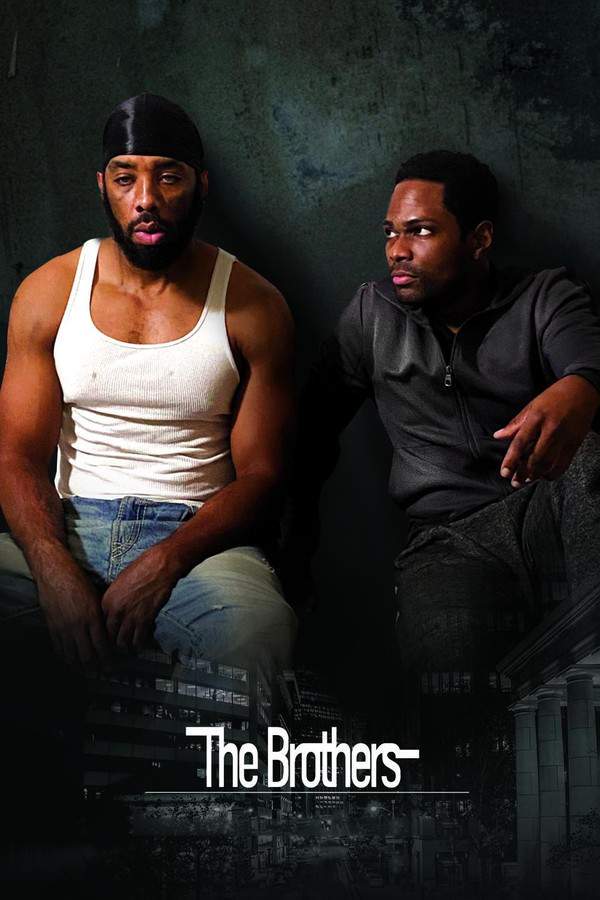
Kolya, Amil Nasirov, and his twin brother Vasya, Ramil Nasirov, are the sons of a gangster who hails from Yugoslavia. The film opens with a vivid flashback to the 1990s: the brothers skip school and Kolya, while playing, ends up inside a freight train. Vasya runs to his father for help, and the father halts the train, a moment that deepens Kolya’s love for his dad but leaves him too ashamed to admit the full truth to him.
Fast-forward to 2018, and the two brothers have taken very different paths. Kolya has become a minibus driver, living with his mother and dealing with a persistent back problem. Vasya is a police officer, married with a young child. A confrontation with another driver lands Vasya in trouble: his boss, Kolya’s stepfather, suspends him for a month and reassigns him to a less favorable route. On his first day, he faces a torrent of pension certificates from anxious passengers. Meanwhile, Vasya is called to quell a violent man, and later visits his wife’s father to tell him about his plan to study criminal investigation—a plan that the skeptical father-in-law resists, arguing that Vasya should focus on supporting his family.
A call from the Luxembourg consulate shocks Kolya: their dying father may have an inheritance that could change everything. Their mother believes their father, who abandoned the family, should be left to die. Kolya makes the difficult decision to travel to Luxembourg to see him, while Vasya resists, convinced that he isn’t worth the trouble. The trip begins with tension: back problems, an encounter with the mysterious “Uncle Slava,” an old associate of their father who reveals a story that contradicts Kolya’s cherished memory of him.
Tragedy strikes when, while Kolya is boarding a minibus, an elderly passenger, Larysa Petrovna, is injured. Kolya is placed under house arrest and eventually fitted with a tracking bracelet after a failed attempt to escape. Determined to repair the rift, Kolya makes a clumsy but earnest effort to reconnect with Larysa Petrovna, who, overwhelmed by her own struggles, initially rejects his help. Vasya’s career prospects take a hit as a consequence, and Kolya begins to help around Larysa Petrovna’s life—cooking meals, assisting at the bakery, and driving her about town—thereby forming bonds with her and the other pensioners she knows.
Amid these growing ties, Kolya learns that he may have to shoulder parental duties in a new way, and the weight of his past missteps—especially a drug-dealing charge that surfaces—puts him at serious risk of a five-year prison sentence. A colleague of Vasya’s hints that the brother might need to disappear from the police’s radar, complicating the brothers’ fragile alliance. The plot thickens further when Kolya’s quarrel with a toy seller, sparked by a defective toy and his involvement in its theft, escalates the pressure on him to leave the country quickly.
The brothers finally reach Luxembourg, where Kolya seeks out their father without waiting for approval, only to be turned away from the ward and then to discover they’ve been evicted from the hospital. With the help of an embassy staffer, they learn that their father died days earlier. They go to the home where he lived, hoping for an inheritance, only to find a man who survived on small wages, gambling, and meager gains. The moment is solemn as they say goodbye to the body in the morgue, the possibility of true recognition left in doubt by a tattoo that may or may not identify him. When Kolya steals Vasya’s phone and discovers there is a real threat of arrest in Ukraine, he reconsiders his priorities. He makes peace with his brother, and, in a decisive turn, decides to stay in Luxembourg, choosing to protect and care for his brother in a way that echoes the bond they shared as children.
This is a story about family, loyalty, and the hard choices that come with legacy and the costs of trying to reclaim a future.