Plot Explained Spoilers guaranteed!
Plot Explained

Browse by genre

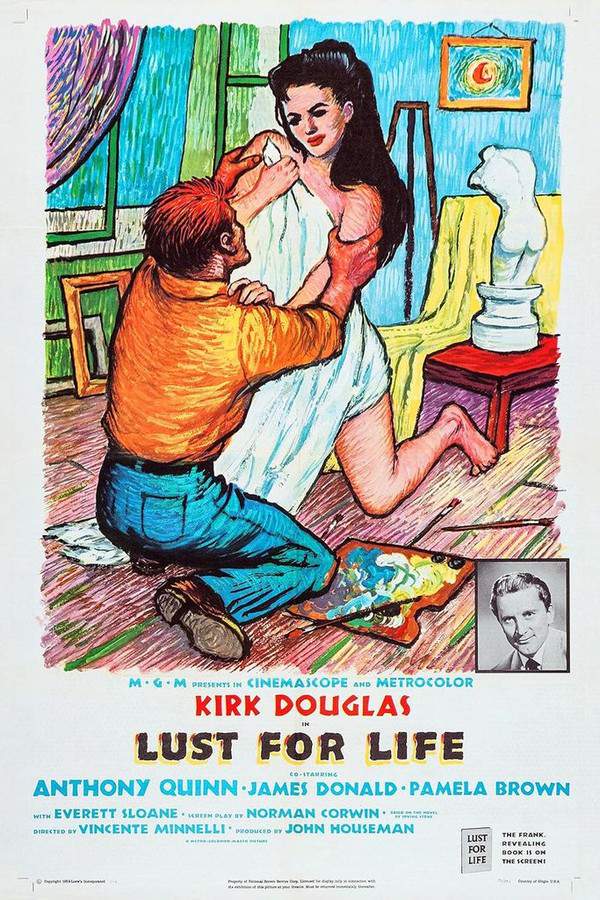
Lust for Life (1956) movie poster

Timeline

Lust for Life (1956) Timeline Explained – Every Event in Order

Release, runtime and language
1956 · 122 min · English
Loading streaming availability…
Directed by
George Cukor, Vincente Minnelli
Starring
Anthony Quinn, Niall MacGinnis, Pamela Brown, James Donald, Kirk Douglas, Jill Bennett

This sweeping biopic explores the passionate and troubled life of Vincent Van Gogh, a brilliant artist struggling with mental anguish. Driven by unbridled creative fervor, he pours his soul onto canvas, seeking inspiration and validation. His tumultuous relationship with fiery mentor Paul Gauguin further complicates his journey as he battles self-doubt and seeks to overcome the darkness that threatens to consume him.

On this page (5)
  1. 1 Where to watch
  2. 2 Events in order (12)
  3. 3 Timeline questions answered
  4. 4 Movie threads
  5. 5 Every angle
Loading streaming availability…

12 events in order · contains spoilers

Lust for Life Timeline: Events in Chronological Order

Every key event of Lust for Life (1956) in order, scene by scene, with when and where it takes place. Use it to untangle flashbacks, time jumps and parallel storylines, to refresh your memory before the sequel or to find the exact scene you are thinking of.

  1. Ministerial training thwarted by church authorities

    Vincent trains to follow in his father’s footsteps as a minister, but church authorities deem him unsuitable for clerical work. They refuse to appoint him to any official position and instead send him to a very poor mining community. This rejection pushes him toward a broader, more compassionate calling beyond the pulpit.

    Where
    Church
  2. Moved to mining community, first immersion in miners' plight

    He moves into the mining community and becomes deeply absorbed in the miners’ daily life. He witnesses their hardship firsthand and begins sketching their routines and struggles. The experience marks the start of his commitment to depicting ordinary people's plight.

    Where
    Mining community
  3. Return home; cousin rejects him due to poverty

    After some time away, he returns to his father’s house seeking stability. A woman he loves, his cousin, rejects him because he cannot support himself financially. In a desperate gesture of devotion, he places his hand over a candle flame, hoping to prove his commitment, but she remains unmoved and refuses to see him again.

    Where
    Father's house
  4. Turns to drawing; Mauve supplies paints

    He turns to drawing as a means of expression and solace. Anton Mauve provides paints and art materials and encourages him to paint, offering practical support and belief in his talent. This encouragement becomes a turning point toward serious artistic work.

    Where
    Mauve's studio
  5. Theo Van Gogh's financial and moral support

    Vincent's brother Theo van Gogh offers steady financial and moral support, helping him to pursue painting despite hardship. The brothers' partnership sustains his practice and keeps him attached to the possibility of a career. This familial backing is crucial to his ongoing artistic development.

    Where
    Theo's apartment
  6. Relationship with a prostitute ends due to poverty

    He briefly becomes involved with a prostitute, seeking companionship amid poverty. The relationship dissolves when money runs out, underscoring his precarious finances. These experiences deepen his emotional vulnerability and sense of isolation.

    Where
    City
  7. Full commitment to painting; struggle to capture reality

    He dedicates himself to painting, but struggles to render on canvas what he actually sees. The process is meticulous and fraught with frustration, yet it also fuels his relentless pursuit of light and color. He labors at the easel, hoping to capture truth beyond mere likeness.

    Where
    Studio
  8. Father's death; moves to Paris with Theo; discovers Impressionists

    After their father's death, he travels to Paris with Theo, where he encounters the Impressionists and a broader avant-garde. The new milieu broadens his artistic horizons and influences his technique. Theo continues to support him as he absorbs these influences.

    Where
    Paris
  9. Gauguin joins in Paris; tensions rise; Gauguin leaves; ear-cutting

    In Paris, Paul Gauguin joins him for a spell, and their collaboration brings vitality to his work. The two clash, and Gauguin eventually leaves for good. Following the fallout, Vincent commits a traumatic act by severing his own ear.

    Where
    Paris and Arles
  10. Seizures and institutionalization

    A mental collapse leads to seizures, and he voluntarily admits himself to a mental institution where he is allowed to paint. The sterile setting provides a new, constrained space for his creative expression. This period contrasts with his previous bursts of inspiration.

    Where
    Mental institution
  11. Return to rural landscape with Theo's help

    He signs himself out and returns to a rural area with Theo's assistance to resume painting. The rural setting offers fresh light and forms that inspire his work anew. He continues to create landscapes, moving away from city subjects.

    Where
    Rural countryside
  12. Despair over perception; suicide attempt and death

    While painting cornfields, he is tormented by the sight of crows and the inability to translate what he sees to canvas. In a moment of despair, he pulls out a revolver and shoots himself. He dies in bed a few days later, marking the end of his turbulent life.

    Where
    Cornfields, rural area

Last updated: November 22, 2025 at 15:58

Was this helpful?

Timeline questions answered

Lust for Life Timeline Explained: Your Questions Answered

When does it happen, and why in that order? The questions people ask about the chronology of Lust for Life (1956): time jumps, flashbacks, cause and effect between scenes and the correct order of events, each answered with spoilers.

Q1

Why was Vincent rejected by the church authorities?

The church authorities deemed Vincent unsuitable for clerical work and refused to appoint him to any official position. Instead, they assigned him to a very poor mining community, reflecting their disapproval of his growing social activism and his compassionate care for the disadvantaged, which they saw as conflicting with institutional doctrine.

Foreshadowing: Earlier in his training, Vincent showed more interest in directly helping people than in following formal religious protocols.

  • church rejection
  • ministerial training
  • church authorities
  • Vincent van Gogh
Q2

Why did Vincent's cousin reject him?

Vincent's cousin rejected him because he could not support himself financially. Despite his deep obsessive love for her, she was disgusted by his inability to provide and wanted nothing more to do with him.

Foreshadowing: This rejection stemmed from Vincent's failure to secure any steady employment or income throughout his early adulthood.

  • cousin rejection
  • love interest
  • poverty
  • financial support
Q3

Why did Vincent put his hand over a candle flame?

After his cousin rejected him, Vincent made a desperate gesture of devotion by placing his hand over a candle flame to prove his commitment and love. However, this extreme act only further disgusted her and reinforced her refusal to have any relationship with him.

Foreshadowing: This desperate act revealed Vincent's willingness to inflict physical pain upon himself to express devotion, foreshadowing his later self-mutilation.

  • candle
  • devotion
  • extreme gesture
  • self-harm
Q4

How did Theo support Vincent throughout his life?

Theo van Gogh provided Vincent with steady financial support and moral encouragement throughout his artistic journey. He helped Vincent afford art supplies, housing, and basic needs, becoming a crucial lifeline that allowed Vincent to continue painting despite constant poverty. Theo also championed Vincent's work and believed in his talent when few others did.

Foreshadowing: Theo's unwavering support began early and continued through Vincent's most difficult periods, including his time in the mental institution.

  • theo van gogh
  • financial support
  • brother
  • art supplies
Q5

Why did Vincent's relationship with the prostitute end?

Vincent became involved with a prostitute seeking companionship amid his poverty and isolation. The relationship ended when he ran out of money, underscoring the precariousness of his financial situation and his inability to maintain even basic human connections.

Foreshadowing: This failed relationship highlighted Vincent's isolation and inability to form lasting intimate bonds due to his poverty.

  • prostitute
  • relationship
  • money
  • poverty
Q6

Why did Vincent and Gauguin's friendship fall apart?

Paul Gauguin joined Vincent in Arles after they met in Paris, and their collaboration initially brought vitality to Vincent's work. However, the intensity of Vincent's obsession with art and their creative partnership became too much for Gauguin, leading to conflicts. Their collaboration ended in conflict, prompting Gauguin's departure, which triggered Vincent's emotional breakdown.

Foreshadowing: Gauguin's presence had energized Vincent, but their conflicting artistic temperaments and Vincent's increasingly intense behavior created an unsustainable dynamic.

  • paul gauguin
  • friendship
  • arles
  • artistic collaboration
Q7

What led to Vincent cutting off his ear?

After Gauguin left following their conflict, Vincent experienced intense emotional anguish. This mental break manifested in the traumatic act of severing his own ear. This event marked a pivotal point in his mental decline and became one of the most infamous moments in his biography.

Foreshadowing: Gauguin's departure broke the fragile creative equilibrium Vincent had found in Arles, pushing him over the edge.

  • ear cutting
  • self-mutilation
  • gauguin departure
  • mental breakdown
Q8

Why did Vincent commit himself to a mental institution?

Following his ear-cutting incident, Vincent experienced seizures and severe mental instability. He voluntarily admitted himself to a mental institution where he was allowed to continue painting. The sterile, controlled environment provided a new space for his creative expression while addressing his mental health crisis.

Foreshadowing: The ear-cutting incident had completely destabilized him, making institutional care necessary.

  • mental institution
  • seizures
  • voluntary commitment
  • psychiatric hospital
Q9

What was Vincent painting in the rural landscape before his death?

After leaving the mental institution, Vincent returned to a rural landscape with Theo's support to resume his work. He painted cornfields, becoming haunted by the presence of crows and tormented by his inability to translate his vision exactly as he saw it onto the canvas. These landscapes represented his final artistic pursuit.

Foreshadowing: The dark presence of crows in his paintings foreshadowed the dark thoughts that would soon overwhelm him.

  • cornfields
  • crows
  • rural landscape
  • final paintings
Q10

What triggered Vincent's suicide?

Vincent's suicide was driven by despair over his inability to capture his vision on canvas and the persistent toll of his mental illness. While painting the cornfields, he was tormented by the sight of crows and the stubborn ache of not being able to render his artistic vision exactly as he saw it. In a final desperate moment, he pulled out a revolver and shot himself, dying in his bed a few days later.

Foreshadowing: His earlier despair over creative frustration and the crows' ominous presence in his paintings signaled his impending end.

  • suicide
  • despair
  • cornsfields
  • death
Q11

Why did Vincent leave Paris for Arles?

Vincent left Paris for Arles to forge a more independent artistic path. While his brother Theo's support was crucial, Vincent sought to establish his own identity and work in a different environment. The sunny climate of Arles offered new possibilities for color and light that he hoped would help develop his unique artistic voice.

Foreshadowing: His desire for independence from Theo and a fresh start drove him to seek a new location away from the Parisian art scene.

  • paris
  • arles
  • independence
  • artistic journey
Q12

How did Vincent's artistic style develop throughout his life?

Vincent's artistic style evolved significantly over time. Initially, he sketched the miners' hardships in the mining community. After turning to art seriously, he struggled to capture what he saw, experimenting with different techniques. In Paris, he encountered the Impressionists and discovered new possibilities for color, light, and form, which profoundly influenced his technique. His time in Arles and later the rural countryside further refined his bold, expressive style characterized by vibrant colors and dynamic brushstrokes.

Foreshadowing: His early struggles with accurately rendering reality eventually gave way to the distinctive, emotionally charged style for which he became famous.

  • artistic style
  • impressionists
  • color
  • technique development

Movie threads

More Movies Like Lust for Life, by Mood & Story

Curated lists built around what makes Lust for Life tick: the same mood, the same kind of story or the same emotional payoff. Each list explains why these movies belong together.

Tortured artist movies like Lust for Life

Biographical dramas about brilliant minds battling inner demons for their art. If you were captivated by Lust for Life's portrayal of Vincent Van Gogh, explore more movies like it. These biographical dramas focus on brilliant creators whose artistic passion is intertwined with profound mental anguish, offering similar stories of creative struggle and tragic genius.

  • tormented
  • melancholic
  • passionate
  • somber
  • introspective
  • desperate
  • Tone: melancholic, tragic
  • Pacing: steady, chronological
Why these movies?

The story pattern: These stories typically follow a linear biographical path, charting the protagonist's rise in creative output concurrent with their descent into personal turmoil. The central conflict is internal—the battle between the drive to create and the weight of mental illness, poverty, or societal rejection, often leading to a tragic conclusion.

Why they belong together: Movies in this thread are grouped by their focus on the archetype of the 'tortured artist.' They share a heavy emotional weight, a melancholic tone, and a straightforward yet relentless narrative that explores the high cost of genius. The viewing experience is characterized by a deep, reflective sadness and a sense of witnessing brilliance crushed by despair.
Heavy melancholic dramas like Lust for Life

Steady, character-driven journeys into profound sadness and psychological decline. For viewers who appreciated the heavy, melancholic mood of Lust for Life, this section highlights similar films. Find other movies like Lust for Life that feature a steady pace, high emotional intensity, and a deeply sad tone, focusing on characters facing psychological turmoil and tragic fates.

  • melancholic
  • somber
  • heavy
  • despair
  • unsettling
  • psychological
  • Tone: melancholic, somber, bleak
  • Pacing: steady, methodical
Why these movies?

The story pattern: The narrative pattern is one of gradual, inevitable decline. A character, often sensitive or brilliant, faces a series of internal and external hardships. The story moves methodically, without significant relief or hope, toward a conclusion that confirms the overwhelming nature of their suffering. The journey is less about plot twists and more about the emotional descent.

Why they belong together: These films are united by a specific and potent mix of tone, pacing, and intensity. They create a coherent vibe of solemn reflection and deep sadness. The shared experience is one of witnessing a human spirit be slowly consumed by darkness, delivered with a steady hand that makes the emotional impact even more powerful.

Every angle

Lust for Life (1956) Explained: Plot, Timeline & Characters

Everything about Lust for Life in one place: what happens in the plot summary, the timeline in chronological order, the characters and meaning and a spoiler-free summary. What's After the Movie adds the cast, box office and post-credit scenes.

Coming soon on iOS and Android

The Plot Explained Movie Summary App

Plot summaries, endings explained and timelines on your phone. Catch up on any movie in minutes, save your favorites and never miss a twist again.

Be the first to know when we launch. Your email stays private, always.

Learn more about the app