Plot Explained Spoilers guaranteed!
Plot Explained

Browse by genre

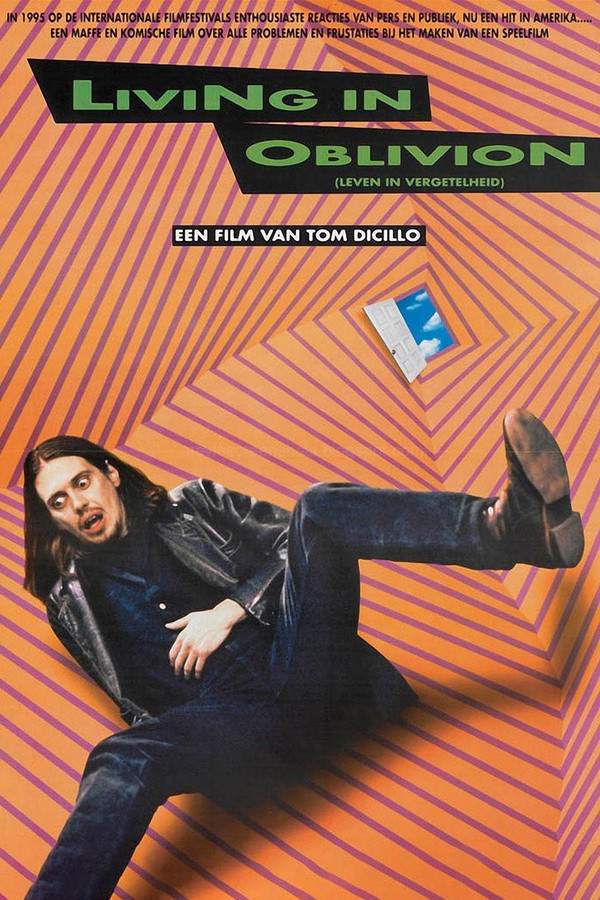
Living in Oblivion (1995) movie poster

Plot Summary

Living in Oblivion (1995) Plot Summary Explained

Release, runtime and language
1995 · 90 min · English
JustWatch #8,893 15
Directed by
Tom DiCillo
Starring
Peter Dinklage, Catherine Keener, Steve Buscemi, James LeGros, Dermot Mulroney, Danielle von Zerneck

During the chaotic production of his first film, director Nick Reve struggles to maintain control as a series of mishaps and personality clashes threaten to derail his creative vision. Facing spoiled catering, unreliable actors, and rising tension between leads Nicole and Chad, Nick battles dwindling funds and looming deadlines. The escalating chaos begins to blur the line between reality and the film's narrative, pushing Nick to the brink as he fights to salvage his project.

On this page (7)
  1. 1 Where to watch
  2. 2 What happens: full plot
  3. 3 Plot questions answered
  4. 4 Movie threads
  5. 5 Movies like Living in Oblivion
  6. 6 Categories
  7. 7 Every angle

Where to watch

Where to Watch Living in Oblivion (1995)

Where can you watch Living in Oblivion? Stream, rent or buy it in the US, including on Fandor, fuboTV and Philo: current JustWatch availability with up-to-date prices.

Streaming availability powered by JustWatch

Full plot summary · contains spoilers

What Happens in Living in Oblivion: Full Plot Summary

The whole story of Living in Oblivion (1995) explained, from the opening scene to the final frame: every key event, every twist and what it all adds up to. Read it as a quick recap before the sequel, to check a scene you missed, or to finally understand what really happened.

The curtain rises on a cinematic journey as Director Nick Reve embarks on a quest to create a low-budget independent film in the vibrant heart of New York City. The atmosphere is saturated with chaos, as an unenthusiastic catering crew struggles to keep up, mirrored by a carton of milk that sits untouched for an entire week—a symbol of the team's collective indifference. Tension hangs thick in the air as Nick fights to film a crucial scene where Ellen (played by Nicole) confronts her mother Cora (also portrayed by Catherine Keener) about their troubled past, shedding light on the dark legacy of abuse inflicted by their father.

As the shooting begins, a cascade of calamities plague the production. The visibility of the mic boom sabotages key takes; the camera assistant grapples with focus issues; a blown light sends Cora spiraling, causing her to forget her lines while distracting Nicole in the process. Frustrated and desperate for change, Nick calls for a rehearsal without cameras, aiming to revitalize his actors.

In a heartfelt moment, Nicole’s self-doubt is countered by Cora’s reassuring gesture, triggering a poignant flashback of Nicole’s own sick mother. This emotional connection ignites a passionate performance in Nicole, matched by Cora's own intensity, which excites Nick as he witnesses their chemistry. However, their powerful interaction is lost to the lens due to Wolf, the cinematographer, who carelessly dilutes the already subpar coffee with spoiled milk, rendering the moment unfilmable.

As Nick’s temper flares over the realization that his aspirations are slipping away, he calls for yet another take. Unfortunately, a mysterious beeping noise disrupts the set, escalating tensions further. Consumed by anger, Nick unleashes a barrage of criticism aimed at his crew and cast, lamenting their incompetence. Just as hope seems to dissipate, Nick awakens in his own bed, the incessant beeping revealed to be his alarm clock at 4:30 am, heralding another long day ahead.

The narrative continues with Chad Palomino (portrayed by Peter Dinklage), waking up in Nicole's hotel room, remnants of their night together lingering in the air. As he dresses, Nicole gracefully declines his suggestion of a reunion later that day, signaling the onset of a new on-set challenge. Despite the undercurrents of tension between them, they arrive at the film location separately. Their characters, Ellen and Damian, harbor an unquenched love for each other, yet this pivotal moment in their narrative is marred by Chad’s erratic behavior, making it nearly impossible to film.

As the scene unfolds, Chad’s unpredictable antics frustrate Nicole to the brink. He struggles to find the right position, becoming either excessively hidden or poorly lit against the backdrop. This dynamic culminates in a moment where he strokes her hair, causing her to momentarily lose her composure. Chad then requests to speak with Nick privately, claiming he and Nicole slept together, spinning a tale that positions her as the one yearning to reignite their romance. Unbeknownst to him—Nicole is eavesdropping via the sound mixer's headphones.

When the chance for improvisation arises, Nicole seizes it, declaring in front of the crew that while she and Chad shared a night, her feelings have not extended beyond that brief liaison. Stung by her rejection, Chad walks off set in anger and frustration, leading Nick to vent his relief with a fiery insult, referring to Chad as a "Hostess Twinkie motherfucker." The confrontation escalates into a physical clash, ending when Nick decisively knocks Chad out and fires him. Once the dust settles, Nick apologizes to Nicole for the drama, his feelings erupting into a genuine kiss... only for Nicole to awaken in her own bed, the entire scene unfolding as a vivid dream.

As the sun descends, the eclectic cast embarks on a surreal adventure, with Nicole as Ellen at the center. Throughout the turmoil, Tito, the fiery dwarf actor, circles her like a mischievous storm, apple in hand. Inspired by his own dreams, Nick remains optimistic, declaring that sometimes "you just gotta roll with things." Nicole, however, chooses to keep mum about her dream encounter with Nick, preserving an air of mystery.

As filming progresses, the chaos escalates—a smoke machine erupts unexpectedly, and Cora, Nick's forgetful mother, makes a surprise appearance, amplifying the bedlam. Vexed by his role in the dream sequence, Tito lashes out against the tired cliché and storms off. Meanwhile, Nick begins to crack under the mounting pressure, declaring the project effectively over.

Just when all seems lost, Cora swoops in, snatching Tito's apple and claiming the stage with a manic fervor. Her entrance breathes new life into the scene, inciting the crew to rush to capture her energy. Nick, revitalized by his mother's unexpected performance, opts to retain the dream sequence, leading to a build-up of tension as the sound mixer records thirty seconds of room tone.

As each cast and crew member gets swept into their personal daydreams—ranging from whimsical fantasies to poignant introspections—the set transforms into a tapestry of fleeting thoughts. Nevertheless, each individual eventually returns to reality, ready to face the next challenges ahead with rekindled determination.
Last updated: November 22, 2024 at 19:06

Was this helpful?

Plot questions answered

Living in Oblivion Plot Explained: Your Questions Answered

The questions people ask most about Living in Oblivion (1995): what happens in the confusing scenes, why the characters do what they do, the twists, hidden details and what the ending means. Each answer contains spoilers.

Q1

Why does Nick fire Chad after the confrontation on set?

Nick fires Chad because Chad lied to the crew about his and Nicole's relationship, claiming she wanted to get back together when she had actually rejected him. When Nicole publicly corrects Chad's falsehood in front of the entire crew, humiliating him, Chad storms off. This triggers Nick to insult Chad as a "Hostess Twinkie motherfucker," which escalates into a physical fight where Nick knocks Chad out. Nick then terminates Chad's employment, deciding the project is better off without an unreliable and disruptive actor.

Foreshadowing: Earlier scenes establish Chad as difficult to work with, as he struggles with basic positioning and lighting during filming, foreshadowing his eventual firing.

  • chad palomino
  • nick reveals
  • fired
  • confrontation
  • actor conflict
Q2

Was the kiss between Nick and Nicole real or a dream?

The kiss between Nick and Nicole was a dream. After Nick fires Chad, he apologizes to Nicole and they share an intimate moment that culminates in a kiss. However, Nicole then wakes up in her own bed, revealing that the entire romantic encounter was a vivid dream reflecting her inner desires and conflicts about her relationship with the director.

Foreshadowing: The film has already established that Nick's earlier frustrations about the production were revealed to be a dream when his alarm clock went off, setting up the pattern that distressing on-set moments may not be reality.

  • nick
  • nicole
  • kiss
  • dream
  • reality
  • reveal
Q3

What is the significance of the apple that Cora takes from Tito?

The apple represents a moment of unexpected inspiration. Earlier, Tito the dwarf actor is frustrated with what he sees as a tired cliché in the dream sequence. When Cora unexpectedly enters the set and snatches the apple from Tito, she brings an energetic, manic performance that Nick decides to keep. This moment transforms a potential setback into a creative breakthrough, with Cora's spontaneous entrance revitalizing the struggling production.

Foreshadowing: Tito is introduced circling Nicole with an apple earlier in the film, establishing the apple as his signature prop before Cora takes it.

  • tito
  • cora
  • apple
  • dream sequence
  • performance
Q4

How many dream sequences are there in the film?

There are at least two major dream sequences in the film. The first occurs when Nick's alarm clock reveals his angry outburst on set was a dream. The second happens when Nicole awakens after kissing Nick, revealing their entire romantic interaction was also a dream. Additionally, the film includes a sequence where each cast and crew member drifts into their own daydream, adding another layer to the film's dreamy, surreal quality.

Foreshadowing: The first dream sequence involving the alarm clock establishes early on that the film will blend reality with fantasy, preparing viewers for subsequent dream revelations.

  • dream sequence
  • reality
  • nick
  • nicole
  • surreal
Q5

Why does Nick call Chad a "Hostess Twinkie motherfucker"?

Nick calls Chad this insult in the heat of the moment after Chad storms off set following Nicole's public rejection of him. The insult reflects Nick's extreme frustration with Chad's behavior throughout the production, his erratic acting, his lying about Nicole, and the disruption he caused to the film. The absurd, specific insult is characteristic of the film's comedic tone and the mounting pressure Nick faces.

Foreshadowing: Chad's difficulties on set, including his inability to position himself correctly and his erratic behavior with Nicole, build toward this explosive confrontation.

  • chad
  • nick
  • insult
  • confrontation
  • profanity
Q6

What causes the tension between Nicole and Chad on set?

The tension stems from their unresolved personal relationship and Chad's unprofessional behavior. Chad wakes up in Nicole's hotel room after spending the night together, but Nicole refuses his suggestion to reunite later, indicating their relationship is complicated. On set, Chad struggles to perform the scene with proper positioning and lighting, often being either too hidden or poorly lit. His erratic behavior frustrates Nicole, culminating in an inappropriate moment where he strokes her hair, causing her to lose composure.

Foreshadowing: The film establishes early that Chad is problematic by showing his difficulties with basic acting requirements and his self-centered attitude.

  • chad
  • nicole
  • relationship
  • tension
  • acting
  • film set
Q7

Why does Cora suddenly take over the dream sequence?

Cora takes over the dream sequence spontaneously when Nick is at his lowest point, having declared the film project is effectively over due to mounting disasters. Seeing her son's frustration, Cora unexpectedly enters the set, snatches Tito's apple, and performs with manic energy. Her bold, unscripted entrance inspires the crew to capture her performance, leading Nick to decide to keep the dream sequence. This moment becomes the turning point that saves the production.

Foreshadowing: Cora's earlier appearance on set during the smoke machine chaos already shows her willingness to insert herself into the production, foreshadowing her takeover.

  • cora
  • dream sequence
  • nick
  • breakthrough
  • inspiration
Q8

Why is the spoiled milk in the coffee significant?

The spoiled milk represents another in a series of technical disasters that plague Nick's production. After Nicole and Cora achieve an emotional breakthrough during a rehearsal without cameras, Nick hopes to capture their powerful chemistry on film. However, Wolf the cinematographer dilutes the already substandard coffee with spoiled milk, making it undrinkable and presumably affecting his focus or judgment. This blunder prevents Nick from filming the emotional moment, symbolizing how small technical failures constantly undermine artistic success.

Foreshadowing: The untouched carton of milk from the catering crew in the opening scene established the team's indifference, foreshadowing such preventable errors.

  • wolf
  • cinematographer
  • spoiled milk
  • coffee
  • technical failure
Q9

What is the beeping noise that disrupts the filming?

The mysterious beeping noise that disrupts the set is actually Nick's alarm clock. After a cascade of disasters and his angry outburst at the crew, the scene shifts to Nick waking up in his own bed at 4:30 am. The beeping was his alarm clock signaling the start of another challenging day of production, revealing that the entire previous sequence of chaos was a dream.

Foreshadowing: The film establishes early that Nick is under immense pressure, preparing viewers for his stress to manifest in dreams about the production.

  • beeping
  • alarm clock
  • dream
  • reality
  • morning
Q10

Does Nick finish his film by the end of the movie?

Yes, by the end of the film, Nick appears to complete his film. After Cora's spontaneous performance saves the dream sequence and renews the crew's spirit, each cast and crew member immerses themselves in personal daydreams before returning to reality with rekindled determination. The film ends on a hopeful note as the chaotic production transforms into a creative breakthrough, suggesting Nick will successfully complete his low-budget independent film.

Foreshadowing: Nick's earlier declaration that the project is over sets up this turnaround, making the eventual success more meaningful as a reversal of fortune.

  • ending
  • film completion
  • nick
  • hopeful
  • resolution

Movie threads

More Movies Like Living in Oblivion, by Mood & Story

Curated lists built around what makes Living in Oblivion tick: the same mood, the same kind of story or the same emotional payoff. Each list explains why these movies belong together.

Movies about filmmaking chaos like Living in Oblivion

Stories where the act of creation becomes a hilarious and stressful battle. If you liked the frantic, meta-comedy of Living in Oblivion, explore these other movies about creative process chaos. This collection features stories focused on the hilarious and stressful breakdowns behind the scenes of filmmaking, theater, or other artistic endeavors.

  • chaotic
  • meta
  • frustrated
  • anxious
  • absurd
  • cathartic
  • Tone: tense, humorous
  • Pacing: fast, frantic
Why these movies?

The story pattern: Narratives in this thread typically follow a creator or team under pressure, facing a relentless series of obstacles that threaten their project. The journey is less about the final product and more about the cathartic, often surreal, experience of trying to bring a vision to life against all odds, culminating in a hard-won resolution.
Why they belong together: These movies are grouped by their shared focus on the creative struggle. They blend high-tension situations with absurdist, often meta, humor, creating a unique vibe that is both stressful and comically relatable for anyone who has ever worked on a collaborative project.

Surreal workplace comedies similar to Living in Oblivion

Comedies where the job itself becomes a surreal and dreamlike pressure cooker. Fans of Living in Oblivion will enjoy these other surreal workplace comedies. Discover movies that capture the same feeling of a high-pressure job descending into absurd, dreamlike chaos, whether it's an office, a newsroom, or another professional setting.

  • absurd
  • surreal
  • dreamlike
  • frustrated
  • chaotic
  • satirical
  • Tone: absurd, tense
  • Pacing: fast, escalating
Why these movies?

The story pattern: These stories often unfold in a single, compressed timeframe within a specific professional setting. The plot is driven by a cascade of escalating problems and eccentric characters, creating a sense of controlled anarchy. The narrative structure may play with reality, incorporating dream sequences or surreal elements that reflect the characters' mounting stress.

Why they belong together: They are united by a unique tone that mixes fast-paced, stressful scenarios with surreal humor. The experience is defined by the feeling of being trapped in an illogical system, striving for competence in a world that has gone absurd, leading to a cathartic release.

If you liked this

Movies Like Living in Oblivion

Similar movies to Living in Oblivion: the same genre, themes or kind of story. Each one comes with its own plot summary, timeline and ending explained.

Browse all movie summaries

Categories

Movie Lists Featuring Living in Oblivion

Living in Oblivion appears in these hand-built movie categories. Each one groups movies by a specific mood, theme or story type, with their plot summaries and endings explained.

View all movie categories

Every angle

Living in Oblivion (1995) Explained: Plot, Timeline & Characters

Everything about Living in Oblivion in one place: what happens in the plot summary, the timeline in chronological order, the characters and meaning and a spoiler-free summary. What's After the Movie adds the cast, box office and post-credit scenes.

Coming soon on iOS and Android

The Plot Explained Movie Summary App

Plot summaries, endings explained and timelines on your phone. Catch up on any movie in minutes, save your favorites and never miss a twist again.
Be the first to know when we launch. Your email stays private, always.
Learn more about the app