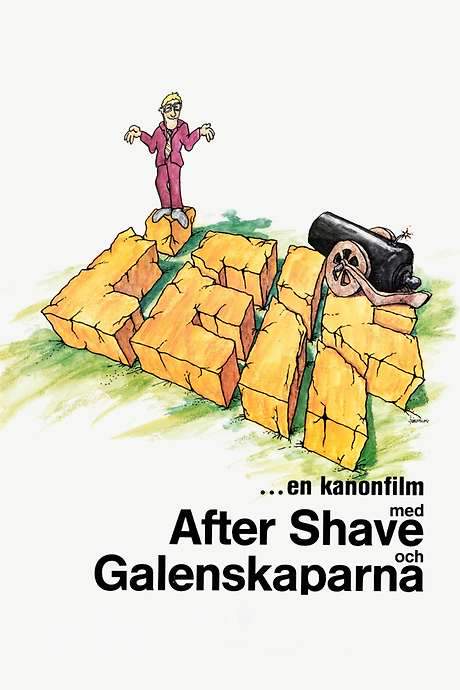
Gunnar Volt Anders Eriksson is the head of the weapons factory Kanoner & Krut in the small town of Rotum, where he plans a public demonstration of a new weapon known as The Fighting Egg. The project sits at the center of a tense balance between ambition, pride, and the pressure to prove the factory’s value to a wary community. The announcement of the demonstration is suddenly overshadowed by a local newspaper article criticizing the company for allegedly participating in illegal arms trading, a claim that sends ripples through Rotum and beyond.
Rotum itself carries a sly joke in its name: Rotum spelled backwards is mutor, the Swedish word for bribes, a detail that subtly frames the unfolding conflict and the moral ambiguity at the heart of the story. As the town braces for the looming spectacle, Inspector Mård Peter Rangmar and his assistant Nilsson Jan Rippe, two seasoned police officers from Stockholm, descend on the scene, bringing a sense of order—and possible trouble—into a place not used to outside scrutiny.
Into this powder keg arrive two Iranians, Kimmo Rajala and Pierre Jonsson, who come to close a deal at Volt’s office. The tension between legitimate business interests and illicit intentions becomes immediately apparent as Volt, together with his deputy director Max Koger Claes Eriksson and the loyal but conflicted ally Rambo Knut Agnred, makes a dramatic escape through a window when the authorities knock. In a swift scramble to avoid capture, they steal clothes and slip away, briefly joining the Iranians in a desperate bid for disguise and safety.
Their path leads them to Volt’s brother, Håkan Volt Per Fritzell, who operates on the fringes of the entertainment world. Håkan’s world of show business offers a different sort of cover, a distracting backdrop that contrasts with the grim intensity of the weapons plot and the chase that follows. Amid all this upheaval, Doris Volt Kerstin Granlund, Gunnar’s wife, goes through the life-changing moment of giving birth to their son, a personal milestone that intensifies the family dimension of the story and adds emotional gravity to the characters’ choices.
As events spiral toward a confrontation, the group resolves to face Leif—the catalyst behind the initial article—at the upcoming demonstration. A high-stakes car chase erupts between the main players and the pursuing Iranians, testing loyalties and exposing hidden fears. In a pivotal revelation, Volt discovers that the figure orchestrating the muddled web of deals and threats is, in fact, Leif, a twist that reframes his own ambitions and the risks he has taken.
In the end, Volt makes a decisive pivot away from weapon manufacturing. He leaves the dangerous world of arms behind and shifts toward a new, quieter venture: selling Japanese dance bands, embracing a life centered on music and entertainment rather than conflict and conquest. The film’s resolution emphasizes personal responsibility and the possibility of change, even after a season of chaos and close calls.
Throughout the story, the ensemble cast grounds the satire in human terms: Inspector Mård and Nilsson provide steady counterpoints to the chaos, while Max Koger and Rambo navigate loyalty and pragmatism under pressure. Doris and Håkan contribute warmth and a touch of showbiz color, and the presence of the two Iranians, along with the broader backdrop of Rotum’s small-town dynamics, keeps the narrative playful yet pointed. The result is a wry, character-driven tale that uses humor to probe the consequences of ambition, corruption, and the stubborn pull of family ties.