Plot Explained Spoilers guaranteed!
Plot Explained

Browse by genre

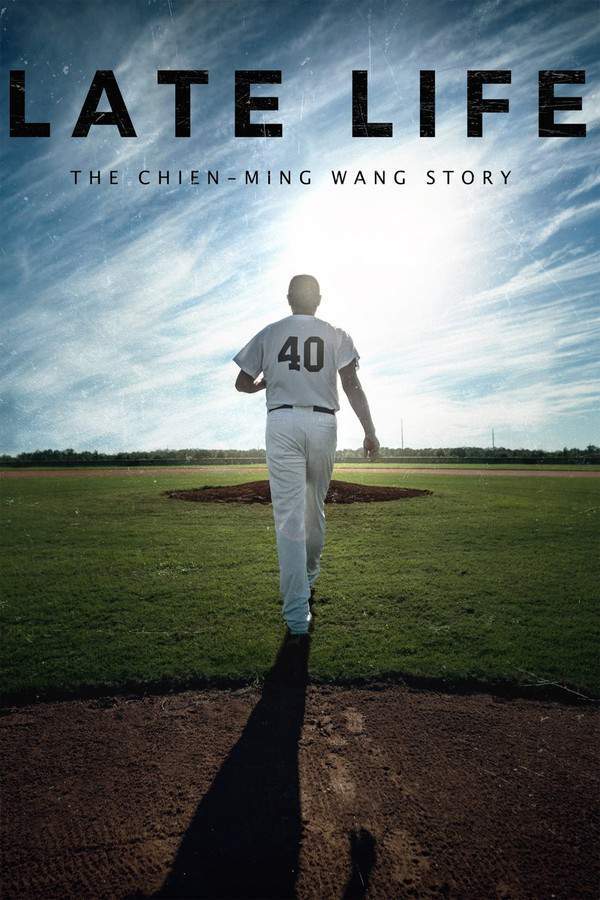
Late Life: The Chien-Ming Wang Story (2018) movie poster

Plot Summary

Late Life: The Chien-Ming Wang Story (2018) Plot Summary Explained

Release, runtime and language
2018 · 99 min · English
Echo score 88
Loading streaming availability…
Directed by
Frank W Chen
Starring
Alan Chang, Billy Connors, Brian Cashman, Charlene Wu, Chien-ming Wang, Dave Eiland

As the first Taiwanese player for the New York Yankees, Chien-Ming Wang achieved remarkable success, earning titles like AL Wins Leader and World Series Champion. He also represented his nation as an Olympian and was recognized as one of Time's 100 Most Influential People. However, a devastating injury in 2008 dramatically altered his career trajectory. Late Life documents Wang’s determined fight to return to Major League Baseball, detailing his difficult rehabilitation process and a period of self-imposed exile while facing immense pressure and the burden of expectation.

On this page (6)
  1. 1 Where to watch
  2. 2 What happens: full plot
  3. 3 Plot questions answered
  4. 4 Movie threads
  5. 5 Movies like Late Life: The Chien-Ming Wang Story
  6. 6 Every angle
Loading streaming availability…

Full plot summary · contains spoilers

What Happens in Late Life: The Chien-Ming Wang Story: Full Plot Summary

The whole story of Late Life: The Chien-Ming Wang Story (2018) explained, from the opening scene to the final frame: every key event, every twist and what it all adds up to. Read it as a quick recap before the sequel, to check a scene you missed, or to finally understand what really happened.

Chien-Ming Wang holds a unique place in baseball history as the first and only Taiwanese player to suit up for the New York Yankees. Throughout his storied career, Chien-ming Wang achieved a staggering array of accolades, earning titles such as the American League Wins Leader and a World Series Champion. Beyond the diamond, his impact was felt globally; he represented his country as an Olympian and was recognized by Time magazine as one of the 100 Most Influential People, ultimately becoming known as the “Pride of Taiwan.”

Wang's dominance on the mound was driven by his signature sinker, a pitch renowned for its “late life” that baffled hitters. His status within the organization was so prestigious that he was selected as the starting pitcher for the historic inaugural game at the New Yankee Stadium in 2009. However, the trajectory of his career shifted abruptly following a severe ankle injury, which eventually led to his release from the Major League rosters.

The narrative follows Wang's grueling journey toward redemption, providing an intimate look at his rigorous workout routines and his various stops through the minor leagues as he attempts to mount a professional comeback. During this challenging period, he is supported by a dedicated network of people, including his agent, specialized trainers, loyal fans, and his supportive family.

Beyond the athletics, the film delves into the profound psychological burdens that come with being a national icon. As the first Taiwanese athlete to reach an all-star level of fame, Chien-ming Wang is revered as a hero in his homeland. Yet, the story explores how the immense weight of his countrymen’s expectations acted as both a gift and a curse. While this pressure could have been overwhelming, it served as the primary catalyst that drove him to keep fighting and striving for excellence when he could have simply rested on his previous achievements.

Ultimately, his journey is presented as an Asian parable—an uplifting and detailed chronicle that proves success can be achieved through sheer determination and unrelenting hard work.

Last updated: October 11, 2026 at 16:41

Was this helpful?

Plot questions answered

Late Life: The Chien-Ming Wang Story Plot Explained: Your Questions Answered

The questions people ask most about Late Life: The Chien-Ming Wang Story (2018): what happens in the confusing scenes, why the characters do what they do, the twists, hidden details and what the ending means. Each answer contains spoilers.

Q1

What does "late life" mean in relation to Chien-Ming Wang's signature sinker?

"Late life" describes the deceptive movement of Wang's sinker, which appears to be a routine fastball until the very last instant before reaching the plate, when it suddenly drops away from the hitter. This late-breaking action made the pitch extraordinarily difficult to square up and turned Wang into a relentless ground-ball machine and a cornerstone of the Yankees' rotation. The phrase became so tied to his identity that it inspired the documentary Late Life, which uses the same metaphor to describe how his comeback also gathered force only after years of quiet rehabilitation.

Foreshadowing: The film introduces the "late life" of his sinker early, echoing how his comeback itself moved only in its final, unexpected stages.

  • late life sinker
  • signature pitch
  • ground-ball machine
  • deceptive movement
  • fastball
Q2

Why was Chien-Ming Wang chosen to start the inaugural game at the new Yankee Stadium?

Wang was named the starting pitcher for the inaugural game at New Yankee Stadium in 2009 because he had become one of the most respected and trusted members of the Yankees' rotation. By that point he was a back-to-back American League Wins Leader and a World Series champion, making him a natural symbolic choice to represent the franchise as it opened its new home. The honor underscored how highly the organization regarded him, even as injuries were already beginning to reshape his career.

Foreshadowing: Even as he prepared for this ceremonial high point, the ankle injury was quietly beginning to derail his season.

  • inaugural game
  • new Yankee Stadium
  • starting pitcher
  • Yankees rotation
  • franchise trust
Q3

What happened to Chien-Ming Wang after his ankle injury?

Wang suffered a serious ankle injury that abruptly derailed his run as one of baseball's most dependable starting pitchers, interrupting his status as an American League Wins Leader. The injury prevented him from performing at his previous level and ultimately led to his release from the Major League rosters, bringing his celebrated Yankees tenure to an end. Rather than retire, he committed to a grueling comeback through intensive workouts and a series of minor-league stops in hopes of returning to the majors.

Foreshadowing: The injury marks the turning point that reshapes the rest of his baseball life, converting him from a frontline ace into a fighter rebuilding his career.

  • ankle injury
  • career setback
  • MLB release
  • comeback attempt
  • rehabilitation
Q4

Why did Chien-Ming Wang attempt a comeback instead of retiring from baseball?

Wang chose to attempt a comeback because he was driven by both personal determination and the immense expectations of a nation that saw him as a symbol of Taiwanese excellence. As the first Taiwanese player to reach All-Star status in Major League Baseball, retirement would have meant settling for far less than what he believed he could still achieve. The film frames this refusal to walk away as the defining characteristic of his journey, transforming a devastating injury into a long, deliberate fight rather than a conclusion.

Foreshadowing: His 2004 Olympic appearance foreshadowed the discipline and sense of national responsibility he would carry into every rehab session.

  • comeback decision
  • retirement alternative
  • determination
  • national expectations
  • perseverance
Q5

Why is Chien-Ming Wang referred to as the "Pride of Taiwan"?

Wang earned the title "Pride of Taiwan" because he became the first Taiwanese player ever to suit up for the New York Yankees and one of the first to reach All-Star-level fame in Major League Baseball. His achievements, American League Wins Leader, World Series Champion, Olympian, and one of Time's 100 Most Influential People, turned him into a rare global figure from his homeland. Fans in Taiwan came to treat his career as a shared national triumph, which is why every one of his starts carried the weight of collective expectation.

Foreshadowing: His Olympic appearance in 2004 had already made him a recognizable figure in Taiwan, paving the way for the national icon status that followed his Yankees success.

  • pride of Taiwan
  • national icon
  • Taiwanese player
  • Yankees history
  • All-Star status
Q6

What role did national expectations play in Wang's career and comeback?

National expectations functioned as both a gift and a burden throughout Wang's career, shaping how he measured every result on and off the field. As the first Taiwanese athlete to reach All-Star status in America's pastime, he felt the weight of millions who treated his starts as collective moments of national pride. The documentary argues that this pressure could easily have crushed him, but instead it became the primary catalyst pushing him to keep striving even after his injury, when walking away would have been far easier.

Foreshadowing: His early Olympic appearances already foreshadowed how his performances would eventually be seen as more than personal achievements.

  • national expectations
  • psychological burden
  • Taiwan pressure
  • comeback motivation
  • cultural weight
Q7

Why does the film frame Wang's story as an "Asian parable"?

Late Life frames Wang's journey as an "Asian parable" because it transforms his rise, injury, and rehabilitation into a universal story about perseverance that resonates far beyond baseball. His narrative arc, from Taiwanese Olympian to Yankees ace to injured veteran fighting through the minor leagues, illustrates the broader cultural value of refusing to settle, of earning success through sheer hard work rather than resting on past accomplishments. By calling it a parable, the film positions Wang as a symbol whose determination can inspire audiences who relate to carrying the weight of family or national expectations.

Foreshadowing: The recurring theme of "late life" in his sinker is mirrored in the late, unexpected resurgence the film hopes to capture in his career.

  • Asian parable
  • perseverance narrative
  • cultural symbolism
  • success through hard work
  • inspirational arc
Q8

Why did Wang have to pitch in the minor leagues during his comeback?

After his release from the Major League rosters, Wang was no longer considered a frontline big-league pitcher, so the only realistic path back to the majors ran through the minor leagues. Each stop was both humbling and necessary, giving him a stage to rebuild his mechanics, stamina, and results far from the spotlight of Yankee Stadium. The documentary treats these minor-league assignments as essential steps in proving, start by start, that he still belonged at the highest level.

Foreshadowing: His earlier dominance as a back-to-back American League Wins Leader stood in sharp contrast to the modest settings of his comeback games.

  • minor leagues
  • comeback path
  • rehabilitation
  • proving grounds
  • career rebuilding
Q9

Who supported Chien-Ming Wang during his rehabilitation journey?

Wang was supported by a dedicated circle that included his agent, specialized trainers, loyal fans, and his family, all of whom stood by him through every rehab milestone and setback. The documentary highlights this network as a deeply personal dimension of his comeback, emphasizing that his fight to return to the majors was not carried alone. Their presence reframes the story as one of collective perseverance rather than a lone athlete's struggle.

Foreshadowing: The loyalty shown during his slump mirrors the national loyalty that first lifted him to icon status.

  • support network
  • family
  • trainers
  • agent
  • fans
  • rehabilitation team
Q10

Why was being named to Time's 100 Most Influential People significant for Wang?

Being named to Time's 100 Most Influential People in 2007 elevated Wang from being a successful baseball player to a globally recognized cultural figure. The honor reflected how a pitcher from Taiwan had crossed over from sports into mainstream international attention, reinforcing his status as the Pride of Taiwan. It also intensified the expectations that would later weigh on him, as the distinction made clear that his career now represented something larger than wins and losses.

Foreshadowing: The growing media attention during this period foreshadowed how his personal struggles would later be felt as national disappointments.

  • Time 100
  • Most Influential People
  • global recognition
  • cultural figure
  • 2007 honor
Q11

How did Chien-Ming Wang become the first Taiwanese player for the New York Yankees?

Wang's path to the Yankees began with his development as a pitcher in Taiwan, including representing his country at the 2004 Athens Olympics, which showcased his talent on an international stage. He signed with the Yankees organization and worked his way through their system, eventually breaking into the Major League roster in 2005 and becoming the first and only Taiwanese player ever to suit up for the franchise. His rise instantly made him a symbol of possibility for Taiwanese athletes dreaming of Major League Baseball.

Foreshadowing: His Olympic appearance in 2004 foreshadowed the international recognition that would eventually carry him into the Yankees' rotation.

  • first Taiwanese Yankee
  • MLB debut
  • Athens Olympics 2004
  • international scouting
  • Taiwanese baseball

Movie threads

More Movies Like Late Life: The Chien-Ming Wang Story, by Mood & Story

Curated lists built around what makes Late Life: The Chien-Ming Wang Story tick: the same mood, the same kind of story or the same emotional payoff. Each list explains why these movies belong together.

Inspiring comeback documentaries like Late Life: The Chien-Ming Wang Story

Stories of champions fighting to return after devastating setbacks and injury. Looking for movies like Late Life: The Chien-Ming Wang Story? These comeback stories follow determined athletes rebuilding their careers after injury or setback. With steady pacing, hopeful tone, and emotional depth, these documentaries and films capture the perseverance and resilience that define the long road back to greatness. Perfect for fans of inspiring sports narratives.

  • inspiring
  • determined
  • hopeful
  • perseverance
  • comeback
  • resilient
  • Tone: hopeful, determined, earnest
  • Pacing: steady, reflective
Why these movies?

The story pattern: Stories in this thread typically open with a peak moment of triumph—a championship, a record, a career high—before pivoting into the devastating setback that changes everything. The middle act follows the long, unglamorous process of rehabilitation, self-doubt, and reinvention, often punctuated by self-imposed exile or retreat from the spotlight. The climax arrives not as a single dramatic victory, but as the symbolic return to the arena, with the hopeful resolution found in the dignity of the struggle itself rather than in any guaranteed outcome.

Why they belong together: These films share a steady, reflective pacing that allows emotional weight to build gradually rather than through sudden shocks. They all embrace earnest, hopeful storytelling that finds uplift in perseverance. The complexity is straightforward, focusing on a clear protagonist whose journey from loss back to attempt resonates with viewers who value determination, hard work, and the quiet courage required to attempt a comeback.

Stories of national pride and cultural expectations like Late Life: The Chien-Ming Wang Story

Stories of pioneers bearing the hopes of their culture in foreign arenas. If you connected with Late Life: The Chien-Ming Wang Story, these movies explore similar themes of athletes and public figures carrying the hopes of their nations and cultures abroad. They blend cultural identity, national expectations, and personal ambition in earnest, reflective stories that examine what it means to represent something bigger than yourself in a foreign arena.

  • cultural identity
  • national pride
  • pressure
  • representation
  • earnest
  • displacement
  • Tone: reflective, earnest, pressured
  • Pacing: steady, character-driven
Why these movies?

The story pattern: Films in this thread often follow an outsider or pioneer navigating a dominant foreign space—a foreign league, a foreign country, a foreign industry—while their home community watches and projects its hopes onto them. Tension arises not only from professional pressure but from cultural displacement, the fear of letting one's people down, and the burden of being a symbol rather than just a person. The endings often hinge on whether the protagonist can redefine their relationship to those watching eyes, finding meaning beyond pure victory.

Why they belong together: These films share a reflective, steady pacing that allows themes of cultural identity and national expectation to unfold organically. They tend to carry medium emotional weight without becoming melodramatic, treating their subjects with respect and earnestness. The mood is hopeful but layered, capturing the pressure of representation alongside the honor of being chosen as a symbol of one's community abroad.

If you liked this

Movies Like Late Life: The Chien-Ming Wang Story

Similar movies to Late Life: The Chien-Ming Wang Story: the same genre, themes or kind of story. Each one comes with its own plot summary, timeline and ending explained.

Browse all movie summaries

Every angle

Late Life: The Chien-Ming Wang Story (2018) Explained: Plot, Timeline & Characters

Everything about Late Life: The Chien-Ming Wang Story in one place: what happens in the plot summary, the timeline in chronological order, the characters and meaning and a spoiler-free summary. What's After the Movie adds the cast, box office and post-credit scenes.

Coming soon on iOS and Android

The Plot Explained Movie Summary App

Plot summaries, endings explained and timelines on your phone. Catch up on any movie in minutes, save your favorites and never miss a twist again.

Be the first to know when we launch. Your email stays private, always.

Learn more about the app