Plot Explained Spoilers guaranteed!
Plot Explained

Browse by genre

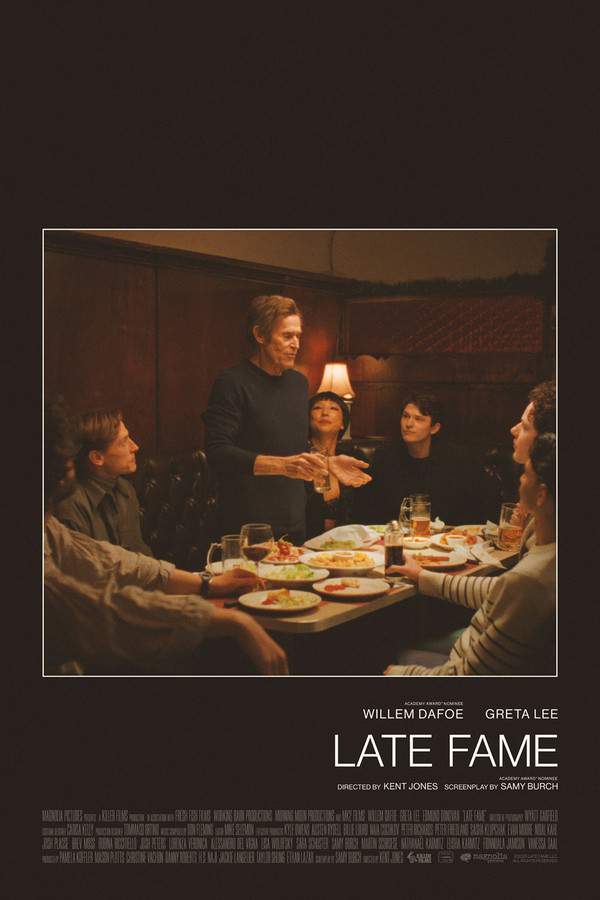
Late Fame (2026) movie poster

Characters & Themes

Late Fame (2026) Characters, Setting & Themes Explained

Release, runtime and language
2026 · 1 h 36 m · English
Loading streaming availability…
Directed by
Kent Jones
Starring
Willem Dafoe, Greta Lee, William Hill, Welker White, Jake Lacy, Clark Johnson

When the long‑overlooked poems of legendary New York poet Ed Saxberger are discovered by an eccentric circle of young artists, their fascination revives his dormant creative spark. As they delve deeper, the enigmatic actress Gloria weaves her beguiling presence through their world, adding intrigue.

On this page (7)
  1. 1 Where to watch
  2. 2 Characters explained (3)
  3. 3 Where & when it takes place
  4. 4 Themes & meaning (3)
  5. 5 Character & meaning questions
  6. 6 Movie threads
  7. 7 Every angle
Loading streaming availability…

3 main characters · contains spoilers

Late Fame Characters Explained: Who Is Who

The main characters of Late Fame (2026), heroes and villains: what drives them, how they change over the course of the story and what each of them reveals about the film's bigger ideas.

  • Ed Saxberger (Willem Dafoe)

    Ed Saxberger is a reclusive post office worker whose former life as a published poet haunts him. Once part of the bohemian art scene, he now navigates the tension between nostalgia and current obscurity. Ed's character embodies the struggles of aging artists, grappling with past glory and present isolation.

    • 🖊️ Poet
    • 🏙️ Urbanite
    • 📖 Reflective
  • Gloria (Greta Lee)

    Gloria is a flirtatious actress who becomes an object of Ed's affection. Initially drawn to Ed for his past, her character evolves into a symbol of theatricality and superficiality in the chaotic literary world. Her dramatic persona contrasts with her personal struggles, which complicate her relationship with Ed.

    • 🎭 Actress
    • ❤️ Love Interest
    • 🎤 Performer
  • Meyers (Edmund Donovan)

    Meyers is a wealthy NYU graduate who initially admires Ed’s work but is ultimately driven by self-interest. His character exemplifies the pretentiousness and opportunism often found in the art world. Despite his admiration for Ed, Meyers manipulates events to maintain his own status and influence within the Enthusiasm Society.

    • 💼 Opportunist
    • 🎓 Graduate
    • 👑 Influencer

Last updated: September 09, 2026 at 04:40

Was this helpful?

Setting

Where and When Does Late Fame Take Place?

The setting of Late Fame (2026): the year and time period, the places and locations, and how they shape the characters, the mood and the tension of the story.

Time period

1970s, Present

The movie reflects on the artistic and cultural landscape of the 1970s, a time rich with counterculture movements, poetry, and the rise of personal expression through art. Set against this backdrop, the story suggests a contemporary perspective, exploring themes of nostalgia and the struggles of aging artists in today's fast-paced world.

Location

Downtown Manhattan, SoHo, Pennsylvania

Downtown Manhattan is a vibrant urban area known for its rich cultural scene and historical significance. Once a hub for bohemian artists and writers, it has transformed into a modern metropolis while retaining pockets of its artistic past. SoHo, in particular, is famous for its cobblestone streets and cast-iron architecture, often rejuvenated by galleries and trendy boutiques.

  • 🏙️ City
  • 🎨 Arts District

Last updated: September 09, 2026 at 04:40

Was this helpful?

3 major themes

Late Fame Meaning: Themes & Message Explained

What is Late Fame (2026) really about? The emotional, social and philosophical themes the film keeps returning to, its symbolism and the message beneath the surface.

  • Rediscovery

    The theme of rediscovery plays a significant role as Ed grapples with his past fame and current obscurity. His interactions with the Enthusiasm Society trigger a reflection on his legacy and artistic voice. This journey highlights the tension between past and present, as well as the challenges of reconciling one's identity amidst changing societal values.

  • Lost Connections

    Ed's strained relationship with his sister and the contrasting camaraderie with his working-class friends illustrate the theme of lost connections. Despite being surrounded by admirers, Ed struggles to maintain genuine relationships, leading him to confront the personal costs of seeking fame over familial ties. This emotional distance adds depth to his character's journey.

  • Silenced Voices

    A pivotal aspect of the narrative is Ed's writer's block, symbolizing the theme of silenced voices in the creative process. His reluctance to confront his own feelings and the pressure to perform exacerbate his internal conflict, reflecting the struggles many artists face when dealing with vulnerability and self-expression.

Last updated: September 09, 2026 at 04:40

Was this helpful?

Character & theme questions

Late Fame Characters & Meaning: Your Questions Answered

The questions people ask about Late Fame (2026): who the characters really are, their relationships, what the symbols mean, where it takes place and what the movie is really about. Each answer contains spoilers.

Q1

Where is Late Fame set?

Late Fame is set in Downtown Manhattan, with SoHo serving as a focal neighborhood known for its cobblestone streets, cast-iron architecture, and lingering artistic atmosphere. The area is portrayed as a modern metropolis that still holds pockets of its bohemian past, which mirrors Ed Saxberger's own tension between his former artistic identity and his current life of obscurity.

  • downtown manhattan
  • soho
  • new york setting
  • artistic neighborhood
Q2

What time period does Late Fame take place in?

Late Fame reflects on the artistic and cultural landscape of the 1970s, a period rich with counterculture movements, poetry, and personal expression through art. While the film draws heavily on that era's sensibilities, it filters them through a contemporary perspective, using nostalgia for the 1970s to examine the struggles of aging artists in today's fast-paced world.

  • 1970s
  • contemporary perspective
  • counterculture
  • nostalgia
Q3

Who is Ed Saxberger?

Ed Saxberger, played by Willem Dafoe, is a reclusive former poet who now works at the post office, once a fixture of New York's bohemian art scene. He embodies the struggles of aging artists, caught between nostalgia for his past glory and the isolation of his current obscurity. His story centers on rediscovering his creative voice after his long-overlooked poems are rediscovered by a new generation.

  • ed saxberger
  • willem dafoe
  • forgotten poet
  • aging artist
Q4

Who is Gloria in Late Fame?

Gloria, played by Greta Lee, is a flirtatious and enigmatic actress who becomes an object of Ed's affection. Initially drawn to Ed because of his past, she evolves into a symbol of theatricality and superficiality within the literary world surrounding him. Her dramatic persona conceals personal struggles that ultimately complicate her relationship with Ed.

  • gloria
  • greta lee
  • actress
  • theatricality
Q5

Who is Meyers?

Meyers, played by Edmund Donovan, is a wealthy NYU graduate who initially admires Ed's poetry but is ultimately driven by self-interest. He exemplifies the pretentiousness and opportunism often found in contemporary art circles, using his admiration for Ed as a means of maintaining his own status and influence within the group that revives interest in the older poet's work.

  • meyers
  • edmund donovan
  • opportunism
  • art world
Q6

What is the Enthusiasm Society in Late Fame?

The Enthusiasm Society is the eccentric circle of young artists who discover Ed Saxberger's forgotten poems and spark renewed interest in his work. They serve as the catalyst for Ed's rediscovery, but the group also embodies the performative, self-serving tendencies of contemporary cultural tastemakers, blurring the line between genuine appreciation and manufactured reputation.

  • enthusiasm society
  • young artists
  • cultural tastemakers
Q7

What does the rediscovery theme explore in Late Fame?

The rediscovery theme explores Ed's reckoning with his past fame and current irrelevance after his poems are uncovered by the Enthusiasm Society. It examines the tension between who Ed once was and who he has become, highlighting how difficult it is to reconcile a long-dormant artistic identity with the changing values of both the art world and the self.

  • rediscovery
  • legacy
  • artistic identity
  • past fame
Q8

What does Ed's writer's block symbolize?

Ed's writer's block represents the theme of silenced voices, reflecting the struggle many artists face when confronting vulnerability and self-expression. His reluctance to engage honestly with his own feelings, combined with the pressure to perform for his new admirers, deepens his internal conflict and mirrors the broader cost of a life spent seeking recognition over emotional truth.

  • writer's block
  • silenced voices
  • vulnerability
  • self-expression
Q9

How does SoHo's artistic history connect to Ed's story?

SoHo's legacy as a bohemian enclave with cobblestone streets, cast-iron architecture, and a thriving gallery scene provides a natural backdrop for Ed's story as a forgotten poet of that world. The neighborhood's transformation from an artistic haven into a commercialized district parallels Ed's own movement from celebrated artist to anonymous post office worker, reinforcing the film's meditation on artistic legacy.

  • soho
  • bohemian history
  • artistic legacy
  • urban transformation
Q10

What is the core tension in Ed's character?

The core tension in Ed's character lies between his working-class present and his bohemian past, between the isolation of obscurity and the seductive but hollow promise of renewed fame. He is pulled between the genuine camaraderie of his working-class life and the performative admiration of the young artists, forcing him to question what authentic artistic connection really means.

  • ed saxberger
  • working-class
  • bohemian past
  • authenticity
Q11

How does the lost connections theme show up in Late Fame?

Lost connections appears most clearly through Ed's strained relationship with his sister, which contrasts sharply with the easy camaraderie he shares with his working-class friends at the pool hall. Despite being surrounded by admirers from the Enthusiasm Society, Ed struggles to form genuine bonds, illustrating the personal cost of having prioritized fame and artistic identity over family ties.

  • lost connections
  • family estrangement
  • sister
  • isolation
Q12

What does Gloria's theatricality represent in Late Fame?

Gloria's theatricality represents the blurred line between performance and authenticity in the literary world orbiting Ed. Her dramatic persona and ambiguous motivations serve as a counterpoint to Ed's search for genuine creative connection, ultimately exposing the hollowness of cultural admiration built on charm and image rather than substance.

  • gloria
  • performance vs authenticity
  • theatricality
  • superficiality

Movie threads

More Movies Like Late Fame, by Mood & Story

Curated lists built around what makes Late Fame tick: the same mood, the same kind of story or the same emotional payoff. Each list explains why these movies belong together.

Late-life artistic rediscovery like in Late Fame

Forgotten creators rediscovered at the edge of mortality, wrestling with what their work still means. If you liked Late Fame, these slow, bittersweet dramas follow aging writers, poets, and artists rediscovered in their twilight years. Movies like Late Fame explore mortality, artistic authenticity, and the fragile comfort of belated recognition, all delivered with contemplative, understated pacing and medium emotional weight.

  • bittersweet
  • contemplative
  • aging
  • artistic
  • mortality
  • rediscovery
  • Tone: bittersweet, contemplative
  • Pacing: slow, reflective
Why these movies?

The story pattern: An overlooked or retired creative figure is pulled back into their artistic world by admirers, family obligations, or personal crisis. Initial attention feels flattering or restorative, but the narrative slowly exposes tensions between past ambition and present reality, between the person they were and the person they have become. By the end, the protagonist has not been rescued by recognition but has gained a clearer, sadder view of their own art and life, often marked by the loss of a sibling, a lover, or an illusion.

Why they belong together: These films share a slow, reflective pacing, bittersweet endings, and a meditative interest in aging, creative identity, and what art costs over a lifetime. They tend to favor character over plot, with low-to-medium intensity that builds through quiet scenes of reading, performing, conversing, and remembering. Mortality, family estrangement, and the gap between public reputation and private truth recur across them.

Bohemian urban melancholy like in Late Fame

Atmospheric city stories where intellectuals, artists, and dreamers collide with their own pretensions. If you liked Late Fame's Manhattan drift, you'll love these slow, contemplative dramas set in artistic urban enclaves. Movies like Late Fame capture coffee shops, literary circles, and bohemian pretensions, weaving grief, romance, and self-reflection through atmospheric city streets with understated, bittersweet humor.

  • bohemian
  • urban
  • wistful
  • intellectual
  • contemplative
  • understated
  • Tone: melancholic, wistful, wry
  • Pacing: slow burn, drifting
Why these movies?

The story pattern: An outsider or returning figure moves through a tight-knit creative community and gradually sees through its charms and illusions. The narrative is episodic and observational, drifting between cafes, studios, parties, and apartments. Romance and friendship entangle with gossip, hierarchy, and self-performance, and the protagonist's deepening honesty often costs them their place in the circle. The ending rarely resolves cleanly, instead settling for a quieter, lonelier clarity about who they really are.

Why they belong together: These films are united by their urban artistic settings, slow-burn pacing, and a tone that blends melancholy with dry, understated wit. They traffic in intellectual and creative pretension as both subject and mild satire, and they use atmosphere, dialogue, and character interiority rather than plot momentum. Themes of self-worth, authenticity, romance, and the gap between reputation and reality recur across the group.

Every angle

Late Fame (2026) Explained: Plot, Ending, Timeline & Characters

Everything about Late Fame in one place: what happens in the plot summary, the timeline in chronological order, the characters and meaning, the ending explained and a spoiler-free summary. What's After the Movie adds the cast, box office and post-credit scenes.

Coming soon on iOS and Android

The Plot Explained Movie Summary App

Plot summaries, endings explained and timelines on your phone. Catch up on any movie in minutes, save your favorites and never miss a twist again.

Be the first to know when we launch. Your email stays private, always.

Learn more about the app