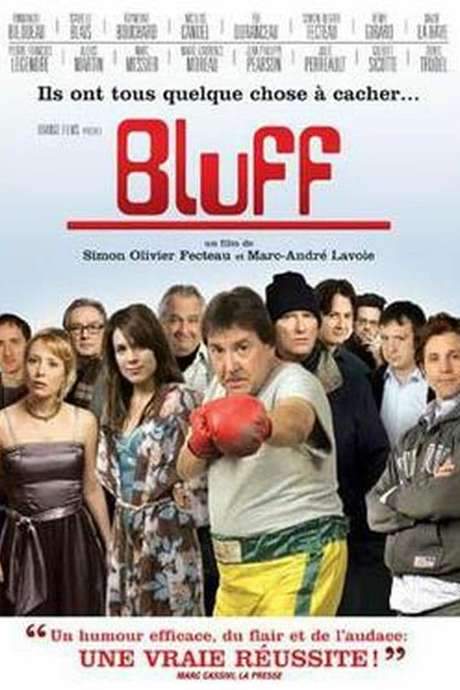
Taking place almost entirely within a single apartment, the film opens with a building inspector Jean-Philippe Pearson who uncovers a startling discovery in the basement of a building slated for demolition. He contacts the landlord and, as they wait for a police officer Denis Trudel to arrive, the narrative unfurls through a series of intimate vignettes that trace the lives of the apartment’s tenants over the past fifteen years. What starts as a simple discovery gradually reveals how intertwined lives can be, and how the past continues to echo in the present chaos of a crowded urban home.
In one thread, Julien, Simon-Olivier Fecteau, nervously rehearses for a job interview with the steady presence of his girlfriend Ève Duranceau by his side, their banter and nerves painting a tender portrait of young adults trying to map out a future amid uncertainty. The humor and warmth of their dynamic offer a counterpoint to the apartment’s more tense episodes, reminding viewers that tenderness can survive even in awkward, almost comical moments.
Another thread centers on Michel, Alexis Martin and Josée, Isabelle Blais, a devoted couple who spend long hours scouring the space for a potentially valuable painting that experts fear may be worth more than a hundred thousand dollars. Their search is a blend of determination and anxiety, as the searchlight of possibility throws light on every dusty corner of the room and the memories tied to each object it reveals.
Nico, Emmanuel Bilodeau and Céline, Julie Perreault, invite Serge, David La Haye, into their intimate life for a ménage à trois, a choice that unsettles some and liberates others within the apartment’s micro-society. The arrangement tests boundaries and trust, exposing how affection, jealousy, and desire coexist in shared spaces.
Meanwhile, Patrice, Marc Messier and Chuck, Nicolas Canuel, stumble through a pair of bungling criminal schemes aimed at robbing the landlord, injecting a nervous humor into the larger tapestry of human frailty. Their misadventures ripple outward, reminding viewers how misjudgments in pursuit of quick gain can collide with the more carefully plotted lives of others.
Georges, Rémy Girard, an older man with a stubborn pride, challenges his daughter Julie, Marie-Laurence Moreau, and her boyfriend Sébastien, Pierre-François Legendre, to a boxing match to prove a claim: that he was once a championship boxer. His stubborn insistence clashes with the modern world’s reality, sparking a cascade of doubt, pride, and longing that threads through the entire building.
As the stories weave together, the film balances humor, nostalgia, and quiet tragedy, painting a mosaic of lives defined by affection, loss, and the stubborn hope that keeps people connected when doors close, opportunities waver, and the clutter of a crowded apartment becomes a mirror for the human condition.
The ensemble is rounded out by veteran performers who lend weight and texture to the emotional landscape of the film: Gilbert Sicotte and Raymond Bouchard appear in supporting turns that enrich the atmosphere, adding depth and a sense of lived-in history to the apartment’s walls.
Together, these interwoven tales illuminate how a single mystery can unlock a gallery of memories, regrets, and small victories. The film invites viewers to linger on the details—the hum of conversation, the echo of footsteps in a narrow hallway, the way a glance can speak louder than words—while maintaining a steady, respectful tone that never shies away from the complexities of love, ambition, and the stubborn pull of home.