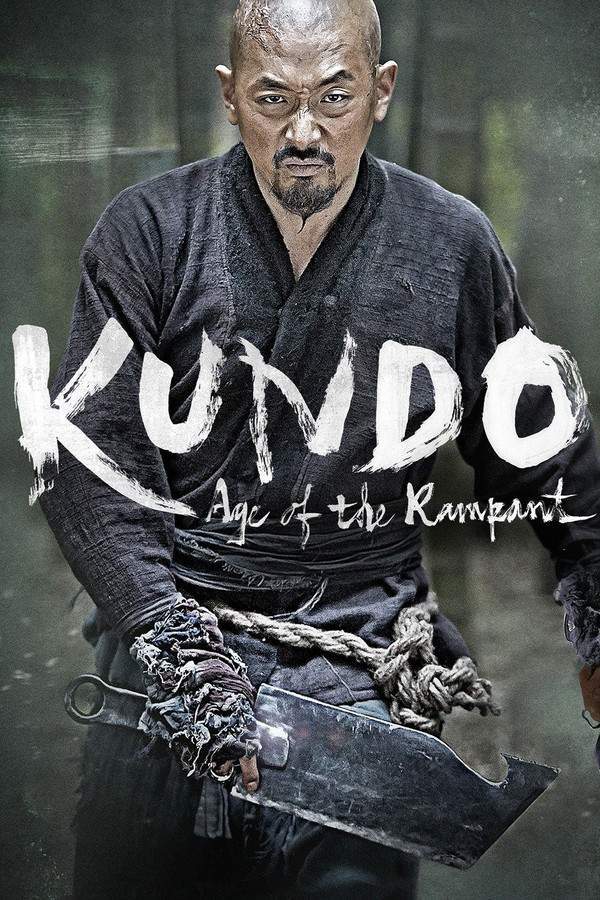
During a turbulent period in 1859 Joseon, a group of outlaws known as Kundo fight against the corrupt nobility who exploit the impoverished masses. This band of thieves steals from the rich to aid the poor, challenging the rigid social hierarchy. Simultaneously, one man embarks on a quest for vengeance against the nobleman responsible for the destruction of his family and the loss of his former life. Their actions spark a violent conflict with far-reaching consequences.
Find where to stream, rent, or buy Kundo: Age of the Rampant (2014) in the US with current JustWatch availability, up-to-date pricing, and platform listings for subscription, rental, and digital purchase options.
Warning: spoilers below!
Haven’t seen Kundo: Age of the Rampant yet? This summary contains major spoilers. Bookmark the page, watch the movie, and come back for the full breakdown. If you're ready, scroll on and relive the story!
Trace every key event in Kundo: Age of the Rampant (2014) with our detailed, chronological timeline. Perfect for unpacking nonlinear stories, spotting hidden connections, and understanding how each scene builds toward the film’s climax. Whether you're revisiting or decoding for the first time, this timeline gives you the full picture.
Last updated: November 22, 2024 at 15:39
Find frequently asked questions about the Kundo: Age of the Rampant (2014) timeline, including chronological order, nonlinear jumps, cause-and-effect links, and scene sequence clarifications. This timeline FAQ helps explain when key events happen, how moments connect, and why the story unfolds in that specific order.
Dol Mo-chi, a humble butcher, was offered a substantial sum by the young nobleman Joo Yoon to kill a target. Despite his desperate financial situation, Mo-chi chose his moral integrity over the金钱 reward. This decision ultimately set off the chain of devastating events that followed, as Joo Yoon retaliated against him for refusing.
Earlier in the film, Mo-chi is shown living a modest, honest life as a butcher, establishing his character as someone who values doing what is right.
Joo Yoon was born to a prostitute but raised as the heir to nobleman Joo Won-sook. When Won-sook's legitimate wife gave birth to a son named Seo-in, Yoon's status was suddenly demoted. This betrayal and loss of position ignited a deep-seated resentment in him, fueling his bitterness, manipulative tendencies, and quest for power to never be discarded again.
Joo Yoon's cruel actions throughout the film stem from his desire to eliminate any threat to his inheritance, including Seo-in's unborn child.
After refusing the hit job, Mo-chi was attacked in his home, captured by Joo Yoon's henchmen, and imprisoned facing execution. Just before his scheduled death at dawn, he was rescued by a group of bandits who took him in and nicknamed him 'Dochi.' Over the next two years, he transformed from a simple butcher into a formidable fighter under their mentorship.
The bandits who rescue Mo-chi are established as opponents of the corrupt nobility, foreshadowing his alignment with the resistance.
Dochi takes on a paternal role for Seo-in's son after the child's mother (Seo-in's pregnant wife, whom Mo-chi was originally meant to assassinate) dies. Treating the boy as his own, Dochi becomes committed to protecting the child who represents hope for the future and a direct challenge to Joo Yoon's claim on the Joo family legacy.
The irony of Dochi protecting the very person he was once hired to kill creates emotional depth and redemption in his character arc.
Joo Yoon manipulates the poor through deceitful contracts, taking advantage of their desperation during the economic crisis. He gradually tightens his grip on Naju, using his position as a nobleman to extract wealth from already starving citizens, paralleling the corrupt governance the Chusul clan fights against.
This exploitation directly motivates the bandits' raid on Naju and sets up the central conflict between Dochi and Joo Yoon.
When government troops prepare to execute captured bandits at dawn, Dochi arrives with a Gatling gun and creates chaos among the soldiers. This attack allows the surviving bandits to break free. The oppressed townspeople, unified by their anger, then rally around Dochi for a final assault on Joo Yoon's manor.
Earlier raids established the bandits' tactical advantages and Dochi's growing leadership abilities.
Joo Yoon displays eerie calmness throughout the final battle, even when defeat becomes inevitable. This calmness reflects his nihilistic worldview born from his traumatic past, he was raised as an heir only to be discarded, making him view power and life with detachment. His acceptance of death may also stem from never truly finding belonging or happiness.
Joo Yoon's philosophical detachment was hinted at in his calculated, cold approach to power throughout the film.
The Chusul clan is a resistance movement rising against the oppressive Joseon aristocracy during the 1862 crisis. They rob corrupt officials and redistribute their wealth to the impoverished masses. The group embodies the story's social rebellion theme, providing the backbone for the uprising that challenges the rigid social hierarchy.
The film opens with the Chusul clan's raid on Governor Choi's estate, establishing their role as redistributors of justice.
After defeating Joo Yoon in the bamboo groves, Dochi rises to become the leader of the bandit group. With the precious child safely in his care, he unites the remaining outlaws and citizens of Naju, leading them toward a hopeful future while lighting the flame of rebellion for the Chusul clan.
Dochi's transformation from a reluctant participant to a committed leader was foreshadowed by his rapid growth as a fighter and his paternal dedication to the child.
Dae-ho is Dochi's ally who helps set the trap for Joo Yoon during the raid on Naju. When Joo Yoon narrowly escapes, he causes immense destruction including killing Dae-ho. This loss deeply impacts Dochi and motivates his later quest for vengeance against Joo Yoon, strengthening his commitment to the rebellion.
Dae-ho's death occurs during Joo Yoon's escape, directly fueling Dochi's determination for the final confrontation.
During the bandits' bold raid on Naju, Dochi cunningly leads Joo Yoon into a trap set by his ally Dae-ho, allowing the bandits to reclaim the rice reserves. However, Joo Yoon narrowly escapes despite the trap, though not before causing significant destruction and killing Dae-ho.
Joo Yoon's narrow escape sets up his later retaliatory actions against the townspeople and bandits.
Discover curated groups of movies connected by mood, themes, and story style. Browse collections built around emotion, atmosphere, and narrative focus to easily find films that match what you feel like watching right now.
Stories where systemic oppression is met with violent, cathartic revolt.For viewers seeking movies like Kundo: Age of the Rampant, this thread collects historical and period action dramas where a downtrodden group fights back against a corrupt ruling class. These films share a theme of cathartic violence, high-stakes resistance, and a heavy emotional weight stemming from the brutal cost of freedom.
These narratives typically begin with a state of intense, unjust oppression, which galvanizes a group of protagonists—often outcasts or common folk—into forming a resistance. The plot is driven by a series of escalating confrontations, raids, and battles, leading to a violent climax where the old order is challenged, resulting in a hard-won but hopeful victory.
They are grouped by their core emotional drive: turning righteous anger into action. They share a dark tone due to the harsh realities depicted, but balance it with a cathartic, fast-paced intensity and a final feeling of hopeful justice, making the heavy emotional journey feel worthwhile.

Bonds forged in violence create a new family for outcasts and rebels.If you liked the theme of the Kundo band in Kundo: Age of the Rampant, this list features movies with similar 'found family' dynamics. These films focus on groups of outlaws, rebels, or soldiers who become a close-knit unit, offering a powerful sense of loyalty and belonging amidst a dark and violent backdrop.
The narrative pattern follows a protagonist, often isolated by trauma or loss, who is reluctantly integrated into a group of outsiders. Through shared missions and hardships, this group evolves from a mere alliance into a deep, familial bond. Their collective strength becomes their greatest weapon against overwhelming odds, with the survival of the 'family' being as important as the central conflict.
These movies are united by the powerful emotional core of 'found family'. Despite a dark tone and high intensity, they provide a sense of warmth and loyalty that counterbalances the brutality. The pacing is often fast, driven by the group's actions, and the emotional weight is heavy due to the stakes involved in protecting their new bonds.
Don't stop at just watching - explore Kundo: Age of the Rampant in full detail. From the complete plot summary and scene-by-scene timeline to character breakdowns, thematic analysis, and a deep dive into the ending - every page helps you truly understand what Kundo: Age of the Rampant is all about. Plus, discover what's next after the movie.
Read a complete plot summary of Kundo: Age of the Rampant, including all key story points, character arcs, and turning points. This in-depth recap is ideal for understanding the narrative structure or reviewing what happened in the movie.
Discover the characters, locations, and core themes that shape Kundo: Age of the Rampant. Get insights into symbolic elements, setting significance, and deeper narrative meaning - ideal for thematic analysis and movie breakdowns.