Plot Explained Spoilers guaranteed!
Plot Explained

Browse by genre

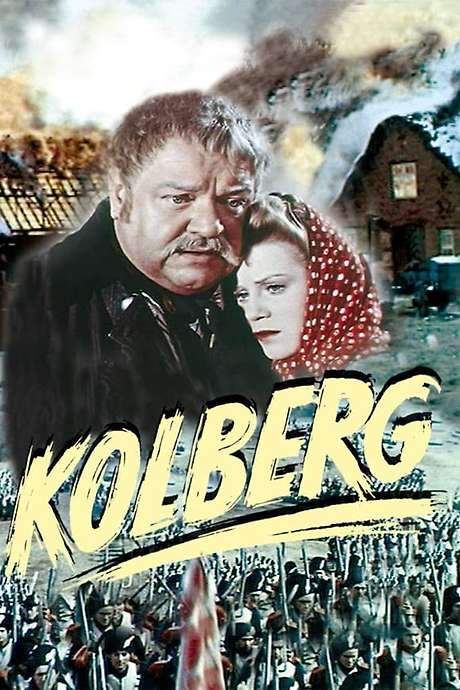
Kolberg (1945) movie poster

Timeline

Kolberg (1945) Timeline Explained – Every Event in Order

Release, runtime and language
1945 · 110 mins · German
Directed by
Veit Harlan
Starring
Heinrich George, Franz Schafheitlin, Paul Wegener, Jakob Tiedtke, Paul Bildt, Gustav Diessl

During Napoleon’s victorious campaign in Germany, the city of Kolberg finds itself cut off from the retreating Prussian army. Undeterred, its citizens rally together, refusing to surrender and mounting an organized resistance against the French forces, which promptly unleash a massive artillery barrage on the city.

On this page (5)
  1. 1 Events in order (12)
  2. 2 Timeline questions answered
  3. 3 Movie threads
  4. 4 Movies like Kolberg
  5. 5 Every angle

12 events in order · contains spoilers

Kolberg Timeline: Events in Chronological Order

Every key event of Kolberg (1945) in order, scene by scene, with when and where it takes place. Use it to untangle flashbacks, time jumps and parallel storylines, to refresh your memory before the sequel or to find the exact scene you are thinking of.

  1. Breslau 1813: crowds and citizen defences

    The film opens in 1813 with Prussian Landwehr and volunteers marching through Breslau amid enthusiastic crowds. King Frederick William III and Count August von Gneisenau discuss the recent events, underscoring that the defense of Kolberg under siege demonstrated the power of citizen armies.

    When
    1813
    Where
    Breslau
  2. Vienna 1806: abdication of Francis II

    In Vienna, the last Holy Roman Emperor Francis II abdicates, signaling a reshaping of German politics. Gneisenau condemns the move, calling him an Emperor who abandoned the German people in their hour of need.

    When
    1806
    Where
    Vienna
  3. Kolberg 1806: townsfolk debate the future

    Back in Kolberg, inhabitants debate Napoleon's announcements and the implications for their town. Some see French victories as a net positive, while others fear surrender and loss of independence. Nettelbeck remains steadfast in resisting the French.

    When
    1806
    Where
    Kolberg
  4. Nettelbeck forms a citizen militia

    Nettelbeck organizes a citizen militia, gathering supplies and mobilizing ordinary townspeople. He opposes the regular Prussian army's surrender plans and pushes for a determined defense of Kolberg.

    When
    1806
    Where
    Kolberg
  5. Threat of execution and a desperate plea for leadership

    Facing threatened execution by the military, Nettelbeck concludes that Kolberg can be saved only if a great leader emerges. He sends Maria, a farmer's daughter, on a dangerous mission to Königsberg to reach the king and queen.

    When
    1806
    Where
    Kolberg
  6. Maria travels to Königsberg

    Maria undertakes a perilous journey to Königsberg to plead with the royal court. Her purpose is to secure intervention to defend Kolberg, risking her safety along the way.

    When
    1806
    Where
    Königsberg
  7. Queen Louise is approached

    Maria meets the Queen, Louise, who holds the key to unlocking royal support. Through her, the plan is set in motion to bring Gneisenau to Kolberg.

    When
    1806
    Where
    Königsberg
  8. Gneisenau takes command

    Gneisenau confronts Nettelbeck and emerges as the top leader. He joins forces with the army and the citizens, coordinating a united effort to defend the city.

    When
    1806
    Where
    Kolberg
  9. Kolberg's defense and the French retreat

    With new leadership, Kolberg resists the French siege and ultimately survives as they retreat. The film emphasizes the power of citizen resolve and concerted action in turning the tide.

    When
    1806
    Where
    Kolberg
  10. Return to 1813 after Tauroggen

    The narrative returns to 1813 after the Convention of Tauroggen, with the war against Napoleon looming anew. Napoleon is depicted as having been defeated in Russia, prompting Prussian leaders to consider bold action.

    When
    1813
  11. Gneisenau pushes the king toward action

    Gneisenau convinces Frederick William to confront Napoleon and act decisively. He persuades the king to rally the nation behind a renewed war for liberation.

    When
    1813
    Where
    Prussia (Berlin)
  12. An Mein Volk: the proclamation to begin the Wars of Liberation

    Frederick William writes and issues the proclamation An Mein Volk, signaling the start of the Wars of Liberation. The act unifies Prussia and sets the stage for a broader call to arms against Napoleon.

    When
    1813
    Where
    Berlin, Prussia

Last updated: October 05, 2025 at 11:22

Was this helpful?

Timeline questions answered

Kolberg Timeline Explained: Your Questions Answered

When does it happen, and why in that order? The questions people ask about the chronology of Kolberg (1945): time jumps, flashbacks, cause and effect between scenes and the correct order of events, each answered with spoilers.

Q1

Why does Nettelbeck decide to form a citizen militia instead of following the Prussian army's surrender plans?

Nettelbeck forms the citizen militia because he believes Kolberg can only be saved if the citizens take action themselves. The regular Prussian army is preparing to surrender, but he refuses to accept defeat. Facing threatened execution by military leaders for his defiance, he organizes ordinary townspeople to gather supplies and mount a defense, arguing that citizen armies have proven effective in earlier resistance. His leadership bridges the gap between civic courage and military action when official channels seem futile.

Foreshadowing: Earlier in the film, Gneisenau reminds the King that Kolberg's earlier resistance demonstrated the crucial power of citizen armies, establishing the philosophy that Nettelbeck later puts into practice.

  • nettelbeck
  • citizen militia
  • prussian army
  • surrender
  • kolberg defense
Q2

What motivates Maria to undertake the dangerous journey to Königsberg?

Maria is dispatched by Nettelbeck to travel to Königsberg to seek an audience with the King and Queen Louise. Her mission is to plea for royal intervention to save Kolberg from the French siege. Facing execution threats himself, Nettelbeck sends this humble farmer's daughter as a last resort to reach the royal court, believing only a great leader's intervention can turn the tide. The journey represents the connection between ordinary citizens and the high-stakes politics of a court in retreat.

Foreshadowing: The film establishes early that the military hierarchy threatens Nettelbeck with execution, creating the desperate circumstances that make Maria's journey necessary.

  • maria
  • konigsberg
  • queen louise
  • royal court
  • desperate mission
Q3

How does Queen Louise's intervention change the situation in Kolberg?

After Maria pleads with Queen Louise in Königsberg, the Queen is moved by the plea and takes decisive action. She orders that Gneisenau be sent to Kolberg to reinforce the beleaguered city. This royal intervention transforms Kolberg's fate by aligning citizen mobilization with formal military leadership. The Queen's willingness to act when the moment demands it provides the crucial link between local resistance and royal support, giving Kolberg a fighting chance against the French siege.

Foreshadowing: Maria's dangerous journey specifically targets the Queen, building toward this pivotal moment where royal compassion meets citizen desperation.

  • queen louise
  • gneisenau
  • kolberg reinforcement
  • royal intervention
  • military leadership
Q4

What was the Tauroggen Agreement and why does it matter in the film?

The Tauroggen Agreement, known historically as the Convention of Tauroggen, was a preliminary peace treaty signed between Prussia and Russia in 1806, separate from the broader conflict with France. In the film, its significance lies in what follows: after Napoleon's failures in Russia, the mood among Prussian leaders shifts. The narrative returns to 1813 after this agreement, showing that Prussia now has the political space to consider challenging Napoleon directly rather than remaining under French dominance. It sets the stage for the Wars of Liberation.

Foreshadowing: The film depicts earlier defeats and French dominance, making the Tauroggen Agreement the turning point that enables Prussian leaders to reconsider their stance against Napoleon.

  • tauroggen agreement
  • convention of tauroggen
  • prussia
  • russia
  • napoleon
  • 1813
Q5

What is the significance of the "An Mein Volk" proclamation?

"An Mein Volk" (To My People) is the stirring royal proclamation issued by King Frederick William III in 1813 that frames the Wars of Liberation as not only a political rebuke to French occupation but a renewed assertion of national identity and resolve. In the film, Gneisenau persuades the King to take a bold stand, and this proclamation becomes the rallying cry that unifies Prussia for war against Napoleon. It represents the culmination of the film's themes: the connection between citizen resolve and royal leadership in the fight for national freedom.

Foreshadowing: Gneisenau's earlier push to convince the King to confront Napoleon directly builds toward this proclamation as the ultimate expression of national will.

  • an mein Volk
  • proclamation
  • frederick william
  • wars of liberation
  • national identity
  • patriotism
Q6

How does Kolberg manage to successfully resist the French siege?

Kolberg survives through a combination of citizen determination and military leadership. After Gneisenau arrives and takes command, he coordinates the efforts of the city militia, the army, and ordinary citizens into a united defense. The film emphasizes that it's the collective effort and communal resolve, not any single factor, that turns the tide. With new leadership and coordinated resistance, Kolberg holds against the French artillery barrage until the French ultimately retreat. The successful defense demonstrates the power of citizen resolve combined with competent military strategy.

Foreshadowing: The film establishes early that citizen armies can be effective, and Gneisenau's arrival provides the military expertise needed to organize that citizen power.

  • kolberg siege
  • french retreat
  • citizen defense
  • gneisenau command
  • successful resistance
Q7

Why does the film show the abdication of Francis II in Vienna?

The film depicts Francis II's abdication in 1806 to provide political context for the chaos facing German states. Francis II was the last Holy Roman Emperor, and his abdication signals the collapse of the old political order. In the film, Gneisenau condemns this as an Emperor who abandoned the German people in their hour of need. This moment underscores the themes of leadership and betrayal that run through the narrative, it explains why ordinary citizens must take matters into their own hands when established authority fails them.

Foreshadowing: This scene establishes the theme of failed leadership that contrasts with the film's heroes: Nettelbeck, Gneisenau, and Queen Louise, who unlike Francis II, rise to meet the challenge.

  • francis ii
  • abdication
  • holy roman emperor
  • vienna
  • political upheaval
  • german politics
Q8

What role does Gneisenau play in the defense of Kolberg?

Gneisenau serves as the experienced military strategist who takes command of Kolberg's defense. When he arrives in the city following Queen Louise's orders, he confronts Nettelbeck but ultimately emerges as the top leader, joining forces with both the army and the citizen militia. His contribution is combining formal military expertise with the energy of the citizen mobilization. The film portrays him as the crucial link between the royal court's decision to intervene and the actual defense of the city.

Foreshadowing: The film establishes in the opening that Gneisenau believes in the power of citizen armies, making his arrival in Kolberg the fulfillment of that philosophy.

  • gneisenau
  • military leader
  • kolberg commander
  • citizen army
  • defense strategy
Q9

Why do Kolberg's townspeople have different opinions about Napoleon's victories?

When Napoleon announces his victories, Kolberg's inhabitants are divided in their response. Some see French victories as an opportunity, likely hoping for changed circumstances that might benefit them personally or professionally. Others fear subjugation and loss of independence, aligning with Nettelbeck's determination to resist. This division reflects the broader uncertainty facing Prussian territories: with the old order crumbling and the army apparently defeated, many wondered whether resistance was wise or futile. The tension between those who see opportunity in change and those who refuse to surrender becomes a key element of the film's exploration of civic courage.

Foreshadowing: The earlier scene with Francis II's abdication establishes that many leaders are choosing pragmatism over resistance, providing context for why some citizens waver.

  • townspeople division
  • napoleon victory
  • fear
  • surrender
  • civic courage
  • resistance debate
Q10

What is the historical context of this film given its 1945 release?

Kolberg was released in 1945 during the final months of World War II, and it served as Nazi propaganda designed to inspire resistance against Allied forces. The film glorifies citizen determination and military defense of the homeland against overwhelming odds, drawing direct parallels to the German situation in 1945. The story of Kolberg's successful defense against French forces was used to encourage Germans to continue fighting despite the war's apparent loss. This propagandistic purpose contributes to the film's definitive, hopeful ending and its emphasis on collective resolve triumphing over military superiority.

  • 1945
  • nazi propaganda
  • world war ii
  • historical context
  • allied forces
  • hollywood
Q11

What does the film say about the relationship between citizens and the crown?

The film portrays a dynamic relationship where ordinary citizens and royal leadership must work together for national survival. Nettelbeck's citizen militia represents the people taking initiative when formal authority seems inadequate, while Queen Louise and Gneisenau represent the crown responding to citizen desperation with decisive action. The emotional core of the story shows how a city can mobilize its people and a monarch can respond with confidence when the moment demands it. The film suggests that the most effective resistance combines grassroots determination with royal support, rather than depending on either alone.

Foreshadowing: Maria's journey embodies this relationship, she bridges ordinary citizen life with royal politics, making the connection literal rather than just thematic.

  • citizens
  • crown
  • royal support
  • nettelbeck
  • queen louise
  • leadership
  • collective effort

Movie threads

More Movies Like Kolberg, by Mood & Story

Curated lists built around what makes Kolberg tick: the same mood, the same kind of story or the same emotional payoff. Each list explains why these movies belong together.

Movies about citizen resistance like Kolberg

Ordinary people unite against an overwhelming military force in a desperate stand. Explore movies like Kolberg where ordinary citizens rise up against an invader. If you enjoyed the story of civic defiance and strategic resistance against overwhelming odds, you'll find similar historical epics and war dramas focused on the power of collective courage.

  • urgent
  • resolute
  • tense
  • hopeful
  • dramatic
  • nationalistic
  • Tone: hopeful, resolute, tense
  • Pacing: steady, building
Why these movies?

The story pattern: Stories in this thread typically follow a pattern of invasion, initial despair, and the subsequent rallying of a civilian population. The narrative charts their journey from fear to organized defiance, focusing on the logistical and emotional challenges of holding out against a siege, often leading to a pivotal battle or negotiation that determines their fate.

Why they belong together: These movies are grouped together because they share a core narrative of bottom-up resistance. They balance high-intensity action with a hopeful tone, emphasizing themes of national or civic identity, personal sacrifice for the greater good, and the strategic brilliance that can emerge from desperation.

Intense but hopeful war dramas like Kolberg

Stories where a light of hope endures through the darkest and most intense trials. Find more movies like Kolberg that blend high-intensity war scenarios with a fundamentally hopeful message. These similar films explore heavy themes of conflict and sacrifice but are defined by their focus on resilience, collective effort, and emotionally rewarding outcomes.

  • hopeful
  • tense
  • dramatic
  • somber
  • resolute
  • urgent
  • Tone: hopeful, dramatic, somber
  • Pacing: steady, tense build
Why these movies?

The story pattern: The narrative pattern involves placing characters in a deeply challenging, often life-threatening situation. Despite the pervasive grimness and high tension, the story consistently highlights acts of bravery, unity, and strategic success. The emotional journey moves from dread to determination, culminating in an ending that validates the struggle and reinforces the hopeful theme.

Why they belong together: These films are united by their specific emotional mix: they do not shy away from the brutality of their subject matter, yet they are ultimately defined by an optimistic core. The pacing is often steady, building tension methodically towards a cathartic and positive resolution, making the hopeful ending feel earned rather than facile.

If you liked this

Movies Like Kolberg

Similar movies to Kolberg: the same genre, themes or kind of story. Each one comes with its own plot summary, timeline and ending explained.

Browse all movie summaries

Every angle

Kolberg (1945) Explained: Plot, Timeline & Characters

Everything about Kolberg in one place: what happens in the plot summary, the timeline in chronological order, the characters and meaning and a spoiler-free summary. What's After the Movie adds the cast, box office and post-credit scenes.

Coming soon on iOS and Android

The Plot Explained Movie Summary App

Plot summaries, endings explained and timelines on your phone. Catch up on any movie in minutes, save your favorites and never miss a twist again.

Be the first to know when we launch. Your email stays private, always.

Learn more about the app