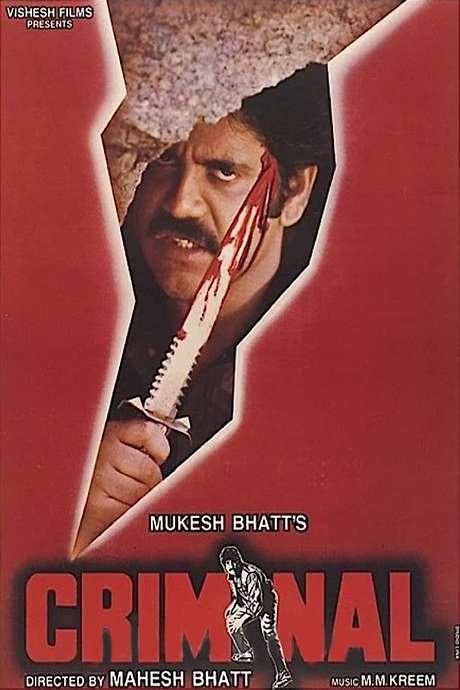
Sonia Raina is a spirited teenager navigating the shadows of a family fractured by divorce. She grows up under the care of her mother, Mallika, and her grandmother, Jaya, moving through the quiet heat of Indian summers and the quieter heat of adolescence. As her eighteenth birthday approaches, she grapples with curfews, autonomy, and the ache of a missing sense of belonging. A heated argument after a Christmas party sends ripples through the household, and in a moment of frustration she seeks space, diving into the sea until the world around her grows distant. What follows is a chilling disruption: she is abducted by a man who uses chloroform to quiet her cries and locks her away in a secluded cottage that seems otherwise without exit.
Back home, the family trembles in a different rhythm. Sonia’s mother receives a call from the abductor, who states his demand with a chilling coldness: he will speak only to Sonia’s father, Vikrant Raina, a ruthless billionaire whose wealth and reach are tied to a life lived in the public glare and private fear. Vikrant, a man who has built an empire in New York and is known for his uncompromising ruthlessness, returns to India when he learns that a substantial portion of his fortune has allegedly vanished from his accounts. He reunites with Mallika, who fills him in on Sonia’s disappearance and the enigmatic demands that accompany it. The kidnapper claims his money is secure, but he will only release Sonia after a series of dangerous tasks that will reveal the motive behind the crime.
The first task is perplexing and personal. It requires Vikrant to locate Sister Margaret, a figure from his own past, and to offer her a formal apology. The search takes him onto a moving train, where the memory of past choices collides with the present danger. To aid in deciphering the mystery, a diligent detective named Irfan joins the pursuit, bringing with him a set of clues that point to a poem offered by Sister Margaret. The unfolding investigation becomes a careful dance between the kidnapper’s calculated demands and Vikrant’s stubborn resolve to protect his daughter’s future. The hunter and the hunted move through crowded stations, quiet towns, and the uneasy tension of a city that never truly rests.
Meanwhile, Sonia, who initially resists cooperating with her captor, begins to sense a complicated humanity behind the person holding her. She discovers that the man who keeps her is not cruel by nature but broken by long years of unspoken anger and frustration. Her own perspective shifts as she learns that the rage she once perceived as indiscriminate cruelty is, in fact, a product of someone’s deep-seated pain. In the small, tethered world of the bungalow where she is held, she starts to recognize familiar traces—the way the place once belonged to Vikrant, the echoes of lives lived and choices made long before she arrived. The space holds memory as much as fear, and Sonia’s heart straddles a line between defiance and empathy.
In a crucial layer of the story, it’s revealed that a car accident years earlier—one in which Sonia herself was a passenger—drew a different verdict from the world around them. It involved a young boy who stole the car to reach an injured friend and to attempt a desperate rescue. Vikrant’s influence led to that boy’s imprisonment for fifteen years, a decision that seeded resentment and a thirst for retribution. The kidnapper’s motive begins to unfold not as a desire for vengeance against a stranger, but as a calculated lesson meant to educate Vikrant about the consequences of the choices he has imposed on others. Sonia’s capacity for empathy grows as she pieces together the boy’s story and realizes that the pain produced by past actions has a way of returning with a sharpened edge.
As clues accumulate, Vikrant comes to a startling realization: the person who abducted Sonia is Kabir Devendra Sharma, a figure whom Vikrant had previously misjudged and wrongly believed to have caused Sonia’s harm. Kabir, meanwhile, makes his own moves; unable to reach Vikrant by phone, he visits him in person, setting off a tense standoff and a perilous chase. Vikrant and Irfan collaborate to track Kabir, and the pursuit eventually leads them to Sonia. After a brief encounter with Sonia, Vikrant is instructed to dismiss Irfan from the case and is given a new, troubling assignment: free a prisoner from jail. The act turns out to be a high-stakes test of Vikrant’s willingness to bend the rules for the sake of a life he cherishes.
Vikrant succeeds in releasing the prisoner, who turns out to be a friend of Kabir. The moment of triumph is short-lived, as Irfan intervenes and shoots Kabir, who dies only after a farewell to his own past. The shooting leaves Vikrant furious and conflicted, torn between relief at Sonia’s safety and anger at the violence that shadows every step of this rescue. Kabir manages to escape death and returns to the bungalow, where Sonia offers him nursing care and a quiet, complicated gratitude. The complexities of guilt and forgiveness swirl through the air as Sonia’s sense of right and wrong becomes entangled with the reality of violence and rescue.
With Kabir wounded but alive, Vikrant follows a sequence of clues that lead him to Sonia’s location. He arrives at an old bungalow expecting to find nothing but a memory, only to discover that the next clue requires him to commit another murder at a New Year’s Eve gathering. He wrestles with the moral weight of the act, and in a moment of dark clarity, he believes he has killed Kabir. Yet Kabir reappears, revealing that he survived and that the entire chain of events has forced Vikrant to confront a hard, disquieting truth: Vikrant himself has become a criminal in the eyes of his own conscience, albeit one who has operated under the banner of trying to rescue his daughter. Kabir’s appearance shatters the facade, provoking a confrontation in which Vikrant must reckon with the possibility that his ruthlessness and his protective instincts have converged into something morally ambiguous and dangerous.
This reckoning is no cure-all, but it becomes a turning point. Vikrant apologizes to Kabir, who disappears again, leaving behind a clue that eventually leads Vikrant to Sonia. In a final act of reconciliation, the family is reunited, but the road there is heavy with questions about justice, vengeance, and the true meaning of protection. The ending hints at quiet promises rather than tidy resolutions: a family restored, yet a world where old wounds can resurface when fear and power collide.
In the aftermath, a subtle gravitas settles over the household. Kabir reappears at a family gathering to offer Sonia a sincere apology for the ordeal she endured, and he explains that he has chosen a new path, starting afresh at a software company. Sonia and Kabir part on amicable terms, wishing each other well as they continue to navigate the blurred lines between forgiveness and consequence. The story closes not with a perfect ending, but with a cautious hope: a daughter who has learned to parse danger from care, a father who has faced the limits of his own power, and a world where acts of violence are weighed against the fragile, enduring ties of family.