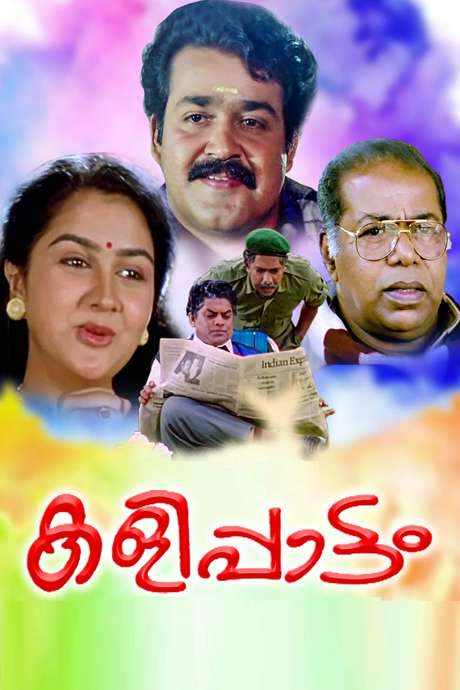
In the bustling industrial town where factories hum like distant heartbeats, Venu ekes out a modest living as a violinist, threading melodies through the clatter of machinery. His days are a careful balance between the demands of his craft and the pressing need to provide for his family, a tension that colors every note he draws from his instrument. The city’s stark divide between laborers and the affluent casts a subtle but ever‑present backdrop, reminding Venu that any shift in fortune could change the rhythm of his life.
Across town, the powerful Menon oversees a sprawling enterprise, his influence stretching far beyond the factory walls. When a sudden dismissal threatens Venu’s already fragile stability, a reluctant meeting with the industrialist’s household sets the stage for an unexpected proposition. It is here that Saro, Menon’s daughter, first hears Venu’s music, a sound that pierces the polished veneer of her privileged world and reveals a shared yearning for something more authentic.
The agreement that follows is as delicate as a violin string: Venu will marry Saro in exchange for the security his family desperately needs. Yet the bargain carries a hidden weight—Saro bears a serious, life‑altering health condition that has been kept quietly between her and her father. The contract marriage, while pragmatic, teeters on the edge of compassion and self‑preservation, framing a relationship that is as much about survival as it is about the burgeoning connection forged through music and mutual respect.
Within this intimate tableau, the film blooms with a tone that is simultaneously tender and contemplative. The interplay of humble artistry against the backdrop of wealth and illness creates an atmosphere of quiet hope, inviting the audience to wonder how love, duty, and the fragile threads of fate will intertwine without yet revealing the path ahead.