Year: 1942
Runtime: 90 mins
Language: English
Director: Curtis Bernhardt
She’s easy to meet, but hard to forget. During the depths of the Great Depression, drifter Steve Talbot and jukebox‑joint hostess Lola Mears arrive in Cat‑Tail, Florida, where tenant farmers and pickers are crushed by a monopolistic buyer who enforces dirty contracts and violence. Steve organizes the workers to fight back, a struggle that spirals into a lynch mob.
Warning: spoilers below!
Haven’t seen Juke Girl yet? This summary contains major spoilers. Bookmark the page, watch the movie, and come back for the full breakdown. If you're ready, scroll on and relive the story!
Trace every key event in Juke Girl (1942) with our detailed, chronological timeline. Perfect for unpacking nonlinear stories, spotting hidden connections, and understanding how each scene builds toward the film’s climax. Whether you're revisiting or decoding for the first time, this timeline gives you the full picture.
Last updated: December 03, 2025 at 23:58
Find frequently asked questions about the Juke Girl (1942) timeline, including chronological order, nonlinear jumps, cause-and-effect links, and scene sequence clarifications. This timeline FAQ helps explain when key events happen, how moments connect, and why the story unfolds in that specific order.
Steve grew up on a Kansas farm and understands the exploitation Madden imposes on tenant farmers. He refuses to participate in a system that keeps workers trapped in consignment deals and low wages. His moral stance sets him apart from Danny, who chooses to climb Madden's ladder.
Earlier scenes show Steve's discomfort with the coercive labor conditions as soon as he arrives in Cattail.
Danny is drawn to the power and security that working for Madden provides. In the desperate economy of the Great Depression, Madden's plant offers steady employment and a chance to improve one's status, even if it means participating in an exploitative system.
Danny shows immediate interest in Madden's operation when he and Steve first arrive in Cattail.
Nick decides to bypass Madden's monopoly by finding an Atlanta food distributor willing to buy directly. Steve supports this by stalling one of Nick's trucks at the distributor's entrance, refusing to move until a deal is agreed upon. This bold tactic forces the distributor to honor the entire crop.
After successfully selling his crop directly, Nick returns to Cattail feeling victorious and celebrates at Muckeye's. Overconfident from his success, he attempts to make peace with Madden, but Madden rebuffs him and orders him off the premises, triggering the fatal confrontation.
During the scuffle at Madden's premises, Nick attempts to stand his ground. In the chaos of trying to eject Nick, Madden's actions result in Nick being fatally struck. The killing is portrayed as unintentional, though it occurs during Madden's aggressive attempt to remove Nick from his property.
Madden seeks to cover up his crime and maintain control over the town. By framing Steve and Lola, who were aligned with Nick and opposed to his monopoly, Madden hopes to eliminate potential witnesses and accusers while preserving his economic stranglehold on Cattail.
An investigation reveals the truth behind Nick's death, exposing Madden's involvement. His guilt is uncovered through the proceedings that follow the framing attempt, leading to his arrest and the downfall of his economic empire.
Madden controlled the town's largest employer, the packing plant, and his monopoly kept the local economy functioning, albeit exploitatively. With his imprisonment, the economic structure collapses, leaving farmers and workers without the jobs and commerce that Madden's operations provided.
Despite exposing Madden's crimes, the victory is hollow. With the town's economy shattered and no viable future in the depleted community, Steve, Lola, and Madden's former employees choose to seek new opportunities elsewhere. The ending reflects the melancholy theme that defeating exploitation still leaves devastation in its wake.
Nick's direct-sale approach challenges Madden's monopoly and demonstrates that farmers can survive without his exploitative system. His success inspires other farmers to consider alternatives, threatening Madden's economic stranglehold and laying groundwork for broader resistance.
Discover curated groups of movies connected by mood, themes, and story style. Browse collections built around emotion, atmosphere, and narrative focus to easily find films that match what you feel like watching right now.
Stories of desperate individuals fighting systemic greed during economic collapse.If you liked the desperate economic struggle and grim realism of Juke Girl, explore more movies about class conflict during the Great Depression. These films share a heavy emotional weight, dark tone, and themes of worker solidarity against overwhelming corporate power.
Stories typically follow a group of downtrodden workers or a lone organizer as they challenge an oppressive economic system. The conflict escalates from quiet desperation to organized resistance, often met with violence, leading to a pyrrhic victory or tragic disillusionment.
They are grouped by their shared setting of economic despair, a central conflict pitting the vulnerable against the powerful, and a consistently dark, gritty visual and emotional tone that emphasizes the high stakes of survival.
Narratives where the fight for justice leads to violence and hollow victory.For viewers who appreciated the tragic arc of collective action in Juke Girl, this collection features similar movies about organized resistance that ends in sadness. These stories share a high tension, straightforward narratives of conflict, and ultimately bleak or bittersweet conclusions.
A protagonist mobilizes a community against an unjust force. The initial hope of collective action is crushed by escalating violence, often culminating in a key death. The ending feels sad or bittersweet, as the victory is overshadowed by personal loss and the community is left fractured.
They share a specific narrative pattern: a clear organiser-vs-oppressor plot, a steady build to a violent climax, and a profoundly sad ending that undercuts any sense of simple victory, creating a heavy, melancholic feel.
Don't stop at just watching - explore Juke Girl in full detail. From the complete plot summary and scene-by-scene timeline to character breakdowns, thematic analysis, and a deep dive into the ending - every page helps you truly understand what Juke Girl is all about. Plus, discover what's next after the movie.
Read a complete plot summary of Juke Girl, including all key story points, character arcs, and turning points. This in-depth recap is ideal for understanding the narrative structure or reviewing what happened in the movie.
Discover the characters, locations, and core themes that shape Juke Girl. Get insights into symbolic elements, setting significance, and deeper narrative meaning - ideal for thematic analysis and movie breakdowns.
Discover movies like Juke Girl that share similar genres, themes, and storytelling elements. Whether you’re drawn to the atmosphere, character arcs, or plot structure, these curated recommendations will help you explore more films you’ll love.
Juke Girl (1942) Plot Summary & Movie Recap
Juke Girl (1942) Scene-by-Scene Movie Timeline
Juke Girl (1942) Spoiler-Free Summary & Key Flow
Movies Like Juke Girl – Similar Titles You’ll Enjoy
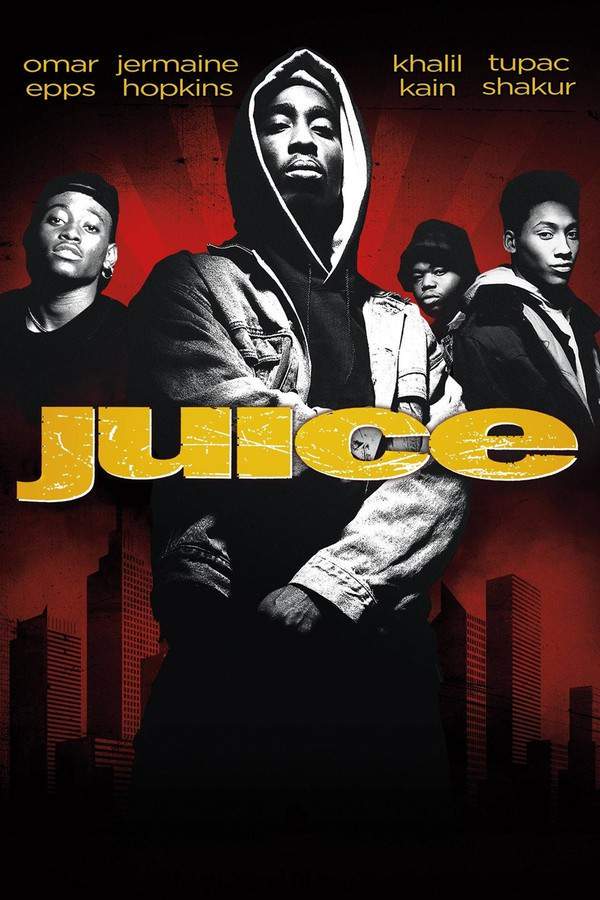
Juice (1992) Plot Summary & Ending Explained
Jett (1000) Full Summary & Key Details
The Jut-Nuts I (1988) Plot Summary & Ending Explained
Parachute Jumper (1933) Movie Recap & Themes
Country Blue (1973) Complete Plot Breakdown
Blondie Johnson (1933) Movie Recap & Themes
Girl in Trouble (1963) Movie Recap & Themes
Jungle Street (1960) Full Movie Breakdown
Juke Joint (1947) Spoiler-Packed Plot Recap
Girls Can Play (1937) Full Summary & Key Details
Juvenile Court (1938) Spoiler-Packed Plot Recap
Wild Harvest (1947) Movie Recap & Themes
Jump (1971) Movie Recap & Themes
Drive a Crooked Road (1954) Film Overview & Timeline
Girl on the Run (1953) Detailed Story Recap