Plot Explained Spoilers guaranteed!
Plot Explained

Browse by genre

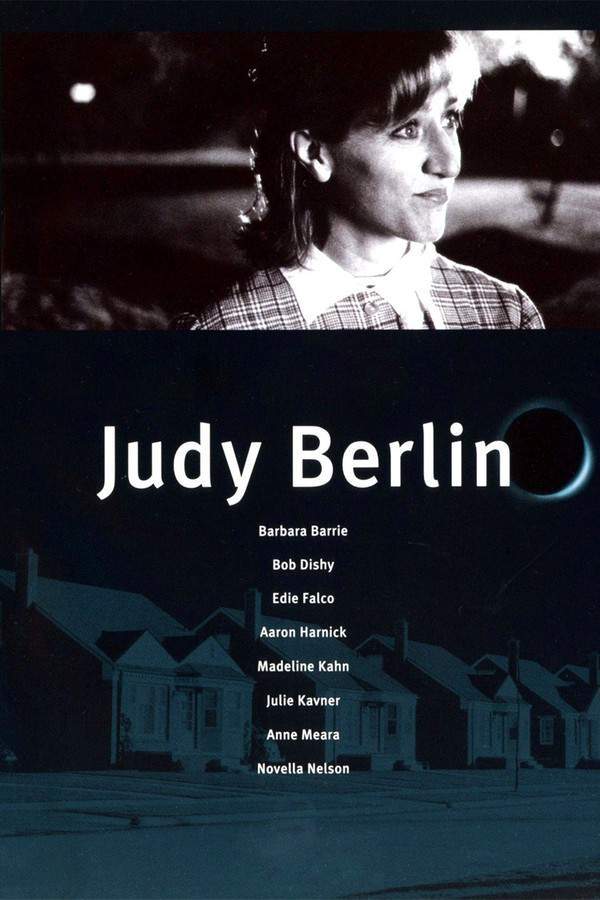
Judy Berlin (2000) movie poster

Timeline

Judy Berlin (2000) Timeline Explained – Every Event in Order

Release, runtime and language
2000 · 93 min · English
Loading streaming availability…
Directed by
Eric Mendelsohn

During a solar eclipse, the quiet lives of suburban residents are disrupted, prompting unexpected introspection. An aspiring actress, a weary schoolteacher, and a woman struggling with domestic life find themselves on a path toward self-discovery. They confront personal failures and unspoken desires, searching for meaning and connection as the eclipse and its aftermath reveal hidden truths about themselves and their community.

On this page (6)
  1. 1 Where to watch
  2. 2 Events in order (15)
  3. 3 Timeline questions answered
  4. 4 Movie threads
  5. 5 Movies like Judy Berlin
  6. 6 Every angle
Loading streaming availability…

15 events in order · contains spoilers

Judy Berlin Timeline: Events in Chronological Order

Every key event of Judy Berlin (2000) in order, scene by scene, with when and where it takes place. Use it to untangle flashbacks, time jumps and parallel storylines, to refresh your memory before the sequel or to find the exact scene you are thinking of.

  1. The First Day of School

    The film opens on the second day of school, where Principal Arthur Gold struggles with the complexities of his marriage to Alice. Arthur’s frustration is palpable as he navigates his wife's cheerful demeanor, which often tests his temper.

    When
    Second Day
    Where
    School
  2. David's Discontent

    David, Arthur and Alice's son, is introduced as a thirty-year-old man burdened by his unrealized dreams of becoming a filmmaker. His disenchantment with life serves as a central theme, highlighting the challenges faced by those who fail to live out their aspirations.

  3. Judy's Introduction

    Judy Berlin, the spirited daughter of Sue Berlin, is presented as a lively contrast to David's disillusionment. Her enthusiasm for life and positivity instantly captivates those around her, setting the stage for her deepening connection with David.

  4. A Fateful Encounter

    Judy and David cross paths during a serene morning, rekindling memories of their high school years together. Their reminiscence stirs a mixture of nostalgia and hope as they discuss their dreams in the film industry.

    When
    Morning
    Where
    Local Park
  5. Community Characters

    As the narrative unfolds, various unique characters from the local community are introduced. Each character, from Sue the teacher to Bea the secretary, brings their own ambitions and realities to the story, enriching the tapestry of small-town life.

    Where
    Town
  6. Lunch Conversations

    During lunch at the historical society, where Judy works, David and Judy share their aspirations in film. However, it is here that Judy's frustrations over her stagnant career seep through, revealing the struggle between ambition and reality.

    When
    Lunch Time
    Where
    Historical Society
  7. Arthur and Sue's Tension

    Amidst the complexities of relationships, Arthur shares moments with Sue that suggest a deeper, unacknowledged attraction between them. This tension is woven into the unfolding narrative, providing an additional layer of conflict to the story.

    Where
    School
  8. The Solar Eclipse Begins

    As a solar eclipse approaches, the environment transforms into a captivating scene, mirroring the emotional turbulence of the characters. Alice, overwhelmed with feelings, takes a whimsical walk with her cleaning lady, adding to the film's dreamlike quality.

    When
    During Eclipse
    Where
    Town
  9. Memory Revelations

    During their walk, Alice and Carol encounter a neighbor, Maddie, who hints at a forgotten conflict that strains Alice's relationship. This exchange serves as a metaphor for Alice's struggle with her own memory and emotional connection to the past.

    Where
    Neighborhood
  10. Confessions and Reality

    As the eclipse reaches its pinnacle, Judy expresses her long-time crush on David, filled with hope and excitement. But David’s harsh words about the film industry shatter her dreams, illustrating the bitterness between dreams and reality.

    When
    Eclipse Zenith
    Where
    Park
  11. Alice's Emotional Monologue

    After her walk, Alice delivers a heartfelt monologue, revealing her feelings of disconnection from reality and her deep love for Arthur. This moment encapsulates the themes of love and the struggle for clarity within the whirlwind of life.

  12. Judy's Departure

    Despite David's grim views, Judy plots her escape to Queens in search of her dreams. However, she is met with David's unexpected apology, leading to a sorrowful farewell as she boards the train, leaving her aspirations behind.

    Where
    Train Station
  13. Reunited in the Street

    In a touching resolution, Alice and Arthur have a quiet reunion in the streets, underscoring the film's central theme of reconnection. Their interaction reflects a sense of closure amidst life's chaos, leading to hope for new beginnings.

    Where
    Street
  14. Eclipse Concludes

    As the solar eclipse comes to an end, the normalcy of sunlight returns, symbolizing the promise of a new day. This poignant moment captures the essence of change and the journey of the characters toward self-discovery.

    When
    Eclipse Conclusion
    Where
    Sky
  15. Hope for the Future

    With the eclipse behind them, characters like Sue offer reassurance to Dolores, hinting that challenges can be overcome. The final moments inspire reflection on resilience and the importance of connections in facing life's trials.

Last updated: November 18, 2024 at 20:54

Was this helpful?

Timeline questions answered

Judy Berlin Timeline Explained: Your Questions Answered

When does it happen, and why in that order? The questions people ask about the chronology of Judy Berlin (2000): time jumps, flashbacks, cause and effect between scenes and the correct order of events, each answered with spoilers.

Q1

Why does David crush Judy's dreams so harshly?

David's harsh reaction stems from his own failed ambitions. As a thirty-year-old man who once dreamed of becoming a Hollywood filmmaker but never achieved that goal, he projects his own disappointment and bitterness onto Judy. Rather than encourage her hopes, he warns her about the brutal reality of the film industry, essentially protecting himself from the pain of watching someone else pursue what he couldn't accomplish. His coldness is really self-protection disguised as honesty.

Foreshadowing: Earlier scenes establish David's deep discontent with his life, showing his envy of Judy's still intact optimism.

  • David
  • Judy
  • dreams
  • Hollywood
  • film industry
  • rejection
  • ambition
Q2

What is happening with Alice's memory and mental state?

Alice appears to be experiencing some form of disconnection from reality, possibly related to memory loss or emotional detachment. When her neighbor Maddie mentions a conflict that Alice seemingly cannot recall, it suggests she has gaps in her memory or has been repressing certain experiences. Her whimsical behavior during the eclipse walk, pretending to walk on air and making eerie sounds, combined with her heartfelt monologue about feeling disconnected from reality, indicates she struggles to engage fully with her everyday life, possibly as a coping mechanism for her unhappy marriage.

Foreshadowing: Arthur's frustration with Alice's cheerful chatter that 'tests his patience' hints at ongoing tension in their marriage.

  • Alice
  • memory loss
  • Maddie
  • neighbor
  • disconnection
  • mental state
Q3

Why does Arthur kiss Sue during the eclipse?

Arthur's kiss with Sue represents a moment of emotional overflow during the eclipse's intensified atmosphere. Throughout the film, there are hints of romantic tension between them, Arthur makes 'yet another visit' to Sue's classroom, and their interactions suggest an unacknowledged attraction. Under the eclipse's surreal, emotionally charged environment, Arthur acts on feelings he has suppressed, though this moment remains isolated and doesn't lead to a full affair. The kiss is a brief escape from his discontented marriage, though it ultimately changes nothing concrete in their lives.

Foreshadowing: Earlier interactions between Arthur and Sue 'hint at a simmering romantic tension.'

  • Arthur
  • Sue
  • kiss
  • eclipse
  • attraction
  • marriage
Q4

What does the solar eclipse represent in the film?

The solar eclipse serves as both a literal event disrupting the town and a symbolic device representing introspection and hidden truths. As daylight dims, the characters are forced to confront aspects of themselves they've been avoiding: unrealized dreams, failing relationships, and unspoken desires. The eclipse creates a dreamlike, otherworldly atmosphere where normal social constraints loosen, allowing characters like Alice to behave freely and Arthur to act on suppressed emotions. Its conclusion, returning sunlight, symbolizes the promise of new beginnings and the hope that follows periods of darkness and self-examination.

Foreshadowing: The opening establishes the eclipse as a major event that 'disrupts' ordinary life.

  • solar eclipse
  • symbolism
  • introspection
  • truth
  • self-discovery
  • darkness
Q5

Why does Judy run away after David rejects her?

Judy runs away because David's harsh reality check shatters her optimism. She had approached their reunion with genuine hope, excited by both her old feelings for David and the possibility of reconnecting with her Hollywood dreams through him. When he not only fails to share her enthusiasm but actively crushes her dreams with grim warnings, she becomes heartbroken and emotionally overwhelmed. This prompts her to flee and plot an escape to Queens, attempting to pursue her ambitions alone since David won't be part of her dream. However, when David apologizes and expresses his aversion to goodbyes, she chooses to board the train, abandoning her dreams entirely in exchange for the emotional connection he represents.

Foreshadowing: Judy's earlier frustration about her stagnant career already shows her vulnerability to disappointment.

  • Judy
  • David
  • rejection
  • running away
  • train
  • dreams
  • heartbreak
Q6

What was the conflict between Alice and her neighbor Maddie?

The conflict between Alice and Maddie remains deliberately vague, reflecting Alice's fragmented memory. Maddie mentions a dispute that caused strain in their relationship, but Alice cannot recall it, suggesting either memory loss or significant emotional denial. The film implies Alice's mental state is unstable, she struggles to remember past conflicts and often feels disconnected from reality. This unresolved tension with Maddie serves as another symptom of Alice's broader disconnection from her life and community, adding to the film's themes of failed communication and emotional isolation.

Foreshadowing: Alice's 'cheerful chatter' and the subtle hints of her mental fragility appear early in the film.

  • Alice
  • Maddie
  • neighbor
  • conflict
  • memory
  • dispute
Q7

Why did David give up on becoming a filmmaker?

David's abandonment of his filmmaking dreams appears to stem from a combination of failure and discouragement. Now thirty years old and living in his parents' town, he has neither achieved success in Hollywood nor attempted to pursue it seriously in years. His bitter response to Judy's enthusiasm suggests he attempted and failed, leaving him cynical about the industry. Rather than risk further disappointment, he chose stability and acceptance of his mundane life, though this choice clearly weighs on him as he grapples with regret and resentment.

Foreshadowing: David is introduced as 'a disenchanted thirty-year-old' with 'unrealized dreams.'

  • David
  • filmmaker
  • dreams
  • Hollywood
  • failure
  • ambition
  • giving up
Q8

What does Alice's emotional monologue reveal about her marriage?

Alice's monologue reveals deep emotional disconnection and unfulfilled love. She admits to feeling detached from reality and expresses unwavering love for Arthur despite their troubled relationship. This suggests she is trapped in a marriage where she loves her husband but cannot reach him emotionally, her cheerful demeanor may be a mask hiding her pain. The monologue exposes her vulnerability: she knows her marriage is failing but feels powerless to fix it, resorting to flights of fantasy (like pretending to walk on air) as escapes from her unhappiness.

Foreshadowing: Arthur's frustration with Alice's constant chatter and their tense interactions foreshadow the depth of their disconnection.

  • Alice
  • Arthur
  • monologue
  • marriage
  • love
  • disconnection
  • emotional
Q9

Why does Judy decide to go to Queens instead of pursuing acting?

Judy's decision to go to Queens represents her final abandonment of her acting dreams. Initially, she plans to escape to Queens to pursue her ambitions alone after David's rejection. However, when he apologizes and shows vulnerability, admitting he doesn't want to say goodbye, her emotional need for connection outweighs her professional aspirations. She chooses to leave with him in a sense, prioritizing personal relationship over professional dreams. This bittersweet choice shows her sacrificing her ambitions for human connection, symbolizing the difficult choices people make between dreams and relationships.

Foreshadowing: Her earlier frustration about a stagnant career shows her dreams were already fragile.

  • Judy
  • Queens
  • acting
  • dreams
  • train
  • departure
  • connection
Q10

What happens to the main characters by the end of the film?

The ending offers a bittersweet resolution: Alice and Arthur quietly reunite in the street, suggesting their marriage will continue despite its difficulties, perhaps the eclipse prompted them to reconnect. Sue offers reassurance to Dolores, indicating she finds some peace. However, Judy's story ends on a sad note: she abandons her Hollywood dreams and boards a train, leaving her ambitions behind. The eclipse concludes, sunlight returns, and the town resumes normalcy, but characters are left changed by their moments of introspection, some finding hope while others accept resignation.

Foreshadowing: The film's melancholic tone and themes of unrealized dreams set up the bittersweet conclusion.

  • ending
  • reunion
  • Alice
  • Arthur
  • Judy
  • closure
  • hope
  • new beginnings

Movie threads

More Movies Like Judy Berlin, by Mood & Story

Curated lists built around what makes Judy Berlin tick: the same mood, the same kind of story or the same emotional payoff. Each list explains why these movies belong together.

Bittersweet Suburban Character Studies like Judy Berlin

Quiet stories of everyday people confronting their disappointments and desires. If you liked the quiet, reflective mood of Judy Berlin, explore more movies that capture the bittersweet essence of suburban life. These films share a focus on character over plot, meditative pacing, and a gentle exploration of themes like disappointment, nostalgia, and the search for meaning in ordinary settings.

  • contemplative
  • melancholic
  • nostalgic
  • quiet
  • intimate
  • hopeful
  • Tone: melancholic, bittersweet, contemplative
  • Pacing: slow, deliberate, character-driven
Why these movies?

The story pattern: These narratives typically weave together multiple character perspectives within a confined setting or timeframe. The plot is secondary to emotional introspection, often unfolding over a short period where a significant event, like a celestial occurrence or a visitor, prompts characters to re-evaluate their lives, leading to a conclusion that is neither fully tragic nor happy, but realistically mixed.

Why they belong together: This thread groups movies that share a specific atmospheric quality: a slow, observational pace, a melancholic yet hopeful tone, and a deep focus on the emotional landscapes of ordinary people. They are united by their bittersweet endings, medium emotional weight, and the gentle, reflective mood they create.

Movies about Single-Day Epiphanies like Judy Berlin

Stories where a single, defining day forces characters to confront their truths. For viewers who enjoyed how Judy Berlin uses a solar eclipse to spark change, this collection features movies where a single day becomes a turning point. These stories focus on quiet moments of realization and the gentle unraveling of characters' lives within a condensed, impactful timeline.

  • introspective
  • intimate
  • contemplative
  • quiet
  • transformative
  • atmospheric
  • Tone: reflective, intimate, bittersweet
  • Pacing: steady, condensed, introspective
Why these movies?

The story pattern: The narrative structure is defined by a short timeline, often a single day, which creates a natural narrative container. A catalyzing event—such as a holiday, a funeral, or a natural phenomenon—serves as a backdrop for characters to collide and confront their long-suppressed feelings. The plot is less about action and more about the cumulative emotional impact of these interactions.

Why they belong together: These films are grouped by their unique temporal structure and the thematic focus on epiphany. They share a moderate narrative complexity from weaving character threads, a slow but purposeful pacing that allows for introspection, and an ending that feels earned through the day's emotional journey, often leaving characters subtly changed.

If you liked this

Movies Like Judy Berlin

Similar movies to Judy Berlin: the same genre, themes or kind of story. Each one comes with its own plot summary, timeline and ending explained.

Browse all movie summaries

Every angle

Judy Berlin (2000) Explained: Plot, Timeline & Characters

Everything about Judy Berlin in one place: what happens in the plot summary, the timeline in chronological order, the characters and meaning and a spoiler-free summary. What's After the Movie adds the cast, box office and post-credit scenes.

Coming soon on iOS and Android

The Plot Explained Movie Summary App

Plot summaries, endings explained and timelines on your phone. Catch up on any movie in minutes, save your favorites and never miss a twist again.

Be the first to know when we launch. Your email stays private, always.

Learn more about the app