Plot Explained Spoilers guaranteed!
Plot Explained

Browse by genre

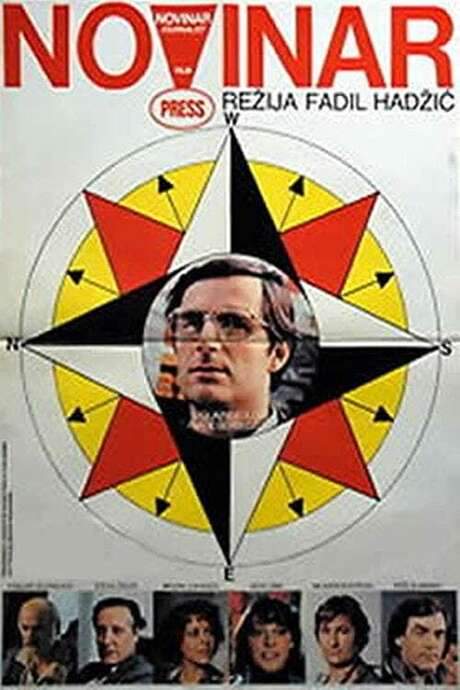
Journalist (1979) movie poster

Timeline

Journalist (1979) Timeline Explained – Every Event in Order

Release, runtime and language
1979 · 117 mins · Serbo-Croatian
Loading streaming availability…
Directed by
Fadil Hadžić
Starring
Mira Furlan, Rade Šerbedžija, Milena Zupančič, Božidar Smiljanić, Zvonimir Torjanac, Damir Šaban

Stressful life of a journalist in the former Yugoslavia.

On this page (6)
  1. 1 Where to watch
  2. 2 Events in order (12)
  3. 3 Timeline questions answered
  4. 4 Movie threads
  5. 5 Movies like Journalist
  6. 6 Every angle
Loading streaming availability…

12 events in order · contains spoilers

Journalist Timeline: Events in Chronological Order

Every key event of Journalist (1979) in order, scene by scene, with when and where it takes place. Use it to untangle flashbacks, time jumps and parallel storylines, to refresh your memory before the sequel or to find the exact scene you are thinking of.

  1. Vlado's drunken outburst at the newsstand

    In the morning, Vlado Kovač erupts in a drunken outburst and attacks a street newsstand, scattering the papers across the ground. The incident shocks his colleagues and sets off a chain reaction within the newsroom. The event exposes his volatile state and becomes the trigger for disciplinary discussions by the journalists' organization.

    When
    morning
    Where
    Zagreb, street newsstand
  2. Journalists' communist organization holds a meeting

    A meeting of the journalists' communist organization is convened to discuss Kovač's behavior and position. The group debates whether his conduct reflects on the press and what should be done about him. The discussion reveals underlying tensions about journalistic freedom within the newspaper.

    When
    later that day
    Where
    newsroom / press club
  3. Censorship becomes the root cause

    It emerges that Kovač's article about the Mikros tools workers' strike was blocked by editor Mirko. The blocked piece is portrayed as the central symptom of broader censorship within the paper. The meeting highlights the conflict between truth-telling and the editorial line.

    When
    during the meeting
    Where
    newsroom
  4. Confrontation with the editor

    Tomac, the incoming editor, sharply confronts Kovač over the censorship issue. Nada, Kovač's colleague, defends him, arguing for professional integrity. The exchange marks a turning point in their working relationship.

    When
    during the meeting
    Where
    meeting room
  5. Tomac assumes control and reaches out

    Tomac becomes the editor and attempts to win Kovač over with offers and promises of change. Kovač remains steadfast, refusing to compromise his principles. The dynamic sets the stage for growing tension between them.

    When
    shortly after the meeting
    Where
    editor's office / newsroom
  6. Kovač's personal life unravels

    Kovač's wife leaves him and files for divorce, criticizing his self-centeredness and alcohol abuse. The personal setback compounds his professional frustration. The separation deepens his alienation from the newsroom and his peers.

    When
    days later
    Where
    home
  7. The party shifts to support the workers

    There is a political turn as the Party decides to side with the Mikros workers, changing the leverage of the strike. Tomac uses this shift to propose fresh coverage that would challenge Kovač's censored piece. The move underscores the intersection of politics and journalism in the story.

    When
    period after divorce
    Where
    Mikros factory area / city hall
  8. Kovač is asked to write the censored piece

    Tomac commissions Kovač to craft an article similar to the one originally blocked, but Kovač refuses to produce it. He stands by his refusal to participate in censorship and pressure. The refusal deepens his isolation within the newsroom.

    When
    after party decision
    Where
    newsroom
  9. Kovač befriends Kos, the veteran journalist

    Over time, Kovač befriends Kos, an older, highly educated journalist who shared the same dedication to the craft. The relationship reveals how ambition can sour into cynicism and alcoholism. Their bond mirrors Kovač's own trajectory in the newsroom.

    When
    over time
    Where
    press club cafe in Zagreb
  10. Kos's death and the obituary

    Kos dies from an alcohol overdose, leaving Kovač to write his obituary. The piece arrives with the weight of their shared history and professional ideals. It marks a personal tragedy that foregrounds the cost of their era's cynicism.

    When
    later
    Where
    Zagreb
  11. Obituary is censored the next day

    Kos's obituary for Kos is heavily censored in the newspaper the following day, erasing much of his legacy. The censorship serves as a stark reminder of the system's grip on individual stories. This act deepens Kovač's disillusionment with the press.

    When
    next day
    Where
    newspaper office in Zagreb
  12. The toll of censorship persists

    The sequence underscores the ongoing censorship and its toll on Kovač and the profession. He remains isolated as the newsroom's pressures and political forces continue to shape the truth-telling he believes in. The film closes with a somber meditation on journalism under constraint.

    When
    after obituary
    Where
    Zagreb newsroom

Last updated: February 18, 2026 at 23:46

Was this helpful?

Timeline questions answered

Journalist Timeline Explained: Your Questions Answered

When does it happen, and why in that order? The questions people ask about the chronology of Journalist (1979): time jumps, flashbacks, cause and effect between scenes and the correct order of events, each answered with spoilers.

Q1

Why does Vlado attack the newsstand at the beginning of the film?

Vlado attacks the newsstand in a drunken outburst as a manifestation of his accumulated frustration with censorship at the newspaper. The incident is triggered by his anger over the blocking of his article about the Mikros tools factory workers' strike by editor Mirko. This violent act exposes his psychological state and becomes the catalyst for the subsequent disciplinary meeting.

  • Vlado Kovač
  • newsstand attack
  • censorship
  • Mikros article
  • drunken outburst
Q2

Why was Vlado's article about the Mikros factory strike censored?

The article about the workers' strike at Mikros tools factory was halted by editor Mirko because it conflicted with the editorial line of the newspaper under communist control. The piece threatened to expose labor unrest and could have embarrassed local authorities, so Mirko blocked its publication as part of the broader censorship practices limiting what journalists could report.

  • Mikros factory
  • censorship
  • workers strike
  • article blocked
  • editor Mirko
Q3

Why does Tomac become the new editor and what does he want from Vlado?

Tomac takes over as editor after the meeting about Vlado's incident. He recognizes Vlado as a highly capable journalist and attempts to win him over by offering him opportunities and promising change. When the Party later shifts to support the Mikros workers, Tomac asks Vlado to write an article reflecting the new official line, essentially wanting him to produce the same story he originally wanted to write, but now sanctioned by the Party. Vlado refuses because he sees it as hypocrisy and manipulation.

  • Tomac
  • new editor
  • Vlado Kovač
  • journalist integrity
  • Party line
Q4

Why does Vlado's wife Milena leave him and file for divorce?

Milena leaves Vlado because his alcohol abuse and obsessive focus on professional battles have destroyed their marriage. She criticizes him for vanity and self-centeredness, stating that his commitment to his journalistic principles has come at the cost of their relationship. The divorce represents the personal toll of his professional struggles, as his single-minded pursuit of truth alienates those closest to him.

  • Milena
  • divorce
  • Vlado Kovač
  • alcohol abuse
  • personal toll
Q5

Why does Vlado refuse to write the article when the Party supports the workers?

Vlado refuses to write the article even after the Party shifts to support the Mikros workers because he sees the offer as a manipulative attempt to use him. Tomac now wants him to write essentially the same piece that was previously censored, but framed to serve the Party's current political interests. Vlado views this as another form of control, censorship dressed as permission, and chooses to maintain his integrity by refusing to become a tool of propaganda, even when it would benefit his original cause.

  • Vlado Kovač
  • refused to write
  • Party support
  • integrity
  • censorship
Q6

Who is Kos and what is his relationship with Vlado?

Kos is an aging, highly educated journalist who becomes Vlado's friend at the press club. Their relationship mirrors Vlado's own trajectory, dedicated to the craft of journalism but gradually worn down by disillusionment and alcoholism. Kos represents the cautionary path of a journalist who was once idealist but has been broken by years of compromise and censorship. His friendship provides Vlado with both companionship and a glimpse of his possible future.

  • Kos
  • veteran journalist
  • friendship
  • press club
  • disillusionment
Q7

Why is Kos's obituary heavily censored in the newspaper?

After Kos dies from an alcohol overdose, Vlado writes his obituary, but the newspaper heavily censors it before publication. The censorship serves as a stark reminder that even in death, the system controls how journalists are remembered and what can be printed. By erasing much of Kos's legacy, the editors demonstrate that the grip on truth-telling extends beyond living journalists to their very memory and representation.

  • Kos
  • obituary censored
  • death
  • newspaper control
  • legacy erased
Q8

What happens to Vlado by the end of the film?

By the end of the film, Vlado remains isolated within the newsroom, having refused to compromise his principles. He loses his wife through divorce, watches his friend Kos die, and sees even Kos's obituary sanitized by censorship. The film closes with Vlado continuing his work under the same oppressive system, having paid steep personal and professional prices for his integrity. There is no redemptive arc, only a bleak realization of powerlessness against systemic censorship.

  • Vlado Kovač
  • ending
  • isolation
  • journalism
  • bleak outcome
Q9

Why does Nada defend Vlado during the meeting?

Nada, Vlado's colleague, defends him during the communist organization meeting because she recognizes the importance of his reporting and understands the costs he pays for pursuing truth. She argues for professional integrity, standing up for journalistic principles even as others distance themselves from Vlado's controversial actions. Her defense highlights the moral tension in the newsroom between those willing to compromise and those who insist on truthful reporting.

  • Nada
  • defended Vlado
  • meeting
  • professional integrity
  • colleague support

Movie threads

More Movies Like Journalist, by Mood & Story

Curated lists built around what makes Journalist tick: the same mood, the same kind of story or the same emotional payoff. Each list explains why these movies belong together.

Movies about moral erosion under pressure like Journalist

Witnessing a good person gradually worn down by an oppressive system. If you liked the story of personal and professional decline in Journalist, explore these films about characters facing similar moral erosion. These movies feature individuals whose ideals are systematically crushed by oppressive systems.

  • grim
  • oppressive
  • disillusioned
  • despairing
  • psychological
  • dour
  • Tone: melancholic, cynical, despairing
  • Pacing: steady, deliberate, methodical
Why these movies?

The story pattern: Stories in this thread follow a linear, often downward trajectory. A principled individual confronts a powerful, indifferent system. Through a series of defeats, compromises, and personal setbacks, their hope and integrity are steadily eroded, leading to a bleak or disillusioned endpoint.

Why they belong together: These films are grouped by their shared focus on the psychological toll of resisting systemic corruption. They share a melancholic tone, steady pacing that builds emotional weight, and a profound sense of disillusionment.
Movies about professional disillusionment like Journalist

Stories of dedicated professionals whose work leads to personal ruin. Fans of Journalist's depiction of a journalist's despair will find similar stories here. Discover other films about professionals facing ethical crises and personal ruin due to systemic pressures in their field.

  • disillusioned
  • frustrated
  • grim
  • introspective
  • bleak
  • cynical
  • Tone: bleak, disillusioned, dour
  • Pacing: steady, character-driven
Why these movies?

The story pattern: The narrative pattern follows a character defined by their professional identity. Their passion for their work clashes with the reality of institutional corruption, censorship, or bureaucratic inertia. This conflict spills over into their personal life, leading to alienation, addiction, or a complete loss of purpose.

Why they belong together: These movies are united by their exploration of the dark side of professional dedication. They share themes of integrity versus compromise, the personal cost of principled stands, and the bleak reality of fighting a losing battle.

If you liked this

Movies Like Journalist

Similar movies to Journalist: the same genre, themes or kind of story. Each one comes with its own plot summary, timeline and ending explained.

Browse all movie summaries

Every angle

Journalist (1979) Explained: Plot, Timeline & Characters

Everything about Journalist in one place: what happens in the plot summary, the timeline in chronological order, the characters and meaning and a spoiler-free summary. What's After the Movie adds the cast, box office and post-credit scenes.

Coming soon on iOS and Android

The Plot Explained Movie Summary App

Plot summaries, endings explained and timelines on your phone. Catch up on any movie in minutes, save your favorites and never miss a twist again.

Be the first to know when we launch. Your email stays private, always.

Learn more about the app