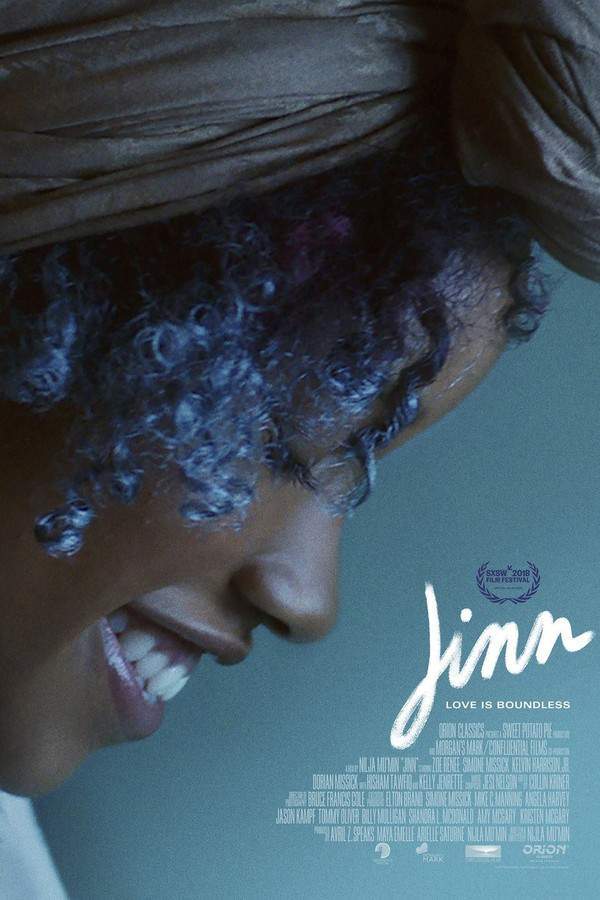
In her final year of high school, Summer Zoe Renee is navigating life with divorced parents, a situation that already tests her sense of independence. Her mother, Jade Simone Missick, a meteorologist, has been quietly exploring a mosque and reading the Quran. As Jade moves toward embracing her conversion more openly, she begins to share her faith with Summer and gently push for her daughter to consider Islam as well. The dynamic between mother and daughter becomes a study in balance, as faith, family history, and personal freedom intersect in a way that feels both intimate and high-stakes.
Summer’s initial reaction is skeptical. She suspects her mother’s religious shift might be tied more to personal evolution than to a serious commitment, especially because it seems sparked by a crush on the imam. Her father Dorian Missick dismisses the change as a passing phase and encourages Summer to go along with it so life can stay smooth. Caught between loyalty to her mother and her own sense of self, Summer tests the waters: she continues to attend the mosque while living largely by her own rules in her downtime—drinking, partying, and choosing to go unveiled. The tension between two worlds begins to pull at her, creating a quiet, almost insistent pull toward something she hasn’t fully understood yet.
A defining moment comes when Summer posts a photo of herself wearing a hijab with the hashtag halal hottie, a moment that instantly places her in the social spotlight. The image goes viral, turning private questions into public scrutiny and bringing the Imam’s attention squarely onto her choices. The spiritual journey becomes louder, more public, and more complicated as she grapples with the expectations that come with her new visibility. The mosque becomes not only a place of worship but a crucible where Summer tests her beliefs, her boundaries, and her sense of belonging.
As Summer sinks deeper into the faith, Jade’s own conversion evolves into a more visible, personal path. Jade begins to consider changing her name to something Arabic to reflect her faith more fully, and she wears her hijab on air, signaling a public commitment that redefines her relationship with her daughter and with the world around them. Summer grows more intrigued by Islamic concepts she’s encountering, including the idea of jinn, and she forms a close connection with Tahir Kelvin Harrison Jr., a classmate who attends the same mosque. Tahir becomes a bridge to a life that looks orderly and devout from the outside, showing Summer what a devoted, conscientious devotional life could look like in practice. Meanwhile, her viral post draws criticism and guidance alike, and the Imam Hisham Tawfiq publicly admonishes her, reminding viewers of the tension between personal expression and communal norms.
The push-pull within Summer intensifies. She enjoys elements of the Muslim faith—the structure, the discipline, the sense of community—while also cherishing the freedom of her previous secular life. The line between faith and personal desire blurs in ways that feel unavoidable, and she confesses to Tahir that she has a crush on him. Their relationship becomes a focal point of both caution and attraction, and they decide to explore their connection physically. Their moment is discovered, and Tahir’s mother, Rasheedah Kelly Jenrette, bans Summer from their house, forcing a difficult choice about where Summer belongs and what she owes to her family, her faith, and herself.
The fallout extends beyond a single incident. Summer runs away to her father’s apartment, where the complexity of the situation becomes clearer: Jade steps in with a careful, compassionate stance, choosing to support her daughter’s relationship and her personal safety. The conversation that follows is grounded in trust and practicality—as long as their relationship is consensual and safe, Jade signals that she will loosen restrictions and allow space for Summer to navigate her faith on her own terms. The film presents a nuanced portrait of parental support and boundaries, showing how love can adapt to growth rather than constrain it.
With encouragement from both parents and a measured, if hesitant, nod from Tahir’s mother, Summer learns that she has been accepted to a school for dance. This development marks a meaningful milestone, offering a tangible path for Summer to pursue her passion while continuing to explore and integrate her faith. The story threads together the resilience of family ties, the search for personal identity, and the delicate art of balancing desire with devotion. It is a journey that does not pretend to settle every question but instead honors the real tension that can exist between faith and freedom, between tradition and personal choice.
Throughout, the characters negotiate a shared space where curiosity and conviction coexist. The film leaves audiences with a quiet, thoughtful portrait of adolescence under the weight of faith, tradition, and the irresistible pull toward self-definition. In the end, Summer’s path reflects a careful, evolving harmony: a life where faith informs choices without erasing the impulse to dance, to create, and to love on one’s own terms.