







Plot Explained Spoilers guaranteed!
Plot Explained

Browse by genre

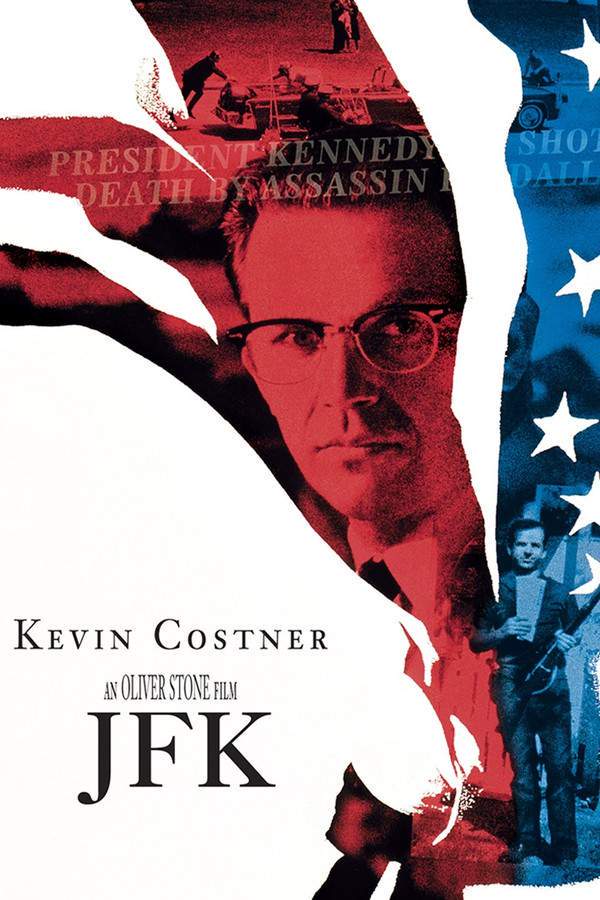
JFK (1991) movie poster

Timeline

JFK (1991) Timeline Explained – Every Event in Order

Release, runtime and language
1991 · 189 min · English
JustWatch #3,305 35
Directed by
Oliver Stone
Starring
Kevin Costner

Oliver Stone's gripping drama follows the investigation of District Attorney Jim Garrison (Kevin Costner) into the assassination of President John F. Kennedy. Facing government interference and challenging accepted narratives, Garrison pursues what he believes to be a larger conspiracy. His relentless pursuit of the truth leads him to risk everything as he attempts to expose the forces behind the tragic event that ended Camelot.

On this page (7)
  1. 1 Where to watch
  2. 2 Events in order (15)
  3. 3 Timeline questions answered
  4. 4 The book behind the movie
  5. 5 Movie threads
  6. 6 Movies like JFK
  7. 7 Every angle

Where to watch

Where to Watch JFK (1991)

Where can you watch JFK? Stream, rent or buy it in the US, including on Amazon Video, Apple TV Store and Fandango At Home: current JustWatch availability with up-to-date prices.

Streaming availability powered by JustWatch

15 events in order · contains spoilers

JFK Timeline: Events in Chronological Order

Every key event of JFK (1991) in order, scene by scene, with when and where it takes place. Use it to untangle flashbacks, time jumps and parallel storylines, to refresh your memory before the sequel or to find the exact scene you are thinking of.

  1. Eisenhower's Farewell Address

    The film opens with a haunting narration by Martin Sheen, showcasing newsreel footage of President Dwight D. Eisenhower's farewell address from 1961. Eisenhower cautioned against the increasing influence of the 'military-industrial complex', setting a thematic tone for the political intrigues that follow.

    When
    1961
  2. John F. Kennedy's Presidency

    The narrative transitions to John F. Kennedy's presidency, detailing the key events that ultimately led to his tragic assassination. These events, as explored by the filmmakers, reveal the political turmoil and societal tensions of the early 1960s.

  3. Kennedy's Assassination

    On November 22, 1963, the narrative culminates in a chilling recreation of President Kennedy's assassination. The shocking event rocked the nation and marked a significant turning point in American history.

    When
    November 22, 1963
    Where
    Dallas, Texas
  4. Jim Garrison's Investigation Begins

    New Orleans District Attorney Jim Garrison begins to connect the dots related to the assassination in the wake of Kennedy's death. His focus turns to potential conspirators and the mysteries surrounding the incident, setting the stage for a complex investigation.

    Where
    New Orleans
  5. David Ferrie's Involvement

    Garrison's team scrutinizes private pilot David Ferrie, suspecting his connections to the assassination. However, facing public scrutiny from federal authorities, they are forced to release him, complicating their investigation.

    Where
    New Orleans
  6. Oswald's Death

    Two days after Kennedy's assassination, Lee Harvey Oswald is killed by Jack Ruby, a shocking turn of events that leads Garrison to temporarily close the case. This incident raises further questions about the assassinations and conspiracies at play.

    When
    November 24, 1963
    Where
    Dallas, Texas
  7. Garrison Revisits the Case

    In late 1966, Garrison revisits the investigation after reading the Warren Commission Report. He is convinced that the official account is flawed, igniting his determination to uncover the true events surrounding Kennedy's assassination.

    When
    Late 1966
  8. Interrogating Witnesses

    Garrison and his team begin interrogating witnesses and vital connections to Oswald, Ruby, and Ferrie. They uncover crucial information, including insights from prominent figures like Senator Russell B. Long regarding Oswald's capabilities.

  9. The Testimony of Jack Martin

    Garrison meets former private investigator Jack Martin, who provides a chilling account of his association with Guy Banister, indicating Oswald's previous connections. Martin’s sudden death leaves Garrison more determined to uncover the truth.

  10. Clay Bertrand's Lawyer

    Attorney Dean Andrews Jr. reveals that he received a bizarre phone call from a client named 'Clay Bertrand', requesting to represent Oswald. This leads Garrison to draw connections between Oswald and local key players.

  11. Willie O'Keefe's Revelation

    Willie O'Keefe, a male prostitute, shares vital information about Ferrie's conversations with Oswald. His romantic history with Clay Shaw adds another layer to Garrison's investigation as the complexities of the case deepen.

  12. Jean Hill's Testimony

    Witness Jean Hill claims to have heard shots fired from the grassy knoll, raising doubts about the official narrative. Garrison's investigations suggest discrepancies in the Warren Commission's report, further complicating the case.

    Where
    Dallas, Texas
  13. Encounter with 'X'

    Garrison meets a mysterious informant known as 'X', who unveils the existence of a high-level conspiracy involving the CIA and the government. This revelation illuminates the stakes surrounding Kennedy's assassination and fuels Garrison's resolve.

  14. The Trial of Clay Shaw

    From January to March 1969, the trial of Clay Shaw unfolds, with Garrison producing significant evidence of multiple shooters. His impassioned closing statement emphasizes the importance of revealing the truth to future generations.

    When
    January to March 1969
    Where
    New Orleans
  15. Garrison's Ongoing Pursuit

    Despite the trial's outcome, which results in Shaw's acquittal, Garrison vows to continue seeking the concealed truths behind Kennedy's assassination. The film concludes with the promise of future revelations about the case.

Last updated: November 04, 2024 at 00:53

Was this helpful?

Timeline questions answered

JFK Timeline Explained: Your Questions Answered

When does it happen, and why in that order? The questions people ask about the chronology of JFK (1991): time jumps, flashbacks, cause and effect between scenes and the correct order of events, each answered with spoilers.

Q1

Why did Jim Garrison investigate the Kennedy assassination in New Orleans instead of Dallas?

Garrison began his investigation in New Orleans after discovering potential connections to the assassination within his own jurisdiction. His team focused on private pilot David Ferrie, who had ties to anti-Cuban groups and connections to Lee Harvey Oswald during Oswald's brief time in New Orleans. The investigation expanded when Garrison found that several key figures in the case had New Orleans connections, including Dean Andrews Jr. who claimed to have received a call from "Clay Bertrand" regarding Oswald.

Foreshadowing: Earlier scenes establish Oswald's presence in New Orleans working for Guy Banister, creating the initial thread that Garrison pulls.

  • jim garrison
  • new orleans investigation
  • david ferrie
  • lee harvey oswald
  • clay bertrand
Q2

Who was the mysterious informant known as X in JFK?

X is a mysterious figure played by Donald Sutherland who approaches Garrison to reveal the existence of a high-level conspiracy. X explains that various factions within the government, the CIA, and other powerful groups perceived Kennedy's foreign policy as a threat to their interests. X provides Garrison with information about the broader conspiracy but remains largely anonymous, representing the film's embodiment of shadowy insider knowledge about the assassination.

  • x informant
  • donald sutherland
  • conspiracy
  • cia
  • government cover-up
Q3

What was the single bullet theory that Garrison challenged in court?

The single bullet theory, central to the Warren Commission's conclusion, posited that one bullet caused multiple wounds to both President Kennedy and Texas Governor John Connally. At the trial, Garrison presented evidence challenging this theory, arguing that the trajectory and timing made it physically impossible for a single bullet to cause all the documented injuries. His team performed tests at the Texas School Book Depository concluding that Oswald's marksmanship was insufficient to execute the precision shots required.

Foreshadowing: Garrison's early investigation includes questioning the Warren Commission's findings about Oswald's capabilities.

  • single bullet theory
  • warren commission
  • lee harvey oswald
  • assassination
  • forensics
Q4

Why was Clay Shaw put on trial and what happened at his trial?

Clay Shaw, a wealthy New Orleans businessman, was charged with conspiracy to murder President Kennedy. Garrison alleged that Shaw had connections to David Ferrie, Lee Harvey Oswald, and had a romantic history with Willie O'Keefe, a male prostitute who claimed to have witnessed Ferrie discussing the assassination. During the trial from January to March 1969, Garrison presented evidence of multiple shooters and challenged the single bullet theory. The jury ultimately acquitted Shaw on all charges, though they stated they believed in a hidden conspiracy but lacked sufficient evidence to convict.

Foreshadowing: Earlier scenes establish Shaw's connections to O'Keefe and Ferrie through Garrison's witness interviews.

  • clay shaw trial
  • new orleans
  • conspiracy
  • 1969 trial
  • verdict
Q5

Why did Jack Ruby kill Lee Harvey Oswald and how did it affect the investigation?

Jack Ruby, a Dallas nightclub owner, killed Lee Harvey Oswald on November 24, 1963, two days after Kennedy's assassination, during what was supposed to be a police transfer. Ruby's action, witnessed live on television, immediately raised suspicions about a cover-up. For Garrison, Oswald's death meant the primary suspect could never stand trial, leaving him no choice but to temporarily close his case initially. The murder eliminated the possibility of learning directly from Oswald about any conspiracy.

  • jack ruby
  • lee harvey oswald
  • murder
  • Dallas
  • police transfer
Q6

What was the grassy knoll theory about Kennedy's assassination?

The grassy knoll theory suggests that additional shooters were positioned on a slight hill northeast of the Texas School Book Depository, known as the grassy knoll. Witness Jean Hill claimed to have heard shots fired from this location, and her testimony was altered by the Warren Commission. Garrison's investigation raised questions about this possible second location, supporting the broader theory that multiple shooters were involved rather than a lone assassin.

  • grassy knoll
  • second shooter
  • jean hill
  • texas school book depository
  • witnesses
Q7

Why did Garrison believe the Warren Commission report was flawed?

Garrison revisited the case in late 1966 after reading the Warren Commission Report, which he believed was riddled with significant inaccuracies and contradictions. Senator Russell B. Long privately informed Garrison that the FBI had probed Oswald and that it would have been nearly impossible for Oswald to execute three shots with the precision that resulted in Kennedy's death. Garrison also challenged the Commission's acceptance of the single bullet theory and its failure to adequately explain certain witness testimonies and physical evidence.

Foreshadowing: The timeline establishes Garrison's initial investigation ended when Oswald was killed, and he only reopened it after studying the Warren Report.

  • warren commission
  • flaws
  • contradictions
  • official investigation
  • russell b long
Q8

What happened to the key witnesses in Garrison's investigation?

Several key witnesses faced intimidation or died under suspicious circumstances during Garrison's investigation. Jack Martin, a former private investigator who provided testimony about Guy Banister's connections to Oswald, died of a reported heart attack. Rose Cheramie, a Dallas prostitute who claimed to have been assaulted by Jack Ruby's bodyguards and warned about Mafia plans to eliminate Kennedy, was found dead. These deaths heightened the sense of danger surrounding the investigation and reinforced the film's themes of cover-up and suppression of truth.

  • witness deaths
  • jack martin
  • rose cheramie
  • intimidation
  • suspicious deaths
Q9

How did Garrison's investigation affect his marriage to Liz?

Garrison's obsessive pursuit of the truth took a severe toll on his marriage to Liz, portrayed by Sissy Spacek. As the investigation intensified, facing government obstruction, media criticism, and personal danger, his relationship deteriorated under the strain. The film portrays his dedication to the case as socially isolating, consuming his attention and energy away from his family life, ultimately leading to the breakdown of their marriage.

  • liz garrison
  • marriage
  • divorce
  • family
  • personal toll
Q10

What was revealed about Clay Shaw's connections after the trial?

In the epilogue, the film reveals that Clay Shaw died of lung cancer in 1974. Nearly five years after his death, revelations emerged about his ties to the CIA. The end credits further foreshadow that critical records related to Kennedy's assassination will be made public in 2029, leaving the question of full truth still unresolved decades later.

  • clay shaw
  • CIA ties
  • death
  • 1974
  • records 2029
  • epilogue
Q11

What was David Ferrie's role in the assassination investigation?

David Ferrie was a private pilot and key figure in Garrison's early investigation. Garrison's team focused scrutiny on Ferrie, suspecting his connections to the assassination and his involvement with Cuban anti-communist groups. Ferrie had known connections to Lee Harvey Oswald. However, when their inquiry was publicly criticized by federal authorities, Garrison's team was compelled to release Ferrie, making him a frustrating dead end in the early stages of the investigation.

Foreshadowing: Ferrie's connections to Oswald and Cuban groups are established early as potential conspiratorial links.

  • david ferrie
  • private pilot
  • cuban
  • new orleans
  • investigation

Movie threads

More Movies Like JFK, by Mood & Story

Curated lists built around what makes JFK tick: the same mood, the same kind of story or the same emotional payoff. Each list explains why these movies belong together.

Relentless Investigative Thrillers like JFK

Where one person's obsessive quest for truth uncovers a dangerous conspiracy. If you liked the obsessive pursuit of truth in JFK, you'll find similar movies here. These films feature protagonists risking everything to expose conspiracies and cover-ups, offering a tense, procedurally-driven experience with a heavy emotional weight and complex narratives.

  • investigative
  • suspenseful
  • paranoid
  • relentless
  • serious
  • gripping
  • Tone: tense, paranoid, serious
  • Pacing: steady, methodical
Why these movies?

The story pattern: These narratives typically center on a procedural investigation that becomes a personal crusade. The protagonist starts with a nagging doubt, gathers evidence and witnesses against increasing resistance, and is often forced to confront the personal cost of their obsession. The endings are frequently ambiguous or bittersweet, emphasizing the difficulty of defeating entrenched power.

Why they belong together: Movies are grouped here for their shared focus on a dogged investigative process, a tone of pervasive suspicion, high emotional stakes, and the thematic exploration of institutional corruption versus individual conviction.
Paranoid Political Conspiracy Movies like JFK

Stories where powerful, unseen forces manipulate events, breeding deep suspicion. For viewers who enjoyed the atmosphere of deep suspicion and government intrigue in JFK, this section collects movies with a similar vibe. These complex thrillers explore themes of cover-ups, shadowy agendas, and the psychological toll of discovering you can't trust the institutions around you.

  • paranoid
  • conspiracy
  • suspenseful
  • unsettling
  • gripping
  • anxious
  • Tone: tense, dark, unsettling
  • Pacing: steady, building dread
Why these movies?

The story pattern: The narrative pattern involves a protagonist stumbling into or deliberately uncovering a conspiracy that is far wider and more sinister than initially imagined. The story unfolds by connecting seemingly disparate clues, often leading to a revelation that the corruption goes to the highest levels of power, leaving the protagonist—and the audience—questioning reality.

Why they belong together: These films are united by their core atmosphere of paranoia, their focus on complex political or corporate conspiracies, a tense and gripping tone, and the thematic weight of confronting systemic corruption.

If you liked this

Movies Like JFK

Similar movies to JFK: the same genre, themes or kind of story. Each one comes with its own plot summary, timeline and ending explained.

Browse all movie summaries

Every angle

JFK (1991) Explained: Plot, Timeline & Characters

Everything about JFK in one place: what happens in the plot summary, the timeline in chronological order, the characters and meaning and a spoiler-free summary. What's After the Movie adds the cast, box office and post-credit scenes.

Coming soon on iOS and Android

The Plot Explained Movie Summary App

Plot summaries, endings explained and timelines on your phone. Catch up on any movie in minutes, save your favorites and never miss a twist again.

Be the first to know when we launch. Your email stays private, always.

Learn more about the app